How to Compare Home Builders Before You Choose One
Learn how to compare home builders side by side, covering quotes, contracts, quality, and warranties before making your final choice.
How to Compare Home Builders Before You Choose One
Knowing how to compare home builders properly is the difference between choosing based on a gut feeling and choosing based on evidence. Most homeowners get two or three quotes, glance at the bottom-line price, and go with whichever number feels most comfortable. The problem is that two quotes with similar totals can represent completely different scopes of work, different quality materials, and very different levels of risk once the contract is signed.
Comparing builders properly takes a bit more structure than just lining up prices side by side. You need to look at what’s actually included in each quote, how each builder handles contracts and payment schedules, what kind of warranty protection is on offer, and how each one communicates before you’ve even paid a deposit. Skipping this comparison process is one of the most common reasons homeowners end up with cost blowouts, delays, or disputes partway through a build.
This article breaks down exactly how to compare home builders in a way that actually protects your budget and your project, from reading quotes line by line to building a simple scorecard you can use across every builder on your shortlist. Whether you’re building a new home, a major renovation, or an extension, the same comparison framework applies. By the end, you’ll have a clear, repeatable process for separating a genuinely strong builder from one that just looks good on paper.
Why Comparing Home Builders Properly Matters
A home build is one of the largest financial commitments most people ever make, and unlike buying a car or hiring a smaller tradesperson, the stakes of getting it wrong are high. A poorly chosen builder can mean months of delays, unexpected costs, and in worst cases, unfinished work that needs to be rectified by someone else entirely.
When you take the time to compare home builders properly, you’re not just chasing the lowest price. You’re evaluating:
- Whether the scope of work is genuinely comparable across quotes
- How much financial and legal protection you have if something goes wrong
- Whether the builder’s communication style and project management approach suits how you want to be kept informed
- How the builder’s past clients rate their experience, not just their finished product
Skipping this process in favour of picking the cheapest or fastest-sounding option is exactly how avoidable problems happen.


Start With a Shortlist of Licensed, Insured Builders
Before comparing anything else, confirm that every builder on your shortlist is properly licensed and insured. This should be step one, not an afterthought once you’ve already fallen in love with a particular builder’s portfolio.
At minimum, verify:
- A current contractor’s licence appropriate for the scope of your project
- Public liability insurance
- Home warranty insurance or an equivalent structural warranty, depending on your region
- No unresolved disciplinary history with the relevant licensing authority
Only once you’ve confirmed these basics should you move on to comparing quotes, quality, and contract terms. Comparing an unlicensed builder against a licensed one isn’t really a comparison at all, since the unlicensed option carries risks that no price difference can offset.
Compare Quotes Line by Line, Not Just the Bottom Line
This is where most homeowners go wrong. A quote that’s $15,000 cheaper than another might simply be excluding items that the more expensive quote includes as standard. Without a detailed breakdown, you’re not actually comparing like for like.
What a Detailed Quote Should Include
A proper quote from a home builder should itemise:
- Materials, including brand and grade where relevant
- Labour costs, broken down by trade or stage
- Site preparation and any allowances for unknown conditions
- Fixtures, fittings, and finishes included in the price
- What is explicitly excluded, such as landscaping, driveways, or window coverings
- Provisional sums for items not yet finalised, such as tiling or cabinetry
If a builder gives you a single lump-sum figure with no breakdown, ask for an itemised version before comparing it against other quotes. A builder who resists providing this detail is worth treating with caution.
Compare Build Quality and Past Work
Price and paperwork only tell part of the story. The actual quality of a builder’s finished work matters just as much, and it’s something you can verify directly.
- Visit completed projects in person rather than relying on photos alone
- Look closely at finishing details, such as joinery, tiling, and paint work, since these are often where quality differences show up most clearly
- Ask how long ago the project was completed, and if possible, speak to the homeowner about how the property has held up over time
- Check for industry association membership, such as the National Association of Home Builders (NAHB), which sets standards for member conduct and professional development
Comparing quality in person, rather than through a portfolio alone, gives you a far more accurate picture of what to expect from each builder.
Compare Contract Terms
Once you’ve narrowed down your shortlist based on quotes and quality, the contract terms deserve just as much scrutiny.
Fixed-Price vs Cost-Plus
Fixed-price contracts lock in a total cost based on agreed specifications, offering more budget certainty but generally less flexibility if you want to make changes later. Cost-plus contracts charge based on actual costs plus a margin, which can work out cheaper if the project goes smoothly, but carries more financial risk if costs run higher than expected.
When comparing builders, check which contract type each one uses by default, and don’t assume they’re interchangeable. A fixed-price quote from one builder isn’t directly comparable to a cost-plus estimate from another without adjusting for that difference.
Payment Schedules and Deposits
Compare each builder’s payment schedule against standard practice in your area. Watch for:
- Deposit amounts that seem unusually high compared to other quotes
- Payment milestones tied to vague progress descriptions rather than specific, inspectable stages
- Final payment terms and what triggers release of the last instalment
A payment schedule that heavily front-loads costs before major work is completed shifts more risk onto you as the homeowner.
Compare Communication and Project Management Style
How a builder communicates during the quoting process is a strong predictor of how they’ll communicate once you’re under contract. When comparing builders, pay attention to:
- Response times to emails, calls, and questions
- Whether you’re dealing with a consistent point of contact or being passed between staff
- How clearly they explain technical details without you having to ask multiple times
- Whether they proactively flag potential issues with your site or plans, rather than only mentioning them once they become expensive problems
A builder who communicates well during a free quote is far more likely to keep you informed once real money and deadlines are involved.
Compare Warranties and After-Build Support
Warranty coverage varies more between builders than most homeowners realise. When comparing options, ask each builder directly:
- What structural warranty applies, and for how long
- What defects liability period is offered on workmanship after handover
- How quickly they typically respond to post-handover issues
- Whether warranty claims are handled in-house or through a third party
Builders offering only the legal minimum warranty aren’t necessarily bad, but it’s a data point worth weighing against builders who offer more comprehensive after-build support as a competitive advantage.
Compare Timelines Realistically
Be cautious when one builder’s timeline is dramatically shorter than every other quote you’ve received. When comparing timelines:
- Ask what the estimate is based on, including whether it accounts for weather delays and material lead times
- Check whether the builder has multiple projects running simultaneously that could affect their availability
- Ask how delays are communicated and whether penalty or incentive clauses apply for missed deadlines
A realistic, well-explained timeline is generally a better sign than the fastest number on paper.
Create a Simple Comparison Scorecard
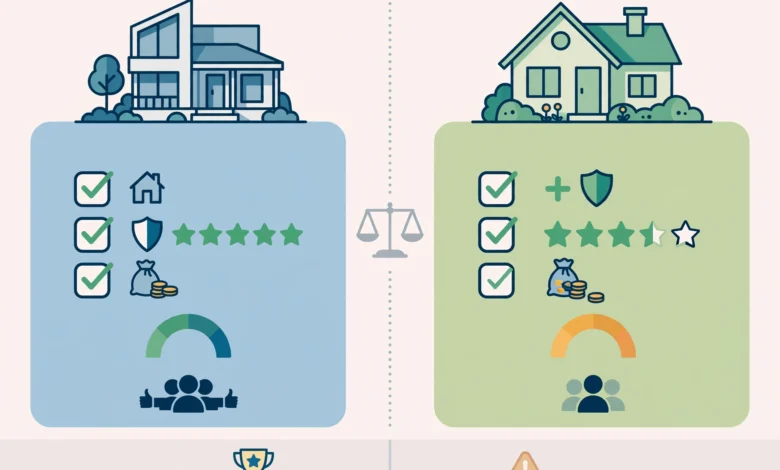
Once you’ve gathered information across all these categories, put it into a simple scorecard rather than trying to hold it all in your head. A basic version might score each builder from 1–5 across:
- Price and quote transparency
- Build quality and past project condition
- Contract terms and payment schedule fairness
- Communication and responsiveness
- Warranty and after-build support
- Timeline realism
This kind of structured comparison makes it far easier to see which builder is genuinely the strongest overall choice, rather than being swayed by whichever one made the best first impression.
Red Flags to Watch For When Comparing Builders
While comparing, keep an eye out for warning signs that should weigh heavily against a builder, regardless of price:
- Reluctance to provide licence, insurance, or itemised quote details
- Vague or inconsistent answers about subcontractors and scheduling
- Pressure to sign quickly or commit before you’ve finished comparing other quotes
- A pattern of negative reviews mentioning unfinished work, poor communication, or unresolved disputes
- No willingness to provide references or allow site visits to past projects
According to guidance from the Better Business Bureau, checking a contractor’s complaint history and resolution record is one of the most reliable ways to catch these patterns before signing a contract, rather than after.
Frequently Asked Questions
How many builders should I get quotes from before comparing? Three is generally a good number. It’s enough to spot outliers in pricing and scope without making the comparison process unmanageable.
Should I always choose the builder with the best warranty? Not automatically. Warranty is one important factor, but it should be weighed alongside build quality, communication, and contract terms rather than treated as the single deciding factor.
Is it worth paying more for a builder with better reviews? Often, yes. A slightly higher price from a builder with consistently strong reviews and verifiable past work is frequently a better long-term value than the cheapest option with limited track record.
What’s the biggest mistake people make when comparing builders? Comparing bottom-line prices without checking whether the scope of work is actually the same across quotes. This single mistake accounts for a large share of budget disputes during construction.
Conclusion
Learning how to compare home builders properly means looking well beyond the bottom-line price on a quote. It means checking licensing and insurance first, reading quotes line by line, visiting completed projects in person, understanding contract terms and payment schedules, and paying close attention to how each builder communicates before you’ve committed to anything. Using a simple scorecard to weigh these factors side by side takes the guesswork out of the decision and makes it far easier to spot which builder is genuinely the strongest fit for your project, not just the one with the most convincing sales pitch.