Swimming Pool Ideas for Homes in Arizona
Practical swimming pool ideas for Arizona homes covering desert landscaping, shade, cool decking, water use, and pool fencing laws.
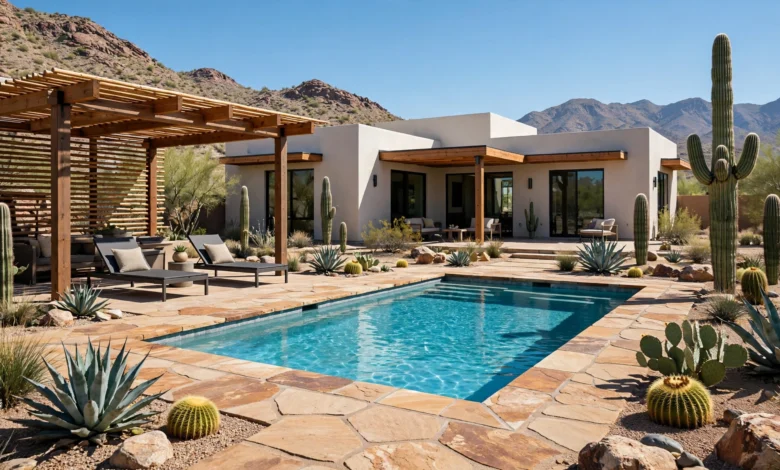
Swimming Pool Ideas for Homes in Arizona: 13 Brilliant Desert Designs
Swimming pool ideas for homes in Arizona have to solve a problem most pool inspiration content never even considers: how do you build a backyard oasis in a climate that regularly hits 110°F, gets almost no summer rain, and can make a standard concrete deck too hot to walk on barefoot by 9am? A pool design borrowed from a coastal or tropical climate simply doesn’t hold up here without real adjustments.
Arizona homeowners, especially across the Phoenix metro, Tucson, and the wider Sonoran Desert, are working with a genuinely different set of conditions than most of the country. Intense, direct sun, sandy or caliche-heavy soil, extreme surface heat, and a real need to think about water use all shape what actually works around a desert pool. At the same time, Arizona’s outdoor lifestyle means a well-designed pool area gets used for a huge share of the year, which makes getting the design right worth the extra thought.
This guide covers swimming pool ideas for Arizona homes built specifically around the desert climate: shade structures that make a pool usable at 2pm in July, decking materials that don’t scorch bare feet, desert-adapted plants that thrive without daily watering, and the state’s legal pool fencing requirements. Whether you’re planning a new pool or reworking an existing one, these ideas will help you build something that actually thrives in Arizona’s climate instead of fighting it every summer. Let’s dig into what genuinely works.
Why Pool Design in Arizona Demands a Desert-Specific Approach
Arizona’s climate is defined by intense, direct sunlight, extremely low humidity, minimal rainfall, and summer temperatures that routinely exceed 100°F for weeks at a time. That combination changes almost every decision around a backyard pool in Arizona, from which plants can survive near the water to how hot your deck gets underfoot at midday. Add sandy, fast-draining soil common across much of the Phoenix metro area, and it becomes clear why a pool design pulled from a cooler, wetter climate rarely translates well here.
1. Build Shade Into the Design From Day One
In Arizona, shade isn’t a nice-to-have accessory, it’s what determines whether your pool area gets used during the hottest months or sits empty. The mistake many homeowners make is treating shade as an afterthought, adding a single umbrella once the pool is finished. A better approach builds shade structures into the plan from the start:
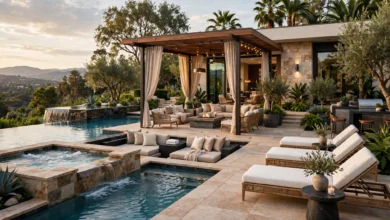
- Pergolas and ramadas – A slatted pergola provides filtered shade that shifts with the sun, which tends to feel more comfortable than a solid roof that traps heat underneath.
- Shade sails – A flexible, modern-looking option that can be positioned over specific lounging or dining zones.
- Strategically placed desert trees – Species like the palo verde, Arizona’s state tree, offer filtered canopy shade without the heavy leaf litter of denser trees.
2. Choose Decking Materials That Stay Cool Underfoot
Standard dark concrete can become genuinely painful to walk on during an Arizona summer. Pool decking choices should prioritise surfaces that stay cooler in direct sun:
- Travertine pavers – A premium option known for staying noticeably cooler than darker stone or standard concrete.
- Porcelain tile – Durable, heat-resistant, and available in light tones that reflect rather than absorb heat.
- Light-coloured textured concrete – A more budget-friendly option that still performs better than a dark, smooth finish.
Composite decking, while popular in cooler climates, can actually get uncomfortably hot in direct desert sun despite marketing claims, so it’s worth testing a sample underfoot in full sun before committing.
3. Landscape With Desert-Adapted and Native Plants
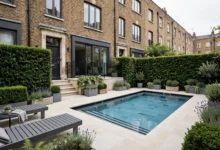
Traditional lush, tropical-style poolside planting demands daily watering to survive an Arizona summer, which runs against both the climate and the state’s water conservation priorities. According to the University of Arizona Cooperative Extension, poolside plantings should be chosen for their ability to withstand intense reflected sun and minimal leaf litter, since debris in the water increases filter maintenance.
Strong choices for an Arizona poolside garden include:
- Agave and Blue Agave for architectural, low-water structure
- Red Yucca for seasonal colour without heavy irrigation
- Desert Spoon and Ocotillo for striking, low-maintenance texture
- Palo Verde for filtered shade with minimal debris
Avoid species known for heavy leaf, flower, or seed drop directly beside the water, since that debris ends up in your filter and skimmer basket far more often in a desert climate where pools tend to stay open nearly year-round.
4. Prioritise Water-Efficient Design Choices
Water conservation is a genuine, ongoing consideration for Arizona homeowners, not just an environmental talking point. The Arizona Department of Water Resources provides low-water-use landscaping and conservation guidance that pairs directly with good desert pool design, and following it benefits both your water bill and your long-term landscaping success. Practical ways to build water efficiency into your Arizona pool design include:
- Grouping plants by water need so irrigation isn’t wasted on drought-tolerant species planted alongside thirsty ones
- Installing drip irrigation rather than sprinklers for poolside beds
- Using a pool cover to reduce evaporation, which is especially significant in Arizona’s low-humidity climate
- Pairing decorative rock and decomposed granite with plantings to reduce the overall irrigated footprint
5. Consider a Plunge Pool for a Smaller Water and Maintenance Footprint
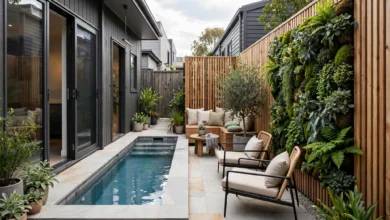
Not every Arizona backyard needs, or can support, a full-size pool. A plunge pool uses significantly less water, costs less to heat and maintain, and still delivers a genuine way to cool off during peak summer. For smaller lots or homeowners prioritising water efficiency, a well-designed plunge pool paired with quality shade and decking can feel just as resort-like as a larger pool on a bigger property.
6. Add Water Features That Also Cool the Air
A modest water feature, a spillway, fountain, or small waterfall, does more than look good in Arizona’s dry climate. Moving water slightly increases humidity and evaporative cooling in the immediate area, which can make the air around your pool feel noticeably more comfortable during peak heat. Keep the scale proportionate to your yard and be mindful that added water features also increase evaporation, so pairing them with efficient irrigation elsewhere helps balance overall water use.
7. Use Heat-Resistant Pool Finishes and Coatings
Beyond decking, the pool’s coping and surrounding hardscape benefit from heat-conscious material choices. Acrylic concrete coatings formulated for intense sun exposure provide a heat-reflective, non-slip surface that stays more comfortable underfoot than standard concrete. Aluminium structures for patio covers and pergolas are also worth considering over other metals, since they resist the rust and discoloration that can develop faster in Arizona’s intense UV exposure.
8. Design for Evening and Night Use
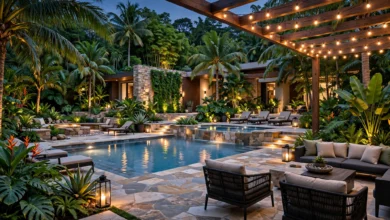
Because daytime heat limits comfortable pool use for a large part of the summer, many Arizona homeowners design their pool area with evening entertaining in mind. Layered landscape lighting, underwater pool lights, path lighting, and uplighting on trees or architectural features, extends usability well past sunset. A fire feature, fire pit or fire bowl, positioned a safe distance from the water adds warmth for the cooler desert evenings and makes the space usable well into the milder months of the year.
9. Choose Salt Chlorination to Simplify Long-Term Upkeep
Many Arizona pool owners choose saltwater systems over manual chlorine dosing, largely because Arizona’s long, hot swim season means heavy chemical use with a traditional setup. Salt systems still require regular testing and occasional shock treatment, but they generally reduce the frequency of manual chemical handling during months of near-constant pool use.
10. Create Multi-Functional Outdoor Living Zones
Given how much of the year Arizona weather supports outdoor living, a pool area that includes more than just water gets significantly more use. Combining a shaded dining or lounge zone, an outdoor kitchen, and defined seating areas turns the backyard into a genuine extension of the home rather than a single-purpose swim space. A pergola furnished with comfortable seating and fade-resistant outdoor fabric creates a spot for poolside dining that holds up to constant sun exposure.
11. Understand Arizona’s Legal Pool Barrier Requirements
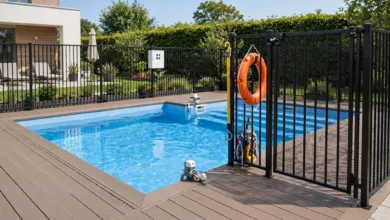
Regardless of your design style, every private pool in Arizona is subject to state safety law. Under Arizona Revised Statutes § 36-1681, any swimming pool or contained body of water that is at least 18 inches deep and wider than 8 feet at any point must be completely enclosed by a wall, fence, or other barrier. Key requirements include:
- The barrier must be at least five feet high, measured on the exterior side.
- No opening in the barrier may allow passage of a four-inch diameter sphere, a sizing standard based on a toddler’s head.
- Gates must be self-closing, self-latching, and open outward away from the pool.
- Horizontal rail spacing that could be used to climb the barrier is restricted to at least 45 inches apart.
Many Arizona cities, including Phoenix, Chandler, and Scottsdale, layer additional local requirements on top of the state statute, so it’s worth checking your specific municipality’s rules before finalising your fence design.
Choosing a Compliant Fence Style That Still Looks Good
Meeting these requirements doesn’t mean sacrificing design. Popular compliant options in Arizona include:
- Wrought iron combined with masonry for a look that suits desert-modern and Southwestern architecture alike
- View-friendly glass fencing where local wind and material rules allow it
- Decorative block walls that double as a privacy screen and safety barrier
12. Sequence Your Build in the Right Order
One of the most practical pieces of advice for Arizona pool projects is to settle the hardscape and shade structure first, before adding decorative planting. Retrofitting a pergola or ramada after the deck has already been poured is far more expensive than planning it into the initial build. Plants, especially slower-growing desert specimens, are generally the last piece added once the structural and shade elements are finalised.
13. Protect Container Plants and Features From Winter Temperature Swings
Arizona’s desert climate isn’t uniformly hot year-round. Many parts of the state, including higher-elevation areas and even the Phoenix metro on winter nights, see temperatures dip toward freezing during the cooler months. Unglazed terracotta pots are prone to cracking during these freeze-thaw cycles, so glazed ceramic or quality fiberglass containers hold up far better for potted specimens placed around the pool.
Quick Planning Checklist for an Arizona Pool
Before finalising your design, run through the following:
- Shade – Is shade built into the layout from the start, not added as an afterthought?
- Decking – Have you tested your chosen material underfoot in full sun?
- Planting – Are you using desert-adapted or native species suited to sandy, fast-draining soil?
- Water use – Does your irrigation and pool cover strategy reflect Arizona’s water conservation priorities?
- Fencing – Does your barrier meet ARS § 36-1681 and any additional local city requirements?
- Sequencing – Are hardscape and shade structures planned before planting begins?
Conclusion
Swimming pool ideas for homes in Arizona work best when they’re designed around the desert rather than against it. That means building shade into the plan from the outset, choosing decking that stays comfortable underfoot in extreme heat, landscaping with native and desert-adapted plants that thrive on minimal water, and making sure your pool barrier meets Arizona’s legal safety requirements from day one. Whether you’re building a compact plunge pool or a full resort-style backyard, a desert-smart pool design turns Arizona’s harsh climate into an asset rather than an obstacle, giving you a backyard that’s genuinely usable for most of the year.
Keywords: