How to Decorate a Home Office That Boosts Productivity
Learn how to decorate a home office that boosts productivity with lighting, layout, colour, and furniture choices backed by real workflow needs.
How to Decorate a Home Office That Boosts Productivity: 12 Proven Ideas
How to decorate a home office that boosts productivity is a question a lot more people have started asking since remote and hybrid work became a permanent part of daily life. A spare bedroom with a desk crammed in the corner might technically function as an office, but it won’t necessarily help you focus, stay organized, or get through a full workday without friction. The way a room is decorated, the light in it, the colours on the walls, the layout of the furniture, actually affects how your brain works while you’re in it.
This guide walks through the decisions that matter most: choosing the right lighting, picking a colour palette that supports focus rather than fighting it, setting up furniture in a way that reduces physical strain, and adding personal touches without turning the space into a distraction. We’ll also cover smaller details, like plants, storage, and sound, that tend to get overlooked but make a real difference over a full working week.
None of this requires a full renovation or a big furniture budget. Some of the most effective changes are things you can do in an afternoon: repositioning a desk to catch better light, swapping a cluttered shelf for closed storage, or changing a wall colour that’s been quietly working against your focus for months. By the end of this article, you’ll have a clear, practical plan for setting up a home office that actually supports the work you’re doing in it, not just one that looks good on a video call.
Why Home Office Decor Actually Affects Productivity
It’s easy to treat decorating a home office as a purely aesthetic decision, but there’s a real, practical link between environment and focus. Poor lighting causes eye strain and fatigue within a few hours. Cluttered surroundings increase cognitive load, meaning your brain spends energy processing visual noise instead of the task at hand. Uncomfortable furniture leads to fidgeting, discomfort, and shorter focused work sessions.
Home office productivity depends on a mix of factors that decorating choices directly influence:
- Lighting that reduces eye strain and supports alertness
- Colour that matches the type of work you’re doing
- Furniture that keeps your body comfortable through a full day
- Layout that minimizes distraction and supports your specific workflow
- Storage that keeps the visual field calm rather than chaotic
Getting these right isn’t about following a trend. It’s about setting up a space that works with your brain instead of against it.
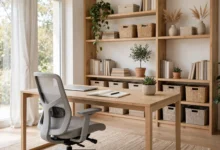
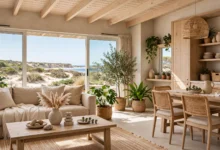
Choosing the Right Location for Your Home Office
Before decorating anything, the room itself matters. If you have a choice of spaces, a few factors are worth weighing.
Natural Light Access
Rooms with access to natural light support better focus and mood throughout the day. A desk near a window, positioned so light comes from the side rather than directly behind or in front of the screen, tends to work best for reducing glare while still getting the benefit of daylight.
Noise and Foot Traffic
A home office tucked away from high-traffic areas of the house, kitchens, living rooms, kids’ play areas, reduces interruptions and background noise. If a dedicated room isn’t available, a quiet corner with some visual separation, a bookshelf, a curtain, a folding screen, can still create a workable boundary.
Room Size and Layout Potential
A smaller room isn’t necessarily worse for productivity. In fact, smaller, well-organized spaces can feel more focused than large, sparse ones. What matters more is whether the room can fit a proper desk setup, adequate storage, and enough clear floor space to move comfortably.
Lighting Decisions That Support Focus
Lighting is one of the most under-decorated aspects of most home offices, and it has an outsized effect on how productive a space actually feels.
Layering Light Sources
A single overhead light rarely provides enough coverage for focused work. A well-lit home office usually layers three types of lighting:
- Ambient light – an overhead fixture or floor lamp providing general room illumination
- Task light – a desk lamp aimed directly at your working surface, reducing eye strain during close work
- Accent light – smaller lighting used for shelves, art, or plants, adding warmth without contributing to glare
Colour Temperature Matters
Cooler, bluer light (around 5000K) tends to support alertness and focus, which works well for morning and midday hours. Warmer light (around 2700–3000K) suits the later part of the day, when a slightly softer tone reduces eye fatigue without making the space feel dim. Some home office setups use smart bulbs that shift colour temperature automatically through the day.
Colour Palettes That Support Concentration
Colour psychology plays a real role in how a workspace feels to sit in for hours at a time. While personal preference always matters, certain palettes tend to support focus more consistently than others.
Best Colours for a Productive Home Office
- Soft blues – associated with calm and focus, useful for roles requiring sustained concentration
- Muted greens – linked to balance and reduced eye strain, especially good for long screen-time days
- Warm neutrals – tans, soft greys, and warm whites create a calm backdrop without feeling sterile
- Small accents of yellow or orange – used sparingly, these can support creativity and energy without overwhelming the space
Colours to Use Carefully
Bright reds and highly saturated colours can increase alertness in small doses but tend to become fatiguing or distracting when used across large wall surfaces in a workspace used for hours at a time. If you love a bold colour, using it in a single accent wall or through artwork rather than the full room tends to work better.
Furniture and Ergonomics for a Productive Home Office
No amount of good styling makes up for furniture that causes physical discomfort. Ergonomics should be treated as a core part of the decorating plan, not a separate consideration.
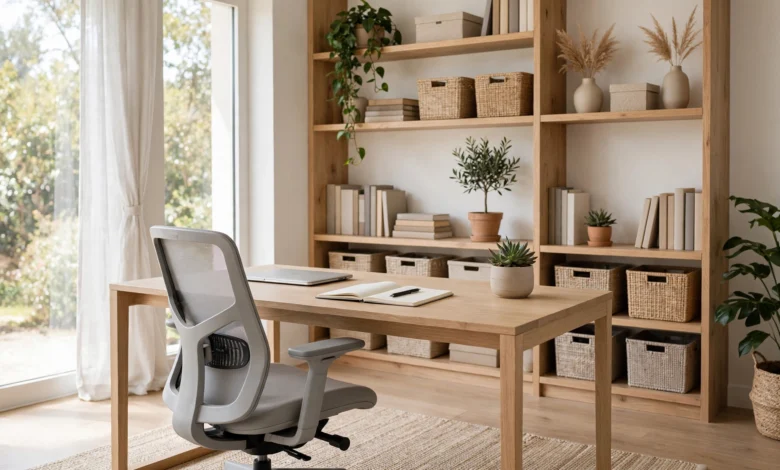
Desk Setup Essentials
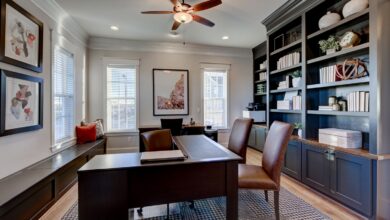
- Choose a desk with enough surface area for your monitor, keyboard, and any paperwork, without feeling cramped
- Position the desk so your monitor sits roughly at eye level, reducing neck strain
- Leave enough legroom underneath to avoid awkward, cramped seating postures
Chair Selection
A good office chair supports the lower back, allows feet to sit flat on the floor, and adjusts to your desk height. This is one area where it’s worth spending more, since a poor chair affects both comfort and focus every single day you use it.
Standing Desk Considerations
Standing desks or desk converters have become a popular addition to home offices, allowing movement between sitting and standing throughout the day. Even without a full standing desk, alternating posture periodically throughout the day supports both comfort and sustained focus.
Organizing Storage to Reduce Visual Clutter
A cluttered desk or shelf creates low-level visual noise that competes for attention, even if you’re not consciously aware of it. Thoughtful storage is one of the most effective, low-cost home office decor upgrades available.
- Use closed cabinets or drawers for items you don’t need daily
- Keep only current project materials on the desk surface itself
- Add a filing system, physical or digital, so paperwork doesn’t accumulate visibly
- Use cable management trays or clips to keep cords out of sight
Adding Personal Touches Without Creating Distraction
A home office that feels sterile can be just as unproductive as one that’s cluttered. The goal is a space that feels like yours without pulling focus away from work.
Art and Wall Decor
Choose one or two meaningful pieces rather than covering every wall. A single piece of art, a framed print, or a personal photo can add warmth without becoming a visual distraction during focused work.
Plants and Greenery
Adding plants to a workspace has been linked to improved mood and even modest gains in concentration, according to research summarized by the American Psychological Association. Low-maintenance options like pothos, snake plants, or ZZ plants work well for people without a lot of time for plant care.
Personal Objects in Moderation
A few personal items, a favourite mug, a small piece of art, a plant, add character. A desk covered in personal items, on the other hand, tends to create the same kind of visual clutter as unfiled paperwork.
Managing Sound in a Home Office
Sound is often overlooked in home office decorating, but it has a direct effect on focus.
- Add soft materials like a rug, curtains, or fabric wall panels to absorb sound in rooms with hard flooring or bare walls
- Consider a white noise machine or app for rooms near shared living spaces
- If budget allows, acoustic panels can meaningfully reduce echo and outside noise in a dedicated office room
Budget-Friendly Ways to Decorate a Productive Home Office
Not every improvement requires a full setup overhaul. Some of the most effective updates cost very little.
- Reposition your desk to improve natural light access, at no cost
- Add a desk lamp with adjustable brightness for better task lighting
- Declutter the desk surface and add simple storage bins or trays
- Repaint a single wall in a calming colour rather than the whole room
- Add one or two low-maintenance plants
- Use a cushion or lumbar support to improve an existing chair rather than replacing it
- Add a rug or curtains to reduce echo in a room with hard surfaces
Common Mistakes to Avoid When Decorating a Home Office
Even well-intentioned setups can undercut productivity if a few common mistakes creep in.
- Placing the desk facing a wall with no natural light, which can make the space feel closed in over a full workday
- Overloading the room with decor, creating visual clutter that competes with focus
- Ignoring chair and desk ergonomics in favour of style alone
- Using harsh, single-source overhead lighting without layering in task or accent light
- Skipping sound considerations in rooms with hard flooring or thin walls
The Occupational Safety and Health Administration offers guidance on ergonomic workstation setup that’s worth reviewing when planning desk height, chair positioning, and monitor placement, since these details affect both comfort and long-term productivity.
Conclusion
Decorating a home office that actually boosts productivity comes down to treating the space as a functional environment first and a styled room second, though the two don’t have to be in conflict. Thoughtful lighting, a colour palette that supports focus, ergonomic furniture, organized storage, and a few personal touches all work together to create a space that supports real, sustained work rather than just looking good in the background of a video call. Whether you’re setting up a dedicated office room or carving out a quiet corner of a shared space, the same principles apply: reduce friction, support your body, and build an environment that works with your focus instead of against it.