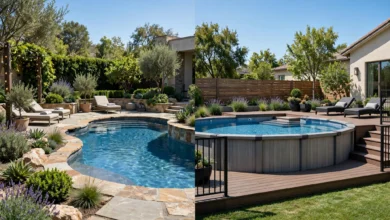
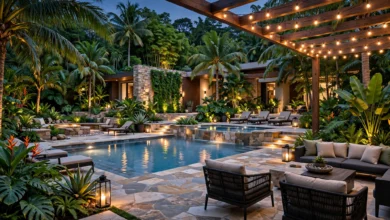
Swimming Pool Design Ideas for Small Yards in Melbourne
Practical swimming pool design ideas for small Melbourne yards, covering plunge pools, layouts, heating, materials, and Victorian pool laws.
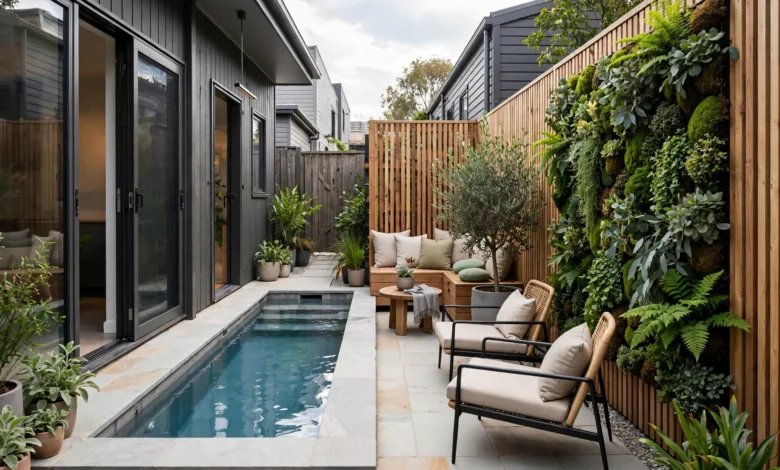
Swimming Pool Design Ideas for Small Yards in Melbourne: 14 Winning Layouts
Swimming pool design ideas for small yards in Melbourne need to solve a problem most pool inspiration content ignores completely: this city is full of narrow blocks, tight side access, and backyards where a standard pool shell simply won’t fit. Between inner-suburban terrace homes, townhouse developments, and blocks with awkward setbacks, “just add a rectangular pool” isn’t realistic advice for a huge share of Melbourne homeowners.
The good news is that a small yard is a design constraint, not a dealbreaker. Some of the most effective small pool designs in Melbourne come from tight, oddly shaped, or narrow blocks where a plunge pool or lap pool has been fitted with genuine precision. A compact pool, done well, can make a backyard feel larger, not smaller, while still delivering everything you actually want from owning a pool: a place to cool off in summer, entertain, and add genuine value to your home.
This guide covers swimming pool design ideas built specifically for small Melbourne yards: plunge pools, lap pools, courtyard layouts, heating for Melbourne’s cooler months, materials that make a tight space feel bigger, and the Victorian pool safety laws every pool owner in the state needs to know about. Whether you’re working with a narrow side strip, a compact courtyard, or a standard suburban block with limited backyard space, these ideas will help you get a genuinely usable pool without overwhelming the yard. Let’s get into the details.
Why Small Yards in Melbourne Need a Different Design Approach
Melbourne’s housing stock includes a huge number of narrow-lot terraces, townhouses, and subdivided blocks, especially across the inner and middle-ring suburbs. Add council setback rules, which typically require at least one metre of clearance between a pool and the boundary fence or easement, and the usable footprint for a pool can shrink fast. On top of that, Melbourne’s genuinely seasonal climate, warm summers followed by cool, sometimes cold winters, means heating efficiency matters more here than in warmer Australian cities. All of this means pool design for small Melbourne yards has to prioritise precision and multi-functionality over sheer size.
1. Choose a Plunge Pool for the Tightest Blocks
A plunge pool is the single most effective solution for genuinely small Melbourne yards. Typically ranging from 2.5 to 4.5 metres in length, plunge pools trade lap-swimming distance for depth and a smaller footprint, giving you a real spot to cool off without dominating the yard. Because they hold significantly less water than a full-size pool, they’re also faster and cheaper to heat, which matters given Melbourne’s cooler shoulder seasons.
Plunge pools work particularly well for:
- Narrow side passages and leftover strips beside the home
- Compact courtyards in inner-city terraces
- Tight rear corners on subdivided blocks
2. Consider a Lap Pool for Narrow, Elongated Spaces
If your yard is long and narrow rather than square, a lap pool often makes better use of the available space than a wider design. These sleek, narrow pools typically run along a side boundary or fence line and are built for swimming lengths rather than lounging. Many Melbourne homeowners add a spa end or built-in bench seating to combine fitness use with a spot to relax, without needing any extra width.
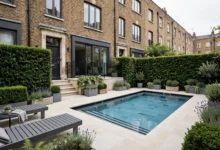
3. Go Custom Rather Than Off-the-Shelf on Irregular Blocks
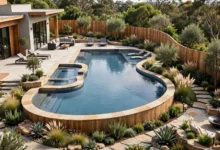
Standard fibreglass pool shells come in fixed sizes and shapes, which works fine on a straightforward rectangular yard but often struggles on Melbourne’s irregular or angled blocks. A custom concrete pool is shaped to fit the site rather than forcing the site to fit a pre-made shell, which matters on blocks with narrow side setbacks, angled fences, or tight rear courtyard corners. It’s a bigger investment, but on genuinely awkward sites, it’s often the only way to fit a pool at all.
Access Matters More Than You’d Think
Many Melbourne properties only allow entry through a narrow side passage, a standard back gate, or rear laneway access. Fibreglass pools typically require crane delivery, which can mean road permits, traffic management, and powerline clearance planning, none of which is simple on a tight inner-city block. Custom concrete construction is generally more adaptable here, since smaller excavation equipment can access tighter spaces and concrete can be pumped in from the street once groundwork is complete.
4. Use an L-Shaped or Boundary-Hugging Layout
Rather than trying to centre a rectangular pool in a small yard, running the pool along a boundary line, or shaping it into an L, can make far better use of an irregular footprint. This kind of custom layout maximises usable water space without leaving awkward, unusable gaps of leftover yard around the edges.
5. Try a Courtyard Pool for a Central Focal Point
A courtyard pool design positions the water at the centre of the property’s layout rather than pushed to one side. This creates sightlines to the pool from multiple rooms inside the home, giving you a calming visual connection to water every day, not just when you’re swimming. It works particularly well for townhouses and inner-Melbourne homes where the backyard essentially functions as an outdoor room off the living space.
6. Add Vertical Water Features Instead of Ground-Level Ones
When floor space is limited, vertical design elements deliver visual impact without eating into your usable yard. A wall-mounted spout or a sheer-descent waterfall adds movement and sound, creates a focal feature visible from indoors, and gives a small pool a genuine resort feel, all without requiring any additional ground area.
7. Choose Built-In Seating Over Loose Furniture
In a tight courtyard or plunge pool setup, built-in benches along one or two pool edges turn a small pool into a far more social, usable space. Seating built into the pool structure means you don’t need extra room for loose outdoor furniture, which is exactly the kind of trade-off that makes a small backyard feel considered rather than cramped.
8. Design for Year-Round Use With Heating in Mind
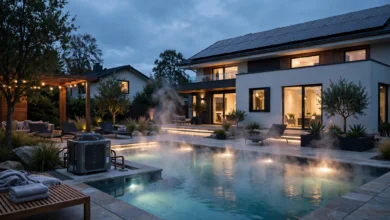
Melbourne’s climate is genuinely seasonal, and a pool that only gets used for eight to ten weeks a year is a much weaker return on investment. Because plunge and small pools contain far less water than a full-size pool, modern heat-pump systems can bring them up to a comfortable temperature efficiently, extending usable swim months well beyond peak summer. Designing for all-season use from the outset, rather than treating heating as an afterthought, is one of the most practical upgrades for a small Melbourne pool.
9. Work With Sloping Blocks Rather Than Against Them
Sloping yards are common across many parts of Melbourne and the surrounding region. Rather than levelling an entire block to fit a standard rectangular design, a pool can be built into the slope with a raised or partially elevated edge, turning what looks like a design obstacle into a genuine architectural feature. This approach often works particularly well paired with a plunge pool, since the smaller footprint is easier to integrate into an already sloped site.
10. Pick Light, Reflective Finishes to Make the Space Feel Bigger
In a compact yard, colour and finish choices genuinely affect how large the space feels. Pale-toned coping, light-coloured pool interiors, and bright decking all bounce more natural light around a small courtyard, helping the whole area read as more open. Darker, moodier finishes can look stunning in larger resort-style pools, but they tend to make an already tight Melbourne yard feel smaller and more enclosed.
11. Keep Landscaping Minimal and Purposeful
A small pool area doesn’t have space for sprawling garden beds, so every plant needs to earn its place. A few well-chosen, low-litter species, ornamental grasses, clumping strappy plants, or a single feature tree in a large pot, add greenery without competing for space. Vertical planting, such as a green wall or trained climbers along a boundary fence, is often more effective than ground-level garden beds in a genuinely tight courtyard.
12. Understand Victoria’s Legal Pool Barrier Requirements
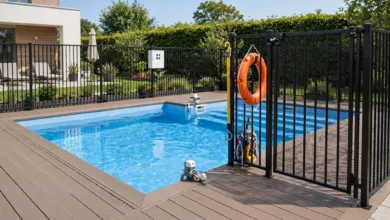
Regardless of how small your pool is, Victorian law treats it the same as a full-size backyard pool once it’s capable of holding water. According to the Victorian Building Authority, all pools and spas capable of holding more than 30cm of water must have a compliant safety barrier, and this applies to permanent, above-ground, relocatable, and inflatable pools alike. Every private pool and spa in Victoria must also be registered with the relevant local council, and barrier compliance certificates need to be renewed through inspection at least every four years.
Key requirements to plan around from day one:
- Registration – All pools and spas must be registered with your local council, regardless of size.
- Compliant barrier – A safety barrier meeting AS 1926.1 is mandatory, even for a small plunge pool.
- Self-closing, self-latching gates – Required on any gate providing pool access.
- Regular inspection – Barrier compliance certificates must be renewed roughly every four years.
- No direct building access – A new pool or spa area generally cannot be directly accessible via a building without an appropriate barrier in place.
Because compact yards leave less room to work with, it’s worth planning your fencing and gate placement early in the design process rather than trying to retrofit compliance around a finished pool.
13. Choose a Frameless Glass Fence to Preserve Sightlines
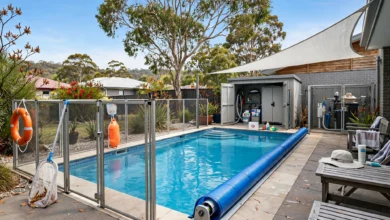
In a small yard, a solid or heavily framed pool fence can make the whole space feel boxed in. Frameless glass fencing meets Victoria’s safety barrier requirements while keeping sightlines completely open, which matters enormously when every square metre of your yard is doing double duty as living space, garden, and pool area.
14. Combine the Pool With an Entertaining Zone
Even a compact Melbourne yard usually has room for a small dining or lounge setup alongside the pool if it’s planned in from the start. A narrow bench seat, a two-person outdoor table, or a built-in daybed positioned beside a plunge pool turns the space into a genuine outdoor room rather than just a body of water with nothing around it. This is often the difference between a small pool that gets used constantly and one that feels like an isolated feature.
Quick Planning Checklist for Small Melbourne Pools
Before finalising your design, run through the following:
- Confirm your setback requirements with council before committing to a layout.
- Decide between plunge, lap, or courtyard styles based on your yard’s actual shape.
- Check site access early, since narrow passages may rule out crane-delivered fibreglass shells.
- Plan heating from the start if you want genuine year-round use.
- Choose light, reflective finishes to keep the space feeling open.
- Design your barrier and gate placement alongside the pool, not as an afterthought.
Conclusion
Swimming pool design ideas for small yards in Melbourne come down to precision, not compromise. A plunge pool, lap pool, or custom courtyard layout can turn even a narrow, awkward, or sloped block into a genuinely usable outdoor space, provided the design accounts for Melbourne’s tight setbacks, variable access, and seasonal climate from the outset. Add efficient heating, light-reflecting finishes, minimal but purposeful planting, and a compliant, low-profile safety barrier, and a small pool stops feeling like a scaled-down compromise and starts functioning as the best-used part of the yard. Whatever your block’s quirks, the right small pool design treats those constraints as the starting point, not the obstacle.