Swimming Pool Ideas for Luxury Homes in Georgia
Elevated swimming pool ideas for luxury homes in Georgia, covering infinity edges, red clay engineering, outdoor living, and pool codes.
Swimming Pool Ideas for Luxury Homes in Georgia: 12 Stunning Features
Swimming pool ideas for luxury homes in Georgia need to account for a very specific combination of factors that don’t come up in most high-end pool inspiration content: the Peach State’s notorious red clay soil, its long, humid outdoor season, and a regional design sensibility that leans toward seamless indoor-outdoor living rather than a single standalone water feature. A luxury pool in Buckhead, Alpharetta, or along the Golden Isles is rarely just a pool, it’s the centerpiece of an entire outdoor living environment.
Georgia’s geography adds real variety to what “luxury” looks like across the state. Metro Atlanta properties often deal with sloped, wooded lots and expansive clay soil that demands serious engineering. Lake Oconee estates chase infinity-edge views over the water. Coastal Georgia properties near Savannah and the Golden Isles work with a different climate rhythm entirely, warmer, more humid, and closer to hurricane season considerations. A genuinely luxurious Georgia pool design has to respond to all of this rather than importing a generic high-end look from somewhere else.
This guide covers swimming pool ideas for luxury homes in Georgia: dramatic design features like infinity edges and dark-bottom finishes, the engineering considerations that come with Georgia’s clay soil, integrated outdoor living spaces, and the state’s pool safety and fencing requirements every high-end build still has to meet. Whether you’re building in the Atlanta suburbs, the North Georgia mountains, or along the coast, these ideas reflect what’s actually working in Georgia’s luxury pool market right now. Let’s dive in.
Why Luxury Pool Design in Georgia Demands Local Expertise
Georgia’s combination of red clay soil, sloped and wooded lots, and a long, humid outdoor season means a luxury pool here has to be engineered as carefully as it’s designed. According to soil and construction data from Georgia pool builders, red clay is notorious for expanding when saturated and contracting when dry, and without proper engineering, that movement can seriously compromise a pool shell over time. Add Georgia’s varied terrain, flat suburban lots in some metro areas, dramatic slopes in North Georgia, coastal conditions near Savannah, and it’s clear why a one-size-fits-all luxury pool design doesn’t really exist in this state.
1. Choose an Infinity-Edge Pool for Scenic Properties
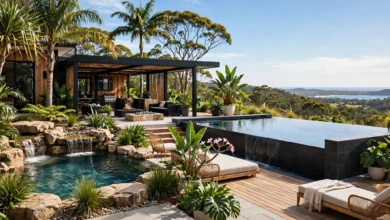
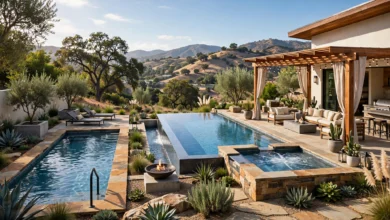
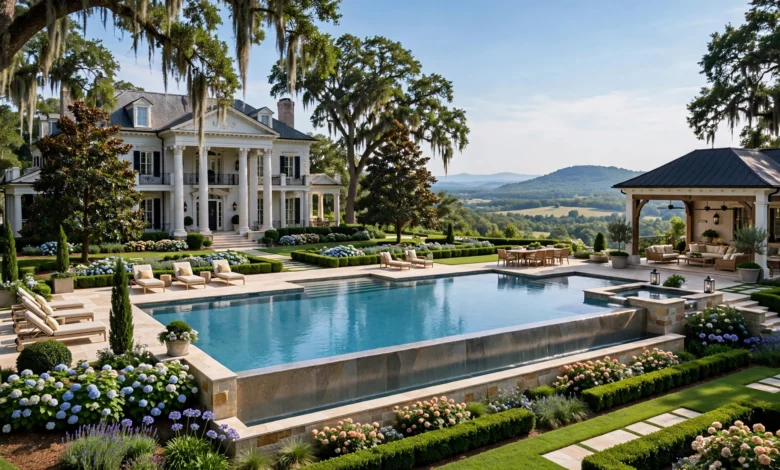
Infinity-edge pools have become one of the defining features of luxury pool design nationally, and Georgia’s landscape offers genuinely striking settings for them. Properties overlooking Lake Oconee, rolling North Georgia hills, or a well-positioned golf course view are especially well suited to this design, since the disappearing edge creates the illusion of water extending straight into the horizon. Industry data shows infinity-edge installations have grown significantly among residential luxury pools over the past year, driven by homeowners who want a pool that feels like a destination rather than simply a place to swim.
Even on a flat lot without a natural view, a skilled builder can still achieve the infinity effect, though it typically requires more extensive excavation and grading to create the necessary elevation change.
2. Go With a Dark-Bottom Finish for a Dramatic Look
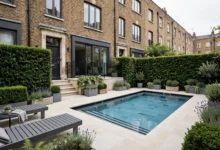
Dark-bottom pools are one of the most talked-about trends in luxury pool design right now, and they pair particularly well with infinity edges and clean, geometric shapes. A dark finish gives the water a rich, almost mirror-like quality and tends to photograph beautifully against Georgia’s greenery. Beyond aesthetics, dark finishes also absorb more heat from the sun, which can modestly extend comfortable swim temperatures during Georgia’s long shoulder seasons.
3. Add a Tanning Ledge as a Standard Luxury Feature
What used to be considered an optional add-on has become close to a must-have in current luxury pool design: the tanning ledge, also called a Baja shelf. This shallow, submerged platform near the pool’s entrance gives homeowners a place to lounge in a few inches of water, works beautifully with in-water furniture, and adds a resort feel that pairs naturally with Georgia’s long, warm swim season.
4. Engineer the Pool Shell for Georgia’s Red Clay Soil
This is the single most important technical consideration for any serious pool project in Georgia, and it applies just as much to luxury builds as standard ones. Georgia’s red clay soil expands significantly when wet and contracts when dry, and if a pool shell isn’t engineered to accommodate that movement, it can lead to cracking, shifting, and expensive structural repairs down the line. Proper site assessment should address:
- Soil composition and compaction before excavation begins
- Engineered backfill designed to manage expansion and contraction cycles
- Drainage planning to control how water moves around and beneath the pool structure
- Elevation and grading on sloped lots common throughout metro Atlanta and North Georgia
Choosing a builder with specific experience in Georgia’s clay conditions, rather than a generalist contractor, is one of the most important decisions in a luxury pool project here.
5. Integrate a Full Outdoor Living Environment
Luxury pool design in Georgia rarely stops at the water’s edge. The current standard across metro Atlanta luxury builds treats the pool as one element within a larger outdoor living space, typically including:
- An outdoor kitchen with a grill, prep space, and often a pizza oven or bar
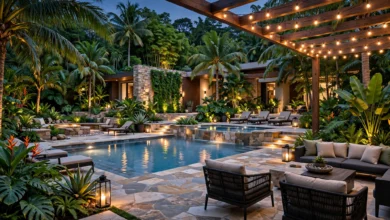
- A covered lounge, pergola, or cabana for shade
- A fire feature, fire pit or linear fire bowl, positioned a safe distance from the water
- Defined dining and entertaining zones separate from the swim area
This integrated approach means the pool, hardscaping, and softscaping are typically designed together as a single vision rather than added piecemeal over time.
6. Add a Custom Water Feature or Waterfall
A custom water feature, whether a rock waterfall, a sheer descent spillway, or a sculptural water element, adds both visual drama and ambient sound to a luxury Georgia pool. These features work particularly well on properties with natural elevation changes or wooded backdrops, where a rock waterfall can feel like a genuine extension of the landscape rather than an artificial add-on.
7. Use Slip-Resistant, Heat-Appropriate Decking
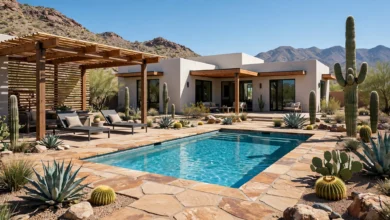
Georgia’s hot, humid summers make decking material a genuine functional consideration, not just an aesthetic one. Slip-resistant surfaces matter around a pool that will see heavy bare-foot traffic in wet conditions, and materials also need to hold up to humidity and the settling that can occur on Georgia’s clay-heavy soil. Popular high-end choices include travertine, natural stone, and premium concrete pavers with a textured, non-slip finish.
8. Plan Landscape Lighting as Part of the Original Design
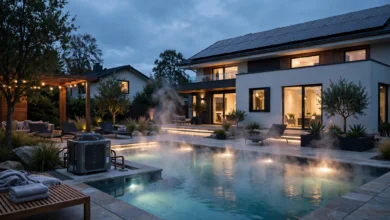
Rather than treating lighting as an afterthought, the strongest luxury pool projects in Georgia plan landscape lighting into the design from the start. This typically includes underwater pool lighting, uplighting on trees and architectural features, and path lighting through surrounding garden beds, ensuring the pool area feels immersive and balanced both during the day and after dark.
9. Choose a Pool Finish and Style Suited to Your Region of Georgia
Georgia’s regional variety genuinely affects which luxury pool styles feel most appropriate:
- Metro Atlanta – Sleek, modern geometric pools with dark finishes and infinity edges suit the area’s contemporary luxury architecture.
- North Georgia and Lake Oconee – Naturalistic freeform pools and rock waterfalls complement the rolling terrain and lake views.
- Savannah and the Golden Isles – Classic, elegant pool styles with lighter finishes tend to suit the coastal, historic aesthetic of the region.
10. Add a Spa or Spillover Hot Tub
Pairing a spa or spillover hot tub with the main pool extends usability into Georgia’s cooler months and gives homeowners a heated option without running the entire pool at a higher temperature. A spillover design, where heated spa water cascades into the main pool, also adds a visually striking feature that reads as effortlessly luxurious.
11. Confirm Your Design Meets Georgia’s Pool Barrier Requirements
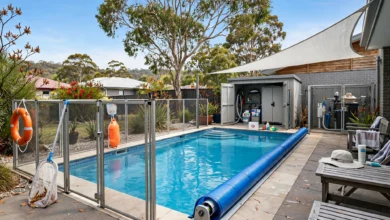
Even the most elevated luxury pool design still has to meet Georgia’s legal safety requirements. Georgia has adopted the International Swimming Pool and Spa Code as a statewide standard, and residential pool barriers must meet baseline requirements including:
- A minimum barrier height of 48 inches, measured from the outside
- No opening large enough to allow passage of a 4-inch diameter sphere
- Self-closing, self-latching gates that swing outward, away from the pool
- No climbable features on the exterior of the barrier
According to the Official Compilation of Rules and Regulations of the State of Georgia, local jurisdictions can, and often do, exceed these state minimums. Cobb County, for example, requires a five-foot minimum barrier height for most residential pools, and many Atlanta-area HOAs impose additional style and material requirements beyond the state code. For luxury builds, this often means working with a landscape architect or pool designer who can integrate a compliant barrier, frameless glass, custom wrought iron, or a design that uses architectural walls, without compromising the overall aesthetic.
HOA Considerations for Luxury Georgia Communities
Many of Georgia’s most desirable communities, particularly in Cobb, Forsyth, and Fulton counties, have homeowners associations that regulate fence style, material, and color above and beyond the state’s minimum requirements. Confirming your HOA’s specific covenants before finalizing a pool barrier design avoids a costly redesign after installation.
12. Work With a Design-Build Team That Understands Georgia’s Terrain
Given how much Georgia’s clay soil, slope conditions, and regional climate variation affect pool construction, luxury projects benefit significantly from a design-build approach where landscape architecture, pool engineering, and outdoor living design are handled by one integrated team rather than several disconnected contractors. This approach tends to produce a more cohesive final result and reduces the risk of mismatched materials or drainage problems that can arise when different elements of a project are designed independently.
Quick Planning Checklist for a Luxury Georgia Pool
Before finalizing your project, confirm the following:
- Soil engineering – Has your site been properly assessed for red clay expansion and contraction?
- Design style – Does your chosen pool style suit your specific region of Georgia?
- Outdoor living integration – Is the pool designed alongside kitchen, lounge, and fire features, or as an isolated element?
- Barrier compliance – Does your fencing plan meet both state code and any local or HOA requirements?
- Lighting plan – Has landscape and pool lighting been designed into the project from the outset?
- Builder expertise – Does your design-build team have specific, verifiable experience with Georgia’s soil and climate conditions?
Conclusion
Swimming pool ideas for luxury homes in Georgia work best when they combine current high-end design trends, infinity edges, dark-bottom finishes, tanning ledges, and integrated outdoor living spaces, with the engineering rigor Georgia’s red clay soil genuinely demands. Whether your property sits on a sloped Lake Oconee lot, a wooded North Georgia acreage, or a coastal estate near Savannah, the strongest luxury pool designs are built around the state’s specific soil, climate, and regulatory realities rather than borrowed wholesale from a different market. Get the engineering, regional style, and legal barrier requirements right from the start, and a Georgia luxury pool becomes a genuinely enduring centerpiece of the property rather than a beautiful feature that runs into problems a few years down the line.