Roof and Gutter Ideas for Homes in Victoria, Australia
roof and gutter ideas, Victoria roofing, Colorbond steel roofing, bushfire-prone gutter guards, Melbourne roof design, gutter profiles Australia, rainwater harvesting gutters, roof colour energy efficiency, BAL rating roofing, Victorian home renovation roofing
Roof and Gutter Ideas: 9 Brilliant Upgrades for Victorian Homes in Australia
Roof and gutter ideas for homes in Victoria need to do more than look good on the street. Victoria’s climate is one of the more demanding in Australia, swinging from scorching, dry summers with genuine bushfire risk to cold, wet winters with heavy rainfall, particularly across Melbourne, Gippsland, and the Western District. A roof that works beautifully on the Gold Coast might be the wrong choice entirely for a home in the Dandenong Ranges or regional Victoria, where fire safety ratings and rainfall intensity change the equation completely.
Whether you’re building new, renovating, or simply replacing a tired roof and gutter system, the choices you make affect far more than kerb appeal. The right roofing and guttering combination influences your home’s energy efficiency, its resilience during storm season, its resale value, and in bushfire-prone areas, its actual bushfire attack level (BAL) compliance under Australian Standards.
In this guide, we’ll walk through practical roof and gutter ideas suited specifically to Victorian conditions, covering materials, colours, gutter guard options, and design choices that hold up against the state’s mix of heat, storms, and fire risk, so you can make a decision that suits both your home’s style and Victoria’s climate reality.
Why Victoria’s Climate Should Shape Your Roof and Gutter Choices
Victoria doesn’t have one climate, it has several. Melbourne’s famously changeable weather can deliver four seasons in a single day, while regional areas like the Mallee experience intense summer heat and low rainfall, and alpine regions see snow in winter. Coastal towns along the Great Ocean Road deal with salt air and strong winds, and bushfire-prone areas across the Yarra Ranges, Macedon Ranges, and much of regional Victoria face genuine fire risk each summer.
This variation matters because a roofing and guttering system that performs well in one part of the state might be a poor fit elsewhere. According to the Country Fire Authority Victoria, homes in designated bushfire-prone areas are subject to specific construction requirements, including roof and gutter design, aimed at reducing ember attack risk. If you’re in one of these zones, your roofing decisions aren’t just aesthetic, they’re a compliance issue tied directly to your home’s safety rating.
1. Choose Roofing Materials Built for Victorian Conditions
The material you choose sets the foundation for everything else, including how well your roof handles heat, rain, and in some regions, fire.
- Colorbond steel is the most popular choice across Victoria, and for good reason. It’s lightweight, resistant to rust and cracking, handles temperature extremes well, and comes with a strong track record in bushfire-rated construction when paired with appropriate roof and gutter detailing.
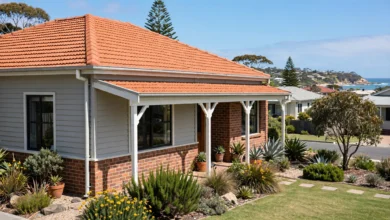
- Concrete and terracotta tiles remain popular for their classic look and thermal mass, which can help regulate indoor temperature in Melbourne’s hot summers and cool winters, though they’re heavier and require stronger roof framing.
- Slate roofing offers exceptional longevity and a premium appearance, often seen on heritage homes in inner Melbourne suburbs, though it comes at a higher price point.
- Zincalume and other metal roofing options provide similar durability benefits to Colorbond with a different finish, often chosen for a more industrial or contemporary aesthetic.
Matching Material to Region
If you’re building in a bushfire-prone area, metal roofing with sealed gutter systems generally performs better under Australian Standard AS 3959, which governs construction in bushfire zones. In coastal areas, look for roofing materials specifically rated for salt air exposure to avoid premature corrosion.
2. Consider Roof Colour for Energy Efficiency
Roof colour affects far more than street appeal in Victoria’s climate.
- Lighter roof colours reflect more heat, which helps keep homes cooler during Melbourne and regional Victoria’s hot summer stretches, potentially reducing air conditioning costs.
- Darker roof colours absorb more heat, which can help slightly with winter warmth but adds to cooling demand in summer, a trade-off worth weighing given Victoria’s genuinely hot summer days.
- Popular neutral tones like Monument, Surfmist, and Woodland Grey remain common choices because they balance thermal performance with a look that suits both modern and traditional Victorian homes.
If energy efficiency is a priority, it’s worth discussing thermal performance ratings with your roofing supplier, since some Colorbond finishes are specifically engineered to reflect more solar heat than standard finishes.
3. Pick Gutter Profiles Suited to Victorian Rainfall
Gutter choice matters just as much as roofing material, especially given how intense Victorian storms can be.
Common gutter profiles used across Victoria include:
- Quad gutters – A popular, cost-effective option with strong water flow capacity, well suited to standard residential roofs.
- Half-round gutters – Often chosen for heritage or character homes, offering a classic look with solid drainage performance.
- Fascia gutters – Sit along the fascia board rather than requiring separate brackets, giving a cleaner, more streamlined appearance popular in newer builds.
- Box gutters – Used for more complex roof designs with multiple roof planes, though they require careful installation to avoid overflow during heavy storms.
Given how intense Victorian downpours can be, particularly during summer thunderstorms, undersized gutters are a common and costly mistake. It’s worth having a roofing professional calculate the correct gutter size for your roof’s catchment area rather than defaulting to a standard size.
Downpipe Placement and Capacity
Downpipes should be positioned to handle Victoria’s occasional intense rainfall events without overwhelming the system. As a general guide, homes with larger roof areas or steep pitches benefit from additional downpipes spaced more closely together, reducing the risk of gutter overflow during heavy storms.
4. Add Gutter Guards for Leaf Debris and Ember Protection
Gutter guards serve a dual purpose in Victoria that’s worth understanding.
- Leaf and debris protection – Victoria’s mix of native gum trees and introduced species means gutters can clog quickly, particularly in leafy suburbs and regional properties. Gutter guards reduce the frequency of manual cleaning and lower the risk of blocked downpipes during storms.
- Ember protection in bushfire zones – In bushfire-prone areas, gutter guards made from non-combustible mesh help prevent embers from settling and igniting debris inside gutters during a fire event. This is a genuine safety consideration, not just a convenience feature, particularly for homes in Victoria’s higher BAL-rated zones.
When choosing gutter guards for bushfire-prone properties, look specifically for products tested and rated for ember protection rather than standard leaf guards, since the two aren’t always interchangeable.
5. Design for Bushfire-Prone Areas
If your property sits in a designated bushfire-prone area, roof and gutter design becomes a compliance matter as much as a style choice.
Key considerations include:
- Sealed roof and gutter junctions to prevent ember entry points
- Metal roofing over combustible materials in higher BAL-rated zones
- Non-combustible gutter guards as discussed above
- Enclosed eaves to reduce ember entrapment points beneath the roofline
- Regular gutter clearing during fire season, since dry leaf litter in gutters is a significant ignition risk
Victoria’s building regulations around bushfire-prone construction are detailed and specific to your property’s BAL rating, so it’s worth consulting your local council or a bushfire construction specialist before finalising roofing and guttering plans if your home falls within one of these zones.
6. Explore Rainwater Harvesting and Gutter Integration
With Victoria’s periodic water restrictions and growing interest in sustainable living, integrating rainwater harvesting into your roof and gutter design is worth considering.
- Rainwater tanks connected to gutter downpipes allow you to capture roof runoff for garden use, toilet flushing, or in some cases, laundry use, reducing mains water demand.
- First-flush diverters improve water quality by redirecting the initial, debris-heavy runoff away from your storage tank.
- Gutter mesh combined with tank inlet filters helps keep collected water cleaner and reduces maintenance on the tank system itself.
Many Victorian councils offer guidance or rebates related to water tank installation, so it’s worth checking with your local council before installing a system to see what support might be available.
7. Match Roofing Style to Your Home’s Architecture
Victoria’s housing stock spans everything from Victorian-era terraces and Federation homes to modern architectural builds and suburban brick veneers, and roofing choices should respect that variety.
- Heritage and character homes often suit slate, terracotta tile, or half-round gutters that echo the home’s original era, which can also matter for heritage overlay compliance in some Melbourne suburbs.
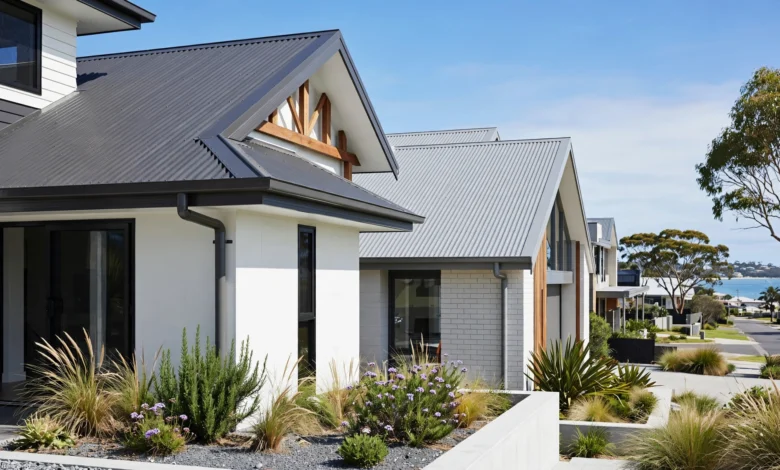
- Modern and architectural builds tend to favour Colorbond steel roofing with fascia gutters for a clean, contemporary line.
- Regional and rural properties often prioritise durability and fire resistance over pure aesthetics, leaning toward metal roofing systems that balance both.
If your property is in a heritage overlay zone, check with your local council before changing roofing materials or gutter profiles, since some areas have specific requirements to preserve streetscape character.
8. Plan for Regular Roof and Gutter Maintenance
Even the best roofing and guttering choices need upkeep to perform well over time in Victoria’s climate.
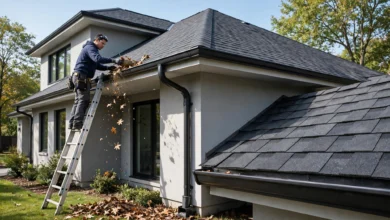
- Clear gutters at least twice a year, ideally before bushfire season and again after autumn leaf drop.
- Inspect roof flashing and seals annually, particularly after severe storms.
- Check for rust or corrosion on metal roofing, especially in coastal areas exposed to salt air.
- Trim overhanging branches to reduce debris buildup and storm damage risk.
Skipping regular maintenance is one of the most common reasons Victorian homeowners face unexpected roof repairs, since small issues like a blocked downpipe or cracked flashing tend to worsen quickly once heavy rain or fire season arrives.
9. Get Professional Advice for Your Specific Property
Every property in Victoria sits within its own microclimate, bushfire rating, and architectural context, so general roofing advice can only take you so far. Before committing to a roofing or guttering upgrade, it’s worth getting an assessment from a licensed roofing professional who understands local council requirements and, where relevant, your property’s BAL rating. This is particularly important for renovations, additions, or full roof replacements, where getting the design right the first time avoids costly rework down the line.
Quick Comparison of Popular Roofing Options in Victoria
| Material | Best For | Key Consideration |
|---|---|---|
| Colorbond steel | Most Victorian homes, bushfire zones | Lightweight, durable, wide colour range |
| Concrete/terracotta tile | Thermal mass, classic look | Heavier, needs stronger framing |
| Slate | Heritage homes | Premium cost, long lifespan |
| Zincalume | Contemporary builds | Similar durability to Colorbond, different finish |
Conclusion
Choosing the right roof and gutter ideas for a Victorian home means balancing style with the state’s genuinely varied climate, from Melbourne’s changeable weather to regional bushfire risk and coastal salt exposure. Materials like Colorbond steel, well-sized gutter profiles, and ember-rated gutter guards aren’t just design choices, they’re practical decisions that affect your home’s energy efficiency, storm resilience, and safety. Whether you’re renovating a heritage property in inner Melbourne or building new in a bushfire-prone regional area, taking the time to match your roofing and guttering system to your specific location, and getting professional advice where BAL ratings or council overlays apply, will pay off in fewer repairs and a home better suited to Victoria’s demanding conditions.