Swimming Pool Tips for Homeowners in London
Practical swimming pool tips for London homeowners covering planning permission, basement pools, heating costs, and water treatment.
Swimming Pool Tips for Homeowners in London: 12 Essential Rules
Swimming pool tips for homeowners in London look very different from the advice aimed at homeowners in warmer, more spacious parts of the world, and that’s largely down to three things: London’s limited garden space, its planning and building control system, and a climate that makes outdoor swimming a genuinely seasonal activity rather than a year-round one.
Most pool guides are written with a Californian or Mediterranean backyard in mind, wall-to-wall sun, generous plot sizes, and few real planning hurdles. London homeowners are working with something entirely different: tight urban plots, terraced housing, conservation areas, and a real possibility that the only sensible place for a pool is underground. On top of that, London’s cooler, wetter climate means heating and covering a pool properly isn’t optional, it’s the difference between a pool that gets used and one that sits cold and unused for most of the year.
This guide covers the swimming pool tips that actually matter for London homeowners: what you need to know about planning permission and basement pool conversions, how party wall rules can affect a build, realistic heating strategies for the UK climate, and the water treatment standards that keep a pool safe and clear. Whether you’re planning a compact garden pool, a basement conversion, or an indoor pool house, these tips will help you avoid the most common and costly mistakes London pool owners run into. Let’s get into it.
Why Pool Ownership in London Requires Different Planning
London’s dense housing stock, smaller plots, and mix of conservation areas, listed buildings, and terraced properties mean that pool ownership in London almost always involves more upfront planning than it would in a detached suburban or rural home elsewhere in the country. Add the UK’s genuinely seasonal climate, where outdoor swimming without heating is only realistic for a few months a year, and it becomes clear why London pool projects tend to focus heavily on space efficiency, heating, and regulatory compliance from the very start.
1. Understand Whether You Need Planning Permission
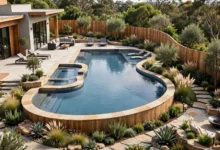
Most outdoor domestic swimming pools in England fall under permitted development rights, meaning many homeowners can install a garden pool without a formal planning application. However, this comes with real conditions worth knowing before you commit to a design:
- The combined footprint of your pool, sheds, garages, and extensions generally can’t exceed 50% of your garden area.
- A pool typically can’t be positioned in front of the principal elevation of your house.
- Properties in a conservation area, World Heritage Site, or Area of Outstanding Natural Beauty may face additional restrictions.
- Listed buildings almost always require planning permission for any pool project, indoor or outdoor.
Given how many London boroughs include conservation areas and listed properties, it’s worth checking your specific designation on the UK Government’s Planning Portal before finalising any design.
2. Recognise That Basement Pools Are a Different Category Entirely
If your London property doesn’t have the garden space for an outdoor pool, a basement pool is a genuinely popular alternative, particularly in inner London boroughs where land is at a premium. Unlike most outdoor pools, basement pools almost always require both planning permission and building control approval, since the excavation work and structural impact go well beyond what’s covered under permitted development.
Before committing to a basement pool project, expect to need:
- A structural engineer’s assessment of the excavation and reinforcement required
- Full building regulations approval, covering waterproofing, drainage, ventilation, and structural integrity
- Planning permission from your local borough, particularly if the property is terraced, listed, or in a conservation area
- A clear plan for construction access, since London terraces often have limited room for excavation equipment and material removal
3. Factor in the Party Wall Act for Terraced and Semi-Detached Homes
A huge share of London’s housing stock is terraced or semi-detached, which means a basement pool or significant excavation project can trigger obligations under the Party Wall etc. Act 1996. If your building work involves excavating near a shared boundary or party wall, you’re generally required to notify your neighbours and, in some cases, arrange a formal party wall agreement before construction begins. Skipping this step is one of the most common causes of neighbour disputes and project delays on London pool builds, so it’s worth addressing early, ideally before finalising your excavation plans.
4. Plan for Realistic Heating Given London’s Climate
London’s climate simply doesn’t support the kind of long, naturally warm swim season that pools enjoy in more southern or tropical climates. Without a heater, an outdoor London pool is realistically swimmable for only a small part of the year. Practical heating approaches for London homeowners include:
- Electric heat pumps – Generally the most cost-efficient option for maintaining a comfortable temperature across the milder months of the UK swim season.
- Gas heaters – Useful for quickly bringing a pool up to temperature for a specific occasion, though running costs are typically higher.
- Pool covers – One of the most cost-effective ways to retain heat overnight and reduce the energy needed to maintain temperature, particularly important given the UK’s higher energy prices.
Given the UK’s cooler evenings even in summer, a well-fitted cover is arguably more valuable for a London pool than for a pool in a consistently warm climate.
5. Consider an Indoor Pool or Pool House for Year-Round Use
Many London homeowners who want a pool they can genuinely use throughout the year opt for an indoor pool or a dedicated pool house rather than relying solely on an outdoor design. An enclosed pool space, whether a converted outbuilding, a garden pool hall, or part of a larger extension, removes much of the climate dependency that limits outdoor London pools to a handful of warm months. Pool halls built as outbuildings are generally covered under permitted development in the same way as other garden structures, provided they meet the relevant size and placement conditions, though it’s worth confirming this with your local authority given how much conditions vary between boroughs.
6. Get Building Regulations Approval Even When Planning Permission Isn’t Needed
It’s a common misconception that if a pool doesn’t require planning permission, no approval is needed at all. In practice, building regulations approval is a separate process from planning permission and often still applies, particularly for indoor pools, basement conversions, or pools built inside an existing structure like a garage. This covers technical standards including:
- Structural integrity of any excavation or new construction
- Waterproofing and drainage design
- Electrical installations, which must comply with Part P of the building regulations
- Thermal performance and insulation calculations for indoor or basement pools
7. Budget for London’s Hard Water
London sits on a chalk aquifer, which means the mains water supply across most of the city is notably hard, high in dissolved calcium and magnesium. This has real consequences for pool maintenance: hard water accelerates limescale buildup on tiles, filters, and heating elements, and can make water balancing more difficult if it’s not accounted for. London pool owners generally need to test and manage calcium hardness more proactively than pool owners in areas with naturally softer water, and a scale inhibitor is often a worthwhile addition to a standard water treatment routine.
8. Follow Recognised UK Water Treatment Standards
Unlike drinking water, there’s no single piece of UK legislation that directly regulates private pool water quality, which makes independent technical guidance especially valuable. The Pool Water Treatment Advisory Group (PWTAG) publishes the UK’s recognised Code of Practice for pool water treatment, and its guidance is referenced by the Health and Safety Executive as the practical standard for well-managed pools. Following PWTAG’s parameters, including maintaining pH between roughly 7.2 and 7.4 for chlorine-based systems and keeping alkalinity stable between 80 and 200 mg per litre, gives London pool owners a reliable, independently recognised benchmark for water safety and clarity.
9. Plan Pool Access and Delivery Logistics Early
London’s narrow streets, terraced housing, and limited off-street parking create genuine logistical challenges for pool construction that homeowners in more spacious settings rarely have to think about. Before committing to a design:
- Confirm whether construction vehicles and equipment can actually access your property or garden.
- Check whether a road closure or parking suspension will be needed for delivery or excavation work.
- Ask your contractor how materials will be moved through the property for basement or indoor pool projects, since many London homes have limited internal access points.
Addressing this early avoids expensive surprises once a project is already underway.
10. Insulate Properly if You’re Building a Basement or Indoor Pool
Basement and indoor pools in London need to meet specific thermal performance standards under building regulations, since heat loss through the ground and surrounding structure is calculated differently than for a standard room. Insulation calculations typically follow BS EN ISO 13370, which covers heat transfer via the ground, and your pool builder or architect will need to submit these calculations for local authority approval. Getting this right isn’t just a regulatory box to tick, it directly affects how expensive your pool is to heat and run once it’s built.
11. Choose a Design That Makes the Most of Limited Space
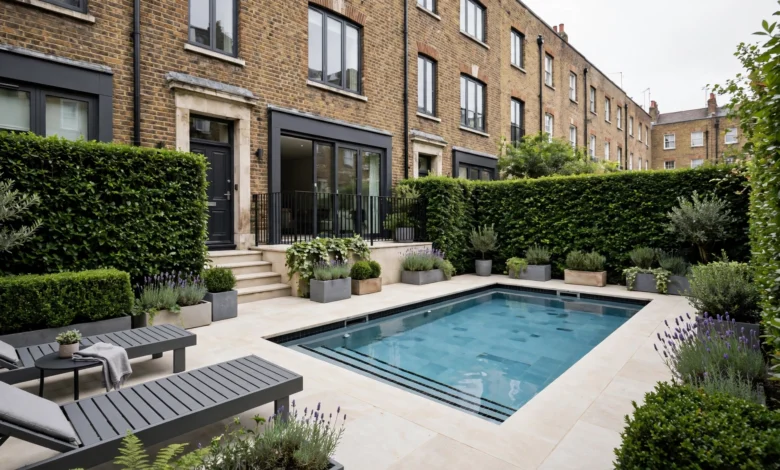
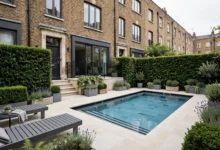
Given how tight many London gardens are, space-efficient pool design matters more here than almost anywhere else. Options worth considering include:
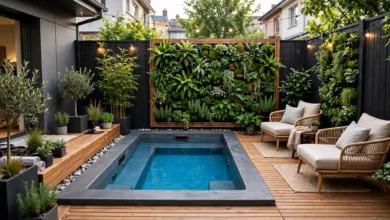
- Plunge pools – A smaller footprint that still delivers a genuine cooling-off spot without dominating a compact garden.
- Lap pools – A narrow, elongated design that makes efficient use of a long, narrow London garden.
- Basement conversions – Making use of underground space that would otherwise go unused, particularly in properties with limited garden area altogether.
12. Get Insurance and Liability Sorted Before Filling the Pool
Once your pool is built, standard home insurance policies don’t always automatically cover pool-related risks, including structural damage, liability for injuries, or specific weather-related issues relevant to the UK climate. It’s worth speaking directly with your insurer before completing construction to confirm what’s covered and what additional endorsement, if any, your policy needs. This is a step many first-time pool owners overlook until after an incident occurs, which is exactly when it becomes most costly.
Quick Planning Checklist for London Pool Owners
Before finalising your project, run through the following:
- Confirm planning status – permitted development, formal planning permission, or listed building consent.
- Check party wall obligations if excavation is near a shared boundary.
- Budget for heating and covers given London’s cooler climate.
- Plan for building regulations approval, separate from planning permission.
- Account for hard water in your ongoing maintenance plan.
- Follow PWTAG guidance for water treatment and safety.
- Confirm access and delivery logistics before committing to a build date.
Conclusion
Swimming pool tips for homeowners in London ultimately come down to planning around the city’s specific constraints rather than following generic pool advice built for warmer, more spacious settings. Understanding when planning permission and building regulations apply, accounting for party wall obligations on terraced properties, budgeting realistically for heating in the UK climate, and following recognised water treatment standards like PWTAG’s Code of Practice all help avoid the costly mistakes that catch London pool owners off guard. Whether you’re building a compact garden plunge pool or converting a basement into a full indoor pool, getting the regulatory and practical fundamentals right from the outset is what turns a London pool project from a stressful undertaking into a genuinely well-used addition to your home.