15 Red Flags to Avoid When Choosing a Home Builder
15 red flags to watch for when choosing a home builder, from vague quotes to pressure tactics, before you sign a contract.
15 Red Flags to Avoid When Choosing a Home Builder
Spotting red flags early in the process of choosing a home builder can save you from months of stress, blown budgets, and unfinished work. Most homeowners only build or renovate a handful of times in their life, which means there’s rarely a chance to learn these warning signs through experience before it actually matters. By the time a problem becomes obvious, the deposit is often already paid and the contract is already signed.
The reassuring part is that unreliable builders tend to show the same patterns over and over. Vague quotes, pressure to sign quickly, reluctance to provide licensing details, and unrealistic timelines all show up again and again in homeowner complaints and industry data. None of these signs require special expertise to spot. You just need to know what to look for and be willing to walk away when something doesn’t add up, even if the price looks appealing.
This article covers 15 specific red flags to watch for when choosing a home builder, along with what to do if you spot one and how to properly vet a builder before signing anything. Whether you’re planning a new build, a major renovation, or a home extension, these warning signs apply across almost every type of residential construction project. By the end, you’ll have a practical checklist you can use to filter out risky builders before they ever get near your budget or your home.
Why Watching for Red Flags Matters Before You Sign
A construction contract is one of the largest financial commitments most homeowners will ever sign, and once it’s in place, walking away becomes far more expensive and complicated. This is exactly why catching warning signs during the quoting stage, before any money changes hands, matters so much.
Builders who exhibit multiple red flags are statistically far more likely to:
- Deliver work that falls short of the agreed scope or quality
- Run significantly over budget through poorly explained variations
- Miss deadlines without clear communication
- Leave a project unfinished if their business runs into financial trouble
Recognising these patterns early gives you the chance to choose a different builder before you’ve committed any money, rather than trying to manage the fallout after the fact.
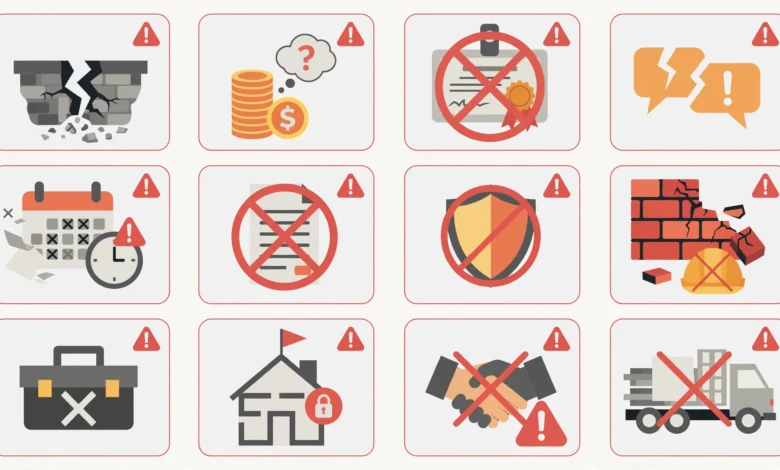
15 Red Flags to Watch for When Choosing a Home Builder
1. No Verifiable License or Refusal to Share It
A trustworthy builder has no reason to hesitate when asked for their licence number. If a builder is cagey about sharing this information, or the name on their documents doesn’t match what’s on the quote, treat it as an immediate warning sign. Most regions have a free online tool to verify licensing status directly with the regulator.


2. Missing Insurance or Warranty Documentation
Ask for proof of liability insurance and any required home warranty coverage before paying a deposit. A builder who can’t produce this documentation, or gives vague answers about it, is leaving you financially exposed if something goes wrong mid-project.
3. Demands for a Large Upfront Deposit
Most regions cap how much a builder can legally request as a deposit, often somewhere between 5% and 10% of the contract value. A request for a much larger upfront payment is one of the most common warning signs associated with builders who later disappear or run into financial trouble before completing the work.
4. Vague or Non-Itemised Quotes
A quote that lists a single lump-sum figure with no breakdown of materials, labour, and inclusions makes it almost impossible to know what you’re actually paying for. This vagueness also makes it easier for a builder to add costly “variations” later that should have been included in the original scope.
5. Pressure to Sign Quickly
Reputable builders understand that a construction contract is a major decision and will give you time to review it properly, including having it checked by a solicitor if you choose to. Pressure to sign on the spot, or claims that a quoted price is only valid for 24 hours, is a manipulation tactic more than a genuine business practice.
6. No Fixed Business Address
A builder operating without a verifiable business address, or one who only communicates through a personal mobile number with no company details, is harder to hold accountable if problems arise later. Legitimate, established builders are generally easy to find through a business registration search.
7. Poor or Inconsistent Online Reviews
A handful of negative reviews isn’t necessarily disqualifying, since even good builders occasionally have an unhappy client. What matters more is the pattern. Repeated complaints about unfinished work, poor communication, or unresolved disputes across multiple review platforms are a much stronger signal than a single bad review.
8. Reluctance to Provide References or Show Past Work
A home builder confident in their work will happily connect you with past clients or show you completed projects in person. Hesitation here, or only offering photos rather than addresses you can actually visit, suggests they may not want you speaking with people who’ve worked with them before.
9. Slow, Evasive, or Inconsistent Communication
How a builder communicates during the quoting stage is usually a preview of how they’ll communicate once you’re under contract. Watch for slow response times, vague answers to direct questions, or being passed between different staff members with no consistent point of contact.
10. Unusually Low Quotes Compared to Others
If one quote comes in significantly lower than every other builder you’ve spoken to, it’s worth asking why. In many cases, a very low quote either excludes items included in competing quotes, uses lower-grade materials, or is intentionally underpriced to win the job, with the expectation of recovering costs later through variations.
11. Refusal to Put Agreements in Writing
Verbal promises about inclusions, timelines, or pricing mean very little if they’re not documented in the contract. A builder who resists putting agreed changes in writing, or who says “don’t worry, we’ll sort it out” when you ask for documentation, is setting up a situation where disputes become difficult to resolve later.
12. High Staff or Subcontractor Turnover
Ask how long a builder has worked with their core trades. Frequent turnover among subcontractors can lead to inconsistent quality and scheduling delays, since the builder is constantly onboarding new tradespeople who aren’t familiar with their standard processes.
13. Unrealistic Timeline Promises
Be cautious of any builder promising a significantly faster completion time than every other quote you’ve received, especially without a clear explanation. Unrealistic timelines are often used as a sales tactic and rarely hold up once the project is actually underway.
14. Poor Jobsite Organisation on Past or Current Projects
If you’re able to visit an active jobsite, pay attention to how organised and safe it looks. A chaotic, cluttered, or clearly unsafe site often reflects broader issues with how a builder manages projects, not just how tidy their crew happens to be that day.
15. Avoiding Discussion of Warranty and Defects Process
A reliable builder should be able to clearly explain what happens if a defect appears after handover, including timeframes and how claims are handled. Vague or dismissive answers about warranty coverage suggest the builder may not intend to stand behind their work once final payment has been made.
What To Do If You Spot a Red Flag
Spotting one of these warning signs doesn’t automatically mean you need to rule a builder out completely, but it should prompt further investigation before moving forward. Consider these steps:
- Ask direct follow-up questions. Give the builder a chance to explain or clarify before assuming the worst.
- Verify independently. Check licensing, insurance, and business registration through the relevant regulator rather than relying on documents the builder provides.
- Get a second opinion. Ask a solicitor or independent building consultant to review the contract if something feels off.
- Compare against other quotes. If a red flag involves pricing or timeline, see how it stacks up against your other shortlisted builders.
- Trust the pattern, not a single incident. One red flag might have a reasonable explanation. Multiple red flags together are a much stronger signal to walk away.
How to Vet a Builder Properly From the Start
The best way to avoid these red flags altogether is to build a proper vetting process into your search from the beginning, rather than reacting to warning signs after they’ve already appeared.
- Get at least three detailed, itemised quotes before comparing anything else
- Verify licensing and insurance independently, not just through documents the builder supplies
- Visit completed projects in person rather than relying on photos
- Call at least two past clients directly and ask specific questions about budget, timeline, and communication
- Check industry association membership, such as the National Association of Home Builders (NAHB), which requires members to meet ongoing standards
- Review complaint history through a resource like the Better Business Bureau, which tracks how businesses respond to and resolve customer disputes
Following this process consistently across every builder you consider makes it far easier to spot red flags early, before they cost you time, money, or peace of mind.
Frequently Asked Questions
Is one red flag enough reason to rule out a home builder? Not necessarily. A single red flag might have a reasonable explanation, but it’s worth asking direct questions before proceeding. Multiple red flags together are a much stronger reason for concern.
What’s the most serious red flag on this list? A builder who can’t or won’t verify their licence and insurance is the most serious, since it removes almost all legal protection you’d otherwise have if something goes wrong.
Should I always choose the builder with the fewest red flags? Generally yes, but weigh red flags alongside the overall picture, including quote detail, past work quality, and communication style, rather than treating it as a simple checklist score.
Can a good builder have one negative review? Yes, and it’s normal. Focus on patterns across multiple reviews and how the builder responded to complaints, rather than dismissing a builder over a single isolated review.
Conclusion
Learning to recognise these 15 red flags before choosing a home builder puts you in a much stronger position to avoid budget blowouts, delays, and disputes down the line. From unverifiable licensing and vague quotes to pressure tactics and unrealistic timelines, these warning signs tend to appear well before a contract is signed, which means there’s almost always a chance to catch them if you know what to look for. Taking the time to verify credentials independently, speak with past clients, and read every contract carefully remains the most reliable way to separate a trustworthy builder from one that’s likely to cause problems later.