10 Tips for Managing a New Home Build
A new home build runs smoother with the right planning. Ten practical tips help you manage budget, timeline, and decisions with confidence.
New Home Build: 10 Essential Tips for a Successful Project
Managing a new home build is one of the most rewarding and, at the same time, one of the most demanding projects a homeowner will ever take on. Between coordinating with your builder, tracking a budget that can shift week to week, and making dozens of decisions about materials and finishes, it’s easy to feel like you’re juggling more than you signed up for. The good news is that most of the stress that comes with building a home is preventable. It usually comes down to a lack of structure early on, not bad luck.
This article walks through ten practical, field-tested tips for managing a new home build from groundbreaking to final walkthrough. These aren’t abstract ideas, they’re the kind of guidance experienced builders and project managers actually give homeowners who ask how to keep a build on track. We’ll cover how to set a realistic budget and timeline, how to communicate effectively with your builder, what to watch for during each construction phase, and how to avoid the small mistakes that tend to snowball into bigger problems.
Whether this is your first time building a home or you’ve done it before and want to avoid repeating past headaches, these tips will help you stay organized, informed, and in control of the process. Let’s get into it.
1. Set a Realistic Budget Before You Fall in Love With Anything
The single most important step in managing a new home build happens before construction even starts. Many homeowners fall in love with a design or a set of finishes before they’ve nailed down what they can actually afford, and that’s where budgets go sideways fast.
- Get a detailed, itemized estimate from your builder, not just a rough total
- Set aside a contingency fund of 10 to 20 percent for unexpected costs
- Separate “must-have” items from “nice-to-have” upgrades so you know where to cut if needed
A realistic budget isn’t just a number, it’s a decision-making tool you’ll use throughout the entire project.
Understand Where Costs Typically Creep Up
Site work, permitting fees, and upgraded fixtures are the most common places where a home building budget quietly grows. Ask your builder directly which parts of the project have historically gone over budget on similar homes, and build in extra room there specifically.
2. Choose the Right Builder and Vet Them Thoroughly
Your builder is the single biggest factor in how smoothly your new home build goes. A skilled, communicative builder can make even a complex project feel manageable, while a disorganized one can turn a simple build into a stressful ordeal.

Check Licensing and Reviews
Confirm your builder is properly licensed in your state and look into their history of completed projects. Reviews from past clients, especially ones who built a similar style or size of home, tell you a lot about what to expect.
Ask About Their Communication Style
Before signing a contract, ask how often you’ll receive updates and through what method. Some builders use project management apps with real-time photos and schedules, while others rely on weekly phone calls. Neither approach is wrong, but you should know what you’re signing up for.
3. Build a Realistic Timeline With Milestones
A new home build timeline should never be a single end date. It should be broken into phases so you can track progress and catch delays early instead of discovering them at the finish line.
- Site prep and foundation
- Framing and roofing
- Rough-in electrical, plumbing, and HVAC
- Insulation and drywall
- Interior finishes and fixtures
- Final inspections and walkthrough
Ask your builder to map your specific project against this general sequence so you know roughly when to expect each phase, and what could push it back.
4. Establish a Clear Communication System With Your Builder
Miscommunication is behind a huge percentage of disputes that happen during home construction. Managing a new home build well means setting up a communication system before problems arise, not after.
- Agree on a primary point of contact on the builder’s team
- Set a recurring check-in, whether weekly or biweekly
- Keep a written log of decisions, change orders, and verbal agreements
Text messages and phone calls are fine for quick questions, but anything involving cost changes or material substitutions should be documented in writing.
5. Understand Your Contract Before You Sign It
Your contract is the foundation of the entire build, and it’s worth reading closely, even the boring parts. Look specifically for:
- A detailed scope of work with specific materials, not vague allowances
- A clear payment schedule tied to completed milestones, not arbitrary dates
- Change order procedures, including how cost adjustments are calculated
- Warranty terms for structural components and finishes
If anything is unclear, ask for clarification in writing before signing. The U.S. Department of Housing and Urban Development publishes helpful general guidance on what homeowners should understand before entering a construction contract, which is worth a look if this is your first build. You can find more detail on their site at hud.gov.
6. Track Every Decision and Change Order
A new home build involves hundreds of small decisions, and it’s easy to lose track of what’s already been decided versus what’s still open. Keeping a running decision log prevents costly miscommunications.
Create a Simple Decision Tracker
A spreadsheet with columns for the decision, the date it was made, who approved it, and any cost impact keeps everyone on the same page. This becomes especially useful when multiple family members are weighing in on finishes and selections.
Watch for Scope Creep
Small upgrades add up fast. A slightly better faucet here, an upgraded tile there, none of it feels significant in the moment, but by the time you’re finishing the home, those small additions can total thousands of dollars. Track every change order against your original budget so you’re not surprised at the end.
7. Visit the Job Site Regularly
Nothing replaces seeing your home build in person. Site visits let you catch issues early, ask questions about details you can’t fully picture from a floor plan, and build a working relationship with the crew.
- Schedule visits around key milestones, like before drywall goes up
- Take photos at every stage, especially of anything that will be covered up later
- Bring a notebook or use your phone to jot down questions for your builder
Just be mindful of site safety and check with your builder about when visits are appropriate, since active job sites can be hazardous.
Document Before Drywall Goes Up
This is one of the most valuable pieces of advice for managing a new home build. Once walls are closed up, you lose visibility into wiring, plumbing, and insulation. Photograph everything at this stage so you have a reference if issues come up years down the road.
8. Plan for Inspections and Understand What They Cover
Inspections aren’t just a formality, they’re a checkpoint that protects your investment. A well-managed new home build treats each inspection as a milestone worth understanding, not just a box to check.
Typical inspections during a residential build include:
- Foundation inspection
- Framing inspection
- Rough-in inspections for electrical, plumbing, and mechanical systems
- Insulation inspection
- Final inspection and certificate of occupancy
Ask your builder what happens if an inspection fails and how that affects your timeline. Knowing the process ahead of time removes a lot of anxiety if a minor issue comes up.
9. Prepare for Weather and Supply Delays
Almost every new home build experiences some kind of delay, whether it’s weather, material shortages, or labor availability. Managing expectations around this from the start makes the inevitable delays far less frustrating.
- Ask your builder how weather delays typically affect the schedule in your region
- Confirm whether major materials, like windows or cabinetry, have been ordered early to avoid backorders
- Build flexibility into your moving timeline, especially if you’re selling or leasing your current home
A builder who’s upfront about likely delays is more trustworthy than one who promises a perfect, uninterrupted schedule.
10. Do a Thorough Final Walkthrough Before Closing
The final walkthrough is your last chance to catch issues before you take ownership of the home. Managing a new home build properly means treating this step seriously, not rushing through it because you’re excited to move in.
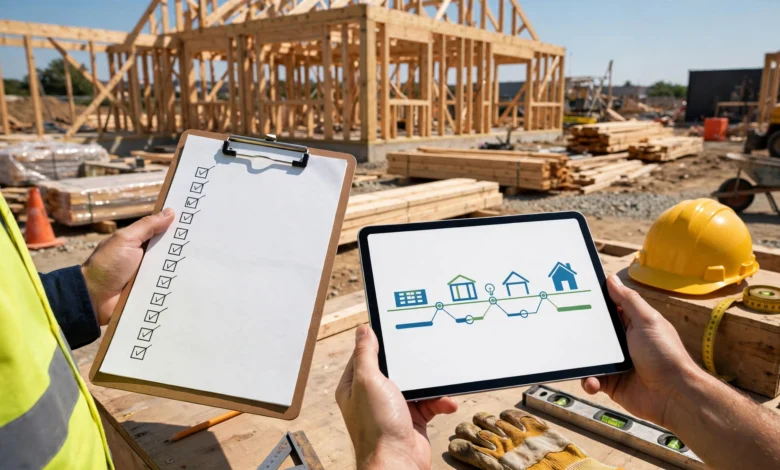
Create a Punch List
Walk through every room with a checklist, testing outlets, opening and closing doors and windows, and checking for paint touch-ups or finish issues. Anything that isn’t right should go on a written punch list with a timeline for the builder to address it.
Confirm Warranty Documentation
Before closing, make sure you have copies of all warranties, appliance manuals, and any maintenance instructions specific to your home’s systems. The National Association of Home Builders offers useful general information on what a standard new home warranty should include, which is a good reference point when reviewing your own paperwork. You can read more at nahb.org.
Final Thoughts on Managing a New Home Build
A new home build goes smoothly when homeowners approach it with structure, not just enthusiasm. Setting a realistic budget, vetting your builder carefully, tracking decisions in writing, and staying engaged through site visits and inspections all work together to keep the project on track. Delays and surprises are part of nearly every build, but they’re far easier to handle when you’ve planned for them ahead of time. By applying these ten tips, you’ll be in a much stronger position to manage your build with confidence and end up with a home that reflects the decisions you actually intended to make, not ones rushed under pressure.