Swimming Pool Design Trends Popular Across Queensland
Swimming pool design trends shaping Queensland backyards, from plunge pools and magnesium water to frameless glass fencing and alfresco living.
Swimming Pool Design Trends: 10 Stunning Styles Popular Across Queensland
Swimming pool design trends in Queensland tend to move a little differently than the rest of Australia, and the reason comes down almost entirely to climate. With a swimming season that stretches nearly year-round in the south-east and genuinely never ends further north, Queensland homeowners treat a pool less like a summer indulgence and more like a permanent extension of the house. That changes what people actually want from a design. Durability against heat, humidity, and seasonal storms matters as much as how a pool looks in photos.
At the same time, shrinking block sizes in Brisbane, the Gold Coast, and Sunshine Coast growth corridors have pushed homeowners toward smarter, more compact layouts rather than the sprawling backyard pools of decades past. The result is a wave of design choices that balance lifestyle, wellness, and practicality in ways that are fairly specific to this part of the country.
This guide walks through the ten pool design trends currently shaping Queensland backyards, from space-saving plunge pools and skin-friendly magnesium water systems to frameless glass fencing and alfresco entertaining zones built around the pool itself. Some of these trends are purely aesthetic. Others reflect real practical shifts, like builders choosing concrete over fibreglass for its resilience against Queensland’s climate, or homeowners prioritising water systems that hold up to constant UV exposure. Either way, if you’re planning a new pool or renovating an existing one, these are the trends worth understanding before you start sketching a design.
Why Queensland’s Climate Shapes Its Own Pool Trends
Queensland’s subtropical and tropical zones create conditions most other Australian states don’t deal with year-round. Long swimming seasons mean pools get more actual use days per year, which shifts homeowner priorities toward durability and low-maintenance systems rather than purely seasonal features. Heavy summer storms, intense UV exposure, and high humidity all put more strain on pool surfaces, equipment, and surrounding materials than a cooler, drier climate would.
This is part of why concrete pools remain the dominant choice for new construction across the state. They tend to handle ground movement, storm activity, and long-term wear better than fibreglass shells in many Queensland conditions, even though they typically cost more and take longer to build. Builders across South East Queensland consistently point to this durability as the deciding factor for homeowners weighing their options.
1. Plunge Pools for Shrinking Blocks
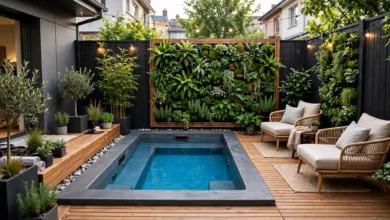
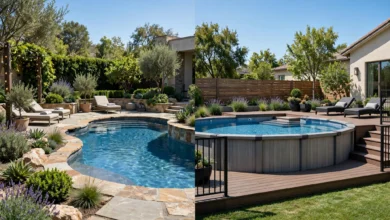
As housing blocks across Brisbane and the Gold Coast get smaller, plunge pools have become one of the most requested solutions for homeowners who still want a pool without giving up their entire backyard. These compact designs, typically 3 to 4 metres wide and deep enough to submerge comfortably, deliver most of the lifestyle benefit of a full-size pool at a fraction of the water use, footprint, and running cost.
Plunge pools work particularly well for:
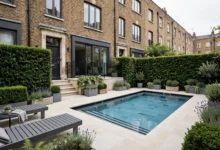
- Narrow inner-city blocks in suburbs like West End or New Farm
- Renovation projects where a full lap pool isn’t structurally or spatially realistic
- Homeowners prioritising a low-maintenance water feature over serious swimming distance
2. Magnesium Mineral Pools
One of the more distinctive shifts in Queensland pool design over the past couple of years has been the move toward magnesium pools, which use a mineral-based system instead of traditional chlorine dosing. Homeowners consistently describe the water as softer on skin and eyes, with less of the sharp chemical smell associated with standard chlorine pools.
Magnesium systems appeal to buyers thinking about wellness as much as aesthetics, and they pair well with the broader shift toward pools designed to feel more like a spa experience than a simple backyard feature. It’s not a maintenance-free system, but for many Queensland homeowners the trade-off in comfort has made it worth the switch.
3. Frameless Glass Pool Fencing
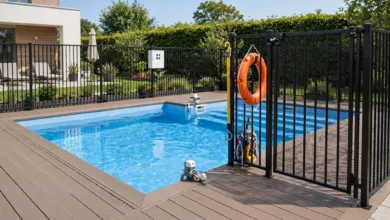
Frameless glass fencing has moved from a premium upgrade to close to a default choice for new Queensland pool installations, and there are a few clear reasons why. It meets Australian pool safety standards while keeping sightlines completely open, which matters for families supervising young children and for anyone who simply wants an uninterrupted view from the house to the water.
Compared to older fencing styles, frameless glass:
- Preserves views of the pool and surrounding landscaping from indoor living areas
- Reads as more contemporary alongside modern Queensland home architecture
- Requires less visual clutter around the pool area than framed or mesh alternatives
Because pool fencing in Queensland is governed by strict legal requirements, it’s worth confirming any fencing choice meets current standards before installation rather than after. The Queensland Government publishes clear guidance on pool safety laws and fencing requirements that applies statewide: <a href=”https://www.qld.gov.au/law/laws-regulated-industries-and-accountability/queensland-laws-and-regulations/pool-safety”>Queensland Government pool safety guidance</a>.
4. Sunken Lounges and Wet Deck Areas
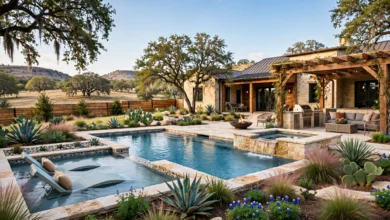
Built-in seating inside the pool itself, whether a sunken lounge with cushioned furniture or a shallow wet deck for lounging in a few inches of water, has become a defining feature of Queensland’s resort-style backyard trend. These features change how a pool actually gets used day to day, turning it into a place for relaxing and entertaining rather than just swimming laps.
Wet deck areas in particular suit Queensland’s climate well, since they let people cool off without fully submerging, which is a common preference during the hottest, most humid stretches of summer.
5. Poolside Kitchens and Fire Features
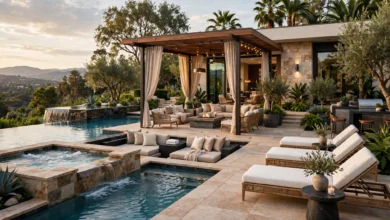
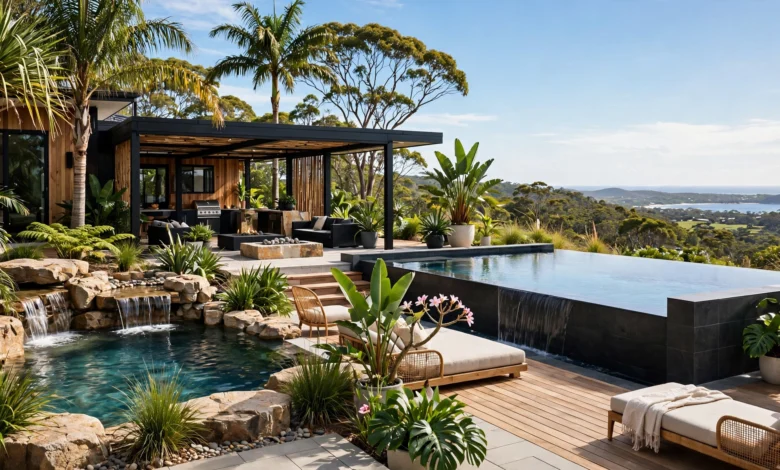
Alfresco entertaining has become almost inseparable from pool design across South East Queensland, with poolside kitchens, built-in fire pits, and covered dining areas increasingly planned alongside the pool itself rather than added later. This reflects how much of Queensland life happens outdoors given the climate, and homeowners are treating the pool area as the true centre of the property rather than a separate feature at the back of the yard.
Common combinations include:
- An outdoor kitchen with a built-in grill, sink, and storage positioned within view of the pool
- A fire pit or fire bowl set back from the water for cooler evenings, which still occur even in a warm climate
- Covered alfresco dining areas that connect the indoor living space to the pool deck
6. Tropical and Resort-Style Poolscaping
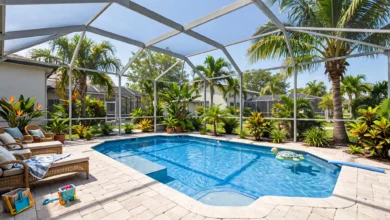
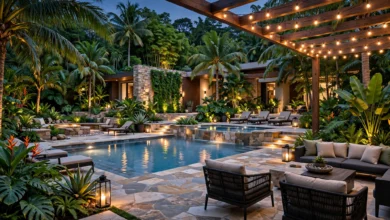
Lush, layered planting around the pool, often featuring palms, strappy tropical foliage, and dense greenery, has become a signature look in Queensland backyard design, particularly in Brisbane’s inner suburbs. This style leans into the state’s natural climate advantage rather than fighting it, using plant choices that thrive in heat and humidity to create a genuinely tropical, resort-like feel without requiring the constant upkeep that a more temperate garden style would demand in these conditions.
Materials matter here too. Sandstone stepping stones, travertine pavers, and timber-look composite decking are common choices because they stay relatively cool underfoot and hold up to constant sun and moisture exposure better than some other paving options.
7. Curved and Organic Pool Shapes
While rectilinear, architectural pool shapes remain popular nationally, Queensland has also seen a genuine swing toward curved, organic pool forms that soften the overall backyard design. Curved edges pair naturally with the tropical landscaping style common across the state and tend to feel less formal, which suits the relaxed, indoor-outdoor lifestyle many Queensland homes are built around.
This trend often shows up alongside built-in lounges and seamless edges, creating a design language that feels more like a natural swimming hole than a traditional geometric pool.
8. Smart Pool Automation
Smart technology has become a standard expectation in new Queensland pool builds rather than a luxury add-on. Homeowners increasingly expect to control heating, filtration, and lighting from a phone, and to receive automatic alerts if water chemistry drifts out of range or unusual water loss suggests a leak.
Given Queensland’s climate, automation carries a practical advantage beyond convenience. Pools here run for more months of the year than in cooler states, so efficient, well-managed equipment has a bigger cumulative impact on running costs. Reviewing general guidance on efficient pool equipment, including variable-speed pumps and smart filtration, is a useful step before finalising an equipment package: <a href=”https://www.energy.gov/energysaver/swimming-pools”>energy.gov’s guide to swimming pool efficiency</a>.
9. Indoor-Outdoor Design Integration
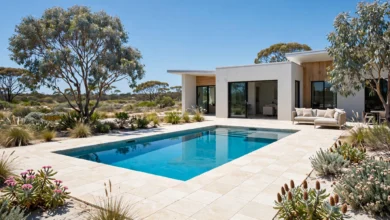
Increasingly, Queensland pools are being planned at the same time as the home itself rather than added afterward, which allows for genuine indoor-outdoor flow between living spaces and the pool deck. Large sliding or stacking doors that open living areas directly onto the pool, matching flooring materials inside and out, and sightlines designed so the pool is visible from key living spaces all contribute to this integrated feel.
This approach reflects a broader shift in how Australian homeowners think about pools generally, not as a separate backyard feature but as a central part of the home’s architecture and daily use.
10. Durable, Climate-Ready Construction
Beyond the visual trends, one of the more practical shifts in Queensland pool design is simply a growing emphasis on construction choices suited to the local climate. This includes:
- Concrete shells over fibreglass in many builds, for better resilience against ground movement and storm conditions
- UV-stable fencing and fixtures, since constant sun exposure degrades lower-quality materials faster in Queensland than in cooler states
- Robust drainage design around the pool deck to handle heavy seasonal downpours without pooling water or eroding surrounding landscaping
- Salt or magnesium systems that reduce the intensity of chemical maintenance during long, hot swimming seasons
Choosing a licensed, experienced local builder matters more here than the specific style you pick, since a poorly constructed pool will show problems from Queensland’s climate faster than it would somewhere milder. The Queensland Building and Construction Commission maintains licensing checks and consumer guidance that’s worth reviewing before committing to any builder: <a href=”https://www.qbcc.qld.gov.au/”>QBCC licensing and consumer resources</a>.
Bringing These Swimming Pool Design Trends Together
Not every trend on this list needs to make it into a single project, and in practice, the best-designed Queensland pools tend to combine a handful of complementary choices rather than chasing every trend at once. A few sensible starting points:
- If you’re working with a smaller block, prioritise a plunge pool with a wet deck or sunken lounge rather than trying to fit a full lap pool onto a tight footprint
- If wellness and low-maintenance water quality matter most, look closely at a magnesium mineral system before defaulting to standard chlorine
- If entertaining is the priority, plan the pool alongside a poolside kitchen and fire feature from the start, rather than retrofitting them later
- Regardless of style, choose construction materials and a builder suited to Queensland’s climate first, since durability issues will undercut even the most beautifully designed pool within a few years
Conclusion
Swimming pool design trends across Queensland are shaped as much by climate and lifestyle as by aesthetics, which is part of what makes them distinct from trends in cooler parts of the country. Plunge pools for smaller blocks, magnesium water systems, frameless glass fencing, and alfresco entertaining zones built around fire features and outdoor kitchens all reflect a state where the pool genuinely gets used for most of the year rather than a few months in summer. Layer in tropical landscaping, smart automation, and construction choices built to handle heat, humidity, and storms, and you get a style of pool design that’s practical as much as it is beautiful. Whatever combination of these trends fits your own backyard and budget, prioritising durability and genuine day-to-day usability will serve you better in the long run than chasing every trend at once.