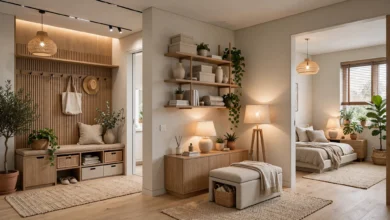
25 Design Ideas That Are Taking Over Pinterest and Instagram
25 Design Ideas That Are Taking Over Pinterest and Instagram right now, from bold color palettes to sculptural furniture and cozy textures.
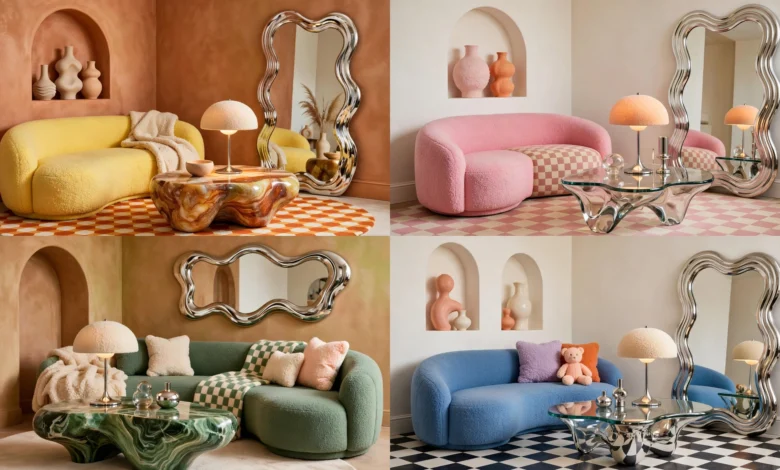
25 Design Ideas That Are Taking Over Pinterest and Instagram right now look nothing like the quiet, all-neutral feeds of a few years ago. Scroll through either platform today and you’ll find bold colour combinations, sculptural furniture, fantasy-inspired bedrooms and unapologetically personal spaces replacing the safe, catalogue-style interiors that once dominated home boards. The shift is loud, deliberate and, according to platform data, remarkably good at predicting what actually shows up in real homes months later.
That predictive power is worth taking seriously. Pinterest’s trend team analyses billions of searches and saves each year, and historically, <cite index=”21-1″>roughly 88% of its trend predictions over the past six years have come true</cite>. Instagram tends to follow closely behind, turning the same aesthetics into viral reels, room tours and before-and-after transformations. Together, the two platforms have become the clearest early signal for where home design is actually heading, well before it reaches showrooms or renovation shows.
This article breaks down the full list of 25 Design Ideas That Are Taking Over Pinterest and Instagram, grouped into five clear categories: bold colour and pattern, fantasy-inspired interiors, culturally rooted design, nature and sensory comfort, and the small statement details showing up in nearly every renovation reel. Each idea includes a quick explanation of what it looks like and how to bring it into a real home, whether you’re chasing a full room refresh or just want one standout feature to try this year.
To put this list together, we looked at how the highest-ranking design coverage and platform trend reports are currently categorising what’s popular, then cross-referenced those categories against the aesthetics showing up repeatedly across saved Pinterest boards and Instagram renovation content. That process is why the list below leans on named, searchable aesthetics like Vamp Romantic or Afrohemian Decor rather than vague descriptors like “cozy” or “modern,” since those specific terms are what people are actually typing into search bars and hashtags right now.
1. Bold Colour and Pattern Take Over the Feed
After years of restrained neutrals, saturated colour and playful pattern are dominating home content on both platforms. This category leans maximalist, but with more intention than the “more is more” trends of the past.
The five ideas defining this category:
- Color-Forward Maximalism – Deep, saturated wall colours paired with equally bold furniture and textiles, used to create rooms with real personality rather than a single accent wall.
- Glitchy Glam – A digital-meets-physical aesthetic featuring iridescent finishes, holographic accents and unexpected colour clashes, popular with younger homeowners furnishing their first space.
- Gimme Gummy – Soft, candy-toned colour palettes in pinks, purples and blues, often paired with rounded furniture for a playful, nostalgic feel.
- FunHaus – Circus-inspired interiors built around bold stripes and sculptural silhouettes; Pinterest has reported <cite index=”22-1″>searches for “circus interior” jumping 130 percent, with interest in striped ceilings rising 40 percent</cite>.
- Red Bathrooms – A specific but fast-growing micro-trend, with fully red-tiled or red-painted bathrooms showing up repeatedly in renovation content this year.
2. Fantasy-Inspired and Escapist Interiors
A clear thread running through both platforms right now is escapism. Homeowners are building rooms that feel like a departure from daily life, whether that means gothic drama or cosmic wonder.
The five ideas defining this category:
- Vamp Romantic – Dark, moody interiors built around rich wood tones, velvet upholstery and dramatic lighting, drawing on gothic romance references.
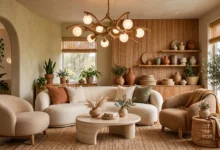
- Mystic Outlands – Grounded, nature-inspired spaces with earthy tones and organic textures, positioned as a calmer counterpoint to the more theatrical trends on this list.
- Extra Celestial – Fully cosmic interiors featuring deep blues, metallics and starry accents, often used in bedrooms and reading nooks.
- Space-y Spaces – A broader take on the celestial trend, with holographic accents, bubble chairs and iridescent accessories; Pinterest recorded <cite index=”22-1″>searches for “alien core aesthetic” up 80 percent</cite> among Gen Z and millennial users.
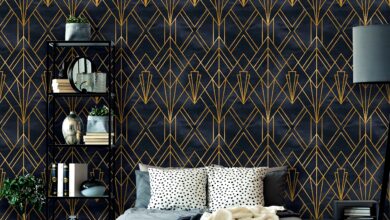
- NeoDeco – A modern take on Art Deco glamour, combining symmetry, polished finishes and sculptural lighting for a cleaner, more architectural feel than the original style.
3. Culturally Rooted and Heritage-Inspired Design
Alongside the bolder, more theatrical trends, there’s a strong pull toward interiors that reflect personal heritage and genuine craftsmanship rather than trend-driven purchases.
The five ideas defining this category:
- Afrohemian Decor – A blend of African and bohemian influences built around texture, artisan-made pieces and cultural storytelling; interest in this look has grown as <cite index=”21-1″>people seek meaning and intention in their homes through personal heritage and artisan-made pieces</cite>.
- Grandmillennial Style – Traditional details like fringe, chintz and antique furniture reworked with a fresher, less formal colour palette.
- Global Eclectic – Rooms that combine pieces sourced from different cultures and eras, chosen for personal significance rather than a single cohesive theme.
- Artisan Craft Pieces – Handmade ceramics, woven textiles and small-batch furniture, often shown in Instagram reels documenting the making process alongside the finished room.
- Vintage Revival – Secondhand and antique furniture mixed confidently with modern pieces, reflecting a broader move away from fast furniture across both platforms.
4. Nature, Texture and Sensory Comfort
Not every trending idea is loud. A significant share of what’s circulating on Pinterest and Instagram right now is about making a home feel calmer and more physically comfortable to be in.
The five ideas defining this category:
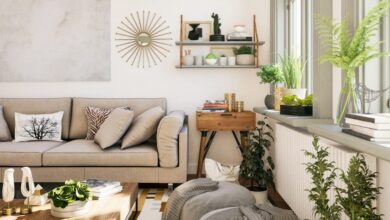
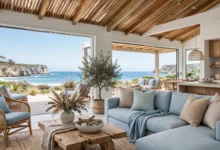
- Biophilic Layouts – Rooms designed around natural light, greenery and views, with houseplants used as a central design feature rather than an afterthought.
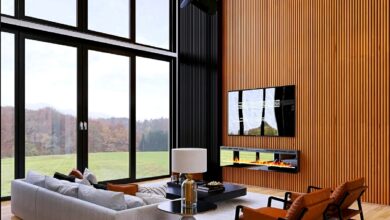
- Tactile, Layered Textures – Boucle upholstery, ribbed wood panelling and woven rugs combined in a single room to add depth without relying on colour.
- Curved, Soft-Edged Furniture – Rounded sofas, arched mirrors and oval tables replacing the sharp angles that defined interiors a few years ago.
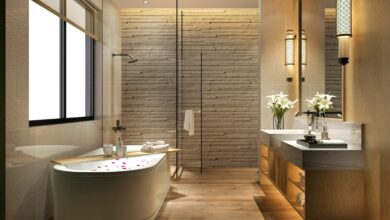
- Warm Minimalism – A softer alternative to stark minimalism, using fewer pieces but warmer tones and natural materials to avoid feeling cold or empty.
- Indoor Micro-Gardens – Small dedicated plant corners, living walls or moss panels, frequently shown in Instagram “room tour” content as a low-cost way to add life to a space.
5. Small Statement Details Showing Up Everywhere
The final category covers smaller, more affordable ideas that appear constantly across renovation reels and before-and-after posts, often as the single detail that makes a whole room feel current.
The five ideas defining this category:
- Arched Doorways and Niches – A soft architectural detail replacing standard rectangular openings in hallways, kitchens and built-in shelving.
- Checkerboard Flooring – Black-and-white or two-tone tile patterns appearing in kitchens, bathrooms and entryways, often paired with more traditional cabinetry for contrast.
- Statement Ceilings – Painted, papered or panelled ceilings used as a fifth wall, from striped circus-inspired designs to deep, moody colours.
- Layered, Sculptural Lighting – Multiple smaller light sources, such as wall sconces and sculptural table lamps, replacing a single central overhead fixture.
- Sculptural Furniture Pieces – One statement chair, table or light fixture used as the visual anchor of a room, rather than spreading the budget evenly across every piece.
How to Choose Which of These 25 Design Ideas Fits Your Home
With so many aesthetics on this list, it helps to narrow things down before buying anything. Start by looking at the mood you actually want a room to create, rather than picking the trend with the most saves or likes. A home office benefits from calmer, focus-friendly ideas like Warm Minimalism or Mystic Outlands, while a living room or dining space can usually handle something bolder, like Color-Forward Maximalism or NeoDeco, without feeling overwhelming.
It’s also worth considering how a trend will age alongside your existing furniture. Ideas built around texture and natural materials, such as Biophilic Layouts or Tactile, Layered Textures, tend to sit comfortably next to almost anything you already own. Fully committed aesthetics like Vamp Romantic or Extra Celestial work best when a room is being built from scratch, since mixing them halfway with an unrelated existing scheme rarely reads as intentional.
Why These 25 Design Ideas Move So Quickly From Screen to Home
Both platforms function differently from traditional design media, and that’s part of why these ideas spread so fast. Pinterest is largely search-driven, meaning its trend reports reflect what people are actively planning for, not just admiring. Instagram, by contrast, tends to amplify finished results through renovation reels and room tours, which makes a trend feel achievable rather than aspirational.
The two platforms also reinforce each other in a way that speeds up adoption. Someone might first encounter Vamp Romantic or Afrohemian Decor as a saved Pinterest board full of colour palettes and material references, then see the same aesthetic executed in a real, lived-in space through an Instagram renovation reel a few weeks later. That combination of planning tool and proof of concept is a big part of why design trends move from screen to home so quickly compared to previous decades, when ideas typically took months or years to filter down from magazines and showrooms into everyday houses.
It also explains why the list above skews toward ideas that are relatively easy to execute in stages. Full-room transformations are rare in this kind of content. Instead, most of the accounts and boards driving these trends focus on incremental, budget-conscious changes: a repainted ceiling, a single piece of sculptural furniture, or a new lighting layout, each documented as its own post or pin rather than saved for a full renovation reveal.
A few practical tips for using these trends well:
- Pick one or two ideas from this list rather than combining all 25 in a single room.
- Use bold, statement trends like Vamp Romantic or FunHaus in smaller spaces first, such as a powder room or reading nook.
- Balance louder aesthetics with a calmer material palette, so the space still feels liveable day to day.
- Treat heritage-inspired trends, like Afrohemian Decor or Vintage Revival, as an invitation to use pieces with real personal meaning rather than buying generic “boho” décor.
- Save reference images before shopping, since a clear mood board makes it much easier to stay consistent once you start buying furniture, paint or lighting.
For a closer look at how these ideas are already showing up in real homes, Apartment Therapy’s coverage of the 2026 Pinterest Predicts report breaks down which trends are gaining the most traction. Pinterest’s own 2026 trend forecast is also worth reading in full for the underlying search data behind each aesthetic.
Frequently Asked Questions About Pinterest and Instagram Design Trends
Do Pinterest and Instagram design trends actually last, or are they short-lived? Some do fade quickly, particularly the more theatrical micro-trends like Glitchy Glam or specific colour fads. Others, such as biophilic layouts, warm minimalism and heritage-inspired styles, tend to have staying power because they’re rooted in comfort and personal meaning rather than novelty alone.
How can I try a bold trend without it feeling dated in a year? Apply louder aesthetics through easily changeable elements first, such as cushions, artwork, lighting or a single feature wall, before committing to anything structural or expensive. That way, if a specific trend fades, updating the room doesn’t mean undoing major work.
Are these trends only relevant to renters and small apartments, or do they work in larger homes too? They scale in both directions. Smaller spaces often adopt these ideas through a single statement piece or accent wall, while larger homes have more room to build entire zones, such as a fully realised Vamp Romantic study or an Afrohemian-inspired living room, around one aesthetic.
Which of these 25 ideas is easiest to try on a tight budget? Layered lighting, curved accent furniture and small indoor plant corners tend to offer the biggest visual change for the lowest cost, since none of them require structural work or a full furniture swap.
Conclusion
25 Design Ideas That Are Taking Over Pinterest and Instagram share a common thread once you look past the individual aesthetics: personality over uniformity. Whether it’s the theatrical drama of Vamp Romantic, the cultural depth of Afrohemian Decor, or the quieter comfort of warm minimalism and biophilic layouts, each idea reflects a broader shift away from cookie-cutter interiors toward homes that feel genuinely lived in and expressive. None of them require a full renovation to try, and most can be introduced through a single room, a colour choice or one statement piece, making this an easy list to pull inspiration from regardless of budget or the style of home you’re starting with. Treat it as a starting point rather than a checklist, and let whichever ideas resonate most guide the first change you actually make.