Interior Designer Advice for Renovating a Historic Home in Edinburgh
Interior designer advice for renovating a historic home in Edinburgh covers listed status, conservation rules, and sympathetic materials.
Introduction
Renovating a historic home in Edinburgh is a genuinely different process from updating a modern property, and it catches a lot of homeowners off guard. Edinburgh has more listed buildings per capita than almost any other city in the UK, and a significant share of its housing sits within one of the city’s 46 conservation areas. That means many of the decisions you’d make freely in a newer home, from replacing a window to repainting a wall, may require formal consent before you can touch them.
None of this should put you off. Historic homes in Edinburgh, whether a New Town Georgian flat, a Victorian terrace, or an Old Town tenement, offer a level of craftsmanship and character that’s genuinely hard to replicate. The goal isn’t to avoid change; it’s to make changes that respect the building’s original fabric while still creating a home that works for how you actually live today. Done well, this balance is what makes a renovated historic property feel timeless rather than either frozen in time or stripped of its original identity.
This guide draws together the advice interior designers and conservation specialists consistently give homeowners tackling this kind of project, covering listed building status, sympathetic materials, working with the right professionals, and how to modernise a historic interior without compromising what makes it special in the first place.
1. Understand Your Property’s Listed Status Before You Start
Before making any design decisions, it’s essential to understand exactly what protections apply to your home. Listed status in Scotland is managed by Historic Environment Scotland, which maintains the national register covering more than 47,000 properties.
Listed buildings fall into three categories:
- Category A – buildings of national or international significance, with the highest level of protection
- Category B – buildings of regional importance or significant examples of a particular type
- Category C – buildings of local interest, still requiring consent for most substantial work
A common misconception is that listing only protects a building’s exterior. In practice, many listing descriptions specifically identify interior features, such as cornicing, staircases, or fireplaces, which carry the same level of protection as the facade. Even where a specific feature isn’t named in the listing, substantial internal work still typically requires Listed Building Consent from the City of Edinburgh Council.
2. Check Whether Your Home Sits in a Conservation Area
Listed status and conservation area designation are separate but often overlapping protections. Edinburgh has dozens of conservation areas, including the Old Town, New Town, Dean Village, and Morningside, each protecting the character of the area as a whole rather than any single building.


- Conservation area status can affect exterior changes even if your specific property isn’t individually listed
- Windows, doors, and roofing materials are commonly restricted within conservation areas
- Extensions and additions typically require closer scrutiny to ensure they don’t disrupt the surrounding streetscape
Checking both your property’s individual listing and its conservation area status early on prevents costly surprises once a renovation is already underway.
3. Use Sympathetic, Traditional Materials
One of the most consistent pieces of advice from conservation specialists is that material choice matters as much as design intent. Modern materials often do genuine, long-term damage to historic building fabric, even when the intention is simply repair.
- Lime mortar, not modern cement, should be used for repointing sandstone and stone masonry. Cement is harder than the surrounding stone and traps moisture, accelerating decay rather than preventing it
- Traditional lime plasters and renders are similarly important for interior restoration work, since they allow the building to breathe in a way modern plasters don’t
- Timber sash and case windows, common throughout Edinburgh’s New Town, should generally be repaired rather than replaced, since original joinery is difficult and expensive to replicate convincingly
4. Prioritise Repairs in the Right Sequence
Renovating a historic home works best when tackled in a deliberate order, rather than starting with the most visually exciting rooms first. Getting the sequence wrong can lead to expensive damage to finishes completed too early.
A sensible priority order typically looks like:
- Roof repairs, including lead flashing, stone pointing, and slate replacement, to prevent water ingress
- Structural issues, such as floor joist repair or replacement
- Full electrical rewiring, particularly important in older properties with outdated systems
- Window restoration, including frame and cill repairs
- Restoration of decorative features, such as cornices and ceiling roses
- Interior finishes and styling, once the building’s fabric is secure
5. Preserve Original Features as Design Anchors
Original architectural features are often what give a historic Edinburgh property its character, and they’re worth treating as the foundation of your design plan rather than obstacles to work around.
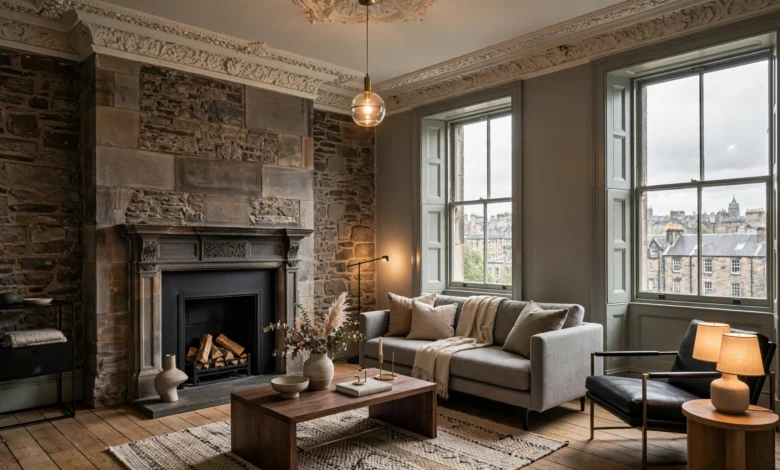
- Cornicing, ceiling roses, and original fireplaces can anchor a room’s design even when the rest of the interior is thoroughly modernised
- Original staircases and balustrades are frequently protected and worth restoring rather than replacing
- Where features have been lost over time, period-correct reinstatement is often possible and can meaningfully improve both character and value
6. Balance Historic Character With Modern Comfort
Preserving a home’s history doesn’t mean living without modern comfort. Interior designers who specialise in period properties consistently emphasise that historic character and contemporary function aren’t mutually exclusive.
- Repurpose existing rooms to suit modern living patterns rather than assuming original room functions must stay fixed
- Consider open-plan layouts where structurally appropriate, while retaining key partition walls that define the building’s original character
- Introduce discreet modern conveniences, such as underfloor heating or updated plumbing, without disrupting visible historic fabric
7. Improve Energy Efficiency Without Damaging the Fabric
Insulating and heating a historic Edinburgh home requires more care than a standard retrofit, since many modern insulation materials trap moisture in ways that damage traditional stone and timber construction.
- Use breathable insulation materials, such as sheep’s wool or hemp, which are sympathetic to a historic building’s fabric
- Consider secondary glazing alongside draught-proofed original sash windows, which can achieve strong thermal performance while preserving the original joinery
- Upgrade heating systems, such as modern radiators or underfloor heating, designed specifically to complement rather than disrupt period interiors
8. Choose Furnishings That Respect the Property’s Era
Extending period authenticity into your interior design choices, not just the structural repairs, meaningfully affects how cohesive the finished home feels.
- Select furnishings, fixtures, and decor that complement your property’s specific era, whether Georgian, Victorian, or Edwardian
- Layer in contemporary pieces thoughtfully rather than filling every room with strictly period-accurate furniture, which can feel more like a museum than a home
- Pay particular attention to lighting, since historic properties were originally designed around very different light sources than modern homes typically use
9. Work With Professionals Experienced in Edinburgh’s Historic Properties
Perhaps the single most important piece of advice for renovating a historic home in Edinburgh is to engage architects, interior designers, and conservation specialists who have direct experience with the city’s specific regulatory framework.
- Look for professionals experienced in negotiating Listed Building Consent applications with the City of Edinburgh Council
- Ask whether they’ve worked directly with Historic Environment Scotland on similar projects
- Confirm experience with the specific materials and techniques traditional Edinburgh properties require, such as lime-based repairs and sash window restoration
- A professional familiar with the local process can often anticipate issues before they become expensive problems mid-project
Organisations such as Edinburgh World Heritage also provide guidance and resources specific to the city’s protected historic areas, which can be a useful starting point when researching your property’s context before appointing a design or conservation professional.
What to Expect From the Consent Process
Understanding the practical side of the approval process helps set realistic expectations before you begin:
- Listed Building Consent is typically required for any work affecting the character of a listed building, inside or outside
- Conservation area consent may be needed separately for certain external changes, even on unlisted properties within a conservation area
- Timelines for consent can vary significantly depending on project scope, so building this into your overall renovation schedule is essential
- Engaging with the council’s conservation officers early, before finalising design plans, tends to produce a smoother approval process than submitting a completed scheme for the first time
Common Mistakes to Avoid
A few recurring mistakes tend to complicate historic home renovations in Edinburgh:
- Starting work before confirming listed or conservation area status, risking enforcement action and costly remedial work
- Using modern cement-based repairs on traditional stone or lime-based construction, which accelerates rather than prevents decay
- Replacing original sash windows without first exploring repair and secondary glazing options
- Treating interior features as unprotected simply because they’re inside the building, when many listings specifically cover interior elements
- Underestimating timelines, particularly for consent approvals and sourcing specialist materials or tradespeople
Frequently Asked Questions
Do I need permission to renovate the interior of a listed building in Edinburgh? Often, yes. While exterior changes are more commonly restricted, many listing descriptions specifically protect interior features, and substantial internal work typically still requires Listed Building Consent even when a feature isn’t individually named.
How much does renovating a listed property in Edinburgh typically cost? Costs vary widely depending on scope, but renovations involving structural work, specialist materials, and consent applications generally run higher than comparable work on unlisted properties, due to the specialist skills and materials required.
Can I make a historic Edinburgh home feel modern without losing its character? Yes. Many designers specifically describe this balance as the goal, preserving what matters structurally and architecturally while introducing modern layouts, lighting, and conveniences that support how people actually live today.
Conclusion
Renovating a historic home in Edinburgh comes down to respecting the building’s protected status and original fabric while still creating a space that functions for modern life. Understanding your property’s listed category and conservation area status before you start, using sympathetic materials like lime mortar and traditional plasters, prioritising repairs in the right sequence, and preserving original features as design anchors all protect what makes these homes valuable in the first place. Pair that with breathable insulation choices, period-appropriate furnishings, and a design or conservation professional experienced in Edinburgh’s specific regulatory process, and it becomes entirely possible to create a home that feels both authentically historic and genuinely comfortable to live in today.
Keywords: