Roofing Ideas and Materials Perfect for Homes in Texas
Roofing ideas for Texas homes that hold up to heat, hail, and storms, with material comparisons to help you choose the right roof.
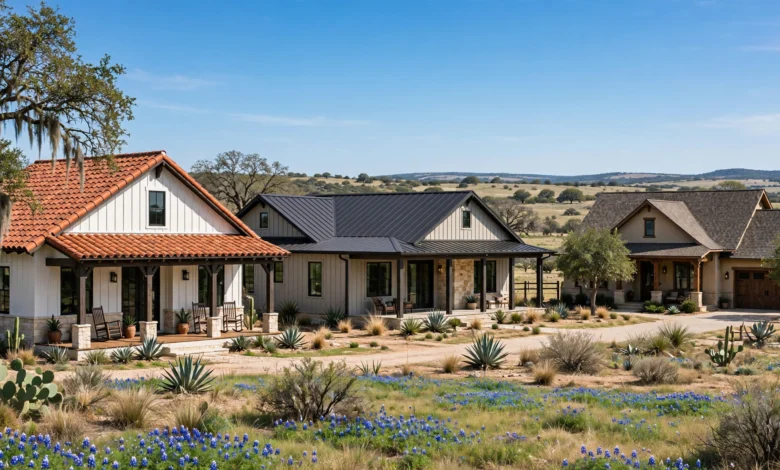
Roofing Ideas and Materials Perfect for Homes in Texas
Roofing ideas for Texas homes need to account for a climate that doesn’t do anything halfway. One month you’re dealing with triple-digit heat and blazing sun, and the next you’re bracing for a hailstorm or a hurricane rolling in off the Gulf. Texas is a big state with a lot of climate variety, from the humid coast around Houston to the dry heat of West Texas and the hail-prone stretches of North Texas, and your roof needs to be chosen with your specific region in mind, not just picked off a showroom sample board.
A roof in Texas isn’t just about curb appeal, though plenty of homeowners do want something that fits the Spanish, Mediterranean, ranch, or modern farmhouse styles common across the state. It also has to handle UV exposure that breaks down cheaper materials fast, sudden hailstorms that can total a roof in minutes, and high winds that test how well everything is fastened down. Picking the wrong material, or installing the right one poorly, tends to show up in your utility bills and your insurance premiums a lot sooner than you’d expect.
In this guide, we’ll go through the roofing materials that actually perform well in Texas conditions, along with practical design ideas, energy efficiency considerations, and a few things worth discussing with your roofing contractor before you commit. Whether you’re building new, replacing storm damage, or just planning ahead, this should give you a solid starting point.
Why Texas Weather Changes the Roofing Equation
Before getting into specific materials, it helps to understand what Texas roofs are actually up against, since it explains why certain choices consistently outperform others in this state.
- Intense UV exposure breaks down asphalt and lower-grade shingles faster than in milder climates
- Hailstorms, especially across North and Central Texas, can cause significant damage to standard shingles in a single event
- High winds and hurricanes along the Gulf Coast require roofing rated for higher wind speeds
- Extreme heat drives up cooling costs, making reflective or “cool roof” materials worth serious consideration
- Humidity in coastal regions can accelerate mold, algae, and moisture-related wear
Because of these overlapping pressures, roofing materials for Texas homes are typically judged on three things: impact resistance, wind rating, and heat reflectivity, in addition to standard concerns like cost and appearance.
Best Roofing Materials for Texas Homes
1. Metal Roofing
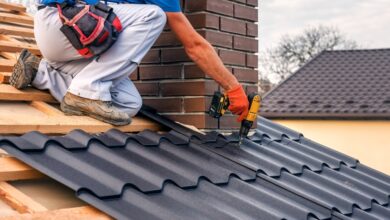
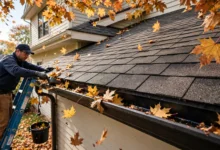
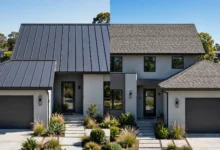
Metal roofing has become one of the most popular roofing ideas for Texas homes, and it’s easy to see why. It reflects a significant amount of solar heat, holds up well to hail and high winds, and can last 40 to 70 years with minimal maintenance. Standing seam metal panels, in particular, are a strong choice for both suburban and rural Texas properties because they shed water quickly and perform well in wind-driven rain.
Pros:
- Excellent wind and impact resistance
- Reflects heat, helping reduce cooling costs
- Long lifespan with low maintenance
- Available in styles that mimic shingles, tile, or standing seam panels
Cons:
- Higher upfront cost than asphalt shingles
- Can be noisy in heavy rain without proper insulation
- Requires an experienced installer for best results
2. Clay and Concrete Tile
Clay and concrete tile roofing is closely associated with the Spanish and Mediterranean architectural styles found throughout Central and South Texas, particularly in cities like San Antonio and Austin. Beyond the aesthetic, tile roofing performs genuinely well in hot climates, since it naturally insulates against heat and allows airflow underneath the tiles.
Pros:
- Naturally heat-resistant and long-lasting, often 50+ years
- Fits well with Texas’s Spanish and Mediterranean-style architecture
- Resistant to fire and rot
Cons:
- Heavy, requiring reinforced roof framing in some cases
- More expensive than asphalt or metal
- Individual tiles can crack under severe hail impact, though the roof system as a whole holds up well
3. Impact-Resistant Asphalt Shingles
Standard asphalt shingles remain common in Texas simply because of cost, but for homeowners who want a similar look with much better durability, impact-resistant shingles, rated Class 4, are worth the upgrade. These shingles are reinforced to better withstand hailstone impact, which matters significantly in hail-prone areas like the Dallas-Fort Worth region.
Pros:
- More affordable than metal or tile
- Class 4 impact rating can qualify homeowners for insurance discounts
- Wide range of colors and styles
Cons:
- Shorter lifespan than metal or tile, typically 20–30 years
- Still more vulnerable to UV degradation than reflective materials
4. Synthetic Roofing Materials (Composite Slate and Shake)
Synthetic roofing products are engineered to mimic the look of slate or wood shake while offering better performance in Texas conditions. They’re lightweight, impact-resistant, and don’t carry the fire risk associated with real wood shake, which matters given Texas’s dry summers and wildfire risk in some regions.
Pros:
- Lightweight compared to natural slate or tile
- Good impact and wind resistance
- Fire-resistant, unlike traditional wood shake
Cons:
- Cost varies significantly by manufacturer and quality
- Newer to the market, so long-term performance data is more limited than traditional materials
5. TPO and Flat Roof Membranes
For homes with flat or low-slope roof sections, common in modern and contemporary Texas home designs, TPO (thermoplastic polyolefin) membranes are a popular choice. TPO is highly reflective, which helps with Texas’s intense summer heat, and it’s a cost-effective option for additions, porches, or modern architectural styles that favor flat rooflines.
Pros:
- Highly reflective, reducing heat absorption
- Cost-effective for flat or low-slope sections
- Resistant to UV degradation and ponding water
Cons:
- Best suited to flat or low-slope roofs, not standard pitched designs
- Requires professional installation to avoid seam failures
6. Cool Roof Coatings
For homeowners not ready for a full roof replacement, cool roof coatings offer a way to improve energy efficiency on an existing roof. These reflective coatings can be applied to many roofing materials to reduce heat absorption, which is particularly valuable given how much Texas summers drive up air conditioning costs. According to the U.S. Department of Energy, reflective roofing surfaces can meaningfully reduce a home’s cooling energy use, especially in hot climates like much of Texas.
Pros:
- Improves energy efficiency without a full roof replacement
- Relatively affordable compared to material replacement
- Can extend the life of the existing roof surface
Cons:
- Not a permanent fix, coatings need reapplication over time
- Works best as a supplement to, not a replacement for, proper roofing material
7. Solar Shingles and Integrated Solar Roofing
With Texas’s high number of sunny days, solar shingles have become an increasingly practical roofing idea for homeowners looking to combine energy production with roof replacement. Unlike traditional panel-mounted solar systems, solar shingles integrate directly into the roofing surface, offering a cleaner look while still generating electricity.
Pros:
- Generates electricity while serving as the roofing material itself
- Increasingly popular in energy-conscious Texas markets
- Can reduce long-term utility costs significantly
Cons:
- Higher upfront investment than traditional roofing
- Fewer installers currently offer this specialized service in some parts of the state
Roofing Design Ideas That Fit Texas Homes
Beyond material selection, a lot of Texas homeowners want their roof to reflect the architectural character common to the region. A few design directions worth considering:
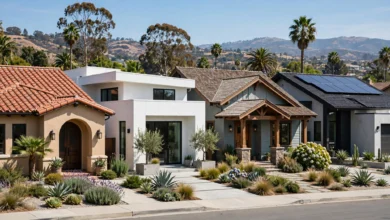
- Spanish and Mediterranean style, using clay or concrete tile in warm terracotta tones, common in Central and South Texas
- Modern farmhouse style, often paired with standing seam metal roofing in black, gray, or dark bronze finishes
- Traditional ranch style, typically suited to dimensional asphalt shingles or metal in earth-tone colors
- Contemporary and flat-roof designs, increasingly popular in urban areas like Austin, using TPO membranes combined with metal accents
Matching your roofing material to your home’s architectural style isn’t just about looks. Certain materials, like clay tile, are engineered to work with specific roof pitches and structural loads, so it’s worth discussing design compatibility with your contractor early in the planning process.
Wind and Hail Resistance: A Texas-Specific Priority
Because hail and high wind events are common across much of Texas, it’s worth paying close attention to a roofing material’s impact and wind ratings, not just its appearance or price. The Insurance Institute for Business & Home Safety provides independent testing and ratings on roofing products for wind and hail resistance, which can be a useful resource when comparing options with your contractor.
A few things worth asking about before choosing a material:
- What is the material’s Class 4 impact rating, if applicable?
- What wind speed is the roofing system rated to withstand?
- Does this material qualify for any homeowners insurance discounts?
- How has this material performed historically in Texas-specific weather events?
Insurance discounts for impact-resistant roofing are common enough in Texas that it’s worth asking your insurance provider directly, since the savings can offset some of the higher upfront cost of premium materials.
Choosing the Right Roofing Material for Your Region of Texas
Texas is large enough that the “best” roofing material really does depend on where in the state you live.
- North and Central Texas (hail-prone regions): Impact-resistant asphalt shingles or metal roofing
- Coastal areas (Houston, Corpus Christi): Metal roofing or wind-rated tile, chosen for hurricane resistance
- West Texas (dry heat, less humidity): Clay tile or metal roofing, both of which handle intense sun well
- Urban and suburban Central Texas (Austin, San Antonio): Tile roofing for traditional homes, or metal and TPO for modern designs
Conclusion
Choosing the right roof for a Texas home comes down to balancing style with the realities of the state’s weather, which means factoring in heat, hail, wind, and humidity depending on your specific region. Metal roofing, clay and concrete tile, impact-resistant asphalt shingles, synthetic materials, TPO membranes, cool roof coatings, and solar shingles each offer distinct advantages, and the right choice often depends on where in Texas you live and what architectural style your home follows. Taking the time to compare wind and impact ratings, understand long-term maintenance needs, and match materials to your region’s climate will help ensure your roof holds up for decades rather than becoming a recurring repair expense.
Keywords