How to Design an Outdoor Space for Year-Round Use
How to design an outdoor space for year-round use, covering heat, shade, wind protection, and materials that hold up in every season.
How to Design an Outdoor Space for Year-Round Use: 8 Essential Steps
How to design an outdoor space for year-round use is a question a lot of homeowners only ask after realizing their beautiful summer patio sits empty from October through April. It’s a common pattern. Someone invests in nice furniture, a grill, maybe some string lights, and the space gets heavy use for a few warm months, then goes quiet the second temperatures drop or the rain starts. The good news is that with the right planning, an outdoor space can stay genuinely usable across all four seasons, not just the easy ones.
The key difference between a seasonal patio and a true year-round outdoor space comes down to a handful of design decisions made early: how you handle temperature extremes, whether you’ve planned for shelter from rain and wind, what materials you’ve chosen, and whether there’s a heat source for cooler months. None of this requires a massive renovation. Plenty of the most effective upgrades, like a fire feature, proper shade, or wind-blocking landscaping, are additions you can make to an existing space rather than a full rebuild.
In this guide, we’ll walk through how to design an outdoor space for year-round use, covering climate control, materials, layout, and the small details that make the difference between a space people avoid in February and one they actually use twelve months a year.
Why Year-Round Outdoor Living Is Worth the Investment
Before getting into specific design elements, it’s worth understanding why this approach has become such a popular priority for homeowners. According to the National Association of Home Builders, outdoor living spaces consistently rank among the features buyers most want in a home, and spaces designed for extended seasonal use tend to offer a stronger return on investment than those that only function well a few months a year.
Beyond resale value, there’s a simple quality-of-life argument here too. A space that only works in summer gets used maybe four months out of twelve. A well-designed year-round space effectively doubles or triples your usable outdoor time, which matters a lot if you actually enjoy being outside.
1. Start With a Realistic Climate Assessment
Before choosing materials or furniture, take an honest look at what your specific climate actually demands. Designing for year-round use looks very different in a mild coastal climate than it does somewhere with harsh winters or intense summer heat.
Ask yourself:
- What’s your coldest realistic month, and how many days per year drop below freezing?
- How much rainfall does your region get, and during which seasons?
- Do you deal with high winds, heavy snow, or intense summer humidity?
- How many hours of direct sun does your outdoor space get in winter versus summer?
This assessment shapes nearly every decision that follows, from the shade structure you choose to whether a fire feature is a nice-to-have or a near-necessity for extending your usable season.
2. Add Overhead Coverage for Rain and Sun Protection
A year-round outdoor space almost always needs some form of permanent or semi-permanent overhead coverage. Without it, rain and intense sun will limit usability regardless of how good the rest of the design is.
Common overhead coverage options include:
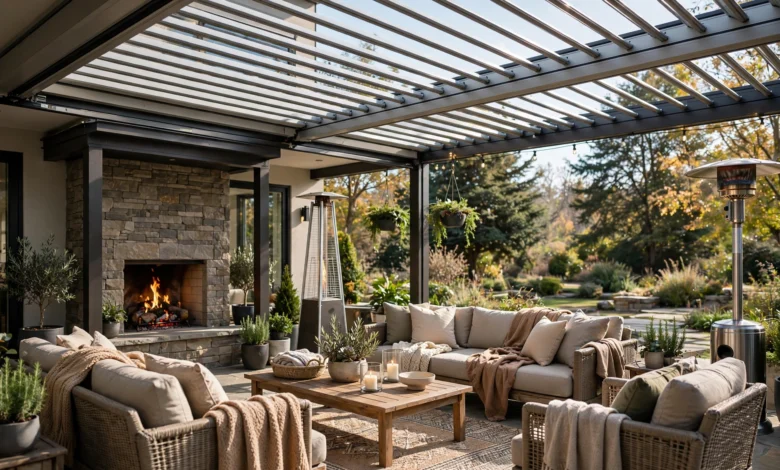
- Solid roof structures (pergolas with solid panels, covered patios) that provide full protection from rain and snow
- Retractable awnings that offer flexibility, open on nice days and closed during storms or intense heat
- Louvered pergolas with adjustable slats that let you control light and airflow throughout the year
- Simple gable or lean-to roof extensions attached to the home, offering permanent, low-maintenance coverage
If you’re in a climate with heavy snowfall, make sure whatever structure you choose is rated to handle your local snow load, since an underbuilt roof structure can become a safety issue during a heavy winter.
3. Incorporate a Heat Source for Cooler Months
Heat is often the single factor that determines whether an outdoor space gets used in fall, winter, and early spring. Without some form of heating, most people simply won’t stay outside once temperatures drop much below 60 degrees.
- Fire pits offer ambiance along with functional warmth, and work well as a gathering point for evenings
- Patio heaters (propane or electric) provide more targeted, consistent heat across a wider seating area
- Built-in fireplaces offer a more permanent, architectural focal point for larger outdoor spaces
- Radiant heating panels mounted overhead work well under covered structures where open flame isn’t practical
A combination approach often works best: a fire pit or fireplace as a visual and social centerpiece, paired with a patio heater or two positioned near seating that’s further from the direct heat source.
How Much Heat Do You Actually Need?
This depends heavily on your climate assessment from step one. In milder climates, a single fire pit might be enough to extend usability through most of the year. In colder regions, you may need a combination of enclosed structure, heating, and wind protection to make winter use realistic.
4. Block Wind With Smart Landscaping and Structure
Wind is an underrated factor in outdoor comfort. Even a mild temperature can feel uncomfortable in a space that’s constantly exposed to wind, and heat sources lose much of their effectiveness in an open, windy area.
- Dense evergreen shrubs or hedges planted on the windward side of your space provide a natural, attractive windbreak
- Solid fencing or privacy screens offer a more immediate wind-blocking solution while landscaping matures
- Glass or acrylic wind panels can be added to pergolas or covered patios without blocking views or natural light
- Strategic furniture placement away from open exposure points can reduce wind impact even without structural changes
Combining a windbreak with your heat source dramatically improves how effective that heat actually feels, since wind chill can undo much of the benefit of a fire pit or patio heater if left unaddressed.
5. Choose All-Season Materials
Materials matter enormously when designing for year-round use, since furniture and surfaces that look great in summer can crack, fade, or degrade quickly under winter conditions if they’re not rated for it.
For flooring and hardscaping:
- Concrete and pavers hold up well across temperature extremes and are relatively low maintenance
- Composite decking resists moisture damage better than traditional wood over repeated freeze-thaw cycles
- Natural stone offers excellent durability, though it can be more expensive upfront
For furniture:
- Look for powder-coated aluminum frames, which resist rust and hold up well in both heat and cold
- Choose quick-dry, UV-resistant cushions designed to handle both intense sun and occasional rain exposure
- Consider teak or eucalyptus wood, both of which are naturally weather-resistant hardwoods suited to year-round outdoor use
Avoid materials that are only rated for “three-season” use if true year-round functionality is the goal, since they’ll degrade faster under conditions they weren’t built to handle.
6. Design Zones for Different Seasons and Activities
A space designed purely for summer entertaining often doesn’t translate well to a quiet winter evening by the fire. Thinking through zones within your outdoor space helps it adapt across seasons.
Consider designing around:
- A covered lounge zone for rain protection and shade, usable in most seasons
- A fire or heat zone specifically positioned for cooler-weather gathering
- An open dining or entertaining zone that gets full use in summer but can be scaled back or covered as needed in winter
- A transitional zone with movable furniture that can shift based on weather and season
This kind of zoning means your space doesn’t have to do everything at once. Different areas can serve different seasonal purposes, which tends to make the overall design feel more intentional and get more consistent use.
7. Add Lighting for Shorter Winter Days
Daylight hours shrink significantly in fall and winter, which means a space that relied on natural light in summer may feel unusable once it gets dark by 5 p.m.
- String lights remain a simple, affordable option for general ambiance across seasons
- Path and step lighting improves safety during darker months, especially with added winter conditions like ice or wet leaves
- Weatherproof sconces or lanterns near seating areas provide functional light without relying solely on overhead fixtures
- Dimmable options allow you to adjust brightness for different moods and seasons, from bright summer gatherings to cozy winter evenings
Good lighting design, combined with a heat source, is often what pushes a space from “usable in theory” to something people actually choose to spend a winter evening in.
8. Plan Landscaping for Multi-Season Interest
Landscaping that only looks good in summer leaves your outdoor space feeling bare and uninviting the rest of the year. Choosing plants with multi-season appeal keeps the space visually engaging year-round.
- Evergreens provide structure and color even in the depths of winter
- Ornamental grasses add movement and texture that holds up well into fall and winter
- Plants with winter berries or interesting bark, like certain dogwood or holly varieties, add visual interest when most other plants have gone dormant
- Layered planting, mixing evergreens, perennials, and seasonal color, ensures something is always contributing to the space’s appeal
The U.S. Forest Service offers guidance on selecting regionally appropriate trees and shrubs, which is a useful starting point when choosing plants that will genuinely thrive in your specific climate rather than struggling through winters they weren’t suited for.
Putting It All Together: A Sample Year-Round Layout
Here’s how these elements might come together in a mid-sized backyard space designed for genuine year-round use:
| Zone | Season Focus | Key Features |
|---|---|---|
| Covered lounge | Fall, winter, rainy days | Solid roof, heater, weatherproof furniture |
| Fire pit area | Fall, winter evenings | Wind screening, comfortable seating, ambient lighting |
| Open dining area | Spring, summer | Retractable shade, easy access to kitchen |
| Landscaped border | Year-round | Evergreens, layered planting, path lighting |
This kind of layout ensures that no matter the season, there’s a functional, comfortable part of the outdoor space ready to use.
Common Mistakes to Avoid
- Skipping the climate assessment and designing based on generic advice rather than your actual local conditions
- Choosing furniture and materials rated only for mild weather, which leads to premature wear
- Underestimating wind’s impact on comfort, especially around heat sources
- Neglecting winter landscaping, leaving the space looking bare and neglected for months
- Forgetting lighting, which becomes essential once daylight hours shrink in fall and winter
Avoiding these missteps early in the design process saves significant cost and frustration compared to retrofitting fixes after the space is already built.
Conclusion
Designing an outdoor space for year-round use comes down to a series of deliberate choices: honest climate assessment, reliable overhead coverage, a real heat source, wind protection, durable all-season materials, thoughtful zoning, adequate lighting, and landscaping that holds visual interest beyond just the summer months. None of these elements are complicated on their own, but together they transform a space that only gets used a few months a year into one that earns its keep in every season. Whether you’re planning a full outdoor renovation or gradually upgrading an existing patio, focusing on these fundamentals will get you a space that’s genuinely worth stepping into in July and in January alike.
10 Keywords: