15 Swimming Pool Design Ideas for Small Backyards
Swimming pool design ideas for small backyards that fit tight spaces without sacrificing the feel of a genuine outdoor retreat.
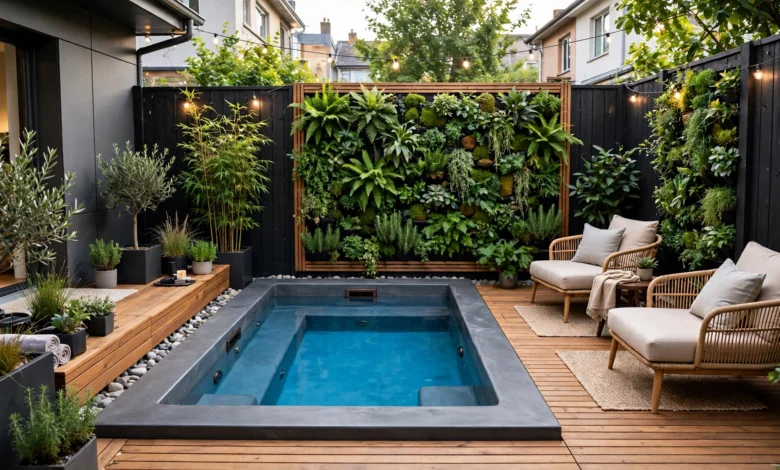
Swimming Pool Design Ideas for Small Backyards: 15 Stunning Options That Maximize Space
Swimming pool design ideas for small backyards get searched a lot more than people expect, mostly because there’s a common assumption that a pool needs a large, sprawling yard to actually work. That’s simply not true anymore. Pool design has evolved significantly over the past decade, and there are now genuinely smart, space-efficient options that fit compact urban lots, narrow side yards, and modest suburban blocks without feeling cramped or like an afterthought.
This guide walks through fifteen practical small backyard pool ideas, covering everything from compact plunge pools and cocktail pools to smart layout tricks that make a small pool feel more spacious than its actual footprint. We’ll also cover material choices, decking strategies, and privacy solutions that matter more in tight spaces, since a small pool poorly planned can feel like clutter, while a small pool thoughtfully designed can genuinely transform an outdoor space.
Whether you’re working with a narrow city lot, a modest suburban backyard, or an awkwardly shaped space, these ideas are meant to show what’s actually achievable rather than assuming you need a large property to enjoy a well-designed pool. By the end of this article, you’ll have a solid sense of which approach fits your space, budget, and how you actually want to use the pool, whether that’s serious lap swimming, casual cooling off, or simply having an attractive water feature to anchor the yard.
Why Small Backyard Pools Require Smarter Design
A small backyard pool demands more precise planning than a larger pool in a spacious yard, since every design decision has an outsized visual and functional impact in a compact space. A few principles apply across almost every idea in this list:
- Every square foot counts, so multi-purpose features matter more than in larger yards
- Sightlines and proportions need careful planning to avoid a cramped feeling
- Privacy solutions often need to work harder in tighter, more exposed spaces
- Material and color choices can visually expand or shrink how a space feels
With those principles in mind, here are fifteen design approaches that work particularly well for smaller backyards.
1. Plunge Pools
A plunge pool is a small, deep pool designed for cooling off and relaxing rather than swimming laps. Typically compact enough to fit into even the tightest backyards, plunge pools have become one of the most popular small-space pool solutions in recent years.
- Requires significantly less space than a traditional pool
- Often deep enough for genuine cooling relief despite the small footprint
- Pairs well with built-in seating along the edges
- Lower installation and maintenance costs compared to larger pools
2. Lap Pools Along a Fence Line
A lap pool doesn’t need to be wide to be functional. A narrow, elongated pool running along a side fence or property boundary makes efficient use of an otherwise underused strip of yard.
- Ideal for narrow lots where width is limited but length is available
- Supports genuine swimming exercise despite the compact footprint
- Can double as a striking visual feature when paired with clean, linear landscaping
- Often installed with minimal surrounding decking to maximize the swimmable area
3. Cocktail Pools
A cocktail pool is essentially a scaled-down pool designed primarily for lounging and socializing rather than swimming. These have grown in popularity specifically for small backyard applications.
- Typically shallow and compact, often just a few feet deep
- Well suited to built-in bench seating and swim-up bar style features
- Works particularly well combined with an adjacent spa or fire feature
- Fits comfortably into backyards where a full-sized pool simply isn’t feasible
4. Spools (Spa-Pool Combinations)
A spool combines a small pool and spa into one compact, unified feature, offering both cooling relief and warm-water relaxation without needing separate spaces for each.
- Highly space-efficient, combining two features into one footprint
- Often designed with a shared filtration and heating system for efficiency
- A popular choice for year-round use, since the spa portion extends usability into cooler months
- Works well as a central visual feature even in a very small yard
5. Above-Ground Pools With a Built Deck
Above-ground pools paired with a well-designed deck can look far more intentional and upscale than the basic backyard above-ground pools of decades past.
- Significantly more affordable than in-ground alternatives
- Faster installation with minimal site excavation required
- A quality wraparound deck disguises the above-ground structure effectively
- Can be relocated or removed more easily than in-ground options if your needs change
6. Integrated Spa Features
Adding an integrated spa directly connected to a small pool, rather than as a separate structure, saves space while still offering the benefits of both features.
- Shares plumbing and equipment with the main pool, reducing overall footprint
- Provides a warm-water option without needing a fully separate structure
- Can be designed as a raised spa flowing into the pool for visual interest
- Works particularly well in yards with limited space for two distinct water features
7. Natural-Style Small Pools
A natural pool design, using organic shapes and stone materials rather than sharp geometric lines, can make a small pool feel more like a landscape feature than a structural addition.
- Softer visual integration with surrounding planting
- Curved edges can make a small space feel less rigidly defined
- Pairs well with lush, layered planting to enhance the natural aesthetic
- Often incorporates boulders or stone edging in place of traditional coping
8. Vertical Privacy Screening
Small backyards often sit closer to neighboring properties, making privacy screening a bigger design priority than in larger, more secluded yards.
- Tall, narrow planting or trellis screens maximize privacy without consuming much ground space
- Climbing vines on vertical structures add greenery without a large footprint
- Slatted privacy fencing paired with planting softens hard boundaries
- Strategic screen placement can also reduce wind exposure around the pool area
9. L-Shaped or Corner Pools
An L-shaped pool design makes efficient use of an oddly shaped or corner lot, fitting into spaces that a standard rectangular pool wouldn’t suit well.
- Adapts to irregular yard shapes rather than forcing a standard layout
- Can separate a lap-swimming zone from a lounging zone within one pool
- Often maximizes usable pool area more efficiently than a straight rectangle in a corner lot
- Works well paired with an L-shaped deck for a cohesive layout
10. Multi-Use Decking With a Retractable Cover
A retractable or automatic pool cover allows the pool area to double as usable patio space when the pool isn’t in use, which is especially valuable in small yards where every surface needs to serve more than one purpose.
- Converts pool space into additional patio area on demand
- Improves safety and reduces heat loss when the pool is covered
- Reduces evaporation and chemical use, lowering ongoing maintenance costs
- A higher upfront investment, but one that meaningfully increases usable yard space
11. Modular or Container Pools
Modular pools, sometimes built from repurposed shipping containers or prefabricated shells, offer a compact, design-forward option that’s grown in popularity for small urban yards.
- Faster installation than traditional in-ground construction
- A distinctive, modern aesthetic that suits contemporary small-space design
- Often more portable or removable than standard in-ground pools
- Available in sizes specifically suited to compact lots
12. Sloped-Lot Infinity Edges
For small backyards with a natural slope, an infinity edge pool design can create a dramatic visual effect while making practical use of the elevation change that might otherwise be difficult to landscape.
- Turns a challenging sloped site into a design advantage
- Creates a visually striking feature disproportionate to the pool’s actual size
- Works particularly well on lots with a view worth framing
- Requires more specialized engineering, so budget accordingly
13. Built-In Bench Seating Instead of Separate Lounge Areas
In tight yards, built-in bench seating within the pool itself reduces the need for separate lounge furniture taking up additional deck space.
- Combines seating and swimming space efficiently
- Reduces clutter from freestanding furniture in a small area
- Often paired with umbrella or shade structure attachments built into the seating
- Keeps sightlines open, which helps a small space feel less crowded
14. Dark-Bottom Pools for a Larger Visual Effect
A dark-bottom pool finish, using darker plaster or tile, can make a small pool appear deeper and more expansive than a lighter-colored equivalent, an effective visual trick for compact spaces.
- Creates a more dramatic, reflective water surface
- Absorbs more solar heat, which can modestly reduce heating costs
- Pairs well with minimalist, modern landscaping styles
- Makes the water itself a stronger visual focal point in a small space
15. Minimal Decking With Gravel or Groundcover Surrounds
Rather than surrounding a small pool with extensive hard decking, using gravel or low groundcover around the edges keeps the space feeling open and reduces both cost and heat retention from hard surfaces.
- Lower cost than full decking or paving
- Reduces heat buildup around the pool compared to large expanses of stone or concrete
- Creates a softer, more garden-integrated look
- Works particularly well paired with a natural-style pool design
Choosing the Right Idea for Your Space
With fifteen options on the table, it helps to narrow down based on a few practical questions:
- Do you want the pool primarily for exercise, relaxation, or entertaining?
- How much of your budget is available for decking and surrounding features versus the pool itself?
- Is privacy from neighbors a significant concern in your specific yard?
- Does your lot have a slope, irregular shape, or other site condition that could become a design feature rather than an obstacle?
A landscape designer or pool contractor experienced with small-space projects can help combine several of these ideas into a cohesive plan rather than treating them as separate, competing options. The Association of Pool & Spa Professionals offers general industry standards and consumer resources worth reviewing if you want a broader understanding of construction and safety standards before finalizing a design.
Common Mistakes in Small Backyard Pool Design
A few recurring issues show up in small-space pool projects that don’t quite work out:
- Oversizing the pool relative to the available yard, leaving no functional space around it
- Skipping privacy planning, leaving the pool area feeling exposed
- Overcrowding the space with features, competing water features, extensive decking, and large furniture all at once
- Ignoring maintenance access, making it difficult to service equipment tucked into a tightly designed layout
For general water safety considerations relevant to any residential pool regardless of size, the CDC’s healthy swimming guidance is a useful reference to review alongside your design plans.
Conclusion
Swimming pool design ideas for small backyards prove that a compact lot doesn’t have to mean giving up on the idea of a pool altogether. From plunge pools and cocktail pools to smart layout choices like L-shaped designs, retractable covers, and dark-bottom finishes, there are genuinely effective ways to fit a functional, attractive pool into a tight space. The key is prioritizing how you actually want to use the pool, being thoughtful about privacy and proportion, and choosing a design approach that makes the most of every available square foot rather than trying to force a large-yard pool concept into a space it was never suited for.