Swimming Pool Ideas Perfect for Homes in California
Swimming pool ideas for California homes: infinity edges, plunge pools, saltwater finishes, and water-wise designs built for the climate.
Swimming Pool Ideas: 15 Stunning Designs Perfect for California Homes
Swimming pool ideas for California homes have to do double duty. They need to look good enough to justify the investment, and they need to make sense in a state where sun, drought, and property size all shape what actually works in a backyard. If you’ve spent any time scrolling through backyard photos, you already know California pools tend to look a little different from pools everywhere else. There’s a reason for that. The climate allows for year-round swimming, the architecture leans modern, and water has always been treated as something precious here, not just decorative.
Whether you’re working with a sprawling lot in the Central Valley, a narrow hillside property in Los Angeles, or a modest backyard in the Bay Area, there’s a pool design that fits. This guide walks through the styles, features, and practical considerations that matter most for California homeowners right now, from infinity pools and plunge pools to water-saving upgrades that keep your utility bill and your conscience in check. Some of these ideas are pure luxury. Others are about making a small space feel bigger or a big space feel intentional. Either way, by the end you should have a clearer picture of what you actually want, not just what looks nice in a photo.
Why California Backyards Are Built for Pools
California’s climate is one of the few in the country where a pool isn’t a seasonal luxury. Depending on where you live, you can realistically swim eight to ten months out of the year, and with a heater, some homeowners never really stop. That kind of usage changes how people think about design. A pool that only gets used for six weeks in July doesn’t need to be as thoughtfully planned as one that’s part of daily life.
There’s also the architectural angle. California’s mid-century modern and contemporary home styles pair naturally with clean-lined pools, geometric shapes, and minimal ornamentation. You’ll notice this in a lot of Southern California backyards, where the pool often looks like an extension of the house rather than something bolted onto the yard afterward.
And then there’s water. California has been through enough drought cycles that homeowners here tend to ask different questions than homeowners elsewhere. Size, coverage, and pump efficiency come up early in the conversation, not as an afterthought.
Popular Swimming Pool Ideas for California Homes
Infinity Pools
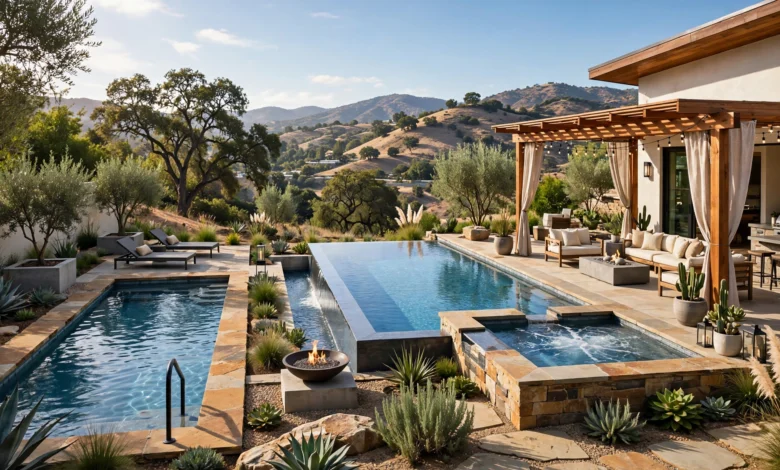
The infinity pool is probably the single most requested style among California homeowners with a view, and it’s easy to see why. The vanishing edge creates the illusion that the water spills directly into the horizon, whether that’s the ocean, the hills, or just the neighborhood below. It’s a dramatic effect, and it works especially well on hillside lots in places like Malibu, Bel Air, or the wine country around Napa.
Infinity pools aren’t just for massive estates, either. A smaller infinity edge, sometimes called a vanishing edge spa or spool, can create the same visual payoff on a modest lot as long as there’s some kind of elevation change or view to work with.
Plunge Pools and Spools
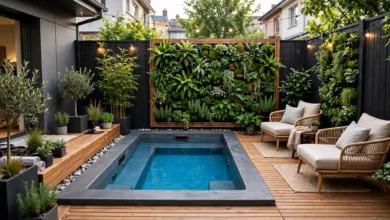
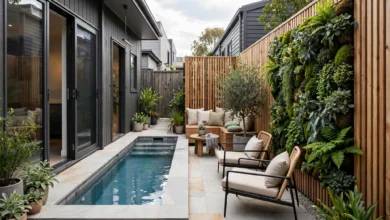
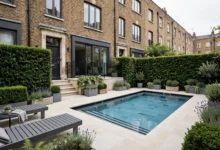
Not every California backyard has room for a full lap pool, and that’s fine. Plunge pools, sometimes marketed as “spools” (a cross between a spa and a pool), have become one of the most popular small-lot solutions in the state. They’re typically 8 to 15 feet long, deep enough to submerge and cool off in, and often built with a spa jet system so they double as a hot tub in cooler months.
These pools work particularly well for:
- Narrow side yards or courtyards
- Urban lots in cities like San Francisco or Oakland
- Homeowners who want water without the maintenance of a full-size pool
- Multi-generational households where a smaller, shallower pool feels safer
Natural and Lagoon-Style Pools
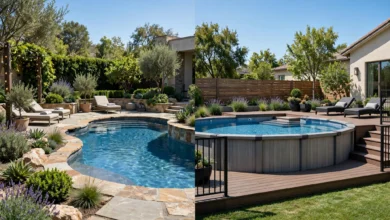
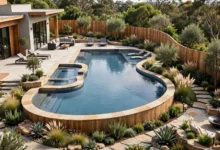
If a rectangular pool feels too formal for your property, a natural or lagoon-style design might be a better fit. These pools use irregular shapes, boulder accents, and often a beach entry (a gradually sloped edge instead of steps) to mimic a natural swimming hole. They pair well with drought-tolerant landscaping, which makes them a good match for California’s native plant palette of grasses, succulents, and olive trees.
Saltwater Pools
Saltwater pools have become close to the default choice for new construction in California, and for good reason. Instead of adding chlorine directly, a saltwater system uses a generator to convert dissolved salt into chlorine automatically. The water tends to feel softer, there’s less of that sharp chemical smell, and maintenance is generally more consistent once the system is dialed in. It’s not chemical-free, despite what some marketing suggests, but for most homeowners it’s an easier system to live with day to day.
Pools With an Integrated Spa
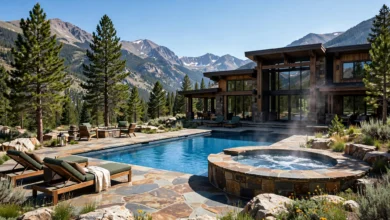
Pairing a pool with an attached spa is one of the most practical upgrades you can make in California, where mornings and evenings can get cool even when afternoons are warm. An integrated spa lets you heat just the smaller spa section rather than the entire pool, which keeps energy costs down while still giving you a warm soak option. Many designs use a raised spa with a spillway, so water cascades from the spa into the main pool, adding movement and sound to the space.
Swimming Pool Ideas for Small California Backyards
Space is at a premium in a lot of California neighborhoods, especially in coastal cities and older suburbs with smaller lot sizes. That doesn’t mean you have to skip the pool. It just means the design needs to work harder.
Tanning Ledges
A tanning ledge, sometimes called a Baja shelf, is a shallow area (usually 6 to 12 inches deep) built into one end of the pool. It’s useful for lounging, wading with small kids, and setting up in-water furniture, and it can make even a compact pool feel more versatile without adding to the footprint.
Cocktail Pools
A cocktail pool is essentially a downsized rectangular pool, often no more than 10 by 20 feet, designed for lounging and cooling off rather than laps. They’re a strong option for entertaining-focused backyards where the pool is more of a visual centerpiece than a fitness feature.
Building Up Instead of Out
When the footprint is tight, some California pool builders get creative with vertical elements instead. Raised walls, tiered decking, and elevated planters can make a small pool area feel layered and intentional rather than cramped. It’s a trick borrowed from small-space architecture generally: when you can’t go wide, you go up.
Water-Wise Swimming Pool Ideas for a Drought-Conscious State
California homeowners can’t really talk about pools without talking about water use, and that’s not a bad thing. A few design and equipment choices can significantly cut down on evaporation and waste without sacrificing how the pool looks or functions:
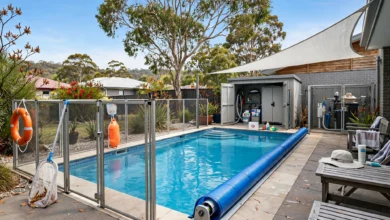
- Pool covers. A well-fitted cover can reduce evaporation by a significant margin and also keeps debris and heat loss down overnight.
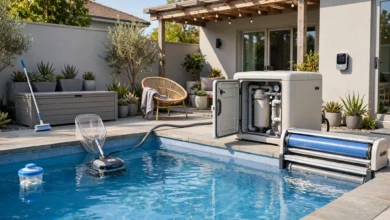
- Variable-speed pumps. These use a fraction of the electricity of older single-speed pumps and can be run longer at lower speeds for better filtration.
- Smaller footprints with taller water features. A compact pool with a striking water feature often reads as more luxurious than a larger, plain one, while using less water overall.
- Drought-tolerant landscaping around the pool deck. Pairing your pool with native or low-water plants keeps the whole backyard consistent instead of creating an odd contrast between a thirsty lawn and an efficient pool.
The U.S. Department of Energy has a helpful breakdown of pool energy use and efficiency upgrades that’s worth a look if you want to dig into the specifics of pump sizing and heating costs before you commit to a design: <a href=”https://www.energy.gov/energysaver/swimming-pools”>energy.gov’s guide to swimming pool efficiency</a>.
Design Features That Elevate a California Pool
Fire and Water Combinations
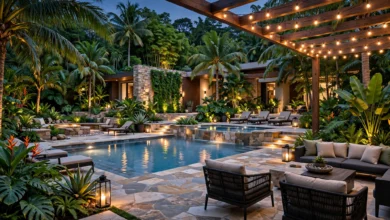
Fire bowls, fire pits built into the pool deck, and torch-style fixtures along the water’s edge have become a signature look in California outdoor design. The contrast between flame and water photographs well, sure, but it also extends how long you can comfortably use the space once the sun goes down and the temperature drops.
Outdoor Kitchens and Shaded Lounges
A pool rarely exists on its own anymore. Most California backyard renovations pair the pool with some kind of outdoor kitchen, whether that’s a full built-in grill station or a simpler counter and sink setup. Shade structures, pergolas, and retractable awnings matter just as much, since direct sun for hours at a time isn’t always comfortable even in a state known for good weather.
Lighting and Nighttime Use
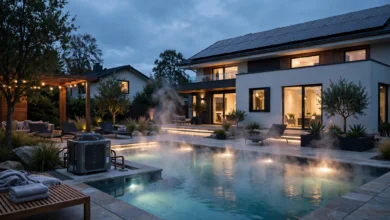
LED pool lighting has gotten a lot more flexible in recent years. Color-changing systems let you shift the mood from a soft white for a quiet evening swim to blues and purples for a party, all controlled from a phone app. Combined with landscape lighting along pathways and planting beds, a well-lit pool area often gets more use at night than during the day, especially in summer when afternoon heat pushes people indoors.
Choosing the Right Pool Material and Finish
Most in-ground pools in California fall into one of three categories, and each comes with its own trade-offs.
- Gunite or shotcrete pools. These are the most customizable option, since the concrete shell can be shaped into nearly any form, including free-form lagoon designs and infinity edges. They take longer to build and cost more upfront, but they last for decades with proper resurfacing.
- Fiberglass pools. Pre-formed shells arrive on-site and are installed relatively quickly, often in a matter of weeks rather than months. Shapes are more limited, but the smooth surface resists algae and requires less chemical upkeep.
- Vinyl liner pools. These are typically the least expensive option upfront, though liners need replacing every 7 to 15 years. They’re less common in California’s higher-end pool market but still show up in budget-conscious projects.
Interior finish matters too. Pebble and aggregate finishes have mostly replaced plain plaster in newer builds because they hold up better to California’s water chemistry and give the pool a richer, more natural color, often a deep blue-green or slate gray rather than the classic bright blue.
Cost Considerations for California Pool Projects
Pool costs vary enormously depending on region, size, and finish level, but a few general patterns hold across the state. A standard in-ground gunite pool typically runs somewhere in the tens of thousands of dollars once you factor in decking, fencing, and basic equipment, with costs climbing quickly as you add features like infinity edges, raised spas, or elaborate water features. Smaller plunge pools and spools tend to land on the lower end of that range, which is part of why they’ve become popular for homeowners who want a pool without the full-size price tag.
It’s worth getting at least two or three quotes from licensed contractors before committing, since pricing can differ significantly between builders even for similar designs. Permitting requirements also vary by city and county, so factor in some lead time before construction can even start.
Safety and Regulations to Keep in Mind
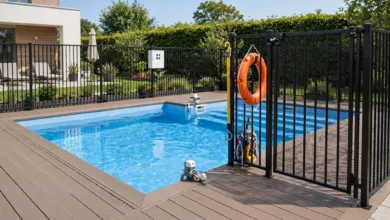
California has specific pool safety requirements that apply to new construction and major renovations, including fencing, self-latching gates, and in some cases pool alarms or covers. These rules exist for good reason. Drowning remains one of the leading causes of accidental death for young children, and a properly enclosed pool area makes a real difference.
The Centers for Disease Control and Prevention publishes clear, practical guidance on pool barriers and layered protection that’s useful to review early in the planning process, before layout decisions get locked in: <a href=”https://www.cdc.gov/drowning/prevention/index.html”>CDC guidance on drowning prevention</a>. Building your safety plan into the design from the start is a lot easier than retrofitting a beautiful pool a year after it’s finished.
Bringing It All Together
The best swimming pool ideas for California homes usually share a few things in common: they respect the climate, they fit the size of the lot honestly instead of overreaching, and they account for water use without feeling like a compromise. Whether that means a dramatic infinity edge on a hillside property, a modest plunge pool tucked into a side yard, or a saltwater pool with an attached spa for cooler evenings, there’s a version of this that works for almost any California backyard. Start with how you actually plan to use the space, day to day and season to season, and let that guide the size, shape, and features you choose. The rest, the finishes, the lighting, the landscaping, is where you get to make it feel like yours.