Gardening Tips for Homes in Western Australia
Gardening tips for homes in Western Australia, covering sandy soil, waterwise planting, native species, and seasonal care for the local climate.
Gardening Tips for Homes in Western Australia: 12 Essential Ideas for a Thriving Garden
Gardening in Western Australia comes with a very particular set of challenges. Between the sandy soil around Perth, long dry summers, water restrictions, and the occasional scorching easterly wind, plants that thrive in other parts of the country often struggle badly here. If you’ve ever watched a garden centre favourite wilt within weeks of planting, it’s usually not bad luck, it’s a mismatch between the plant and the conditions.
These gardening tips for homes in Western Australia focus on what actually works in this climate, rather than generic advice written for cooler, wetter parts of the country. WA’s Mediterranean-style climate, hot dry summers and mild wet winters, means the plants, soil treatments, and watering habits that succeed in Sydney or Melbourne often fail here without serious adjustment. On top of that, much of the Perth metro area sits on notoriously free-draining sandy soil that needs specific handling to hold onto any moisture or nutrients at all.
This guide covers everything from choosing the right native plants and improving sandy soil, to setting up an efficient watering system that keeps you within local water restrictions, to seasonal maintenance that suits WA’s distinct wet and dry periods. Whether you’re gardening in Perth’s northern suburbs, the South West, or a drier inland area, these ideas are built around the realities of Western Australian conditions, not imported advice that assumes a different climate entirely. Let’s get into what actually works.
Understanding Western Australia’s Climate and Soil
Before choosing plants or planning garden beds, it helps to understand exactly what you’re working with, because WA’s conditions vary more than people expect.
Most of the state’s population lives in the South West, which has a Mediterranean climate: hot, dry summers with little to no rain from December through February, followed by cooler, wetter winters. According to the Bureau of Meteorology, Perth typically receives most of its annual rainfall between May and September, leaving summer almost entirely dependent on irrigation unless you’ve chosen drought-tolerant plants.
Soil is the other major factor. Much of the Perth metro area sits on deep, pale sandy soil that drains extremely fast and holds very little in the way of nutrients or moisture. Further inland and in parts of the Wheatbelt, soils can be heavier and more alkaline, while coastal areas deal with salt exposure on top of sandy conditions. Knowing which category your garden falls into shapes almost every other decision you’ll make.
Improving Perth’s Sandy Soil
If you’re gardening anywhere near Perth, there’s a good chance you’re dealing with sandy soil, and it’s one of the most common frustrations local gardeners face. Sandy soil drains so quickly that water and nutrients pass straight through before plants can use them.
- Add organic matter regularly. Compost, well-rotted manure, and leaf mould all help sandy soil hold onto moisture and nutrients for longer.
- Use soil wetting agents. Sandy soil can become hydrophobic over summer, meaning water actually runs off the surface instead of soaking in. A wetting agent applied before the dry season fixes this.
- Apply mulch generously. A thick layer of mulch, at least 7-10cm, dramatically reduces evaporation and keeps soil temperature more stable through hot months.
- Consider clay additives. Products that add clay particles to sandy soil can improve its water-holding capacity over time, particularly useful in vegetable beds.
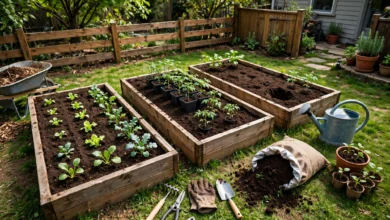
- Build raised garden beds. For vegetable and herb gardens especially, raised beds let you control the soil mix directly rather than fighting the sand underneath.
Improving sandy soil is a gradual process, but consistent effort over a couple of seasons makes a noticeable difference in how much water your garden actually needs.
Choosing the Right Plants for Western Australian Gardens
Plant selection is where most WA gardens succeed or fail. Choosing species suited to hot, dry summers and sandy soil means less watering, less replacing, and a garden that looks good even during the driest months.
Native Plants That Thrive Locally
Western Australia has one of the richest native flora regions in the world, and many of these species are naturally suited to sandy soil and long dry spells.
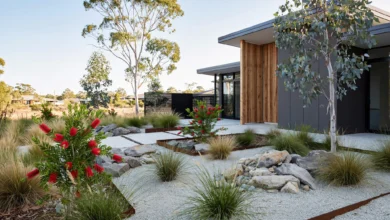
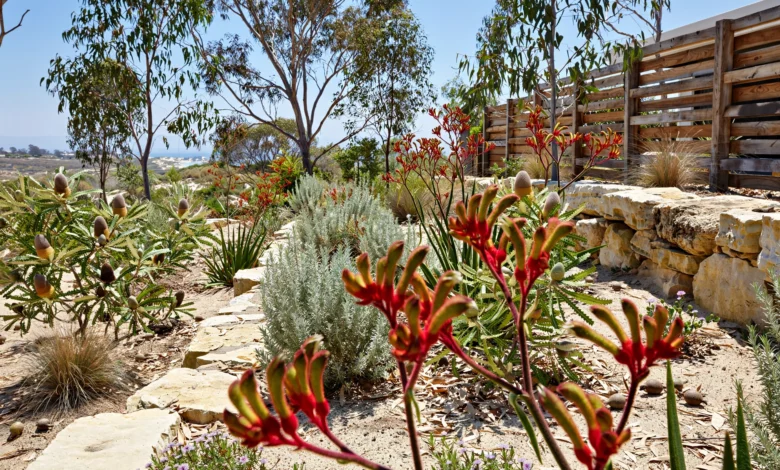
- Kangaroo paw brings striking colour and handles dry conditions extremely well once established.
- Grevillea varieties are hardy, fast-growing, and attract native birds, making them a favourite for WA gardens.
- Banksia species tolerate poor sandy soil and add strong structural interest with their distinctive flower spikes.
- Eremophila (emu bush) copes with heat and drought exceptionally well, ideal for exposed, sun-baked spots.
- West Australian peppermint (Agonis) works well as a hardy small tree or screening plant in coastal and suburban gardens alike.
Drought-Tolerant Exotic Options
If you want a broader plant palette beyond natives, several drought-tolerant exotics also perform well in WA conditions.
- Lavender and rosemary both enjoy the free-draining sandy soil and don’t mind long dry spells.
- Succulents and agaves need minimal water once established and add strong texture to garden beds.
- Olive trees are well suited to WA’s Mediterranean climate and tolerate both heat and poor soil.
- Bougainvillea thrives in full sun and handles dry periods with ease, adding vivid seasonal colour.
Choosing plants suited to these conditions is one of the most effective gardening tips for homes in Western Australia, because it removes most of the ongoing struggle that comes with growing thirstier, less-adapted species.
Waterwise Gardening and Managing Water Restrictions
Water restrictions are a fact of life across much of Western Australia, particularly in Perth, where sprinkler rosters limit when and how often you can irrigate. Building a garden around waterwise principles isn’t optional here, it’s essential.
- Group plants by water needs. Placing thirstier plants together and drought-tolerant ones together prevents overwatering some plants while underwatering others.
- Water deeply but infrequently. Frequent shallow watering encourages roots to stay near the surface, making plants more vulnerable to heat stress. Deep, less frequent watering encourages stronger root systems.
- Install drip irrigation. Drip systems deliver water directly to the root zone with far less waste than sprinklers, and they make it easier to stay within local water scheme rosters.
- Water early in the morning. Watering before sunrise reduces evaporation loss compared to watering during the heat of the day.
- Check your local water scheme roster. Water Corporation publishes current sprinkler rosters and waterwise guidance specific to different parts of WA, worth checking each season since rules can change.
Simple Ways to Reduce Garden Water Use
Beyond irrigation habits, a few structural choices make a big long-term difference to water consumption.
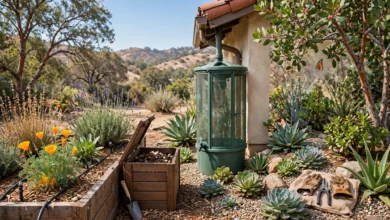
- Install a rainwater tank to capture what winter rain does fall for use during dry months.
- Group pot plants together so they shade each other and dry out more slowly.
- Use self-watering containers for high-need plants like vegetables.
- Reduce lawn area in favour of drought-tolerant garden beds, since lawns are typically the thirstiest part of any WA garden.
- Mulch every bed, since bare soil loses moisture far faster than mulched soil.
Dealing with Heat and Sun Exposure
Western Australian summers can bring extended stretches of extreme heat, sometimes well above 40 degrees Celsius inland, and even coastal gardens face intense UV exposure and drying easterly winds.
- Provide shade for vulnerable plants. Shade cloth, pergolas, or strategically placed taller plants can protect more sensitive species during heatwaves.
- Mulch heavily before summer. A generous mulch layer applied in late spring helps insulate soil before the worst of the heat arrives.
- Choose the right planting position. Position heat-sensitive plants where they get some afternoon shade, particularly from a north or west-facing wall.
- Avoid pruning heavily right before summer. Removing too much foliage right before hot weather leaves plants more exposed and vulnerable to sun scorch.
Bushfire-Conscious Garden Design
Bushfire risk is a real consideration for many WA properties, particularly in bushland-adjacent suburbs and regional areas. Thoughtful garden design can reduce risk without sacrificing a good-looking garden.
- Keep flammable plants away from the house. Position highly flammable species, such as many eucalypts, well away from structures.
- Choose fire-resistant plants where possible. Plants with high moisture content and low oil content, like many succulents and some native groundcovers, are generally less flammable.
- Maintain garden beds and clear dead growth. Removing dry leaf litter and dead branches regularly reduces available fuel close to the home.
- Create defendable space. Leave clear, well-maintained zones immediately around the house rather than dense planting right up against walls.
Local council websites and the Department of Fire and Emergency Services publish specific guidance for bushfire-prone areas, worth checking if your property falls into a higher-risk zone.
Vegetable and Herb Gardening in WA Conditions
Growing your own food is entirely achievable in Western Australia, it just requires working around the hot, dry summer window rather than through it.
- Plant summer vegetables early. Tomatoes, capsicums, and zucchini should go in as soon as frost risk passes in spring, so they’re established before peak summer heat arrives.
- Focus on heat-tolerant crops through summer. Eggplant, okra, and sweet potato handle WA’s summer heat far better than delicate leafy greens.
- Grow leafy greens in the cooler months. Lettuce, spinach, and other leafy crops do best planted in autumn and winter when temperatures are milder.
- Use shade cloth over vegetable beds during heatwaves to prevent scorching and reduce water stress on developing crops.
- Improve soil with compost every season, since sandy soil depletes quickly under the demands of vegetable growing.
Seasonal Garden Maintenance in Western Australia
WA’s distinct wet and dry seasons mean garden tasks follow a slightly different rhythm than in other parts of the country.
- Autumn (March-May): Plant natives and trees while the weather cools and rain returns, giving root systems time to establish before summer.
- Winter (June-August): Take advantage of natural rainfall, prune deciduous plants, and prepare vegetable beds for spring planting.
- Spring (September-November): Mulch beds ahead of summer, plant summer vegetables, and check irrigation systems before the dry season begins.
- Summer (December-February): Focus on deep, infrequent watering, monitor for heat stress, and avoid major planting or heavy pruning during peak heat.
Timing planting around this cycle, rather than the standard spring-planting advice common in cooler states, makes a significant difference to how well new plants establish.
Common Mistakes in WA Gardens
A few recurring issues trip up even experienced gardeners moving to or gardening in WA for the first time.
- Planting in late spring or summer, when soil is already drying out and heat stress makes establishment much harder.
- Underestimating how fast sandy soil dries out, leading to underwatered plants even with reasonably frequent watering.
- Ignoring wetting agents, resulting in water running straight off hydrophobic sandy soil rather than soaking in.
- Choosing plants suited to humid or temperate climates, which often struggle badly against WA’s dry heat regardless of how much extra water they’re given.
Avoiding these mistakes from the outset saves a lot of wasted money and disappointment during your first WA gardening season.
Conclusion
Gardening in Western Australia rewards those who work with the climate rather than against it. By improving sandy soil with organic matter and mulch, choosing native and drought-tolerant plants suited to hot, dry summers, setting up efficient waterwise irrigation, and timing planting around WA’s distinct wet and dry seasons, you can build a garden that stays healthy and attractive year-round rather than struggling through summer. These gardening tips for homes in Western Australia are built around the state’s real conditions, not generic advice from a different climate, which makes them far more likely to actually work in your own backyard.