How to Plan a Bathroom Remodel Without the Stress
Plan a bathroom remodel without the stress using a clear, step-by-step approach to budget, layout, permits, and hiring the right contractor.
How to Plan a Bathroom Remodel Without the Stress
Plan a bathroom remodel the wrong way and you’ll know it within the first week: a contractor who disappears for days at a time, a tile order that’s on backorder for a month, and a budget that quietly doubled somewhere between the mood board and the first invoice. None of that is inevitable. Most of the chaos people associate with bathroom renovations comes down to skipped planning steps, not bad luck.
The good news is that a bathroom remodel is actually one of the more predictable home projects, if you approach it in the right order. Unlike a full kitchen renovation or a structural addition, a bathroom has a relatively contained footprint, which means the planning process, done properly, can catch most problems before they turn into expensive surprises. The stress people describe almost always traces back to one of a handful of things: an unclear budget, a rushed contractor search, missing permits, or no contingency plan for the inevitable surprise behind the old tile.
This guide walks through how to plan a bathroom remodel from the very first decision to the final walkthrough, covering budget, layout, materials, hiring, permits, and timeline in the order that actually prevents problems rather than creating them. Whether you’re updating a small guest bathroom or planning a full gut renovation of a primary suite, the same core planning steps apply. Get these right, and the actual construction phase becomes far more manageable than most homeowners expect.
Start With Your Goals Before You Look at a Single Tile
The single biggest planning mistake is jumping straight to Pinterest boards before deciding what the bathroom actually needs to do better. To genuinely plan a bathroom remodel well, start by writing down what’s frustrating about the current space and what you want to be different.
Ask yourself a few direct questions:
- Is the current layout the problem, or just the finishes?
- Do you need more storage, better lighting, or a completely different fixture arrangement?
- Is this a cosmetic refresh, or does it need to accommodate changing mobility needs over time?
- Who uses this bathroom daily, and what does their routine actually require?
Writing these answers down before you start browsing inspiration photos keeps the project anchored to real problems instead of trends that may not suit how the room is actually used.
Set a Realistic Budget Before You Fall in Love With Anything
Once your goals are clear, the next step to plan a bathroom remodel properly is setting a number you’re genuinely comfortable spending, and building the rest of the plan around it rather than the other way around. Falling for a tile or vanity before you know your budget is one of the fastest ways to end up disappointed or overspending.


What Typically Drives Bathroom Remodel Costs
A few categories consistently make up the bulk of a bathroom renovation budget:
- Labor – Usually the largest single line item, particularly for plumbing, electrical, and tiling work.
- Plumbing changes – Relocating a toilet, sink, or shower drain adds cost quickly, especially if it means cutting into a slab foundation.
- Fixtures and fittings – Toilets, faucets, showerheads, and tubs vary enormously in price depending on brand and finish.
- Tile and flooring – Material cost plus installation labor, which can shift significantly based on tile size and pattern complexity.
- Cabinetry and storage – Custom vanities cost considerably more than stock or semi-custom options.
A sensible rule when you plan a bathroom remodel budget is to set aside 10 to 15 percent as a contingency fund for issues that only become visible once demolition starts, particularly in older homes where old plumbing or hidden water damage is common.
Choose a Layout That Actually Works for the Space
Layout decisions have a bigger effect on both cost and daily usability than almost any finish choice, so this step deserves real attention early in the process. Keeping the existing layout, with the toilet, sink, and shower or tub in their current positions, is by far the most budget-friendly approach, since it avoids relocating plumbing entirely.
If a layout change is genuinely needed to solve a real problem, like separating the toilet for a busy household or widening a cramped shower, it’s worth having a designer or contractor walk through the space early, before finishes are chosen, to confirm the change is actually feasible given existing plumbing and wall structure.
Build a Materials and Fixture Wishlist Early
Once budget and layout are settled, the next step to plan a bathroom remodel smoothly is building a realistic materials list well before construction starts. Long lead times on tile, custom vanities, and certain fixtures are one of the most common causes of delay, so ordering early prevents your contractor’s schedule from stalling out waiting on a backordered item.
A practical materials checklist typically includes:
- Floor and wall tile, including any accent or feature tile
- Vanity, countertop, and cabinet hardware
- Toilet, faucet, and showerhead
- Shower enclosure or tub
- Lighting fixtures and ventilation fan
- Paint and any wallpaper for non-tiled areas
Confirm lead times for every item on this list before finalizing your construction start date. A four-week lead time on a custom vanity can quietly turn a six-week project into a ten-week one if it isn’t accounted for early.
Hire the Right Contractor, or Decide What You’ll DIY
For any project involving plumbing or electrical work, hiring a licensed contractor is almost always the right call, both for safety and for resale value down the line. Cosmetic tasks like painting or hardware swaps are more reasonable to handle yourself if you’re comfortable with basic tools.
Questions to Ask Before Signing a Contract
Before committing to any contractor, it’s worth confirming a few things directly:
- Are they licensed and insured, and can they provide proof of both?
- Can they share references or photos from recent, similarly scoped bathroom projects?
- Will they handle pulling permits, and are they familiar with your local inspection process?
- What’s included in the written estimate, and what would count as an additional cost?
- What’s their estimated timeline, and how do they typically handle unexpected issues found during demolition?
Checking a contractor’s standing through the Better Business Bureau is a useful step before signing anything, since it surfaces complaint history and resolution patterns that aren’t always visible from reviews alone. For general planning benchmarks and layout guidance, the National Kitchen and Bath Association publishes widely used industry standards that many professional designers reference when planning clearances and safety-related spacing.
Get Permits Sorted Before Demolition Starts
Skipping permits is one of the most common ways a bathroom remodel turns stressful later, even if it saves a bit of time upfront. Any work involving plumbing relocation, electrical rewiring, or structural changes typically requires a permit from your local building department, and unpermitted work can create real problems if you sell the home later, including forcing costly retroactive corrections.
Confirm with your contractor exactly which permits the project requires and build the approval timeline into your overall schedule, since permitting can add anywhere from a few days to several weeks depending on your city or county.
Create a Realistic Timeline
Once budget, layout, materials, and contractor are settled, put together a timeline that accounts for every phase of the project, not just the visible construction work. A typical mid-range bathroom remodel breaks down roughly like this:
- Demolition: 1 to 3 days
- Plumbing and electrical rough-in: 2 to 5 days, longer if fixtures are being relocated
- Inspection: Timing varies significantly by location
- Tiling and waterproofing: 4 to 7 days, since tile needs proper curing time between stages
- Fixture and cabinetry installation: 2 to 4 days
- Final touches and punch list: 1 to 2 days
Most mid-range remodels take three to six weeks from start to finish, though full gut renovations or projects requiring significant permitting can run longer. Building in buffer time for each phase, rather than assuming everything goes exactly on schedule, is one of the simplest ways to reduce stress once construction actually begins.
Plan for the Unexpected
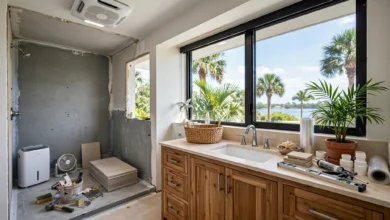
No matter how carefully you plan a bathroom remodel, older homes in particular tend to reveal surprises once walls and flooring come out, outdated wiring, hidden water damage, or plumbing that doesn’t match the original blueprints. This is exactly why a contingency fund matters as much as the primary budget.
A few ways to reduce the impact of surprises:
- Ask your contractor directly what issues they commonly find in homes of a similar age to yours.
- Keep your contingency fund separate from the main budget so it isn’t accidentally spent on upgrades before an actual problem shows up.
- Stay flexible on non-structural decisions, like hardware finishes or accent tile, so there’s room to adjust if the budget shifts.
Living Through the Remodel Without Losing Your Mind
If this is your only bathroom, or one of very few, plan ahead for how the household will manage without it. A few practical steps make a real difference here:
- Set up a temporary space with a portable toilet or access to another bathroom in the home, if only one exists.
- Store frequently used toiletries somewhere accessible outside the construction zone.
- Ask your contractor to seal off the work area with plastic sheeting to reduce dust spreading through the rest of the home.
- Communicate clearly with your contractor about daily start and end times, especially if anyone in the household works from home.
Final Walkthrough and Punch List
Once construction wraps up, do a thorough walkthrough with your contractor before final payment. Check that all fixtures operate correctly, grout lines are even, caulking is clean, and nothing was missed from the original scope of work. Create a written punch list of anything that needs correcting, and agree on a timeline for those fixes before signing off on the project as complete.
Frequently Asked Questions
How far in advance should I start planning a bathroom remodel? For a mid-range remodel, starting the planning process 6 to 8 weeks before you want construction to begin gives enough time to finalize a budget, choose materials, confirm lead times, and vet contractors properly. Larger renovations involving layout changes or custom cabinetry often benefit from 10 to 12 weeks of lead time.
What’s the biggest mistake homeowners make when they plan a bathroom remodel? Choosing finishes before confirming a realistic budget is the most common misstep. It’s much easier to select tile, fixtures, and cabinetry once you know exactly what you have to spend, rather than falling for options that stretch the project well past its intended cost.
Can I plan a bathroom remodel without hiring a designer? Yes, particularly for smaller or more straightforward projects that keep the existing layout. A designer becomes more valuable when the project involves a layout change, custom cabinetry, or when you want a second opinion on how different finishes will work together in the finished space.
How do I know if my bathroom remodel needs a permit? Any work that touches plumbing, electrical wiring, or the structure of the room typically requires a permit in most jurisdictions. Purely cosmetic changes, new paint, hardware, or fixtures that don’t require rerouting plumbing, usually don’t. Confirm directly with your local building department or your contractor before starting demolition.
Conclusion
Learning how to plan a bathroom remodel without the stress comes down to sequencing the decisions correctly: clarify your goals, set a realistic budget with a contingency fund, settle the layout, order materials early, hire a properly vetted contractor, and confirm permits before demolition ever starts. Most of the chaos associated with bathroom renovations isn’t bad luck, it’s the result of skipped planning steps that surface as expensive surprises later. With a clear plan built in the right order, even a full bathroom remodel can move through construction predictably, leaving you with a finished space that actually matches what you set out to build.