12 Kitchen Island Ideas That Add Style and Function
Kitchen island ideas that add style and function, from smart storage to seating and materials, for kitchens of every size and budget.
12 Kitchen Island Ideas That Add Style and Function to Any Kitchen
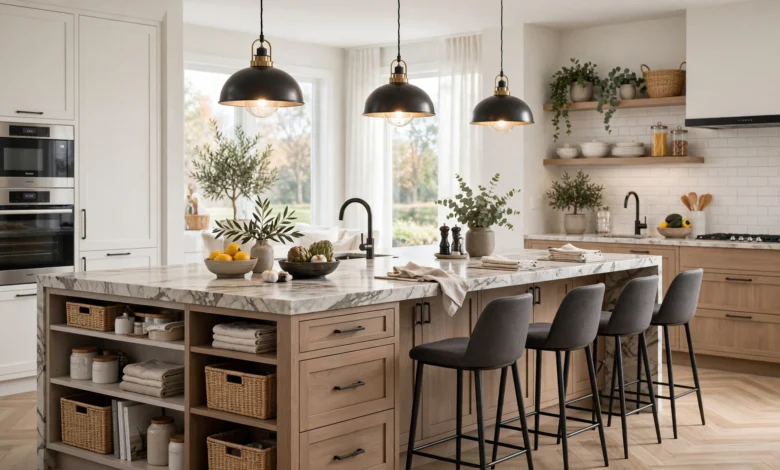
Kitchen island ideas that add style and function are some of the most searched-for design solutions right now, and it makes sense. An island is rarely just a slab of countertop in the middle of the room. Done well, it becomes the busiest, most useful spot in the house: extra prep space while dinner’s cooking, a spot for kids to do homework while you make lunch, a landing zone for mail and keys, and often the place where guests end up gathering no matter how many other seats you offer them. Done poorly, though, an island can eat up walking space, block traffic, or just sit there looking like an afterthought that doesn’t earn its square footage.
This guide covers kitchen island ideas that add style and function, whether you’re working with a sprawling open-plan kitchen or a compact galley where every inch has to work hard. You’ll find layout and storage strategies, material and finish choices that hold up to daily use, seating solutions for different household sizes, and styling tips that make an island feel intentional rather than accidental. Some of these ideas are big renovation projects, and others are simple swaps you can make this weekend. By the end, you’ll have a clear list of options to match your space, your budget, and how you actually use your kitchen day to day.
Why a Well-Designed Kitchen Island Matters
Before getting into specific ideas, it’s worth understanding what separates an island that works from one that doesn’t. A kitchen island is, at its core, a multi-functional unit that adds storage and increases workspace, while often doubling as a casual dining spot too. But it needs to do all of that without disrupting traffic flow or crowding the room. Getting there means thinking through layout, storage, materials, and seating together, not just picking a countertop that looks nice in a showroom.
1. Add Built-In Storage to Maximize Every Inch
If there’s one thing almost every kitchen could use more of, it’s storage, and your island is prime real estate for it. In smaller kitchens especially, an island is an opportunity to add extra storage through cabinets underneath or an open bookcase along the side. Consider:
- Deep drawers for pots, pans, and small appliances that would otherwise clutter your cabinets.
- Pull-out bins for recycling or compost, tucked out of sight but easy to reach.
- A dedicated spice or utensil drawer near the cooktop side if your island houses the range.
Built-in storage is one of the simplest kitchen island ideas that add style and function at the same time, since it declutters the rest of the kitchen without taking up any extra floor space.
2. Choose a Stainless Steel Island for a Clean, Practical Look
A mobile, stainless steel island brings a polished look to almost any kitchen style, from farmhouse to fully modern. It’s a favorite among designers for good reason. It adds the right amount of extra storage and prep surface, and stainless steel is genuinely easy to keep clean, which matters if your island doubles as the main food-prep zone. Many stainless steel islands are also built on wheels, so the whole unit can be moved wherever it’s needed, making it as flexible as it is functional. This makes it a smart pick for renters or anyone who isn’t ready to commit to a fixed, built-in island.
3. Go Curved for a Softer, More Open Layout
Not every kitchen suits a hard-edged rectangular island, and curved islands have become a genuine trend for good reason. A round or curved kitchen island has no corners and doesn’t disrupt the flow of your kitchen layout. It works especially well in open-plan spaces where foot traffic needs to move freely around the perimeter. Whether it’s a full circle or a half-moon shape against a wall, a curved island is a real space-saver that still commands attention and changes how the whole room feels to move through.
4. Mix Open Shelving With Closed Cabinets
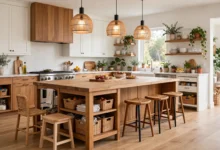
Open shelving adds versatility to your island’s storage, letting you display glassware, cookbooks, or everyday dishware within easy reach, while closed cabinets below keep less attractive essentials out of sight. This combination is one of the more popular kitchen island ideas that add style and function, because it lets you show off a bit of personality (nice ceramics, cookbooks, a favorite bowl) while still hiding the pots, pans, and appliances you don’t want on display. It’s a simple way to make an island feel curated rather than cluttered.
5. Use a Butcher Block Top for Serious Prep Work
If your island’s main job is food prep, a butcher block countertop is hard to beat. It gives you a warm, natural surface that’s forgiving on knives and comfortable to work on for long stretches, whether you’re chopping vegetables for a weeknight dinner or rolling out dough for a weekend bake. It also brings a different texture into the kitchen than stone or quartz, which helps break up an all-white or all-stone scheme and adds a bit of warmth to the room.
6. Try a Small Table or Cart Instead of a Fixed Island
Not every kitchen has room for a full built-in island, and that’s fine. A small French-style wine table can serve as extra counter space and a cozy spot for morning coffee, with a tilting or drop-leaf top that can be stowed away when you need more open floor space for entertaining. A stylish cart works the same way. It’s an easy, low-commitment way to enhance a kitchen’s function without a renovation, and it’s one of the best kitchen island ideas that add style and function for renters or small apartments where a permanent island simply isn’t an option.
7. Add Seating for Casual Meals and Conversation
For many households, the island isn’t just a prep station, it’s where breakfast happens, where kids do homework, and where guests end up standing during a dinner party no matter how many chairs are set at the table. A few seating approaches to consider:
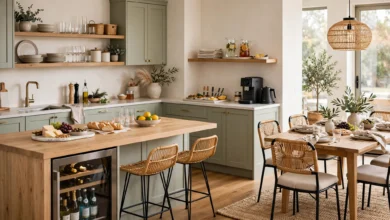
- Bar stools along one side, ideal for quick breakfasts or casual entertaining.
- A built-in banquette or bench at one end for a softer, more relaxed dining feel.
- A drop-down counter height section, which creates a comfortable seating overhang without extending the whole island’s footprint.
Seating is what turns an island from a purely functional workhorse into the social centerpiece of the kitchen, which is often exactly what people are after when they search for kitchen island ideas that add style and function.
How Much Seating Should You Plan For?
A good rule of thumb is to allow roughly 24 inches of counter width per seated guest, with at least 12 inches of knee clearance underneath. This keeps people from bumping elbows and makes the seating area genuinely comfortable to use rather than just decorative.
8. Style It With Height and Texture
An island can look flat and uninteresting without a bit of vertical styling. Designers often say islands need height to make them visually interesting, and a simple way to achieve that is with a tall vase of branches or a dramatic bit of greenery, sized generously enough to actually fill the vertical space above the counter. Other easy styling moves include:
- A pedestal or footed bowl for fruit or bread, which gives everyday items a bit more presence.
- Ginger jars or ceramic vessels, useful as both décor and practical storage for something like cookies or utensils.
- Layered textures, mixing a woven basket, a stone tray, and a ceramic piece rather than one flat surface of matching material.
These small styling choices are what separate a purely functional island from one that photographs, and feels, genuinely finished.
9. Choose a Rustic or Farmhouse-Style Island for Warmth
A kitchen island designed with a farmhouse theme brings a warm, comforting upgrade to the whole room. Reclaimed wood, turned legs, and classic country-inspired lines create a piece that feels like furniture rather than built-in cabinetry, which works particularly well in kitchens that already lean toward warm, natural materials elsewhere. This is one of the more popular kitchen island ideas that add style and function for older or character homes, where a sleek, ultra-modern island would feel out of place.
10. Add a Contrasting Color or Material
One of the simplest ways to make an island feel like a deliberate design choice, rather than an extension of the rest of the cabinetry, is to give it a different color or material entirely. A dark green or navy island against white perimeter cabinets, or a wood-toned island in an otherwise all-white kitchen, immediately draws the eye and signals that this piece was chosen with intention. It’s a low-cost way to add serious visual interest without redoing the whole kitchen.
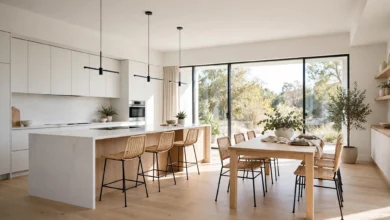
11. Consider a Waterfall Edge for a High-End Look
A waterfall edge, where the countertop material wraps continuously down the sides of the island rather than stopping at the edge, is one of the more striking kitchen island ideas that add style and function in higher-end kitchens. It creates a sleek, seamless look, particularly with stone or engineered quartz, and also has a practical benefit: it protects the sides of the island from scuffs and wear better than a standard cabinet panel would.
12. Right-Size the Island for a Small Kitchen
Small kitchens don’t have to skip the island altogether. Small kitchen islands can lend genuine form and function to even the tiniest spaces without disrupting the flow of the room. A few strategies that work well in compact kitchens:
- A narrow rolling island that can be tucked against a wall when not in use.
- A single-drawer, single-shelf design that prioritizes one function (storage or prep) rather than trying to do everything.
- A stainless steel or butcher block cart on wheels, which offers flexibility without a permanent footprint.
The goal in a small kitchen isn’t to shrink a big island down. It’s to pick the one or two functions that matter most, extra storage, extra prep space, or casual seating, and design around those specifically.
Choosing the Right Island for Your Kitchen
With so many kitchen island ideas that add style and function to choose from, it helps to narrow things down by asking a few honest questions first:
- What’s the island’s main job? Prep space, storage, seating, or all three?
- How much clearance do you have? Aim for at least 42 inches of walking space around the island where possible, more if it doubles as a work aisle.
- What’s your kitchen’s existing style? A rustic farmhouse island will feel out of place in an ultra-modern kitchen, and vice versa.
- Is it permanent or flexible? A built-in island is a bigger commitment; a cart or rolling table offers more flexibility if your needs might change.
For more detailed guidance on planning clearances and layout around a kitchen island, the National Kitchen and Bath Association’s planning guidelines offer professionally vetted recommendations on aisle widths and work zones. For inspiration on materials and finishes, Home Depot’s kitchen island idea gallery is a useful resource for comparing styles side by side.
Conclusion
The best kitchen island ideas that add style and function aren’t about picking the biggest or most expensive option available, they’re about matching the island to how your household actually cooks, eats, and gathers. Whether that means built-in storage and a butcher block top for serious meal prep, a curved silhouette that keeps a small kitchen feeling open, a rolling cart for flexibility, or a contrasting color and waterfall edge for a high-end finish, the twelve ideas covered here give you a full range of options to consider. Start with function, layer in the style choices that suit your space, and you’ll end up with an island that earns its place as the true center of the kitchen.
Keywords: