Kitchen & Dining Ideas for Coastal Homes in Western Australia
Kitchen & dining ideas for coastal homes in Western Australia: layouts, colours, materials and dining tips built for beach living.
Kitchen & Dining Ideas for Coastal Homes in Western Australia
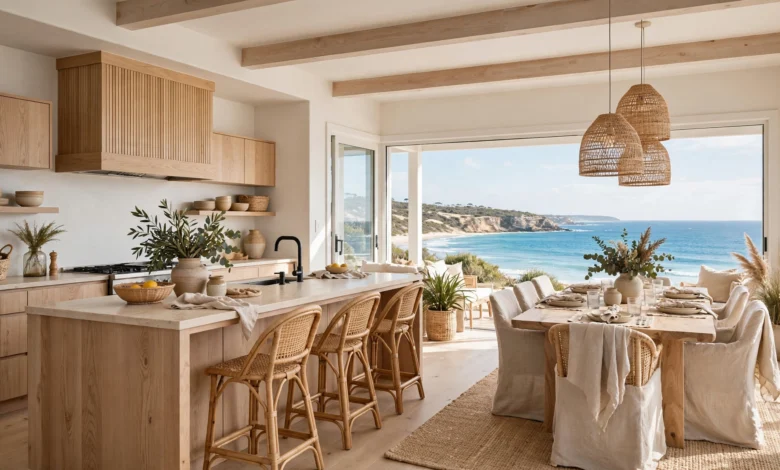
Kitchen & dining ideas for coastal homes in Western Australia usually start with one question: how do you bring the ocean indoors without turning your kitchen into a beach-themed cliché? If you live anywhere from Scarborough to Busselton, you already know the drill. Salt air, blazing summer sun, sandy feet, and a lifestyle that spills straight from the kitchen onto the deck. Your kitchen and dining space need to keep up with all of that while still looking like something you’d want to show off.
This guide walks through what actually works when it comes to kitchen and dining ideas for coastal homes in Western Australia, from layout and colour choices to benchtops, lighting, and the small styling details that pull a room together. We’ll also cover practical points that get skipped in a lot of glossy design articles, like how WA’s climate affects material choices, and what to consider if you’re renovating an older beach house versus building new.
Whether you’re planning a full renovation, a modern coastal kitchen refresh, or just want a dining nook that feels like an extension of the beach, you’ll find ideas here that are grounded in how people actually live in coastal Western Australia, not just how a kitchen photographs for a magazine.
What Makes Good Kitchen & Dining Ideas for Coastal Homes in Western Australia?
Genuine coastal kitchen design isn’t just white cabinets and a shell in a jar on the windowsill. It’s a response to place. WA’s coastline has its own character: bleached limestone, silvery dune vegetation, hard white light, and long dry summers. That’s different to the moody blue-and-white “Hamptons” look you’ll see in American design blogs, and it’s worth knowing the difference before you start picking finishes.
Coastal WA kitchens and dining spaces tend to share a few traits:
- Light-reflective surfaces that bounce natural light around the room, since so many WA kitchens open onto bright outdoor living areas
- Natural, weathered textures like limewashed timber, rattan, and raw stone rather than anything glossy or overly polished
- A restrained colour palette built around whites, sandy neutrals, and one or two muted accent tones
- Materials chosen for durability in heat and UV exposure, not just looks
- An open connection to outdoor entertaining areas, since alfresco dining is basically a second dining room in most WA homes
Keep those five things in mind and everything else in this guide will make a lot more sense.
1. Start With Layout: Open-Plan and Galley Designs Work Best
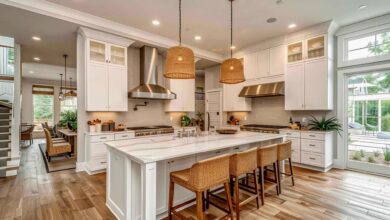
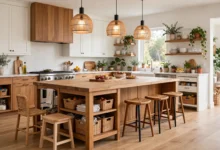
Before colours and finishes, layout does most of the heavy lifting in a coastal kitchen. The two layouts that consistently work well in Western Australian beach homes are open-plan kitchens with a central island, and galley-style kitchens for narrower blocks or older beach houses.
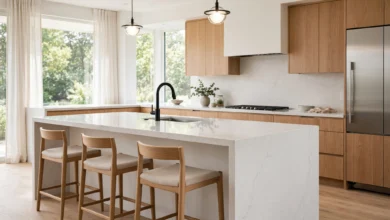
Open-plan kitchen with island
This is the default for most new coastal builds in WA, and for good reason. An island bench:
- Creates a natural gathering point for family and guests
- Gives you extra prep and storage space without closing off the room
- Acts as a visual anchor when the kitchen opens onto a dining and living zone
- Works brilliantly as a breakfast bar for casual coastal living
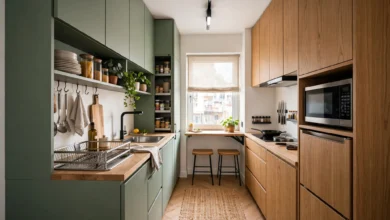
Galley kitchens
If you’re working with a smaller footprint, particularly in older Fremantle or Cottesloe-style beach cottages, a galley layout keeps things efficient. Two parallel runs of cabinetry maximise storage and bench space without demanding a huge floor area, and they still feel open if you keep sightlines clear to a window or courtyard.
A note on flow to outdoor dining
Because so much of coastal WA life happens outside, think about how your kitchen connects to the alfresco or deck. Bi-fold or stacker doors between the kitchen and outdoor dining area are common for a reason: they turn two rooms into one during the warmer months, which is most of the year here.
2. Choosing a Coastal Colour Palette
Colour is where a lot of coastal kitchens either nail the look or tip into something that feels dated fast. The safest and most enduring approach is layering neutrals rather than leaning on obvious “beachy” colours like turquoise.
Base Palette: Whites, Sands, and Warm Greys
Start with a base of soft white or warm off-white cabinetry. Avoid stark, cool whites, which can feel clinical under WA’s harsh midday light. Warmer whites and sandy neutrals read as more relaxed and age better over time.
Accent Colours
Once your base is set, bring in one or two accent tones rather than several competing ones:
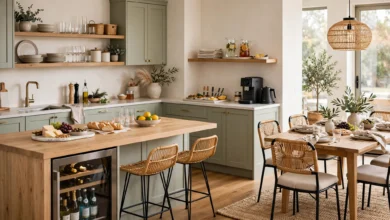
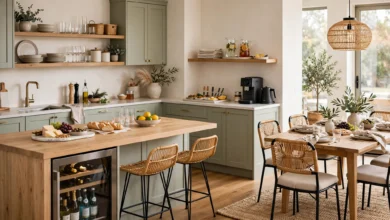
- Muted eucalyptus green for cabinetry, a splashback, or bar stools
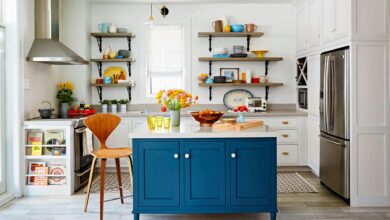
- Soft blue-grey on a kitchen island for contrast without going full “nautical”
- Warm terracotta or clay if you want a nod to the WA landscape rather than the ocean
Materials That Do the Colour Work For You
Instead of painting everything, let natural materials introduce texture and tone:
- Limewashed or whitewashed timber cabinetry
- Textured tiles in a sandy or stone finish for splashbacks
- Woven rattan pendant lights or bar stools for warmth
- Honed limestone or marble-look benchtops
3. Benchtops and Splashbacks: Practical Choices for WA’s Climate
This is where a lot of coastal kitchen guides fall short. They’ll show you a gorgeous marble benchtop without mentioning that WA’s UV levels and heat can be brutal on certain materials.
Benchtop Options Worth Considering
| Material | Why It Works in WA | Watch Out For |
|---|---|---|
| Engineered (composite) stone | Heat and stain resistant, holds up in bright, sun-filled rooms | Choose a matte or honed finish to avoid glare |
| Natural stone (marble-look) | Timeless coastal look, adds real texture | Needs sealing and more upkeep |
| Timber benchtops | Warm, natural feel that suits a relaxed coastal kitchen | Not ideal near a west-facing window with harsh sun exposure |
Splashback Ideas
- Handmade zellige or textured ceramic tiles in soft white or sand tones for depth and movement
- Glass splashbacks for a clean, light-reflective option that maximises brightness
- Natural stone in a subtle vein pattern behind the cooktop as a feature
Heat-resistant splashbacks matter more in WA than in cooler states. If your kitchen faces west, prioritise materials that won’t discolour or warp under sustained afternoon sun.
4. Cabinetry Styles That Suit Coastal WA Homes
Shaker-style cabinetry remains the most popular choice for coastal kitchens across Australia, and WA is no exception. The simple, recessed panel gives a clean, classic look that works whether your home leans more Hamptons, boho, or contemporary coastal.
Other cabinetry approaches worth considering:
- Two-tone cabinetry, pairing light upper cabinets with a slightly darker or contrasting lower run or island, for visual interest without overwhelming the space
- Flat-panel, finger-pull doors if you want something a touch more contemporary while keeping the palette coastal
- Open shelving in place of upper cabinets on one wall, to display crockery, glassware, or a few styled objects and keep the room feeling airy
Matte or satin finishes generally suit coastal kitchens better than high gloss, which can look too formal against the relaxed materials elsewhere in the room.
5. Lighting: Bringing Warmth Without Losing the Coastal Feel
Good lighting is often the difference between a kitchen that looks styled for a photo and one that actually feels good to cook and eat in every day.
- Rattan or woven pendant lights over an island or dining table are a fast way to add coastal warmth without much cost
- Layered lighting — task lighting under cabinets, ambient downlights, and a statement pendant — gives flexibility from morning coffee to evening dinner parties
- Dimmable fittings are worth the investment for dining zones, since WA’s long evenings of outdoor-indoor entertaining benefit from softer light after sunset
- Skylights, where the layout allows, strengthen the connection to natural light that coastal kitchens rely on
6. Dining Ideas for Coastal Homes in Western Australia
A coastal kitchen needs a dining space that matches it, whether that’s a built-in breakfast nook, a full dining room, or an island that doubles as everyday dining. This is really where kitchen & dining ideas for coastal homes in Western Australia come together as one connected experience rather than two separate rooms.
Kitchen Island as Dining Space
For casual family living, an island with bar stool seating is often more practical than a separate dining table, especially in homes that spend most of their time outdoors on weekends.
A Dedicated Coastal Dining Table
If you have the space, a timber dining table in a light, weathered finish anchors the room and pairs naturally with the kitchen’s materials. Look for:
- Reclaimed or FSC-certified timber for both sustainability and character
- A mix of dining chairs and a bench seat for a relaxed, lived-in look
- Rattan or cane-back chairs to echo the woven textures used elsewhere
Indoor-Outdoor Dining Flow
Given how much entertaining in WA moves between kitchen, dining, and alfresco, it’s worth designing these zones as one continuous experience rather than three separate rooms. Matching flooring, a consistent colour palette, and sightlines through to the outdoor dining or bbq bench area all help this flow feel intentional rather than accidental.
7. Storage Solutions Built for Coastal Living
Coastal homes tend to accumulate a specific kind of clutter: beach towels, sandy shoes, reusable shopping bags, and enough serveware for weekend guests. Smart storage keeps the kitchen looking as calm as the rest of the design.
- Deep drawers with soft-close mechanisms for pots, pans, and small appliances
- Pull-out pantries to maximise storage in a compact footprint
- Integrated bins tucked into cabinetry rather than left visible on the bench
- A dedicated mudroom-style zone near the kitchen entry for beach gear, if your floor plan allows it
8. Sustainable and Climate-Smart Choices for WA Kitchens
Because Western Australia’s summers run hot and dry, a few climate-specific decisions will make your kitchen more comfortable and more efficient to run.
- Induction cooktops run cooler than gas and reduce heat load in the kitchen during summer
- Ventilation near west-facing windows helps manage both heat and glare
- Sustainably sourced or reclaimed timber suits both the coastal look and a lower environmental footprint, and choosing timber certified by the Forest Stewardship Council is a straightforward way to ensure it comes from responsibly managed sources
- Double-glazed windows in exposed coastal positions help with both heat and salt-air durability
9. Common Mistakes to Avoid
A few missteps show up again and again when homeowners plan kitchen & dining ideas for coastal homes in Western Australia, and they’re easy to avoid once you know to look out for them:
- Overdoing the theme — anchors, ropes, and literal beach motifs date a kitchen fast. Let materials and colour do the talking instead.
- Choosing high-gloss finishes that clash with the relaxed, matte textures coastal design relies on.
- Ignoring west-facing heat and glare when selecting benchtops and splashbacks.
- Ignoring salt-air corrosion on tapware and hardware near the coast; look for marine-grade finishes if you’re close to the water.
- Skipping ventilation planning, which matters more in WA’s hot, dry summers than in cooler climates.
10. Working With a Local Kitchen Designer
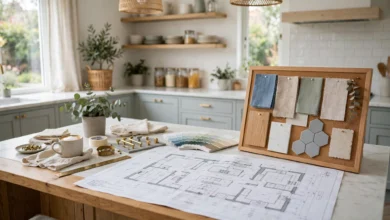
If you’re planning a full renovation, working with a WA-based kitchen designer who understands the local climate, light, and lifestyle will save you a lot of trial and error. A good local designer will factor in things like appliance sizing standards common in Australian homes (600mm ovens as standard, with 900mm ranges popular for larger families), west-facing sun exposure, and how your kitchen needs to connect to outdoor entertaining. For general design inspiration and current trends, resources like Freedom Kitchens’ guide to Hamptons-style coastal kitchens are a useful starting point before you sit down with a designer.
Frequently Asked Questions
What colours work best for a coastal kitchen in WA? Soft whites, sandy neutrals, and warm greys form the best base, with one or two muted accents like eucalyptus green or blue-grey used sparingly on an island, splashback, or cabinetry.
Are coastal kitchens practical for WA’s hot climate? Yes, as long as materials are chosen with heat and UV exposure in mind. Engineered stone benchtops, heat-resistant splashbacks, and good ventilation near west-facing windows all help.
What’s the difference between a Hamptons kitchen and a WA coastal kitchen? Hamptons style leans on navy and white with a more formal, East Coast American aesthetic, while a genuinely WA coastal kitchen draws more on limestone, sand, and native landscape tones for a softer, more relaxed feel.
Do I need a separate dining room, or can the kitchen island work as dining space? Either works. Many WA coastal homes use the island for everyday meals and reserve a separate table, or the outdoor dining area, for entertaining.
Conclusion
Good kitchen & dining ideas for coastal homes in Western Australia come down to working with the local climate and light rather than importing a look from somewhere else. Focus on an open layout that connects naturally to outdoor dining, a restrained palette of whites and sandy neutrals, durable materials suited to heat and UV exposure, and warm textures like timber and rattan to soften the space. Get the layout, colour, and materials right, and the rest of the styling falls into place naturally, giving you a kitchen and dining area that looks good in photos and actually works for the way you live near the coast.
Keywords: