15 Signs You Need an Interior Designer for Your Home
Signs you need an interior designer include a stalled renovation, endless returns, and a home that never quite feels finished.
Signs You Need an Interior Designer for Your Home: 15 Clear Warning Signs to Watch For
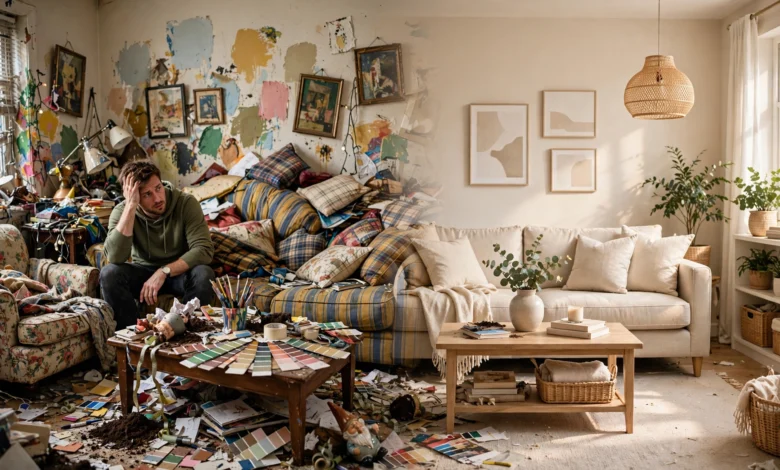
Signs you need an interior designer usually show up long before most homeowners actually admit it. You repaint the same wall twice. You buy a rug, return it, buy another one, and it’s still not right. You’ve had a Pinterest board for two years and the room still looks exactly the same. None of these things feel like a big deal on their own, but together they’re a pattern, and that pattern is worth paying attention to.
There’s a common assumption that hiring a designer is only for people doing a full gut renovation or furnishing a brand-new build. In reality, most people who end up hiring one are just regular homeowners who got stuck somewhere in the process, whether that’s picking a paint color, working around an awkward layout, or trying to make a budget stretch further than it wants to. The DIY route works fine for plenty of projects. It stops working the moment the decisions start costing more time, money, or stress than the project is worth.
This guide walks through fifteen clear signs you need an interior designer, from the obvious ones like a stalled renovation to the quieter ones, like a home that technically has furniture in every room but still doesn’t feel like it works. If more than a few of these sound familiar, it’s probably time to at least have a conversation with a professional.
1. You’ve Repainted the Same Room More Than Once
Standing in the paint aisle staring at forty shades of white is a rite of passage, but if you’ve actually repainted a room two or three times and it still isn’t right, that’s one of the clearest signs you need an interior designer. Color reads differently depending on lighting, room orientation, and the undertones in your existing furniture, and getting it wrong repeatedly usually isn’t bad luck. It’s a sign the decision needs a trained eye, not another trip to the hardware store.
2. You Have a Vision but Can’t Translate It Into Reality
Plenty of homeowners can describe exactly what they want a room to feel like, cozy, airy, warm, minimal, but hit a wall trying to turn that feeling into actual furniture, colors, and layout decisions. This gap between vision and execution is one of the most common reasons people eventually bring in a designer. It’s not a lack of taste. It’s a different skill set, and there’s no shame in not having it.
3. Your DIY Projects Keep Costing More Than Expected
A few failed DIY attempts are normal. A pattern of DIY projects that end up needing professional repairs, or that quietly double in cost once you factor in returns and do-overs, is different. This is one of the more expensive signs you need an interior designer, because at that point the “savings” of doing it yourself have already disappeared.
4. You’re Overwhelmed by the Number of Decisions
A single room involves dozens of decisions: paint, flooring, furniture, lighting, window treatments, and how all of it works together. When a project stalls out simply because there are too many choices to make at once, that’s a sign the process itself needs a guide, not necessarily more time or motivation.

- Decision fatigue often shows up as a project that’s been “in progress” for months with no real movement
- It can also look like a room full of decent individual pieces that were never chosen with each other in mind
- Designers exist specifically to narrow these decisions down into a coherent plan
5. Your Home Has No Cohesive Style
If every room feels like it belongs to a different house, that’s worth paying attention to. A living room that’s modern, a bedroom that’s traditional, and a kitchen that’s somewhere in between isn’t necessarily wrong, but if it happened by accident rather than intention, an interior designer can help pull everything into a style that actually feels like yours throughout the whole home.
6. You’re Renovating and Feel Out of Your Depth
Renovation projects introduce a level of complexity that goes well beyond picking paint colors. Structural changes, lighting design, plumbing relocations, and custom cabinetry all require specialized knowledge that most homeowners simply don’t have, and getting it wrong can be expensive to fix. As Fratantoni Interior Designers puts it, <cite index=”27-1″>a project that requires specialized knowledge, such as structural work, lighting design, or custom furniture, is one of the clearest signs it’s time to bring in a professional</cite>.
7. You Keep Buying and Returning Furniture
If your return history at furniture stores is starting to look like a part-time hobby, that’s a strong signal. Buying a piece, realizing it doesn’t fit the scale of the room or clash with everything else, and returning it, only to repeat the cycle, wastes both time and money that a designer’s trained eye would have avoided from the start.
8. Your Home Feels Stuck in the Past
A home that hasn’t been updated in a decade or more often needs more than a few new throw pillows to feel current. An interior designer stays on top of materials, layouts, and finishes, and can modernize a space while still respecting the architecture and your personal style, rather than chasing a trend that will look dated again in five years.
9. You Don’t Have the Time to Manage a Project
Between work, family, and everything else, plenty of people simply don’t have the bandwidth to research fabrics, compare furniture options, and manage delivery timelines. If your design project keeps getting pushed to “next weekend” indefinitely, the issue often isn’t motivation, it’s capacity. A designer can take over the parts of the process that are eating your time without you having to give up creative input.
10. You Have an Awkward or Underused Space
Every home has at least one room that never quite found its purpose: an oddly shaped nook, a formal dining room nobody eats in, or a spare room that’s become a storage dumping ground. According to JJones Design Co., <cite index=”28-1″>a room that’s rarely used or has become a catch-all for clutter is one of the clearest signs it’s time to think about how to repurpose that space into something useful</cite>. A designer can look at an underused space and see potential that isn’t obvious from inside the problem.
11. You’re Moving and Your Furniture Doesn’t Fit the New Layout
Furniture that worked perfectly in your old home can turn into a puzzle in a new one. Different room proportions, wall placements, and light sources mean pieces that used to look great might suddenly feel oversized, undersized, or just wrong. This is a common trigger point for hiring a designer, since it involves both a fresh floor plan and decisions about what to keep, sell, or replace.
12. You Want a High-End, Cohesive Look
Sometimes the issue isn’t a specific problem room, it’s simply wanting a finished, polished result that feels intentional rather than assembled piece by piece over the years. A designer’s ability to source, coordinate, and finish a space to a professional standard is difficult to fully replicate through DIY alone, particularly when it comes to details like proportion, layering, and lighting design.
13. You’re Worried About Wasting Money on Mistakes
A tight budget is often the exact reason people hesitate to hire a designer, but it can also be the strongest argument for it. Professional guidance helps homeowners avoid costly design mistakes, wrong-sized furniture, paint colors that look different under real lighting, rugs that don’t fit the room, that quietly add up over time. A good designer typically has access to trade discounts that can offset part of their fee, making the net cost lower than it first appears.
14. Your Home Doesn’t Reflect Who You Are Anymore
Life changes, and homes are supposed to change with it. An empty nest, a growing family, a career shift toward more time working from home, all of these shift what a space actually needs to do. If your home still reflects an earlier version of your life rather than your current one, that disconnect is a legitimate reason to bring in a designer who can help translate your current lifestyle into the physical space.
15. You’ve Lost Confidence in Your Own Design Decisions
This is the quiet one. After enough mismatched purchases, repainted walls, and rooms that never quite came together, some homeowners simply stop trusting their own instincts. That loss of confidence is one of the more emotionally driven signs you need an interior designer, and it’s just as valid as any of the practical reasons on this list. A collaborative process with a professional often restores that confidence by showing you what actually works and why.
What to Do If Several of These Signs Apply to You
If you’ve recognized yourself in three or more of these signs, it’s worth having an initial consultation before committing to a full project. Most designers offer a starting conversation that costs far less than a full-service package and gives you a clearer sense of scope, budget, and whether it’s the right fit.
A few practical next steps:
- Make a list of your specific pain points, whether that’s a single room or a whole-home issue, before your first conversation
- Set a realistic budget range so the designer can tell you upfront what’s achievable within it
- Ask about their process, including whether they handle sourcing, contractor coordination, and installation, or design only
- Check recent portfolio work, ideally in a similar style or home type to yours
For general design inspiration while you weigh your options, resources like <a href=”https://www.houzz.com/magazine”>Houzz’s design magazine</a> and <a href=”https://www.architecturaldigest.com/design”>Architectural Digest’s design section</a> are useful for seeing what a professionally finished space actually looks like, which can help clarify whether DIY or a designer is the better fit for your project.
Conclusion
Signs you need an interior designer rarely show up as one dramatic moment. They build gradually: a room repainted too many times, furniture bought and returned in a loop, a renovation that’s outpaced your expertise, or simply a home that no longer feels like it fits how you live. None of these signs mean you’ve failed at decorating your own home. They mean the project has reached a point where professional guidance saves more time, money, and frustration than continuing to figure it out alone. If several of the fifteen signs in this guide sound familiar, a short consultation with a designer is usually enough to find out whether it’s the right next step, without committing to a full renovation before you’re ready.
Keywords: