20 Kitchen & Dining Ideas That Make Entertaining Easy
Kitchen and dining ideas that make entertaining easier, from island seating and open layouts to lighting, storage and bar setups.
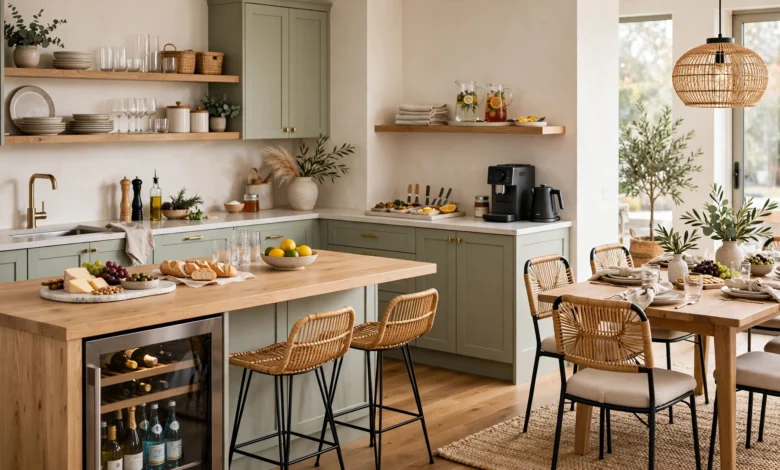
Kitchen and Dining Ideas: 20 Brilliant Ways to Make Entertaining Effortless
Kitchen and dining ideas built around entertaining look different from ideas built purely around cooking, and that distinction matters more than most renovation guides admit. A kitchen can be beautifully designed and still create bottlenecks the moment six guests show up, while a modest space with the right layout and flow can host a dinner party without anyone feeling like they’re in the way.
The shift toward open-plan living over the past decade has made this even more relevant. Today’s kitchens aren’t tucked behind a door, they’re the centre of the home, expected to handle prep, cooking, serving, casual seating and conversation all at once. That means the decisions that matter most for entertaining, island size, seating placement, lighting, storage and traffic flow, deserve just as much attention as cabinetry finishes and countertop material.
This guide brings together 20 practical kitchen and dining ideas specifically aimed at making entertaining easier, whether you’re hosting a casual weeknight dinner for friends or a full holiday gathering. We’ll cover layout strategies that keep guests out of the cook’s way, seating and storage choices that support real hosting, and lighting and styling details that set the mood without any extra effort on the night itself. Whether you’re planning a full renovation or simply rethinking how your current space works, these ideas are grounded in how people actually entertain, not just how a kitchen photographs.
Why Layout Matters More Than Style for Entertaining
Before getting into specific ideas, it’s worth understanding why layout consistently outperforms decor when it comes to entertaining-friendly design. A well-planned kitchen and dining layout keeps the cook connected to guests instead of isolated behind a wall, gives people a natural place to gather that isn’t directly in the traffic path of the stove, and creates enough flexible surface space to handle food, drinks and serving all at once. Style choices matter too, but they matter far less if the underlying flow doesn’t work.
20 Kitchen and Dining Ideas That Make Entertaining Easier
1. Open Up the Kitchen to the Dining and Living Space
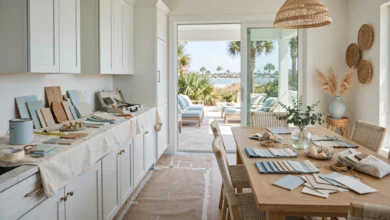
An open-plan layout remains the single biggest factor in creating an entertaining-friendly home. By blending cooking, dining and living areas into one connected space, the person preparing food stays part of the conversation instead of missing it. This layout also lets guests naturally spread across the space rather than clustering awkwardly in a single doorway.
2. Extend the Island Into a Dining Surface
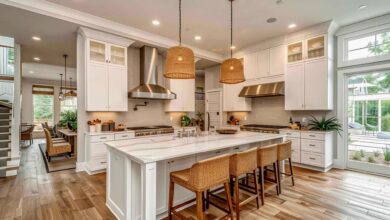
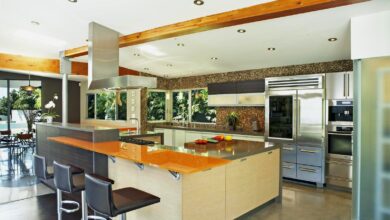
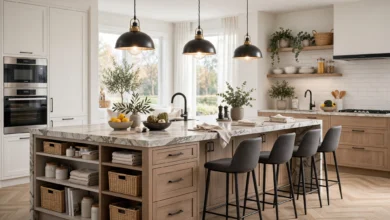
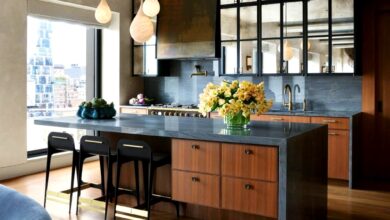
Rather than treating the island purely as a prep surface, extending it into a full dining or bar-height section turns it into the social centre of the room. A kitchen island with an extended surface, whether through a waterfall countertop, a raised bar section or a wood extension at a different height, gives guests somewhere to sit and eat without needing a separate dining table for casual gatherings.
- Standard counter-height islands typically sit around 36 inches from the floor
- Bar-height extensions for stool seating usually run closer to 42 inches
- A mixed-height island separates messy prep work from the seating area visually
3. Prioritise Island Seating for Casual Hosting
The kitchen island has become less of a workstation and more of a genuine gathering spot, the place guests naturally end up whether or not that was the plan. Designing generous seating along at least one side of the island, with enough clearance for people to comfortably get in and out, makes casual entertaining far more natural than relying solely on a formal dining table.
4. Create a Clear Zone for Guests Away From the Cook’s Workspace
Even in an open layout, it helps to define a casual seating or standing zone that’s physically separate from the primary cooking triangle of stove, sink and fridge. This keeps guests comfortably nearby without getting underfoot while food is actively being prepared, which reduces stress for the host far more than any single design feature.
5. Choose Statement Lighting Over the Island
Lighting does more to set an entertaining mood than almost any other design choice. Sculptural pendant lighting over an island or extended dining surface instantly draws the eye and gives the space a defined focal point, while also providing the practical task lighting needed for food prep and serving.
- Hang pendants at a height that illuminates the surface without blocking sightlines across the room
- Choose fixtures with both downward and ambient light for versatility between prep time and dinner time
- Dimmable controls let the same space shift from bright weekday prep lighting to a softer evening glow for guests
6. Layer Lighting Throughout the Room
Beyond the island, a well-lit entertaining space benefits from multiple light sources rather than one central fixture. Under-cabinet lighting adds a soft glow at counter level, while accent lighting in open shelving or a display cabinet adds warmth without needing every light in the room turned up fully.
7. Keep the Colour Palette Warm and Inviting
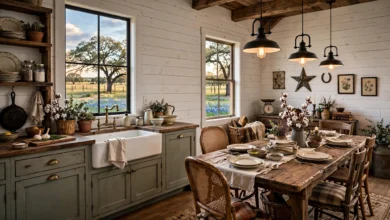
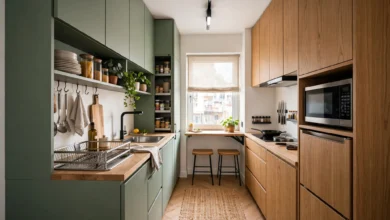
Warmer tones, soft sage, terracotta, oat and deep wood finishes, have overtaken cooler greys as the dominant direction in current kitchen design, and they tend to photograph and feel more welcoming for entertaining than a stark, cold palette. A warm scheme makes a space feel lived-in and comfortable rather than showroom-perfect, which puts guests at ease the moment they walk in.
8. Add a Dedicated Bar or Beverage Station
A small dedicated bar area, even just a section of counter with a wine fridge, glassware storage and a few bottles on display, keeps drinks self-service and out of the main prep zone. This single addition removes one of the most common entertaining bottlenecks: guests and hosts both needing access to the same small stretch of counter at the same time.
- A narrow cabinet or open shelf works well in smaller kitchens without space for a full bar cart
- Keep everyday glassware within easy reach so guests can serve themselves
- A small under-counter fridge dedicated to drinks frees up the main refrigerator during a party
9. Choose Durable, Easy-to-Clean Surfaces
Entertaining puts more wear on a kitchen than everyday use, from spilled drinks to hot serving dishes set down quickly. Quartz and other non-porous countertop materials resist staining and heat far better than more delicate natural stone, making them a smarter choice for households that host regularly.
10. Design Flexible Seating That Can Expand
A dining table that seats six every day but can extend to ten with a leaf, or a kitchen that combines fixed island seating with a few flexible stools that can be pulled in from elsewhere, gives you the flexibility to host larger groups without a table that feels oversized the rest of the time.
11. Use Open Shelving for Easy Access During a Party
Open shelving keeps everyday serving dishes, glassware and platters visible and within easy reach, which matters far more during a busy dinner party than it does on a quiet Tuesday. It also adds a lived-in, styled look to the kitchen that closed cabinetry doesn’t achieve on its own.
12. Build In a Serving Station Near the Dining Area
Positioning a sideboard, buffet counter or a section of extended countertop near the dining table gives guests a natural spot to serve themselves, rather than crowding around the stove or a single serving dish passed down a long table. This is a particularly useful addition for households that host buffet-style or family-style meals regularly.
13. Keep Traffic Flow in Mind From the Start
A kitchen that looks stunning in photos can still feel chaotic during a party if the layout forces guests and hosts to constantly cross paths. Planning clear walkways, generally at least a metre of clearance around the island and between major appliances, keeps the room functioning smoothly even when it’s full of people.
14. Add a Window or Sightline to the Dining Area
Positioning the kitchen so the cook has a direct sightline to the dining or seating area keeps conversation flowing naturally, even mid-task. This is one of the simplest, most overlooked layout decisions in kitchen design, and it consistently ranks as one of the features hosts value most once they’ve lived with it.
15. Choose Furniture That Supports Long Evenings
Comfortable dining chairs matter more than they get credit for when entertaining runs long. A chair that looks sleek but grows uncomfortable after an hour will quietly shorten your dinner parties, so it’s worth prioritising comfort alongside style when selecting dining seating, particularly if you regularly host multi-course meals or long conversations after dinner.
16. Incorporate a Coffee or Tea Station
A small dedicated coffee or tea station, whether a built-in machine, a simple counter setup with mugs and supplies nearby, or a pull-out drawer with everything needed, gives guests something to do themselves at the end of a meal without pulling the host back into the kitchen. It’s a small addition that consistently makes hosting feel more relaxed.
17. Use Warm, Layered Textures to Soften an Open Layout
Open-plan kitchen and dining spaces can sometimes feel cavernous or cold if every surface is hard and reflective. Introducing warmer materials, wood shelving, woven bar stools, textured tile or a wool rug under the dining table, softens the acoustics and the atmosphere, which makes a real difference to how a space feels once it’s full of people and conversation.
18. Plan for Overflow Storage
Entertaining regularly means needing extra serving dishes, table linens and glassware that don’t necessarily need to live in daily-use cabinets. A dedicated pantry shelf, a sideboard drawer, or even a nearby closet set aside specifically for entertaining supplies keeps your everyday kitchen storage uncluttered while still giving you everything you need close at hand when guests arrive.
19. Choose a Kitchen Faucet and Sink Suited to Fast Cleanup
A deep, wide sink and a flexible pull-down faucet make a genuine difference during and after a gathering, when dishes pile up faster than usual. A single deep basin handles large pots and serving trays far more easily than a divided sink, which matters more during a dinner party than it does for everyday washing up.
20. Style the Table as Part of the Overall Design
Finally, treating the dining table itself as part of the kitchen’s overall design, rather than an afterthought, ties the whole entertaining space together. A table runner, simple greenery, and a few well-chosen serving pieces left permanently on display do more to make a kitchen feel entertaining-ready at a moment’s notice than any last-minute styling effort ever could.
Bringing the Ideas Together: A Simple Planning Checklist
If you’re working through a renovation or a smaller refresh with entertaining in mind, it helps to prioritise decisions in this order:
- Layout and flow: open connections, traffic clearance and sightlines between cook and guests
- Seating capacity: island seating, an expandable table, or a combination of both
- Lighting: statement fixtures over key surfaces, layered with dimmable ambient light
- Storage and stations: a bar or beverage area, overflow storage, and easy-access serving supplies
- Finishing touches: warm materials, comfortable seating and a styled table that’s ready to go
Organisations like the National Kitchen and Bath Association publish detailed planning guidance on clearances, work triangles and seating dimensions that’s worth reviewing if you’re working through a full kitchen renovation rather than a smaller update. For entertaining-specific guidance on hosting flow and table setup, resources such as Martha Stewart’s entertaining guides offer practical, tested advice that pairs well with the structural design decisions covered here.
Common Mistakes That Make Entertaining Harder
- Placing the only prep surface directly in the path guests naturally take to the drinks or food
- Skipping a dedicated bar or beverage area, which forces everyone into the same small stretch of counter
- Choosing a dining table that only comfortably seats your everyday household, with no way to expand it
- Under-lighting the dining area while over-lighting the kitchen, which splits the room’s atmosphere in two
- Storing entertaining supplies so far from the kitchen that setup becomes its own chore before guests even arrive
Final Thoughts
The best kitchen and dining ideas for entertaining aren’t about a single showstopping feature, they’re about a layout and set of small decisions that work together: an open connection between cooking and gathering spaces, generous island seating, layered lighting, a dedicated spot for drinks, and storage that keeps entertaining supplies close at hand. Prioritise flow and function first, then let warm materials, comfortable seating and thoughtful styling do the rest. Get those fundamentals right, and hosting stops being a project you have to plan around your kitchen, and starts being something your kitchen was actually designed to do.
Keywords: