Top 10 Popular Design Trends Sweeping Manchester Homes
Design trends sweeping Manchester homes this year favour warm neutrals, texture and personal touches. Here are the 10 styles worth knowing.
Design Trends Sweeping Manchester Homes: Top 10 Popular Styles Transforming Local Interiors
Design trends sweeping Manchester homes right now are easy to spot once you know what to look for. Walk through Chorlton, Didsbury or the Northern Quarter and you’ll notice terraced houses that once stuck to magnolia walls and matching furniture sets are now full of texture, colour and character. Converted mill apartments are swapping stark industrial finishes for warmth. Even new-build estates on the edges of the city are borrowing ideas straight from interior design magazines.
This shift isn’t random. It reflects what’s happening across the UK more broadly: a move away from cold, over-styled minimalism toward homes that feel lived-in, personal and genuinely comfortable. Manchester’s housing stock, a mix of Victorian terraces, red-brick semis, converted warehouses and new apartment blocks, gives homeowners here an unusually wide canvas to work with. That’s part of why the design trends sweeping Manchester homes this year often feel a step ahead of the national picture.
Whether you’re planning a full renovation, redecorating a single room, or just want to know what’s catching everyone’s eye this year, this guide breaks down the ten popular styles shaping houses across Greater Manchester right now. From warm neutral palettes to the return of cooler metals and decorative flooring, each trend below comes with practical ways to bring it into your own space, no matter what kind of property you live in.
1. Warm, Grounded Neutrals Lead the Way
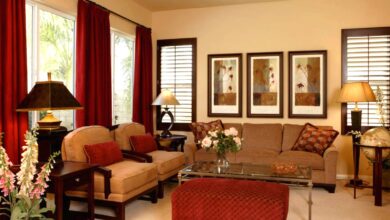
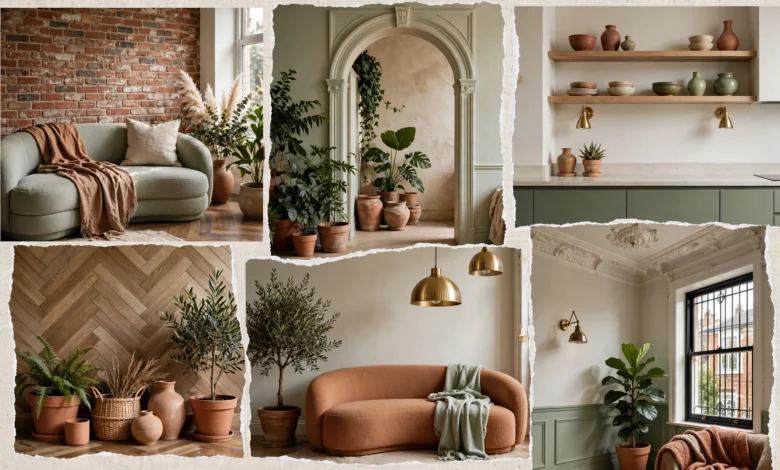
The all-white, all-grey look that dominated the last decade is fading fast. In its place, Manchester homeowners are choosing warmer, earthier tones that feel calmer and more inviting.
Stone, clay, taupe and soft greige shades are showing up on walls, cabinetry and soft furnishings across the city, and for good reason: <cite index=”1-1″>these warm, calming colours help rooms feel connected and peaceful rather than sterile</cite>.
Why it works in local homes:
- Victorian terraces with smaller windows benefit from warmer tones that soften harsh shadows.
- Red-brick exteriors pair naturally with clay and stone interior palettes.
- Warm neutrals photograph well for the growing number of local homeowners renting rooms or listing properties online.
Easy ways to try it:
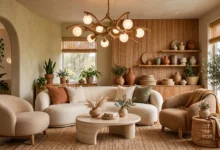
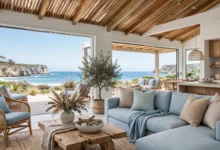
- Swap cool grey walls for a warm greige or soft clay tone in one room first.
- Choose natural wood or rattan furniture over glossy white finishes.
- Layer in warm-toned textiles like linen curtains or a wool throw.
2. Comfort-Led Minimalism (Also Known as “Midimalism”)
Full minimalism is out, but so is cluttered maximalism. What’s replacing both is something in between, often called midimalism, which keeps spaces calm without stripping away personality.
This approach favours soft curves, cosy seating and a handful of carefully chosen pieces rather than empty rooms or overflowing shelves. It’s one of the more affordable design trends sweeping Manchester homes, especially in city-centre flats where space is limited but comfort still matters.
Key features of this trend:
- Rounded furniture edges instead of sharp, angular pieces
- Fewer decorative items, but each one chosen with intention
- Uncluttered surfaces paired with tactile, comfortable textiles
Given the number of compact apartments in Ancoats and the Green Quarter, this trend makes practical sense. It lets residents keep small rooms feeling open while still adding warmth and character.
3. Mixing Old and New in Period Properties
Manchester has an enormous stock of Victorian and Edwardian terraces, and homeowners are increasingly embracing that history rather than covering it up. The trend now is to pair original features, like coving, fireplaces and sash windows, with contemporary furniture and lighting.
This blend of eras is one of the more distinctive design trends sweeping Manchester homes, and it creates a house that feels personal and timeless rather than stuck in one decade. Design experts have noted a similar shift nationally, pointing out that <cite index=”6-1″>classic elements such as wall panelling, checkerboard floors and gallery walls are returning to homes this year</cite>.
How Manchester homeowners are doing this:
- Keeping original fireplaces as a focal point and building modern seating around them.
- Adding panelling to hallways and living rooms in period terraces.
- Mixing vintage or secondhand furniture finds from local markets with new pieces.
- Choosing modern lighting fixtures that contrast with older architectural details.
This trend works particularly well in areas like Chorlton, Levenshulme and Withington, where period housing stock is common and residents want to preserve character while updating function.
4. Bringing the Outdoors In
Natural light, greenery and organic materials are showing up in nearly every room across the city this year. Given Manchester’s grey winters, it’s not surprising that homeowners are prioritising anything that makes their space feel brighter and more connected to nature.
Mirrors, lighter wall finishes and internal windows help maximise limited daylight, especially in terraced houses with narrower floor plans. Houseplants remain central to this trend too, with statement trees and low-maintenance greenery both popular choices.
Popular plant choices for local homes:
- Snake plants and pothos for low-light hallways and bathrooms
- Olive or fiddle-leaf fig trees for bright living rooms and bay windows
- Small herb racks in kitchens for both décor and practicality
- Moss panels or living walls as a statement feature in larger spaces
This is one of the easiest design trends to adopt, since it doesn’t require structural changes, just a shift in how existing rooms are styled and lit.
5. Textured, Tactile Materials Take Centre Stage
Flat, single-finish surfaces are giving way to layered textures across floors, walls and furniture. Boucle upholstery, ribbed wood panelling, woven rugs and rough-plastered walls are all appearing in local renovations this year.
Texture adds depth to a room without relying on bold colour, which makes it a flexible option for renters and homeowners alike who want visual interest without a full redecoration.
Ways to add texture without a major renovation:
- Introduce a chunky knit or boucle throw and cushions
- Choose a textured rug over a flat-weave option
- Add ribbed or fluted panels to a feature wall
- Mix matte and glossy finishes within the same room
6. Cooler Metals Make a Comeback
After years of warm brass and gold dominating kitchens and bathrooms, cooler metallic finishes are returning to interiors across the city. Chrome, brushed nickel and stainless steel are showing up in tap fittings, lighting and cabinet hardware.
This isn’t a return to the harsh chrome bathrooms of the early 2000s. Instead, designers are describing it as a more refined, European-influenced look, and reports suggest <cite index=”3-1″>designers are leaning heavily into silver, chrome, stainless steel and brushed nickel to bring a sleek, contemporary edge back into interiors</cite>.
Where this trend fits best:
- Kitchen taps and cabinet handles in newly renovated homes
- Bathroom fixtures in converted mill apartments with an industrial base
- Statement lighting, such as chrome wall sconces or pendant fittings
Manchester’s many converted industrial buildings, with their existing steel beams and exposed brickwork, are a natural fit for this cooler metallic palette.
7. Personal, Lived-In, Layered Spaces
Perhaps the biggest shift behind this year’s most popular styles is a move away from show-home perfection. Homeowners want rooms that reflect their own story rather than a template pulled from a catalogue, and this is quickly becoming one of the defining design trends sweeping Manchester homes in both period houses and modern flats.
This means collected objects, family pieces, secondhand finds and travel souvenirs are being displayed rather than tucked away. Layered textures and mismatched-but-coordinated furniture are replacing matching three-piece suites.
Signs of this trend in a home:
- Gallery walls with a mix of art, photos and mirrors
- Furniture collected over time rather than bought as a matching set
- Open shelving displaying books, ceramics and personal items
- A colour palette built around favourite pieces rather than a strict scheme
This approach suits Manchester’s creative, independent character, and it’s especially visible in areas known for their arts and music scenes, like the Northern Quarter and Salford’s Chapel Street.
8. Statement and Layered Lighting
Harsh overhead lighting is losing ground to softer, layered lighting schemes. Wall sconces, table lamps and portable fixtures are being used to create warmth and mood rather than relying on a single central light.
This trend also opens the door to more playful design choices, since smaller lighting pieces are easier to update than a full fitting. Ceramic bases, pleated fabric shades and sculptural glass fixtures are all popular right now.
Simple ways to layer lighting in any room:
- Add a floor lamp in a reading corner instead of relying on the main light
- Use wall sconces to highlight artwork or architectural features
- Choose warm bulb temperatures (around 2700K) for a cosier feel
- Mix lamp styles rather than buying a matching set
9. Decorative and Patterned Flooring
Flooring is having a moment across UK interiors, and Manchester is no exception. Encaustic tiles, checkerboard patterns and terracotta finishes are appearing in kitchens, hallways and bathrooms, often as a nod to Victorian tiled entryways that were common in the city’s original terraces.
This trend pairs naturally with the “mixing old and new” approach mentioned earlier, since many local homes already have decorative tiled hallways worth restoring or replicating.
Where decorative flooring works well:
- Entryways and hallways in period terraces
- Kitchen floors as a bold but grounding statement
- Bathroom floors paired with simpler wall finishes to avoid overwhelming a small space
10. Slow Interiors: Quality Over Quantity
The final trend running through homes across the city this year isn’t about a specific colour or material. It’s a broader shift toward buying less but choosing better. Homeowners are moving away from fast furniture and frequent redecorating in favour of pieces built to last.
This mirrors a wider national pattern, and industry observers have pointed out that <cite index=”5-1″>homeowners are increasingly prioritising quality, longevity and thoughtful craftsmanship over frequent updates and disposable décor</cite>.
What this looks like in practice:
- Investing in solid wood furniture instead of flat-pack alternatives
- Choosing timeless colour palettes that won’t need replacing every couple of years
- Repairing and reupholstering existing pieces rather than replacing them
- Buying secondhand or vintage where possible, both for cost and sustainability
For a deeper look at how these ideas are playing out across the wider UK market, Homes & Gardens has put together a detailed breakdown of the colours, materials and layouts designers are focusing on this year. Houzz’s UK trend coverage is another useful resource if you want to compare what’s happening nationally against what you’re seeing in your own neighbourhood.
Bringing These Design Trends Into Your Own Manchester Home
You don’t need a full renovation budget to take advantage of any of the trends above. Most homeowners start small: a new lighting scheme, a textured throw, a warmer paint colour, and build from there as budget and time allow.
A few practical starting points:
- Pick one room to test a new palette before committing to the whole house.
- Prioritise lighting changes first, since they’re low-cost but have a big visual impact.
- Shop local vintage and secondhand shops for character pieces that fit the “mixing old and new” trend.
- Keep period features like fireplaces and coving rather than removing them during renovations.
Manchester’s mix of period housing and modern conversions means almost any of these ten popular styles can be adapted to fit your specific property, whether that’s a Victorian terrace in Chorlton or a converted loft in Ancoats.
Conclusion
The design trends sweeping Manchester homes this year point toward warmth, texture and personality over sterile perfection, and that shift is visible across the city’s Victorian terraces, converted mills and new-build developments alike. From grounded neutral palettes and layered lighting to the return of decorative flooring and cooler metals, each trend offers a practical way to refresh a home without losing the character that makes Manchester’s housing stock so distinctive. Whether you’re planning a full renovation or a few small updates, focusing on quality, texture and pieces that reflect your own story is the throughline connecting every trend on this list, and it’s a direction that looks set to shape local homes well beyond this year.