Interior Designer Trends Taking Over Homes in Florida
Interior designer trends taking over homes in Florida for 2026, from warm minimalism to indoor-outdoor living, explained room by room.
Interior Designer Trends Taking Over Homes in Florida: 10 Bold Ideas Defining 2026
Introduction
Interior designer trends taking over homes in Florida right now have very little in common with the cool, stark interiors that dominated the last decade. Walk into a newly designed home in Miami, Tampa, Orlando, or Palm Beach County this year and you’ll notice something different: warmer color palettes, natural textures, and rooms that open straight into the backyard as if the wall was never really there.
Florida’s climate, light, and lifestyle shape its design trends in ways that don’t apply everywhere else. Humidity affects material choices. Year-round sunshine changes how homeowners think about outdoor living. And a state full of transplants, retirees, and young families all wanting something different means Florida interiors rarely settle into one single look for long.
This article breaks down the ten trends currently reshaping homes across the state, based on what’s actually showing up in new builds and remodels this year, from Miami’s tropical luxury interiors to Palm Beach County’s warm minimalism and Port St. Lucie’s community-driven layouts. Whether you’re planning a full renovation or just want to update a few rooms, understanding where Florida interior design is headed in 2026 will help you make choices that feel current now and hold up well beyond this year.
1. Warm Minimalism Replaces Cool, Stark Interiors
For years, cool grays and stark white interiors dominated Florida design. That’s shifting fast. Cool gray interiors dominated the last decade, but in 2026, warmer tones are taking over, with Florida homeowners leaning into natural light and warmer palettes that feel inviting rather than sterile.
This shift shows up in a few consistent ways:
- Warm whites, taupe, and soft greige replacing pure white and cool gray
- Matte finishes instead of high-gloss surfaces
- Curved furniture edges replacing sharp, angular pieces
- Linen drapes and woven textures softening otherwise clean-lined rooms
The appeal isn’t just aesthetic. Warmer, more welcoming interiors also tend to perform better in resale situations, since they create a more inviting first impression than sterile, cooler palettes.
2. Color Drenching and Layered Earth Tones
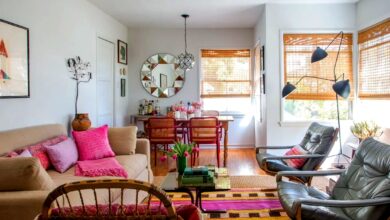
One of the most talked-about interior design trends this year is color drenching, where a single tone carries across walls, ceiling, trim, and sometimes even cabinetry. This technique creates immersive rooms that feel intentional and dramatic while still maintaining a cohesive aesthetic, with deep charcoals, forest greens, and warm earth tones proving especially popular in bedrooms, libraries, and lounge spaces.
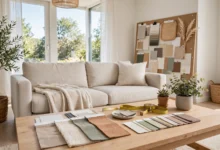
Florida’s version of this trend leans warmer and earthier than what’s showing up in other regions. Miami’s 2026 palette in particular favors sage and olive greens, clay and terracotta tones, and smoky blues, hues that read as calm while still reflecting the city’s more vibrant character.
A related technique, sometimes called color capping, layers several tones from the same family across a single room. This approach adds subtle depth to walls and ceilings without overwhelming the space, and it works especially well in Florida homes where natural light plays such a large role in how interiors feel throughout the day.
3. Indoor-Outdoor Living Takes Over the Floor Plan
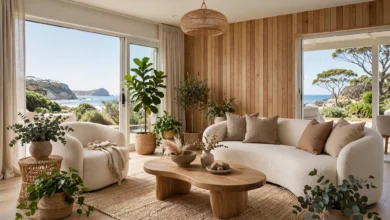
No trend defines Florida homes in 2026 more than the disappearing boundary between inside and outside. Florida homes are increasingly designed to blur the line between indoor and outdoor spaces, using expansive sliding glass walls, covered outdoor kitchens, and resort-style pool environments that let living spaces extend naturally outward.
This isn’t just about adding a patio. The trend includes disappearing glass walls, covered outdoor living rooms, and summer kitchens that function as true extensions of the interior, continuing to dissolve the boundary between inside and out.
Common features driving this trend include:
- Covered lanais that create a shaded, usable transition space between the house and yard
- Pocket or sliding glass walls that fully open a living room to an outdoor patio
- Outdoor kitchens built with the same finish quality as the interior kitchen
- Interior courtyards that bring daylight and greenery into the center of the home
Backyards and patios are increasingly designed for everyday living rather than occasional use, with the covered lanai standing out as one of the most sought-after features for creating a seamless transition from interior living areas to the outdoors.
4. Biophilic Design and Natural Materials
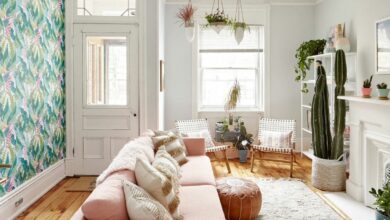
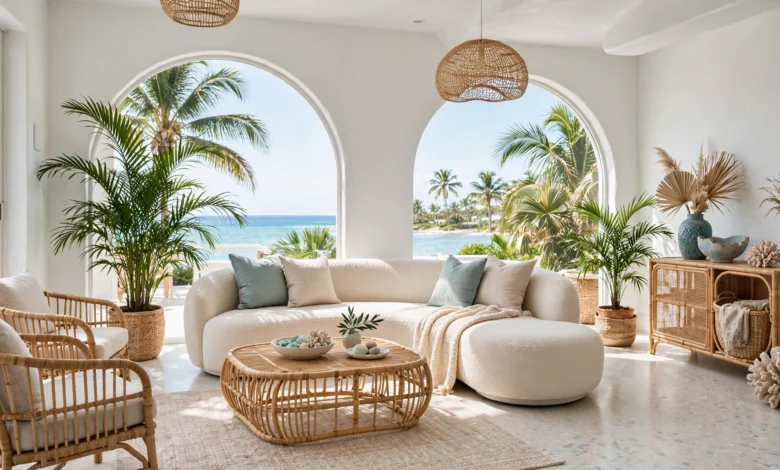
Florida’s connection to its landscape shows up directly in material choices this year. Homes are embracing biophilic design, using materials like stone, rattan, and reclaimed wood to echo nature, an approach that enhances beauty while also supporting overall well-being.
Designers are layering these organic materials rather than using just one. Stone, plaster finishes, natural woods, and textured tile are being combined in layered ways to create depth and visual interest throughout a home.
This trend pairs naturally with Florida’s climate, since materials like stone and reclaimed wood tend to hold up well in bright, sunny interiors and complement the indoor-outdoor flow so many homes are building around.
5. Humidity-Resistant, Durable Materials
Beauty only matters if it lasts, and Florida’s climate puts real pressure on material choices. Materials in Florida homes must handle humidity and temperature shifts, which is why engineered hardwood alternatives, sealed stone surfaces, and moisture-resistant cabinetry are increasingly popular in remodeling projects.
In kitchens specifically, durability and design are being balanced carefully. Florida kitchens are prioritizing airflow and durable finishes, with quartz continuing to dominate countertop choices due to its low maintenance requirements and resistance to humidity.
If you’re planning a renovation in a coastal or high-humidity area, it’s worth treating material durability as a design decision, not just a practical afterthought. The right finish can look just as intentional as it is functional.
6. Wellness-Focused, Restorative Interiors
Homes across Florida are increasingly designed with wellness as a core goal rather than an add-on feature. Many homes are being designed with air and water purification systems to promote cleaner living, a trend accelerated by recent public health awareness, with even window placement becoming more considered to maximize daylight and views for mental health while reducing reliance on artificial lighting.
This wellness focus extends beyond air and light. Homes are evolving into restorative retreats where calm and functionality coexist, a shift guiding Florida home remodeling decisions that favor longevity and comfort over short-term style.
Some of the most common wellness-driven features include:
- Layered, tunable lighting that adjusts through the day
- Larger windows and skylights positioned for daylight rather than just views
- Air and water filtration systems built into the home’s core systems
- Spa-style bathrooms designed as genuine retreat spaces
For general guidance on how daylight and indoor air quality affect wellbeing, the U.S. Environmental Protection Agency’s indoor air quality resources offer useful background on why these design choices matter beyond aesthetics.
7. Quiet Luxury and Personal Storytelling
After years of maximalist, statement-driven interiors, the pendulum in South Florida’s luxury market has swung the other way. Quiet luxury now means investing in better materials, fewer statement pieces, and rooms that feel effortlessly composed rather than aggressively styled.
At the same time, homeowners aren’t opting for generic, showroom-perfect spaces. Clients are integrating meaningful art, curated travel finds, and heirloom objects into high-design spaces, so every room feels lived-in and personal rather than staged.
This trend toward personalization is showing up statewide, not just in luxury markets. Cookie-cutter designs are out, and in 2026, homes increasingly reflect the personality, stories, and lifestyle of the people living in them.
8. Organized Living and Smarter Layouts
Open-concept floor plans aren’t disappearing, but they’re evolving. Open-concept layouts remain popular, though the focus has shifted toward smarter, more livable spaces that feel open and airy while still offering definition and purpose.
Minimalism itself is also evolving into something more functional. Minimalism is increasingly turning into organized living, where clean, uncluttered spaces are paired with real, built-in storage systems rather than just fewer belongings.
This shows up in details like:
- Built-in storage that keeps open-concept rooms from feeling cluttered
- Defined zones within open floor plans, created through flooring changes, ceiling details, or furniture placement
- Mudrooms, drop zones, and pantries designed with the same attention as showpiece rooms
9. Layered Lighting as a Design Priority
Lighting has moved from an afterthought to one of the defining features of a well-designed Florida home. Layered lighting is considered essential in 2026, with homeowners moving beyond recessed lighting alone to combine multiple light sources that serve both functional and aesthetic roles in a room.
A well-lit Florida home typically combines:
- Ambient lighting for general daytime and evening use
- Task lighting for kitchens, home offices, and reading nooks
- Accent lighting to highlight art, architectural details, or textured materials
- Natural daylight, maximized through window placement and open sightlines to the outdoors
Because Florida homes get so much natural light for most of the year, designers are increasingly treating window placement itself as a lighting decision, not just an architectural one.
10. Resilient, Low-Maintenance Exteriors With Smart Technology
The final trend reshaping Florida homes extends past the interior walls entirely. South Florida custom homes are increasingly built around resilient, low-maintenance exteriors alongside thoughtful smart home technology, moving the overall aesthetic from cool and stark toward warm, textured, and deeply connected to the landscape.
This matters for practical reasons as much as design ones. Florida’s weather, from intense sun to seasonal storms, makes durability a non-negotiable part of any exterior design decision, and smart technology is increasingly used to manage everything from climate control to security without disrupting a home’s aesthetic. For broader guidance on building resilient, storm-ready homes, the Federal Emergency Management Agency’s hurricane preparedness resources offer useful context for homeowners planning renovations in storm-prone regions.
How to Bring These Trends Into Your Own Home
Not every trend needs to be adopted all at once, and a good designer will help you choose which ones actually fit your home’s layout, light, and your own lifestyle. A few practical starting points:
- Start with color and materials before committing to a full renovation, since a warmer palette and a few natural material swaps can shift a room’s entire feel without major construction.
- Prioritize the indoor-outdoor connection if your layout allows it, even something as simple as improving a patio or adding a covered seating area.
- Treat lighting as its own project, separate from furniture and paint, since layered lighting has an outsized effect on how a finished room actually feels.
- Choose durability first in humid or coastal areas, then build the design around materials that will hold up long term.
Conclusion
Florida’s interior design scene in 2026 is moving away from cold, minimal spaces and toward homes that feel warm, personal, and deeply connected to the outdoors. From color drenching and biophilic materials to covered lanais, layered lighting, and quiet luxury finishes, the trends taking over Florida homes this year share a common thread: comfort, durability, and a genuine sense of place. Whether you’re renovating a single room or planning a full custom build, leaning into a few of these trends, rather than chasing all of them at once, is the surest way to create a home that feels current today and still feels right years from now.
Keywords: