10 Signs Your Gutters Need Immediate Repair
Signs your gutters need repair before small leaks and sagging sections turn into costly water damage around your home.
10 Signs Your Gutters Need Immediate Repair
Signs your gutters need repair aren’t always obvious until water starts showing up somewhere it shouldn’t, like a damp basement wall, a soggy patch in the yard, or streaks running down your siding. Gutters do a quiet, unglamorous job. They catch water off your roof and carry it away from your home’s foundation, and most homeowners don’t think about them at all until something goes wrong. By that point, you’re often looking at more than a simple repair.
The tricky part is that gutter damage tends to build gradually. A small sag here, a loose bracket there, a bit of rust starting to form. None of it looks urgent on its own, but left alone, these small issues compound into bigger problems: foundation cracks, basement flooding, rotted fascia boards, and even roof damage from water backing up where it shouldn’t.
The good news is that gutters usually give you warning signs before they fail completely. You just need to know what to look for. In this guide, we’ll walk through ten clear signs that your gutters need repair, what’s likely causing each issue, and when it’s time to call in a professional versus handling it yourself. Whether you’re doing a routine check or you’ve noticed something off after a recent storm, this should help you figure out exactly what’s going on and how urgent the fix really is.
Why Gutter Problems Shouldn’t Be Ignored
Before getting into the specific warning signs, it’s worth understanding why gutter maintenance matters as much as it does. Your gutter system is responsible for directing potentially thousands of gallons of water away from your home every year. When it fails, that water doesn’t just disappear. It ends up somewhere, usually somewhere you don’t want it.
Ignoring gutter damage can lead to:
- Foundation damage, caused by water pooling too close to your home’s base
- Basement leaks and flooding, especially in homes with below-grade living space
- Fascia and soffit rot, from water sitting against wood trim for extended periods
- Roof damage, when water backs up under shingles instead of draining properly
- Landscaping erosion, from water overflowing in concentrated spots
- Pest problems, since standing water and rotting wood attract insects and rodents
The EPA’s guidance on stormwater management points out that properly functioning gutters play a real role in directing water away from structures and reducing erosion, which is part of why catching gutter problems early matters well beyond just the gutters themselves.
1. Water Overflowing During Rainfall
One of the clearest signs your gutters need repair is watching water spill over the sides during a rainstorm instead of flowing through the system and out the downspouts. This usually points to one of a few causes:


- Clogged gutters full of leaves, dirt, or debris
- Gutters that are too small for the volume of water coming off your roof
- Improper slope, preventing water from reaching the downspout
If you notice overflow only in certain sections, that’s often a sign of a localized clog rather than a system-wide issue, which makes it a simpler fix.
2. Sagging or Pulling Away From the Roofline
Gutters should sit snug against the fascia board, with a very slight downward slope toward the downspouts. If a section is visibly sagging, dipping, or pulling away from the house, that’s a strong indicator of a structural problem, not just a cosmetic one.
Common causes include:
- Loose or rusted hangers and brackets
- Excess weight from trapped debris or standing water
- Rotted fascia board, unable to hold the gutter securely anymore
Sagging sections should be addressed relatively quickly, since the added strain often accelerates damage to nearby sections as well.
3. Visible Cracks or Splits
Small cracks might seem minor, but they tend to expand over time, especially with temperature swings between hot summers and colder months. Cracked sections leak water directly down your siding or foundation instead of channeling it through the system properly.
- Hairline cracks can sometimes be sealed with gutter sealant as a short-term fix
- Larger splits usually require replacing the affected section
- Cracks near seams or joints often indicate the sealant has failed and needs to be reapplied
4. Peeling Paint or Rust Spots
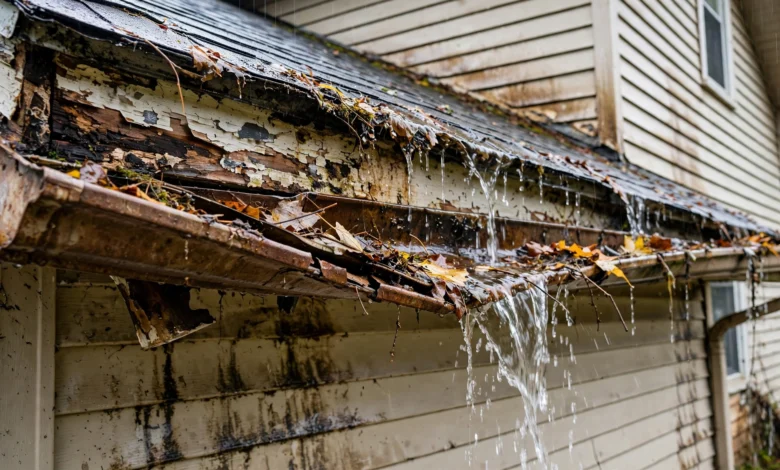
If you notice paint peeling on or near your gutters, or rust spots forming on metal gutters, it’s usually a sign that water has been sitting somewhere it shouldn’t for an extended period. This is especially common around seams, joints, and end caps where water can pool if the gutter isn’t draining properly.
Rust is particularly worth watching closely, since it weakens the metal over time and can eventually lead to holes or full section failure if left untreated.
5. Gutters Pulling Away From the House
Beyond sagging, a related but distinct issue is gutters visibly separating from the fascia board along a wider stretch, sometimes with a noticeable gap between the gutter and the house. This usually signals that the fasteners have failed or the fascia board itself has deteriorated to the point where it can no longer hold screws or hangers securely.
This is one of the more urgent signs of gutter damage, since a fully detached section can fall during a storm and cause additional damage.
6. Pooling Water Near the Foundation
If you notice standing water, soggy soil, or mulch that stays wet longer than the rest of your yard near your home’s foundation, your gutters and downspouts likely aren’t directing water far enough away from the house. This is one of the more serious warning signs, since foundation issues are considerably more expensive to fix than gutters themselves.
Check that:
- Downspouts extend at least 3 to 6 feet away from the foundation
- Splash blocks or extensions are still in place and functioning
- The ground slopes away from your home rather than toward it
7. Mildew, Mold, or Water Stains on Siding
Streaking, dark stains, or a musty smell near your siding, especially just below the gutter line, often points to water overflowing or leaking from a compromised section. Persistent moisture against siding can lead to mold growth, wood rot, and paint damage over time, making this a sign worth addressing before it spreads further.
8. Basement or Crawl Space Leaks
If your basement or crawl space develops new dampness, water stains, or a musty odor, especially following heavy rain, faulty gutters are a common and often overlooked culprit. Many homeowners immediately assume foundation waterproofing issues, when the actual source is water overflowing or improperly draining from a damaged gutter system above.
9. Gutters Full of Granules or Excessive Debris Buildup
While some leaves and debris are normal, especially in fall, a gutter that consistently fills with heavy sediment, shingle granules, or debris even after cleaning may indicate a drainage problem rather than just seasonal buildup. Excessive shingle granules specifically can also be a sign of roof wear, making this worth mentioning to a roofing professional as well.
10. Visible Sagging in the Downspouts
Downspouts that lean, wobble, or have visibly pulled away from the wall aren’t just a cosmetic issue. A loose or damaged downspout can dump water directly next to your foundation instead of carrying it safely away, undermining the entire purpose of the gutter system even if the gutters themselves look fine.
Check downspouts for:
- Loose brackets or straps
- Cracks or separated joints
- Water splashing out mid-stream instead of reaching the ground level opening
How to Tell If You Need a Repair or a Full Replacement
Not every issue on this list requires a full gutter replacement. As a general guide:
Likely just needs repair:
- One or two sections with minor cracks or leaks
- A single sagging area caused by loose hangers
- Isolated rust spots without structural weakening
Likely needs full replacement:
- Multiple sections sagging or pulling away throughout the system
- Widespread rust or corrosion across most of the gutter run
- Gutters older than 20 years showing consistent problems
- Persistent leaks that keep recurring despite repeated repairs
The InterNACHI gutter inspection guidance recommends a thorough inspection of hangers, seams, and slope as part of any gutter evaluation, which is a useful checklist to bring up with a contractor if you’re trying to determine whether repair or replacement makes more sense for your situation.
DIY Gutter Fixes vs When to Call a Professional
Some gutter issues are reasonable for a handy homeowner to tackle, while others are safer and more effective left to a professional.
Reasonable DIY fixes:
- Clearing clogs and debris buildup
- Resealing minor cracks with gutter sealant
- Tightening loose hangers or brackets
- Adding or repositioning downspout extensions
Best left to a professional:
- Replacing sagging or rotted fascia boards
- Full section replacement due to rust or structural failure
- Repairs on steep or high rooflines that aren’t safely accessible
- Diagnosing whether foundation moisture is gutter-related or a separate issue
If you’re ever unsure whether a problem is minor or serious, it’s worth getting a professional opinion, since gutter issues tend to get more expensive the longer they’re left unaddressed.
How Often to Inspect Your Gutters
To catch these warning signs early, aim to inspect your gutters:
- Twice a year, ideally in spring and fall
- After any major storm, particularly ones involving high winds or heavy rain
- Before winter, to make sure everything drains properly before freezing temperatures set in
A quick visual check from the ground, paired with an occasional closer inspection from a ladder, is usually enough to catch most of these issues before they become expensive repairs.
Conclusion
Gutters rarely fail all at once. They usually show warning signs first, whether that’s overflow during rainstorms, sagging sections, rust spots, or water pooling near your foundation, and catching these signs early is what keeps a simple repair from turning into a much bigger project. Regular inspections, especially after storms and during seasonal changes, give you the best chance of spotting problems while they’re still manageable. If you notice any of the ten signs covered here, it’s worth addressing them sooner rather than later, either with a straightforward DIY fix or a call to a professional, so your gutter system can keep doing its job of protecting your home from water damage.