Roofing & Gutter Tips for Older Homes in Edinburgh
Roofing & gutter tips for older homes in Edinburgh covering slate repairs, gutters, chimneys, damp prevention, maintenance and heritage care.
9 Essential Roofing & Gutter Tips for Older Homes in Edinburgh
Introduction
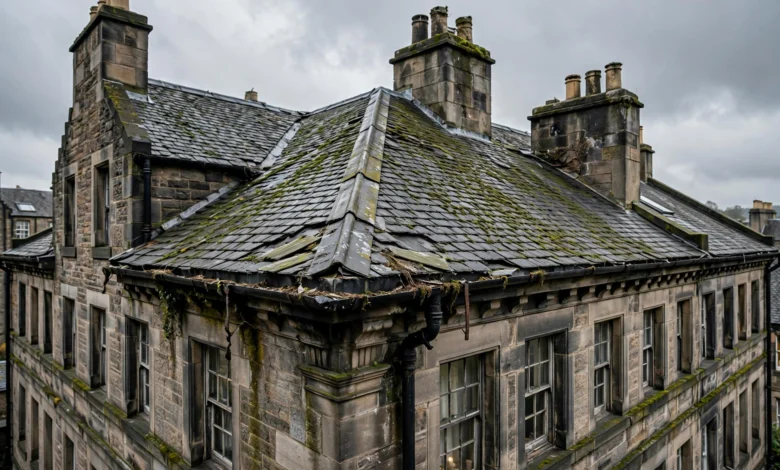
Roofing & Gutter Tips for Older Homes in Edinburgh need to account for much more than ordinary household maintenance. Edinburgh contains a large number of traditional stone properties, tenements, terraces and historic buildings whose roofs and rainwater systems were constructed using materials and techniques very different from those used on modern homes. Scottish slate, leadwork, masonry chimneys, cast-iron gutters and traditional roof structures can remain remarkably durable, but they require the right type of inspection and repair.
Weather is another major consideration. Edinburgh’s roofs regularly face rain, wind, frost, moisture and occasional severe storms. A small defect that might appear insignificant during a dry period can become a serious source of water ingress when repeated rainfall reaches damaged slates, valleys, flashing or blocked gutters.
Historic Environment Scotland recommends regular inspection of traditional buildings and specifically advises checking gutters and downpipes twice a year, while roof coverings, ridges, valleys and chimney stacks should also form part of a maintenance programme.
Older roofs also deserve a different repair philosophy. Replacing original materials unnecessarily can reduce a property’s character and may create compatibility problems. Historic Environment Scotland advises using skilled tradespeople who understand traditional buildings and traditional materials for significant repairs.
This guide explains practical roofing and gutter maintenance tips for older homes in Edinburgh, from inspecting Scottish slate and chimney flashing to managing gutters, preventing damp and knowing when professional conservation advice is necessary.
Roofing & Gutter Tips for Older Homes in Edinburgh
Maintaining an older Edinburgh home begins with understanding that the roof and gutter system work together.
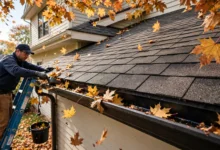

The roof sheds water, while gutters and downpipes carry it safely away from the walls and foundations.
A problem in one component can quickly affect another.
For example:
Damaged slate → water enters roof → timber becomes damp → gutter or flashing problem remains unnoticed → internal staining develops.
Likewise:
Blocked gutter → overflowing rainwater → saturated masonry → damp interior walls → expensive repair.
A good maintenance strategy therefore considers the complete roof and rainwater-disposal system rather than looking at isolated defects.
1. Inspect Scottish Slate Roofs Regularly
One of the most important roofing tips for older homes in Edinburgh is to inspect the slate roof regularly.
Slate has been widely used across Scotland for centuries. Historic Environment Scotland notes that Scottish slate has a reputation for longevity, with many examples remaining in service for 100 years or more.
That longevity does not mean slate roofs can be ignored.
Look for:
- Missing slates
- Cracked slates
- Slipped slates
- Broken slates
- Loose slates
- Damaged ridge slates
- Deteriorated flashing
- Accumulated moss or debris
- Slate fragments around the property
After periods of strong wind or storms, ground-level inspection can reveal slates that have fallen from the roof.
Why One Missing Slate Matters
A missing slate may initially allow only a small amount of water into the roof structure.
However, Historic Environment Scotland explains that if a missing slate is not replaced, the timber sarking beneath can decay, potentially leading to further slate loss.
That makes prompt slate roof repair considerably more sensible than waiting for a visible ceiling leak.
2. Understand Nail Sickness in Older Slate Roofs
Nail sickness is an important issue in traditional Scottish slate roofs.
Older slates were often secured to timber sarking using iron nails. Over many decades, those nails can corrode and eventually fail.
The result may be:
- Slates slipping
- Rows of slates becoming loose
- Increased water penetration
- Progressive roof deterioration
Historic Environment Scotland identifies nail sickness as one of the common causes of problems with slate roofs. (Engine Shed)
Can Nail Sickness Be Repaired?
Individual slipped slates can often be secured again.
However, if a large proportion of the roof is affected, repeatedly repairing individual slates may eventually become uneconomical.
This is why an experienced Edinburgh roofing contractor should assess the overall condition rather than simply replacing whichever slates have visibly fallen.
3. Preserve Original Slate Whenever Possible
Older Edinburgh properties may contain slate that is difficult or impossible to match exactly with modern products.
Historic Environment Scotland explains that Scottish slate has not been quarried in Scotland since the 1950s and that supplies for replacement purposes are limited. It recommends reusing existing slates wherever possible during maintenance and repairs.
This is particularly important for traditional or architecturally significant homes.
Benefits of Reusing Existing Slate
Reusing suitable slate can:
- Preserve the property’s appearance
- Maintain historic character
- Reduce unnecessary material replacement
- Provide a closer visual match
- Support conservation principles
A contractor should carefully remove and store reusable slates if substantial work is necessary.
4. Check Gutters and Downpipes Twice a Year
Among the most practical gutter maintenance tips for Edinburgh homes is to inspect gutters and downpipes at least twice a year.
Historic Environment Scotland specifically recommends checking rhones and downpipes twice annually and clearing leaves and debris as necessary.
This is particularly important around older properties with:
- Mature trees
- Tall tenements
- Large roof areas
- Shared rainwater systems
- Narrow courtyards
- Difficult-to-access gutters
What to Look For
Check for:
- Leaves
- Moss
- Silt
- Broken slate fragments
- Standing water
- Rust
- Cracks
- Loose brackets
- Leaking joints
- Sagging sections
- Blocked downpipes
Do not assume a gutter is functioning correctly simply because it looks intact from the ground.
5. Take Edinburgh’s Rain Seriously
Older homes are particularly vulnerable to water-related deterioration because many traditional walls and roofs were designed to manage moisture differently from modern cavity-wall construction.
Heavy or persistent rainfall can expose weaknesses in:
- Roof coverings
- Valleys
- Flashing
- Gutters
- Downpipes
- Chimney stacks
- Masonry joints
Scotland’s Environment Web notes that traditional buildings may need adaptation to changing conditions, including increased winter rainfall, while regular maintenance remains an important part of resilience. (Scotland’s Environment Web)
This makes roof maintenance in Edinburgh a preventative task rather than something to perform only after a leak occurs.
6. Inspect Roof Valleys Carefully
Roof valleys are areas where two roof slopes meet and where substantial quantities of rainwater can concentrate.
In older Edinburgh properties, valley details may incorporate traditional materials such as lead.
Inspect accessible areas for:
- Cracks
- Splits
- Corrosion
- Loose edges
- Debris
- Standing water
- Failed joints
- Signs of previous patch repairs
Because valleys handle concentrated water flow, even a relatively small defect can produce significant water ingress.
Professional inspection is advisable where access is difficult.
7. Check Lead Flashing Around Chimneys
Chimneys are another common area requiring attention.
Older Edinburgh homes frequently have prominent chimney stacks, and the junction between the chimney and roof needs effective flashing.
Check for:
- Lifted flashing
- Cracked mortar joints
- Missing lead sections
- Loose flashing
- Water staining
- Vegetation growth
- Deteriorating chimney masonry
Flashing should be repaired using appropriate materials and techniques rather than simply covered with a temporary sealant.
Why Chimney Maintenance Matters
Water entering around a chimney can travel into:
- Roof timbers
- Loft spaces
- Ceilings
- Internal walls
A small external defect can therefore produce a surprisingly large internal problem.
8. Inspect Chimney Stacks and Masonry
Do not inspect only the roof covering.
Historic Environment Scotland includes chimney stacks and masonry among the external components that should form part of traditional-building inspections. (Historic Environment Scotland)
Look for:
- Loose masonry
- Cracked mortar
- Missing pointing
- Damaged chimney pots
- Leaning stacks
- Vegetation
- Water staining
- Failed flashing
Use Appropriate Mortar
Traditional masonry often needs materials that are compatible with the original construction.
Historic Environment Scotland advises that repairs to traditional buildings should be sympathetic to their original construction and undertaken by people who understand traditional materials. (Historic Environment Scotland)
This is particularly important when working on historic stonework.
9. Don’t Ignore Small Roof Leaks
A small water stain may seem harmless.
It is not.
Potential signs of a roof leak include:
- Brown ceiling marks
- Damp patches
- Peeling paint
- Musty smells
- Wet loft insulation
- Darkened timber
- Mould
- Water around chimney areas
The source of the leak may not be directly above the visible stain.
Water can travel along:
- Roof timbers
- Sarking
- Masonry
- Flashing
- Insulation
Therefore, simply painting over a stain is not a solution.
The underlying source should be identified.
10. Check the Roof After Storms
Another important roofing tip for older homes in Edinburgh is to perform a visual inspection after severe weather.
Strong winds can dislodge older slates and damage vulnerable roof-edge areas.
Historic Environment Scotland specifically recommends checking slate roofs after storms or gales. (Engine Shed)
After bad weather, inspect from ground level for:
- Slates on the ground
- Gaps in the roof
- Loose ridge tiles
- Damaged gutters
- Fallen chimney material
- Dislodged flashing
- Debris
Do not climb onto the roof to inspect storm damage yourself.
Wet slate is slippery, and older roof structures may be unsafe to walk on.
11. Maintain Traditional Gutters Carefully
Many older Edinburgh properties have traditional rainwater systems that may include cast iron gutters and downpipes.
These systems can last for decades when maintained properly.
However, they can develop:
- Rust
- Pinholes
- Joint leaks
- Cracks
- Loose brackets
- Failed coatings
- Sagging
Cast Iron Gutter Maintenance
Where cast iron is present, maintenance may involve:
- Cleaning debris.
- Checking joints.
- Inspecting for corrosion.
- Repairing small defects.
- Preparing deteriorated surfaces.
- Repainting with an appropriate protective coating.
- Checking brackets and fixings.
Do not automatically replace original cast iron with modern plastic.
For a traditional building, preserving serviceable original materials can sometimes be preferable from both an architectural and conservation perspective.
12. Keep Downpipes Clear
A clean gutter is not enough if the downpipe is blocked.
A blocked downpipe can cause rainwater to back up into the gutter.
Possible warning signs include:
- Overflow during rainfall
- Water running down walls
- Damp masonry
- Green staining
- Cracked joints
- Slow drainage
Check that water can move freely through the entire rainwater system.
Historic Environment Scotland recommends checking below-ground drainage periodically as well as gutters and downpipes. (Historic Environment Scotland)
This highlights an important point: roof drainage does not stop at the gutter.
13. Inspect Below-Ground Drainage
The water-management system around an older Edinburgh home includes more than the roof.
Downpipes may discharge into:
- Surface drains
- Gullies
- Underground pipes
- Combined drainage systems
Blocked or damaged underground drainage can cause water to remain near the building.
Check for:
- Slow drainage
- Standing water
- Overflowing gullies
- Cracked drainage connections
- Persistent damp near downpipes
Historic Environment Scotland recommends periodic checks of below-ground drainage and testing to make sure water drains freely away from the property. (Historic Environment Scotland)
14. Watch for Damp in Stone Walls
Traditional Edinburgh homes often use substantial masonry walls.
Water-related problems can appear as:
- Damp patches
- Salt deposits
- Peeling finishes
- Darkened stone
- Mould
- Musty smells
However, damp does not automatically mean the roof is leaking.
Possible sources include:
- Roof leaks
- Gutter overflow
- Defective downpipes
- Failed pointing
- Groundwater
- Condensation
- Plumbing problems
The correct solution depends on identifying the actual source.
15. Be Careful With Modern Waterproofing Materials
One of the biggest mistakes when maintaining an older home is treating it exactly like a modern house.
Traditional buildings can use materials that behave differently from modern construction.
Historic Environment Scotland recommends that repairs to traditional buildings are sympathetic to the original construction and use appropriate traditional materials where required. (Historic Environment Scotland)
For example, an inappropriate repair can:
- Trap moisture
- Accelerate deterioration
- Damage historic materials
- Create compatibility problems
- Hide the underlying defect
This is why experienced conservation contractors are particularly valuable for older Edinburgh homes.
16. Improve Roof Insulation Without Creating Moisture Problems
Energy efficiency is understandably important for older homes.
However, roof insulation for older homes should be designed carefully.
Historic Environment Scotland provides dedicated guidance on improving energy efficiency in traditional buildings, including roofs, floors, doors and walls. (Historic Environment Scotland)
When considering loft insulation, examine:
- Roof ventilation
- Condensation risk
- Timber condition
- Existing sarking
- Moisture movement
- Loft accessibility
- Electrical installations
Simply adding insulation without considering ventilation and moisture can create unintended problems.
17. Maintain Roof Ventilation
Traditional roofs need appropriate moisture management.
Poor ventilation can contribute to condensation, particularly when warm indoor air reaches colder roof components.
Potential warning signs include:
- Condensation
- Damp insulation
- Mould
- Frost-related moisture
- Musty loft smells
- Persistent timber dampness
Before modifying roof ventilation, have the existing construction assessed.
The objective is not to add as many vents as possible.
The objective is to create an appropriate moisture-management strategy without compromising the building’s historic fabric.
18. Understand Edinburgh Tenement Roof Responsibilities
Older Edinburgh homes are not always standalone houses.
Many are:
- Tenement flats
- Shared buildings
- Terraced properties
- Buildings with common roofs
- Properties with shared gutters and downpipes
This creates a different maintenance challenge.
A roof problem affecting one flat may actually involve the entire building.
For shared buildings, establish:
- Who owns the roof?
- Who arranges inspections?
- Who maintains gutters?
- How are repairs approved?
- How are costs divided?
- Who holds contractor information?
- Are there existing maintenance plans?
This is particularly important before an emergency occurs.
A documented maintenance arrangement is much easier to manage than trying to determine responsibilities during a serious leak.
19. Consider Conservation Area Requirements
Some older Edinburgh properties may be listed or located within conservation areas.
Before making significant changes to:
- Roof shape
- Roof covering
- Chimneys
- Rooflights
- Dormers
- External gutters
- Visible rainwater goods
check whether permissions or conservation requirements apply.
Historic-building guidance stresses the importance of checking permissions before significant roof alterations. (Historic England)
Why This Matters
Replacing a traditional roof with a visually different material might affect:
- Historic character
- Architectural appearance
- Planning status
- Building value
- Future maintenance
Do not assume that because a modern material is technically suitable, it is automatically acceptable for a historic property.
20. Choose a Roofer Experienced With Older Buildings
Not every roofing contractor has the same experience.
For an older Edinburgh property, look for someone who understands:
- Scottish slate
- Traditional roof structures
- Leadwork
- Cast iron rainwater goods
- Stone masonry
- Lime-based repairs
- Conservation requirements
- Historic building construction
Historic Environment Scotland explicitly recommends skilled tradespeople who understand traditional buildings and have experience with traditional materials. (Historic Environment Scotland)
Questions to Ask a Roofer
Before hiring someone, ask:
- Have you worked on traditional Edinburgh properties?
- Do you regularly repair slate roofs?
- Can existing slates be reused?
- How will you assess the roof structure?
- What will you do with original materials?
- Can you repair rather than replace where appropriate?
- Are you experienced with lead flashing?
- Can you work with cast iron gutters?
- Will you provide photographs?
- Are there any planning or conservation considerations?
A good contractor should be able to explain the reasoning behind their recommendations.
21. Avoid Unnecessary Full Roof Replacement
One of the most valuable roof maintenance tips for older homes is to avoid assuming that an old roof automatically needs complete replacement.
Age alone does not determine condition.
A traditional slate roof can remain functional for many decades when individual defects are repaired and its supporting structure remains sound. Historic Environment Scotland notes that many Scottish slate roofs have remained in service for 100 years or more. (Engine Shed)
A professional inspection should establish:
- Percentage of damaged slates
- Condition of fixings
- Condition of sarking
- Timber condition
- Flashing condition
- Valley condition
- Ridge condition
- Evidence of previous repairs
If only a small number of slates are defective, targeted repair may be more appropriate than complete replacement.
22. Know When Roof Replacement Becomes Necessary
Sometimes replacement is justified.
Potential indicators include:
- Widespread slate failure
- Extensive nail sickness
- Structural deterioration
- Severe sarking damage
- Repeated widespread leaks
- Failed roof geometry
- Extensive defective previous repairs
Historic Environment Scotland notes that when the number of slates affected by nail sickness becomes extensive, complete reslating may eventually become more cost-effective than continued individual repairs. (Engine Shed)
A complete roof project should be carefully specified because replacing the covering may also provide an opportunity to address:
- Insulation
- Ventilation
- Flashing
- Leadwork
- Timber repairs
- Gutters
- Downpipes
23. Create a Preventative Maintenance Schedule
Instead of waiting for problems, establish a simple annual programme.
Spring
Check:
- Gutters
- Downpipes
- Slates
- Chimneys
- Flashing
- Roof valleys
Remove winter debris and inspect for storm damage.
Autumn
This is particularly important before heavy leaf fall and winter rainfall.
Check:
- Gutters
- Downpipes
- Roof edges
- Trees near the building
- Moss accumulation
- Drainage
Historic Environment Scotland’s recommendation to inspect gutters and downpipes twice yearly provides a useful basis for this schedule. (Historic Environment Scotland)
After Severe Weather
Perform an additional visual inspection.
Look for:
- Missing slates
- Debris
- Damaged flashing
- Loose gutters
- Chimney damage
24. Keep Trees Away From Roofs Where Practical
Trees can add character to older Edinburgh properties, but branches can damage roofing and leaves can block gutters.
Problems include:
- Falling branches
- Leaf-filled gutters
- Moss growth
- Reduced roof drying
- Damage to slates
- Blocked downpipes
Where trees overhang the roof significantly, professional tree maintenance may reduce the burden on the roof and gutter system.
Do not remove or heavily prune protected trees without checking applicable local requirements.
25. Don’t Pressure-Wash Traditional Slate
Aggressive cleaning can damage roofing materials.
Traditional slate can be vulnerable to:
- Mechanical damage
- Broken edges
- Surface deterioration
- Dislodgement
A roof covered in moss does not automatically require pressure washing.
Instead, determine:
- Why moss is growing
- Whether drainage is adequate
- Whether surrounding vegetation is contributing
- Whether the slate itself is deteriorating
Cleaning should be undertaken using a method appropriate for the particular roof.
26. Document Repairs and Inspections
Older homes benefit from a written maintenance history.
Record:
- Inspection date
- Roof condition
- Slate replacements
- Gutter repairs
- Downpipe repairs
- Flashing work
- Chimney repairs
- Contractor details
- Materials used
- Photographs
- Future recommendations
This becomes particularly useful when the property is sold or when a shared tenement roof requires future work.
Historic Environment Scotland recommends developing a maintenance plan identifying work required in the short, medium and longer term. (Historic Environment Scotland)
27. Warning Signs That Require Prompt Attention
Some roofing problems in older Edinburgh homes should not be delayed.
Contact an appropriate professional if you notice:
- Water actively entering the property
- Large sections of missing slate
- A sagging roof
- Severe chimney movement
- Large cracks in masonry
- Collapsed or severely damaged gutters
- Persistent damp after rain
- Rotting roof timber
- Major flashing failure
- Repeated unexplained leaks
If the issue appears structural or dangerous, do not attempt DIY roof access.
28. Older Home Roofing Checklist
Use this checklist during your routine inspection:
- Missing slates checked
- Cracked slates checked
- Slipped slates checked
- Ridge checked
- Valleys checked
- Flashing checked
- Chimney stack inspected
- Gutters cleared
- Downpipes checked
- Drainage tested
- Damp signs checked
- Loft inspected
- Timber checked for moisture
- Moss assessed
- Storm damage checked
- Repairs documented
- Conservation requirements considered
Roofing & Gutter Tips for Older Homes in Edinburgh: Common Mistakes to Avoid
Ignoring Small Defects
A missing slate can eventually lead to timber deterioration.
Replacing Everything Too Quickly
Traditional materials can often be repaired rather than discarded.
Using Incompatible Materials
Modern materials may not always be suitable for traditional construction.
Neglecting Gutters
A blocked gutter can cause significant water-related damage.
Ignoring Shared Roof Responsibilities
Tenement owners should establish responsibilities before emergency repairs become necessary.
Hiring Solely on Price
The cheapest roofing quote may not include the specialist knowledge required for a traditional building.
Making Alterations Without Checking Permissions
Listed buildings and conservation areas may have additional requirements.
Frequently Asked Questions
How often should gutters be cleaned on an older Edinburgh home?
Historic Environment Scotland recommends checking gutters and downpipes twice a year and clearing leaves and debris as necessary. Homes surrounded by trees may require additional inspections. (Historic Environment Scotland)
How long can a Scottish slate roof last?
Many traditional Scottish slate roofs have remained in service for 100 years or more, although lifespan varies according to slate quality, fixings, roof construction and maintenance. (Engine Shed)
What is nail sickness on a slate roof?
Nail sickness occurs when older iron nails securing slates corrode and fail. This can cause slates to slip and create progressively larger areas of vulnerability. (Engine Shed)
Should original slate be reused?
Where suitable, reuse is often desirable. Historic Environment Scotland notes that Scottish slate supplies are limited and recommends reusing existing slates for maintenance and repairs wherever possible. (Engine Shed)
Can I replace an old slate roof with modern tiles?
Do not assume this is permitted or appropriate. The property’s architectural character, construction and planning or conservation status should be considered before changing the roof covering. (Historic England)
Are gutters important for preventing damp?
Yes. Gutters and downpipes direct rainwater away from the building. Blockages, leaks or poor drainage can contribute to moisture affecting walls and other building components.
Should older homes use modern waterproofing products?
Not automatically. Traditional buildings can require compatible materials and repair techniques. Historic Environment Scotland recommends sympathetic repairs using appropriate materials and skilled tradespeople. (Historic Environment Scotland)
Should I inspect my roof after a storm?
Yes. Ground-level visual checks after storms or gales can identify missing or displaced slates and other obvious defects. (Engine Shed)
Conclusion
Roofing & Gutter Tips for Older Homes in Edinburgh are ultimately about prevention, compatibility and regular care. Traditional slate roofs, chimneys, flashing, gutters and downpipes can remain highly durable, but Edinburgh’s older properties need maintenance that respects their original construction. Regular inspections, particularly twice-yearly gutter and downpipe checks, prompt replacement of missing slates, careful attention to nail sickness, proper chimney and flashing maintenance, and reliable drainage can prevent small defects from becoming expensive water-related problems. Historic Environment Scotland strongly recommends planned maintenance and the use of skilled tradespeople familiar with traditional buildings and materials. (Historic Environment Scotland) For listed or historically significant properties, homeowners should also consider conservation and permission requirements before making substantial changes. By maintaining original materials where practical, documenting repairs and addressing roof and gutter problems early, Edinburgh homeowners can protect both the practical performance and architectural character of their older properties for many years.