12 Roofing Styles That Boost Curb Appeal in California
Roofing styles shape a California home's curb appeal and resale value. Compare 12 popular options, from clay tile to standing seam metal.
12 Stunning Roofing Styles That Boost Curb Appeal in California
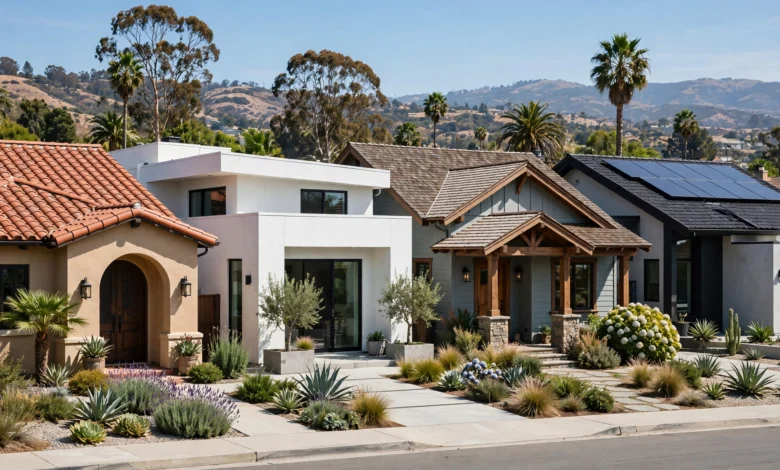
Roofing styles do more work for a California home than most owners realize. The roof covers roughly 40% of a house’s visible exterior from the street, which means it can make or break a first impression before anyone even reaches the front door. If you’re planning a re-roof, selling soon, or just tired of looking at an outdated roofline, the right choice can lift your home’s value, cut your energy bills, and finally make the house look like it belongs in its neighborhood instead of fighting it.
California is unusual in that it has almost every housing style you’ll find nationwide, Spanish Colonial in Santa Barbara, mid-century ranch in the Valley, Craftsman bungalows in Pasadena, sleek modern builds in the Bay Area, so there’s no single “correct” roof. What works is matching the roofing style to your home’s architecture, your climate zone, and your local fire and building codes. Coastal homes deal with salt air and moisture. Inland and foothill homes deal with heat, wildfire risk, and strict Class A fire ratings. Both of those realities narrow the field before aesthetics even enter the conversation.
Below are 12 roofing styles that consistently show up on the highest-value homes across the state, along with what each one actually costs you in maintenance, lifespan, and character. Whether you’re restoring a historic property or updating a plain tract home, one of these should fit.
1. Spanish and Mediterranean Clay Tile
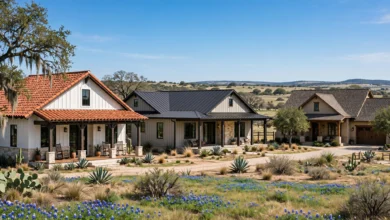
Clay tile is the roofing style most people picture when they think of California. It’s the red-orange, barrel-shaped tile that defines Spanish Colonial Revival and Mediterranean architecture up and down the coast.
- Lasts 50 to 100 years with proper installation
- Naturally fire-resistant, which matters in high fire-hazard zones
- Handles heat well and reflects sunlight, lowering attic temperatures
- Heavier than most roofing materials, so the structure needs to support the load
Clay tile isn’t cheap, but it rarely needs replacing in a homeowner’s lifetime, and it’s one of the few roofing styles that actually raises a home’s appraised value in most California markets.
2. Mission-Style Barrel Tile
Mission tile is a close cousin of Spanish clay tile but with a rounder, more pronounced barrel shape and a rougher, handmade look. It’s the style you’ll see on old missions, churches, and early 20th-century estates throughout the state.
This roofing style works best on homes with stucco exteriors, arched doorways, and wrought iron details. It’s less common on new builds because it costs more to install than standard S-tile, but for a historic renovation, it’s often the only option that looks authentic.
3. Concrete S-Tile
Concrete tile mimics the look of clay at a lower price point. It’s molded into the same S-shaped or barrel profile but made from a mix of sand, cement, and pigment.
- Roughly 20 to 30% cheaper than genuine clay tile
- Available in colors that fade less over time than painted clay
- Still heavy, so a structural check is necessary before installation
- Lasts 30 to 50 years, shorter than clay but longer than asphalt
For homeowners who want the Mediterranean look without the clay tile price tag, concrete tile is the most common substitute across Southern California subdivisions.
4. Standing Seam Metal Roofing
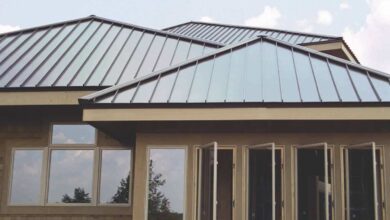
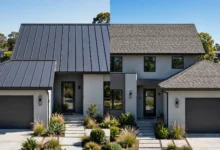
Metal roofing has moved from industrial buildings to residential homes fast, especially in wildfire-prone areas and modern architectural builds. Standing seam panels run vertically with raised seams that lock together, giving a clean, linear look.
- Class A fire rating, a major advantage in fire-hazard zones
- Reflects heat, which can lower cooling costs in hot inland climates
- Lasts 40 to 70 years with minimal maintenance
- Works on both modern and farmhouse-style homes
According to the National Roofing Contractors Association, metal roofing is one of the fastest-growing residential categories nationwide, and California’s wildfire concerns are a big part of that shift.
5. Flat and Low-Slope Modern Roofing
Contemporary and mid-century modern homes in California often use flat or low-slope roofs with clean parapet walls instead of visible pitched rooflines. This roofing style relies on membrane materials like TPO, PVC, or modified bitumen rather than shingles or tile.
- Ideal for homes with rooftop decks or solar arrays
- Requires precise drainage design to prevent pooling water
- Gives a minimalist, architectural look that suits modern builds
- Needs more frequent inspection than pitched roofs
Flat roofing isn’t for every house, but on the right modern design, it’s one of the cleanest ways to boost curb appeal without adding visual clutter.
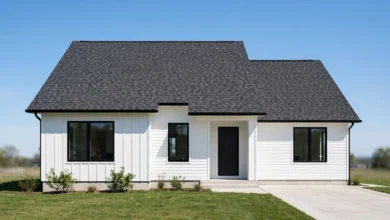
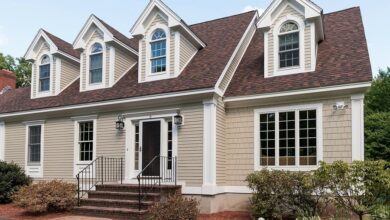
6. Craftsman-Style Composition Shingle
Composition (asphalt) shingles remain the most common roofing material in California simply because they’re affordable and available in dozens of colors and textures. On Craftsman and bungalow-style homes, a dimensional shingle in a warm brown or forest green tone complements the exposed rafters and deep eaves that define the style.
- Costs significantly less than tile or metal
- Available in Class A fire-rated products for high-risk zones
- Typical lifespan of 20 to 30 years
- Easiest style to repair or replace in sections
If budget is the deciding factor, a well-chosen composition shingle can still meaningfully improve curb appeal, especially paired with fresh paint and updated trim.
7. Wood Shake and Shake-Look Alternatives
Traditional cedar shake gives ranch and cottage-style homes a warm, textured look that no other material fully replicates. That said, real wood shake is increasingly restricted or banned outright in California’s high fire-hazard severity zones, so most homeowners now choose composite or synthetic shake that mimics the same texture with a Class A fire rating.
- Authentic wood shake: 20 to 30 year lifespan, requires regular treatment
- Synthetic shake: 40 to 50 year lifespan, fire-rated, low maintenance
- Best suited for ranch, cottage, and rustic mountain-cabin homes
Before choosing real wood shake, check your local fire zone requirements. Many California counties, particularly in the wildland-urban interface, no longer permit it on new installations.
8. Synthetic Slate
Synthetic slate tile gives homes the deep, textured look of natural slate without the extreme weight. It’s a good fit for Tudor-style and traditional homes that want a darker, more formal roofline than tile or shingle can provide.
- Roughly one-tenth the weight of natural slate
- Class A fire rated in most product lines
- 40 to 50 year lifespan
- Available in gray, charcoal, and weathered black tones
This roofing style is less common in California than clay or metal, but it stands out precisely because it’s rare, which can be an advantage if you want your home to look distinct from the neighbors.
9. Hip Roof
A hip roof slopes on all four sides and has no vertical ends, which gives it a lower, more compact profile than a gable roof. It’s a shape rather than a material, so it can be finished in tile, shingle, or metal.
- More wind and fire resistant than gable roofs due to the sloped sides
- Common on ranch, Mediterranean, and Craftsman homes across the state
- Provides more even eave coverage for shading windows and walls
For homeowners in wind-prone or fire-prone areas, a hip roof paired with a fire-rated material is often the safest structural combination available.
10. Gable Roof
The gable roof, two sloped sides meeting at a ridge with a triangular wall section at each end, is the most recognizable roofline in American residential architecture, and it’s just as common in California as anywhere else.
- Simple design that sheds water and snow efficiently in mountain areas
- Lower construction cost than hip or gambrel designs
- Works with nearly every material on this list
- Vulnerable to wind uplift if not properly braced
A steep gable adds dramatic height to a Craftsman or farmhouse-style home, while a shallow gable suits ranch and ADU builds that want a quieter roofline.
11. Dutch Gable (Combination Hip and Gable)
The Dutch gable blends a hip roof’s sloped sides with a small gable section at the peak, giving it extra attic space and a bit more visual interest than a pure hip roof. It shows up often on custom and higher-end California homes where builders want the wind resistance of a hip roof without losing the character a gable adds.
- Adds usable attic or loft space compared to a standard hip roof
- Offers a distinctive silhouette that stands out on a street of plain rooflines
- Costs more to frame due to the added complexity
This is one of the more underused roofing styles in the state, and it’s worth asking your contractor about if you want something that looks custom without going fully custom on materials.
12. Solar Shingle and Integrated Solar Roofing
California’s Title 24 building code requires solar on most new residential construction, and integrated solar roofing has become a genuine curb appeal category rather than just a utility add-on. Instead of bulky panels bolted on top of an existing roof, solar shingles are built into the roofing surface itself.
- Blends into the roofline instead of sitting on top of it
- Qualifies for state and federal solar incentives in most cases
- Higher upfront cost than traditional panels, but a cleaner finished look
- Works best when installed as part of a full roof replacement
Details on the state’s solar requirements and rebate programs are available through the California Energy Commission, which is a useful starting point before committing to a system.
Choosing the Right Roofing Style for Your Home
A few things should guide the decision more than personal taste alone:
- Architecture first. A metal roof on a Spanish Colonial home will fight the design instead of complementing it. Match the roofing style to what the house was built to wear.
- Fire zone requirements. Homes in a designated fire-hazard severity zone are often restricted to Class A fire-rated materials, which rules out untreated wood shake.
- Structural load. Clay and concrete tile are heavy. Older homes may need reinforcement before a tile roof is even possible.
- Climate. Coastal salt air, inland heat, and mountain snow load each favor different materials and pitches.
- Long-term cost. A cheaper roof installed today can cost more over 30 years than a durable one installed once.
A local roofing contractor who’s familiar with your specific city’s building department and fire codes will save you from picking a style that looks right but gets rejected at permitting.
Final Thoughts
The roof is one of the largest visual elements of any home, and the right roofing style can turn an ordinary house into the kind of property that gets a second look from the street. From classic Spanish clay tile and Mission barrel tile to modern standing seam metal and integrated solar shingles, California homeowners have more options than almost anywhere else in the country. The best choice comes down to matching material and shape to your home’s architecture, respecting local fire and building codes, and being honest about your budget and how long you plan to stay in the house. Get that combination right, and the roof stops being just a functional necessity and becomes one of the biggest curb appeal upgrades your home will ever see.
Keywords: