Gutter Guard Options Every Homeowner Should Consider
Gutter guard options compared by type, cost, and performance, helping homeowners choose the right system to stop costly clogs.
Gutter Guard Options Every Homeowner Should Consider: 6 Proven Types That Stop Costly Clogs
Gutter guard options have multiplied over the past decade, and that’s mostly good news, but it also means homeowners now face a genuinely confusing decision when it’s time to stop climbing a ladder every few months to scoop out wet leaves. Mesh screens, foam inserts, brush-style guards, reverse-curve systems, they all promise to solve the same basic problem, keeping debris out of your gutters while letting water flow freely, but they do it in different ways, at different price points, with different maintenance demands.
The stakes of getting this choice right are higher than they might seem. Clogged gutters are one of the most common, and most preventable, causes of home water damage. Overflow can rot fascia boards, undermine foundations, and create the exact damp conditions that lead to mold. A well-matched gutter guard system genuinely reduces how often you need to think about gutter maintenance at all, while a poorly matched one can trap debris just as effectively as having no guard, or worse, void your gutter warranty if installed incorrectly.
This guide breaks down the main types of gutter guards available, how each one actually performs against different debris types (pine needles behave very differently than broad leaves), realistic cost ranges, and how to match a system to your specific home, roof pitch, and surrounding trees. Whether you’re dealing with heavy autumn leaf fall or just want to cut down on annual ladder trips, there’s a practical answer below.
Why Gutter Guards Matter for Homeowners
Before comparing specific products, it’s worth being clear on what a good gutter guard system is actually protecting against. Unmanaged debris buildup in gutters leads to:
- Water overflow that runs down exterior walls instead of through the downspout, staining siding and brickwork over time
- Ice dam formation in colder climates, where trapped water refreezes and expands, damaging both the gutter and the roof edge
- Pest and mosquito breeding, since standing water in clogged gutters is an ideal environment for insects
- Foundation issues, when overflowing water pools near the base of the house rather than draining away properly
- Fascia and soffit rot, from prolonged moisture exposure where gutters attach to the roofline
A properly chosen gutter guard system addresses all of this by keeping debris out in the first place, rather than requiring it to be manually removed after the fact. The right choice depends heavily on what’s actually falling into your gutters and how steep your roof is, which is why there isn’t a single “best” option across every home.
1. Mesh Screen Gutter Guards
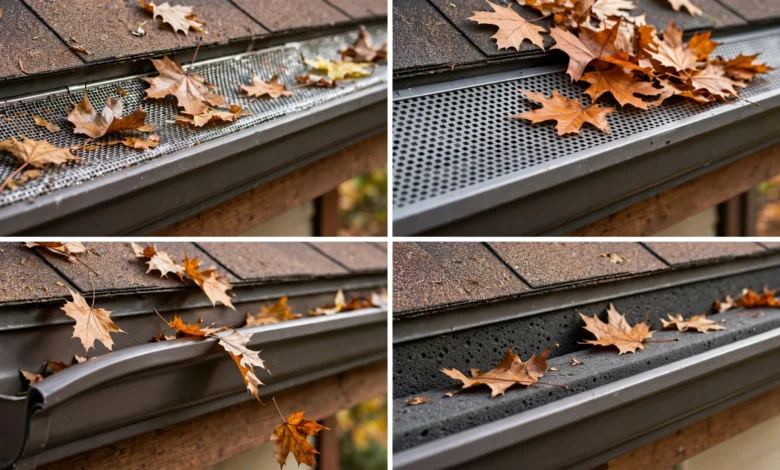
Mesh screens are among the most widely used gutter guard options, sitting directly over the gutter opening with small perforations that let water through while blocking larger debris like leaves and twigs.


Pros:
- Effective against most leaf types and larger debris
- Generally affordable compared to more advanced systems
- Widely available in both DIY and professionally installed versions
Cons:
- Fine debris like pine needles or seed pods can still work through standard mesh
- Requires occasional surface brushing to clear accumulated debris sitting on top
- Lower-quality mesh can sag or warp over time under heavy debris load
Mesh screens work best for homes dealing with moderate leaf fall from deciduous trees, where the debris is large enough to be reliably blocked by standard perforation sizes.
2. Micro-Mesh Gutter Guards
Micro-mesh guards are a finer, more tightly woven version of standard mesh, often made from stainless steel, and represent one of the more effective options currently available for homes with heavy or fine debris.
Pros:
- Blocks even fine debris, including pine needles, seed pods, and roof grit
- Typically the most effective option against nearly all debris types
- Long-lasting, especially in stainless steel construction
Cons:
- Higher upfront cost than standard mesh or foam options
- Usually requires professional installation for proper fit and sealing
- Very fine mesh can occasionally slow water flow slightly during extremely heavy rainfall if not sized correctly for the roof area
For homes near pine trees or with particularly heavy seasonal debris, micro-mesh is frequently the option that actually delivers on the “install it and forget it” promise other systems make but don’t always keep.
3. Foam Gutter Inserts
Foam gutter guards are inserts placed directly inside the gutter channel, made from a porous foam that allows water to pass through while blocking debris from settling into the gutter itself.
Pros:
- One of the simplest and cheapest gutter guard options to install
- No specialized tools required, making it genuinely DIY-friendly
- Effective against medium to large debris
Cons:
- Can become saturated and less effective over time, particularly in consistently wet climates
- Small seeds and fine debris can get lodged in the foam itself, requiring periodic replacement
- Generally has a shorter lifespan than mesh or reverse-curve systems
Foam inserts suit homeowners looking for a low-cost, low-commitment first step into gutter protection, particularly on smaller homes or as a temporary solution before a larger renovation.
4. Reverse-Curve (Surface Tension) Gutter Guards
Reverse-curve guards, sometimes called surface tension gutter guards, use a curved design mounted over the gutter that relies on water’s natural tendency to follow a curved surface, directing it into the gutter while debris slides off the edge to the ground.
Pros:
- Highly effective at directing water flow while shedding debris completely off the roof edge
- No openings for insects to enter, unlike mesh-based systems
- Generally very durable, often metal construction with a long lifespan
Cons:
- One of the more expensive gutter guard options on the market
- Installation typically requires professional fitting, since the curve needs to be precisely aligned with the roofline
- Can be less effective in very heavy rainfall if the curve isn’t properly calibrated for the roof’s water volume
This style tends to be popular on higher-end homes and in regions with heavy, consistent leaf fall, where the higher upfront cost is offset by significantly reduced long-term maintenance.
5. Brush-Style Gutter Guards
Brush guards are cylindrical, bristled inserts that sit inside the gutter channel, similar in concept to a pipe cleaner, allowing water to flow between the bristles while larger debris stays on top and can be brushed away.
Pros:
- Inexpensive and simple to install without professional help
- Reasonably effective against larger leaves and debris
- Easy to remove and clean or replace individually
Cons:
- Less effective against fine debris compared to mesh or micro-mesh options
- Debris that sits on top of the bristles still needs occasional manual removal
- Generally considered a shorter-term or budget solution rather than a long-term fix
Brush-style guards work well as an accessible entry point for homeowners testing whether gutter guards are worth the investment before committing to a pricier system.
6. Perforated Aluminum or Vinyl Guards
Perforated guards, made from rigid aluminum or vinyl sheets with small holes punched throughout, sit over the gutter and allow water through the perforations while blocking most debris on the surface.
Pros:
- More rigid and durable than foam or brush options
- Moderate price point, sitting between basic foam guards and premium micro-mesh systems
- Reasonably effective against a wide range of debris sizes
Cons:
- Perforation holes can clog with finer debris over time, requiring periodic cleaning
- Less effective than micro-mesh against pine needles specifically
- Aluminum versions can dent under heavy impact, such as falling branches
This option suits homeowners looking for a middle-ground solution, more durable and effective than foam or brush guards, without stepping up to the cost of micro-mesh or reverse-curve systems.
Comparing Gutter Guard Options by Cost and Performance
| Gutter Guard Type | Approximate Cost (installed) | Best For | Debris Handling |
|---|---|---|---|
| Mesh screen | $4–$10 per linear foot | Moderate leaf fall | Good |
| Micro-mesh | $10–$25 per linear foot | Heavy or fine debris (pine needles) | Excellent |
| Foam insert | $3–$8 per linear foot | Budget-conscious, DIY installs | Fair |
| Reverse-curve | $15–$30 per linear foot | Heavy, consistent leaf fall | Very good |
| Brush-style | $3–$7 per linear foot | Light to moderate debris, DIY | Fair |
| Perforated aluminum/vinyl | $6–$15 per linear foot | General-purpose, mid-budget | Good |
Pricing varies by region, gutter length, and roof accessibility, so these ranges are a general guide rather than a fixed quote.
How to Choose the Right Gutter Guard for Your Home
Picking the right system comes down to answering a few honest questions about your property:
- What kind of trees surround your home? Pine needles and small seed pods need micro-mesh or reverse-curve systems; broad leaves are manageable with standard mesh, foam, or brush guards.
- How steep is your roof? Steeper roofs shed water faster, which favors reverse-curve systems designed to handle higher water volume and velocity.
- What’s your budget for installation? Foam and brush guards offer the lowest entry cost; micro-mesh and reverse-curve systems cost more upfront but typically require far less ongoing maintenance.
- How much maintenance are you willing to do? If the goal is genuinely minimal upkeep, investing in micro-mesh or reverse-curve pays off faster than it might appear on paper.
- Are you installing yourself or hiring a professional? Foam, brush, and basic mesh guards are generally DIY-friendly; micro-mesh and reverse-curve systems usually need professional installation for proper performance.
Installation Considerations: DIY vs Professional
Some gutter guard types genuinely are simple enough for a confident homeowner to install over a weekend, while others perform noticeably worse if not fitted correctly.
Reasonable DIY options:
- Foam inserts, which simply sit inside the existing gutter
- Brush-style guards, which drop into the gutter channel
- Basic mesh screens, though these benefit from careful measuring and secure fastening
Better left to professionals:
- Micro-mesh systems, where proper sealing and fastening affects long-term performance significantly
- Reverse-curve guards, which require precise alignment with the roofline to function as designed
- Any installation on steep or multi-story roofs, where working at height safely matters more than the guard type itself
For homeowners uncertain about safe ladder use during installation, the Consumer Product Safety Commission publishes general ladder safety guidance that applies directly to gutter and roofline work around the home.
Maintenance: Gutter Guards Still Need Some Attention
A common misconception is that gutter guards eliminate maintenance entirely. In reality, they reduce it significantly but don’t remove it altogether. Even the best-performing systems benefit from:
- An annual visual check, confirming guards remain securely fastened and undamaged
- Occasional surface brushing, particularly for mesh and perforated guards where debris can accumulate on top
- Checking downspouts separately, since a clear gutter doesn’t guarantee a clear downspout, and blockages there cause overflow regardless of guard type
- Post-storm inspection, checking for dislodged sections after high winds or heavy debris fall
Homeowners who treat gutter guards as a maintenance reducer rather than a maintenance eliminator get the most reliable long-term performance out of any system they choose. For broader guidance on home exterior maintenance planning, This Old House offers independent, product-neutral resources that cover gutter systems alongside other seasonal home upkeep tasks.
Conclusion
Gutter guard options range from simple, budget-friendly foam inserts and brush guards to more sophisticated micro-mesh and reverse-curve systems, and the right choice depends less on which product is objectively “best” and more on matching the system to your specific trees, roof pitch, budget, and tolerance for occasional upkeep. Mesh and micro-mesh guards handle most residential situations well, reverse-curve systems suit homes wanting the lowest possible maintenance despite the higher upfront cost, and foam or brush guards remain sensible entry points for homeowners testing the waters. Whichever system you land on, remember that gutter guards reduce maintenance rather than eliminate it entirely, and a quick annual check keeps whichever option you choose performing the way it’s meant to for years to come.
Keywords: