Roofing & Gutter Maintenance Tips Every Homeowner Should Know
Roofing and gutter maintenance tips that help homeowners prevent leaks, water damage, and costly repairs before small problems turn serious.
Roofing and Gutter Maintenance Tips Every Homeowner Should Know
Roofing and gutter maintenance tips are something most homeowners only think about after water starts dripping through a ceiling or a gutter pulls away from the fascia during a storm. By then, what could have been a quick fix has turned into a repair bill with a lot more zeros on it. Your roof and gutters work as a team. The roof sheds water, and the gutters carry it away from your foundation, siding, and landscaping. When either one is neglected, the other usually pays the price too.
The good news is that most roof and gutter problems don’t happen overnight. They build slowly, through small cracks, loose shingles, clogged downspouts, and debris that piles up season after season. A little routine attention, a few times a year, is usually all it takes to catch these issues while they’re still cheap and easy to fix.
In this guide, we’ll walk through practical, do-it-yourself friendly maintenance steps for both your roof and your gutter system, when to call in a professional, and how to spot warning signs before they become emergencies. Whether you live in a rainy climate, a snowy one, or somewhere that swings between the two, these tips apply. By the end, you’ll have a clear, seasonal plan for keeping your home protected from the top down.
Why Roofing and Gutter Maintenance Matters
Your roof is exposed to sun, wind, rain, snow, and temperature swings all year long. Over time, this wears down shingles, flashing, and seals. Gutters take a similar beating, collecting leaves, twigs, dirt, and granules washed off the roof itself. Neglecting either system doesn’t just risk cosmetic damage. It can lead to:
- Water intrusion into attics, walls, and ceilings
- Foundation damage from water pooling too close to the house
- Mold and mildew growth in damp, hidden spaces
- Pest infestations in rotting wood or standing water
- Reduced roof lifespan, sometimes cutting it short by a decade or more
According to the U.S. Department of Energy, a well-maintained roof also plays a role in home energy efficiency, since damaged or poorly ventilated roofing can let conditioned air escape and outside heat seep in. That means neglected maintenance doesn’t just cost you in repairs. It can quietly raise your utility bills too.
How Often Should You Inspect Your Roof and Gutters?
A good rule of thumb is to inspect both systems at least twice a year, typically in spring and fall, plus after any major storm. Spring inspections catch winter damage from ice, snow, and freezing temperatures. Fall inspections make sure everything is ready before leaves start piling up and cold weather sets in.
If you live somewhere with heavy tree cover, harsh winters, or frequent severe weather, you may want to check gutters even more often, maybe every two to three months. It only takes twenty minutes, and it’s a lot cheaper than fixing water damage later.

Essential Roofing Maintenance Tips
1. Do a Visual Inspection From the Ground
You don’t need to climb onto your roof to catch the first signs of trouble. Walk around your home with a pair of binoculars and look for:
- Missing, cracked, or curling shingles
- Dark streaks or discoloration (often a sign of algae or moss)
- Sagging areas along the roofline
- Shingle granules collecting in gutters or on the ground
If anything looks off, it’s worth a closer look, either from a ladder or by hiring a professional to inspect it safely.
2. Check Flashing Around Roof Penetrations
Flashing is the metal material installed around chimneys, vents, skylights, and anywhere else something pokes through your roof. It’s one of the most common places for leaks to start because it relies on sealant that can crack or shrink over time. Inspect flashing for rust, gaps, or lifting edges, and reseal or replace it as needed.
3. Trim Overhanging Branches
Tree branches that hang over your roof do more damage than most people realize. They drop leaves and debris that trap moisture, they can scrape shingles during windy weather, and in a bad storm, they can break off and puncture the roof entirely. Keep branches trimmed back at least six to ten feet from your roofline.
4. Remove Moss and Algae Growth
Moss holds moisture against your shingles, which speeds up decay and can lift shingles enough to let water underneath. Algae, usually seen as dark streaks, is mostly cosmetic but can still shorten shingle life over time. A gentle wash with a moss and algae treatment, applied according to the product’s instructions, can help without damaging the roofing material. Avoid pressure washing shingles directly, since it can strip away protective granules.
5. Check for Proper Attic Ventilation and Insulation
Roof problems often start from the inside. Poor attic ventilation traps heat and moisture, which can warp roof decking and cause shingles to deteriorate faster from underneath. It can also lead to ice dams in colder climates, where melting snow refreezes at the roof’s edge and forces water back under the shingles. Make sure attic vents are clear and insulation is even, without gaps or compressed spots.
6. Watch for Signs of Interior Leaks
Sometimes the first real evidence of a roofing problem shows up inside the house, not on the roof itself. Check your attic and top-floor ceilings periodically for:
- Water stains or discoloration
- Peeling paint or bubbling drywall
- A musty smell, which can indicate hidden moisture
- Visible light coming through the roof deck in the attic
Catching these signs early is one of the most effective roofing maintenance tips because it lets you address a leak before it spreads to insulation, framing, or drywall.
Essential Gutter Maintenance Tips
7. Clean Gutters at Least Twice a Year
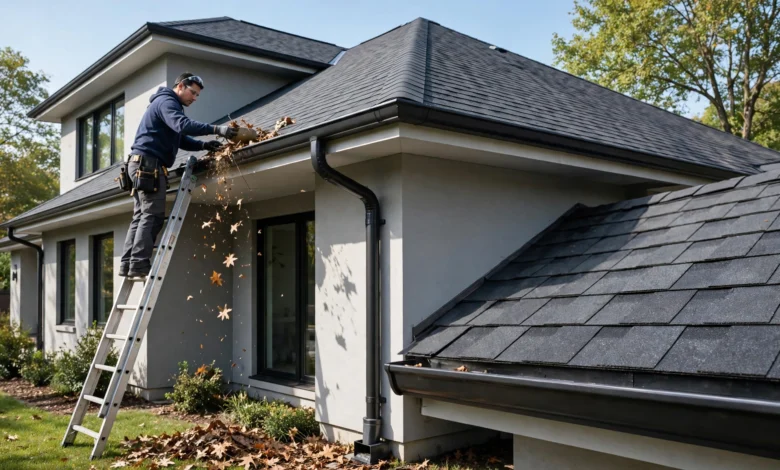
This is the single most important piece of gutter maintenance advice, and it’s the one most homeowners put off. Clogged gutters can’t move water efficiently, which means it overflows and runs down your siding, pools near your foundation, or seeps behind the gutter and rots the fascia board. Use a sturdy ladder, work with a partner for safety, and clear out leaves, twigs, and built-up sediment by hand or with a small scoop.
If climbing a ladder isn’t something you’re comfortable doing, this is one task worth hiring out. A gutter cleaning service is inexpensive compared to the cost of fixing water damage.
8. Check for Proper Gutter Slope and Secure Attachment
Gutters need a slight slope, usually about a quarter inch for every ten feet, so water flows toward the downspouts instead of sitting still. Over time, gutters can sag or pull away from the house due to the weight of debris, ice, or age. Check that hangers and brackets are secure, and look for any sections that seem to be pulling loose from the fascia.
9. Inspect and Clear Downspouts
A clean gutter run doesn’t help much if the downspout at the end is clogged. Water needs a clear path all the way to the ground and, ideally, several feet away from your foundation. Use a garden hose to flush downspouts and check that water flows freely. If water backs up, there may be a blockage further down that needs to be cleared with a plumber’s snake or removed section by section.
10. Install Gutter Guards If Needed
If you’re tired of climbing a ladder every few months, gutter guards can reduce how often you need to clean gutters by keeping out large debris like leaves and branches. They’re not a complete substitute for maintenance, since fine debris and pine needles can still get through, but they do cut down on buildup significantly. The Environmental Protection Agency also notes that well-maintained gutters play a role in directing stormwater away from your home properly, which helps reduce erosion and runoff issues around your property.
Seasonal Roofing and Gutter Maintenance Checklist
Breaking maintenance down by season makes it easier to stay on top of, especially if you tend to forget until something goes wrong.
Spring
- Inspect for winter damage, including cracked shingles and ice dam effects
- Clean gutters of winter debris
- Check attic for signs of moisture from snow melt
Summer
- Trim back tree branches before they grow further over the roofline
- Check flashing and seals before storm season
- Look for signs of pest activity around eaves and soffits
Fall
- Clean gutters thoroughly before leaves finish dropping
- Inspect downspouts for clear drainage
- Check attic insulation and ventilation before cold weather
Winter
- Watch for ice dam formation along the roof edge
- Keep an eye on snow load, especially after heavy storms
- Check for icicles forming near gutters, which can signal drainage issues
When to Call a Professional
While a lot of roof and gutter maintenance can be handled by a reasonably handy homeowner, some situations call for a professional roofer or gutter contractor:
- Steep or high roofs that aren’t safe to access with a standard ladder
- Signs of structural sagging or widespread shingle damage
- Persistent leaks that keep recurring despite repairs
- Roofs older than 20 years that may need a full inspection or replacement
- Storm damage that could involve insurance claims
A licensed roofing contractor can also spot issues that aren’t obvious from the ground, such as deteriorating underlayment or early signs of decking rot, which matters if you’re trying to extend the life of your roof rather than just patch it.
Common Mistakes to Avoid
Even well-intentioned homeowners run into a few recurring mistakes with roof and gutter care:
- Pressure washing shingles, which strips protective granules and shortens roof life
- Ignoring small leaks, assuming they’ll dry out on their own
- Skipping downspout extensions, letting water dump right next to the foundation
- Overlooking attic ventilation, which contributes to both roof damage and higher energy bills
- Waiting until a problem is visible from the street, by which point damage is often already extensive
Avoiding these habits alone can add years to the life of your roofing and gutter system.
Conclusion
Keeping a home protected from water damage doesn’t require major renovations or constant expense. It comes down to consistent, seasonal attention to two systems that work together: your roof and your gutters. By inspecting shingles and flashing regularly, clearing debris from gutters and downspouts, trimming back trees, and watching for early warning signs like interior stains or sagging sections, homeowners can avoid the vast majority of costly roofing and water damage repairs. A little time spent a few times a year, or a professional inspection when something feels beyond a DIY fix, goes a long way toward protecting one of the biggest investments most people will ever make: their home.
Keywords: