Outdoor Living Ideas for Homes in Texas
: Outdoor living ideas for homes in Texas, covering shade, patios, kitchens, and heat-smart design built for the Texas climate.
Outdoor Living Ideas for Homes in Texas: 9 Inspiring Ways to Upgrade Your Backyard
Introduction
Outdoor living ideas for homes in Texas have to answer to one thing before anything else: the heat. A backyard that looks gorgeous in a magazine spread out of California or the Pacific Northwest can turn into an unusable slab of concrete by June in Dallas, Austin, or Houston. That’s why Texas homeowners need a different playbook, one built around shade, airflow, drought-tolerant plants, and materials that don’t scorch bare feet.
The good news is that Texas backyards have a lot going for them too. Long warm seasons mean more months of actual use than most of the country gets. Big lots in the suburbs and exurbs give homeowners real room to work with. And the state’s mix of climates, from the Hill Country to the Gulf Coast to the Panhandle, means there’s a wide range of design approaches that all fall under the same umbrella of smart Texas outdoor living.
This guide walks through practical, climate-aware ways to upgrade your outdoor space, from shaded patios and outdoor kitchens to pools, fire features, and landscaping choices that actually survive a Texas summer. Whether you’re starting with a bare backyard or updating a space that’s been sitting unused for years, these ideas are meant to work with the climate instead of against it.
Why Outdoor Living Matters So Much in Texas
Texas has one of the longest outdoor seasons in the country. In much of the state, you can comfortably use a patio or yard from March through November, with only the deep summer months requiring some extra planning around shade and timing. That’s a much bigger window than homeowners get in the Midwest or Northeast, which is exactly why outdoor living spaces have become such a priority for Texas homebuyers and renovators alike.
According to the National Association of Home Builders, outdoor living features like patios, kitchens, and fire pits consistently rank among the top-requested additions in new home builds across warm-weather states, Texas included. It’s not just about looks. A well-designed outdoor space extends your usable square footage without the cost of a full home addition.
1. Build a Shaded Patio First
Before picking out furniture or grills, solve the shade problem. Texas sun is intense enough that an uncovered patio often sits empty for half the year.
Pergolas and Shade Structures
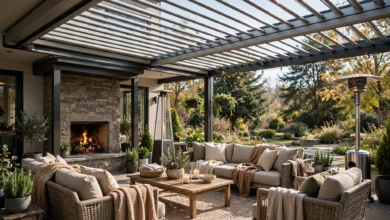
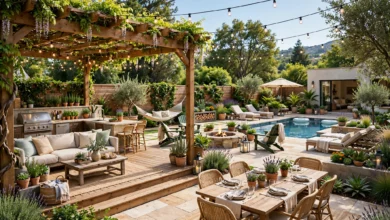
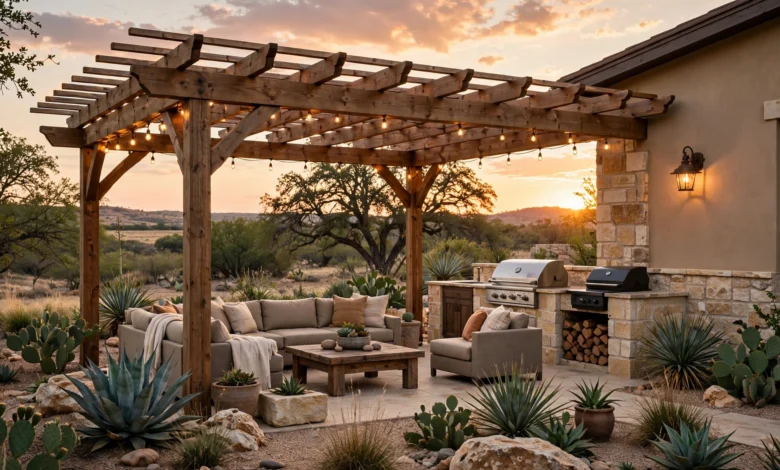
A pergola with a louvered or retractable roof gives you control over how much sun comes through, which matters a lot when the difference between April and August is 40 degrees. Look for options with adjustable slats so you can open things up in cooler months and close them down during peak summer.
Covered Porches and Patio Roofs
A solid roof extension off the back of the house creates a permanently shaded zone that works as an outdoor living room. Pair it with ceiling fans rated for outdoor use to keep air moving, since stagnant air makes Texas heat feel far worse than the thermometer suggests.
Shade Sails
For a more modern, budget-friendly option, canvas or fabric shade sails strung between posts can cover a seating or dining area at a fraction of the cost of a permanent structure.
2. Choose Heat-Smart Flooring Materials
Not every patio surface is comfortable to walk on barefoot in a Texas summer. Some materials get dangerously hot.
- Light-colored concrete or pavers reflect more heat than dark stone or dark stained concrete.
- Travertine stays notably cooler underfoot than most stone options and is popular around Texas pools for that reason.
- Composite decking in lighter tones performs better than traditional wood, which can warp and crack under repeated heat and humidity swings.
- Avoid dark brick or dark tile in any area that gets direct afternoon sun, since surface temperatures can climb well past what’s comfortable to walk on.
3. Add an Outdoor Kitchen
An outdoor kitchen keeps the heat and mess of summer cooking out of the house, which matters more in Texas than almost anywhere else in the country. A basic setup includes:
- A built-in grill, whether gas, charcoal, or a wood-fired option
- Weatherproof cabinetry or counter space for prep
- A small refrigerator or beverage cooler
- A sink, if plumbing access allows
- Overhead shade or a covered structure to protect the space and keep cooks comfortable
Stainless steel appliances rated for outdoor use hold up far better than indoor-grade equipment exposed to Texas humidity and heat cycles.
4. Install a Fire Feature
Texas evenings, especially outside of peak summer, cool down enough to make a fire feature genuinely useful rather than just decorative.
Fire Pits
A classic fire pit works well in most Texas backyards, though many cities enforce burn bans during dry months, so gas or propane options are often the more practical choice for year-round use.
Fireplaces
An outdoor fireplace built into a patio structure adds a more architectural focal point and works well paired with a covered seating area.
5. Design Around Drought-Tolerant Landscaping
Texas landscaping has shifted heavily toward xeriscaping and native plants over the last decade, partly due to water restrictions and partly because these plants simply survive better.
- Texas sage, yucca, and agave require minimal watering once established.
- Native grasses like little bluestem hold up well to heat and don’t need constant mowing.
- Live oaks and cedar elms provide strong shade canopies that mature well in Texas soil conditions.
- Mulching heavily around plant beds helps retain moisture and reduces water use significantly.
The Texas A&M AgriLife Extension offers a helpful native and adapted plant guide for homeowners looking to build a landscape that actually thrives in local conditions rather than fighting the climate every summer.
6. Add a Pool or Water Feature
Given the length and intensity of Texas summers, a pool is one of the highest-use additions a homeowner can make.
Pool Design Trends
Many Texas homeowners are moving toward smaller plunge pools or spools (spa-pool combos) rather than large traditional pools, since they cost less to heat and cool and still provide relief from the heat. Tanning ledges, or “Baja shelves,” have also become popular for shallow lounging in the sun.
Water Features Without a Full Pool
If a pool isn’t in the budget, a fountain or small pondless water feature adds a cooling visual and sound element to a patio or garden area without the maintenance of a full pool system.
7. Prioritize Airflow and Ventilation
Heat is only half the problem in Texas; humidity, especially near the Gulf Coast, makes still air feel worse. A few ways to address this:
- Install ceiling fans in any covered patio or porch area.
- Orient seating areas to take advantage of prevailing summer breezes where possible.
- Avoid fully enclosing outdoor spaces with solid walls on all sides, which traps heat and blocks airflow.
8. Extend Living Space With Outdoor Furniture and Lighting
Comfortable, weather-resistant furniture makes the difference between a space people actually use and one that just sits there.
- Choose UV-resistant fabrics rated for outdoor use, since Texas sun fades and breaks down lower-quality materials quickly.
- Opt for aluminum or teak frames over materials that rust or warp in humidity.
- Add layered lighting, including string lights, path lighting, and lanterns, to make the space usable once the sun goes down and temperatures drop.
9. Plan for Multi-Season Use
The best outdoor living areas in Texas are designed to work across the whole calendar, not just the mild spring and fall months.
- Add misting systems or fans for peak summer comfort.
- Include a fire feature or heaters for the occasional cold snap in winter.
- Choose furniture and structures that don’t need to be packed away seasonally.
Conclusion
Building great outdoor living spaces in Texas comes down to designing around the climate rather than ignoring it. Start with shade, since it determines whether a space gets used at all during summer, then layer in heat-appropriate flooring, an outdoor kitchen, a fire feature, and landscaping that can actually handle Texas heat and drought. Add a pool or water feature if the budget allows, pay attention to airflow, and finish the space with furniture and lighting built to survive the sun and humidity. Done right, a Texas backyard can become one of the most-used parts of the home for nearly nine months out of the year.