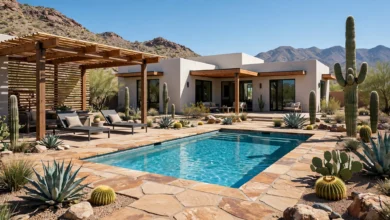
How to Choose the Right Pool Builder for Your Yard
How to choose a pool builder who fits your budget, timeline, and vision, plus the red flags and questions that protect your investment.
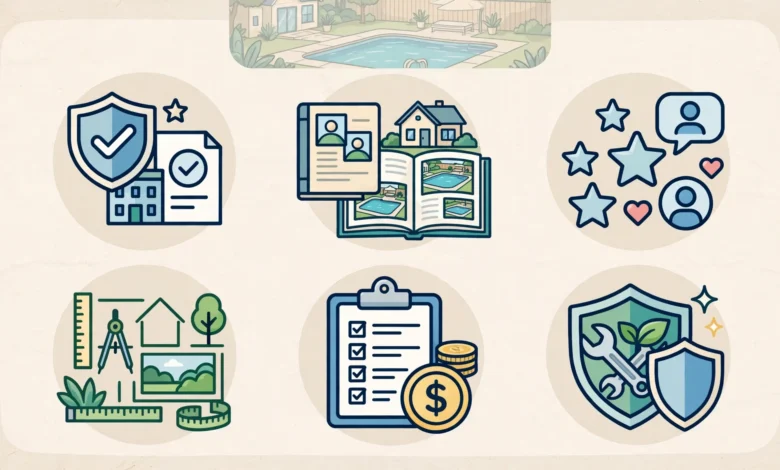
How to Choose the Right Pool Builder: 9 Essential Tips for Your Yard
How to choose a pool builder is one of those questions that seems simple until you actually start getting quotes. Suddenly you’re staring at three proposals with different pricing structures, different timelines, and different promises, and none of them line up neatly enough to compare side by side. That’s not an accident. Pool contracting is a fragmented industry, with everything from one-truck operations to large regional companies competing for the same backyard, and the gap in quality between them can be enormous.
This matters more than most home improvement decisions because a pool isn’t something you can easily redo if it goes wrong. Bad plumbing gets buried under concrete and decking. A poorly compacted base can crack a shell within a few years. And unlike a kitchen remodel, you’re also trusting this pool contractor with a structure that holds thousands of gallons of water right next to your house.
In this guide, we’ll walk through exactly what separates a solid pool builder from a risky one, what questions to ask before signing anything, and which red flags should make you walk away regardless of how good the price looks. Whether you’re planning a simple plunge pool or a full backyard renovation with a spa and outdoor kitchen, the process of picking the right builder is largely the same, and getting it right up front will save you money, time, and a lot of frustration later.
Why Choosing the Right Pool Builder Matters So Much
A pool project typically runs anywhere from a few weeks to several months, involves multiple trades (excavation, plumbing, electrical, gunite or fiberglass installation, decking, and finish work), and requires coordination that a lot of contractors simply aren’t set up to handle well. When something goes sideways, it’s rarely a single dramatic failure. It’s usually a slow accumulation of missed deadlines, change orders that balloon the budget, and finish work that looks fine for the first year before problems start showing up.
Picking the right pool builder up front is the single biggest factor in whether that process goes smoothly. It affects your timeline, your final cost, and honestly, your stress level for the better part of a season. This is a decision worth slowing down for, even if that means turning down the contractor who gave you the lowest number.
Start With Licensing and Insurance
Before you even look at portfolios or pricing, confirm that any pool contractor you’re considering is properly licensed for pool construction in your state, not just a general contracting license. Requirements vary significantly by location, and some states require a specialty swimming pool license separate from general contracting credentials.
Ask for proof of:
- A current, valid contractor’s license specific to pool construction
- General liability insurance, in case of property damage during construction
- Workers’ compensation coverage, which protects you if a worker is injured on your property
Skipping this step is one of the most common and costly mistakes homeowners make. If a subcontractor gets hurt on an uninsured job site, the homeowner can end up legally responsible for medical costs and liability claims. It only takes a few minutes to verify a license number through your state’s contractor licensing board, and it’s worth doing for every company on your shortlist, not just the one you’re leaning toward.
Look Into Experience and Specialization
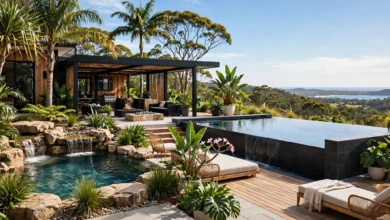
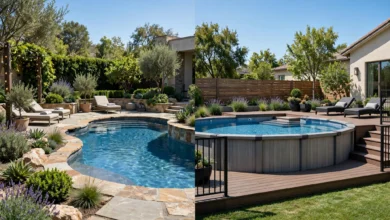
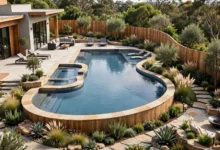
Not every pool builder specializes in the same type of project. Some companies focus almost entirely on vinyl liner pools, others on gunite or fiberglass, and some have deep experience with complex features like infinity edges, natural rock formations, or vanishing-edge spas but very little with simpler designs, or vice versa.
When you’re evaluating experience, ask:
- How many years has the company been building pools specifically, not just doing general construction?
- How many projects similar to yours (in size, material, and complexity) have they completed?
- Can they speak knowledgeably about site conditions like your soil type, water table, or slope?
- Do they have in-house crews, or do they subcontract most of the work out?
That last question matters more than people expect. A builder who subcontracts everything has less direct control over quality and scheduling. It’s not automatically a dealbreaker, since even large, reputable companies use subcontractors for specialty work like electrical or masonry, but you want to understand who’s actually accountable if something goes wrong on-site.
Check References and Past Work in Person
Anyone can put together a polished photo gallery. What’s harder to fake is a list of real homeowners willing to talk about their experience months or years after the project wrapped up.
A reliable pool builder should be able to provide:
- A list of recent client references you can actually call, not just testimonials pulled from a website
- Addresses or photos of completed projects in your area, ideally ones you can drive by or, better yet, visit in person
- Online reviews across multiple platforms, not just a curated handful on their own site
When you talk to references, ask specific questions rather than “were you happy with the work.” Ask whether the project stayed on budget, whether the timeline held up, how the builder handled any problems that came up, and whether they’d hire the same company again for a second project. That last question tends to be the most honest one.
Get Multiple, Detailed Quotes
Talking to just one contractor almost never gives you enough information to know whether a quote is fair. Most industry guidance recommends getting at least three proposals before making a decision, and comparing them line by line rather than just looking at the bottom number.
When you request a quote, make sure it clearly spells out:
- The exact pool dimensions, shape, and depth
- Materials specified for the shell, decking, tile, and coping, including brand names where relevant
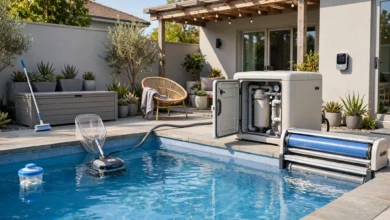
- Equipment included, such as pumps, filters, heaters, and automation systems
- What’s excluded, since some quotes leave out permits, fencing, or landscaping restoration
- Payment schedule and what triggers each installment
A quote that’s vague about materials or noticeably lower than the others is worth extra scrutiny. Sometimes a low bid reflects genuine efficiency, but often it means cheaper materials, more change orders down the line, or corners cut somewhere you won’t notice until the pool has been in the ground for a couple of years.
Watch for Red Flags During the Process
A few warning signs tend to show up consistently with problematic pool contractors, and it’s worth keeping an eye out for them from your very first conversation:
- Pressure to sign quickly. A legitimate builder understands this is a major financial decision and won’t rush you.
- Requests for large upfront payments or cash-only deals. Reputable contractors work on a structured payment schedule tied to project milestones.
- No permanent business address. If a company operates entirely out of a truck with no office or showroom, that’s worth asking about directly.
- Vague answers about subcontracting or scheduling. If you can’t get a straight answer about who’s actually doing the work or when, that’s a preview of how communication will go during construction.
- Unwillingness to put details in writing. Verbal promises about materials, timelines, or included features mean nothing once the contract is signed.
None of these are automatically disqualifying on their own, but a pattern of two or three should give you real pause.
Ask the Right Questions During a Site Visit
A site visit is where a lot of the theoretical planning becomes concrete, sometimes literally. A good pool builder will walk your property with you and talk through how site-specific conditions affect the design and construction process, not just hand you a generic proposal.
Questions worth asking during that visit include:
- How will the soil and drainage on this specific lot affect construction?
- What’s the realistic timeline from permitting to completion, and what tends to cause delays?
- How are design changes handled once construction has started?
- What warranty is offered on the shell, equipment, and finish work, and what does it actually cover?
- Who will be my point of contact throughout the project, and how often should I expect updates?
The way a contractor answers these questions tells you almost as much as the answers themselves. Someone who’s evasive or annoyed by detailed questions during the sales process usually isn’t going to communicate better once they have your deposit.
Understand the Contract Before You Sign
Once you’ve settled on a builder, read the contract closely, and don’t be shy about asking for clarification on anything that’s unclear. A solid pool contract should include a detailed scope of work, a realistic project timeline, a clear payment schedule tied to specific milestones (not just calendar dates), and warranty terms in writing.
It’s also worth confirming who is responsible for pulling permits and scheduling inspections. In most areas, pool construction requires several inspections throughout the build, and building codes typically require safety features like fencing, self-latching gates, or approved pool covers before the pool can be signed off for use. The International Code Council maintains model building codes that many local jurisdictions adopt for pool barrier and safety requirements, and it’s a useful reference if you want to understand the baseline standards your project should meet: <a href=”https://www.iccsafe.org/products-and-services/i-codes/”>ICC’s international codes resource</a>.
If you’re financing part of the project, it’s also worth reviewing general guidance on evaluating contractors and avoiding common scams from a source like the Federal Trade Commission, which publishes consumer protection guidance on hiring contractors for home improvement projects: <a href=”https://consumer.ftc.gov/articles/hiring-contractor”>FTC guidance on hiring a contractor</a>.
Consider Communication Style, Not Just Credentials
Two builders can have identical licenses, similar experience, and comparable pricing, and still deliver completely different experiences based on how they communicate. Pool construction takes weeks or months, and you’ll be interacting with this company regularly during that time.
Pay attention to:
- Response time to emails, calls, or texts during the sales process, since this is usually the best behavior you’ll see from them
- Clarity of explanations, especially when something is complicated or when a problem comes up
- Whether they listen to your priorities or seem to be pushing a standard package regardless of what you actually described wanting
A builder who communicates well but has slightly less impressive credentials than a competitor is often the better choice, simply because so many pool project problems come down to miscommunication rather than technical failure.
Factor In Long-Term Support
The relationship with your pool builder doesn’t necessarily end when construction wraps up. Ask about:
- Whether the company offers ongoing maintenance or opening/closing services
- How warranty claims are handled after the first year
- Whether they stock replacement parts for the equipment they install
- Average response time for service calls once the pool is in regular use
A builder with a strong service department after the sale is often a better long-term partner than one who’s harder to reach once the final payment clears.
Final Thoughts
Choosing the right pool builder comes down to doing the homework most homeowners are tempted to skip: verifying licensing and insurance, checking real references, comparing detailed quotes rather than just bottom-line numbers, and paying attention to how a contractor communicates from the very first conversation. A pool is a significant investment that becomes part of your home for years, if not decades, so it’s worth taking the extra weeks to vet a builder properly rather than rushing into the lowest bid or the fastest available start date. Get multiple quotes, ask direct questions during your site visit, read the contract carefully, and trust the patterns you notice along the way. The right builder will welcome that scrutiny, and that, more than any single credential, is often the clearest sign you’ve found the one to trust with your backyard.