How to Heat Your Swimming Pool Efficiently
A practical guide to heating a swimming pool efficiently, comparing heat pumps, solar, gas heaters, and covers to cut energy costs.
How to Heat Your Swimming Pool Efficiently: 9 Proven Methods
How to heat your swimming pool efficiently is a question that gets more urgent the moment you see your first gas or electricity bill after installing a heater. Pool heating can easily become one of the largest ongoing costs of pool ownership, and a lot of that cost comes down to choosing the wrong equipment for your climate, or simply losing heat faster than you’re adding it.
The frustrating part is that most pool owners don’t waste energy because they picked a bad heater. They waste energy because nobody explains upfront how much heat a pool loses through evaporation, how differently a gas heater and a heat pump actually behave, or how much a $50 pool cover can outperform a $6,000 upgrade. Efficient pool heating isn’t really about buying the most powerful equipment, it’s about matching the right heat source to your climate and usage pattern, then stopping the heat you’ve already paid for from disappearing overnight.
This guide breaks down how to heat your pool efficiently, covering the three main heating technologies (heat pumps, gas heaters, and solar), how pool covers dramatically cut heat loss, and the smaller adjustments, like temperature settings and windbreaks, that add up to real savings over a full swim season. Whether you’re choosing new equipment or trying to get more out of what you already have, these methods will help you keep your pool warm without needlessly inflating your energy bill.
Why Pool Heating Efficiency Matters More Than People Expect
Most pool owners underestimate how much heat a pool actually loses, and to what. According to the U.S. Department of Energy, evaporation is by far the largest source of energy loss in a swimming pool, since every pound of water that evaporates carries roughly 1,048 British thermal units of heat away with it. Wind makes this dramatically worse: even a modest breeze across the pool surface can multiply evaporation and heat loss several times over. Understanding this is the foundation of efficient pool heating, because no heater, no matter how good, can outrun that kind of ongoing heat loss without help.
1. Choose the Right Heater Type for Your Climate
Not all pool heaters are built for the same job, and picking the wrong type for your climate is one of the most common efficiency mistakes homeowners make.
Electric Heat Pumps
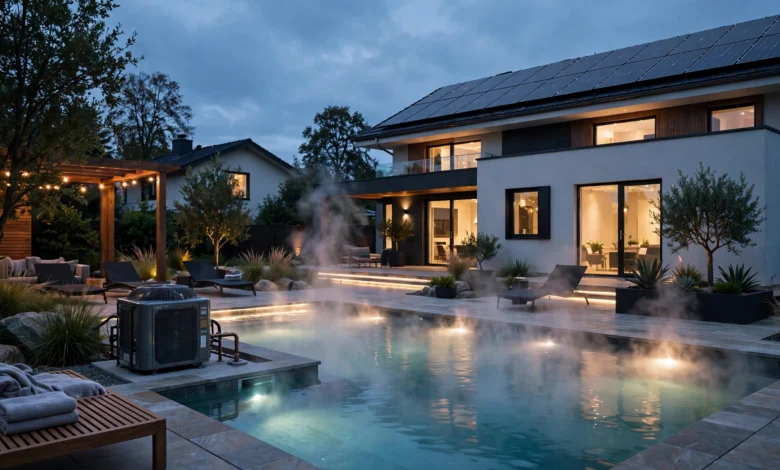
Heat pumps pull warmth from the surrounding air and transfer it into your pool water, similar to how a reverse-cycle air conditioner works. They’re widely considered the most cost-efficient option for homeowners who heat their pool regularly throughout the swim season, since they use significantly less energy per degree of heating than a gas heater. The trade-off is speed: heat pumps typically raise water temperature by only one or two degrees per hour, and their efficiency drops once air temperatures fall below roughly 50°F (10°C).
Gas Heaters
Gas pool heaters burn natural gas or propane to heat water almost immediately, making them the fastest option available. They’re the better choice if you only heat your pool occasionally, want a spa heated quickly, or need reliable performance regardless of outdoor air temperature. The downside is operating cost: gas heaters typically cost several times more per month to run than a heat pump maintaining the same temperature.
Solar Pool Heaters
Solar heating systems circulate pool water through rooftop or ground-mounted collectors, where sunlight warms the water before it returns to the pool. Once installed, solar heaters have virtually no ongoing energy cost beyond running the pump, and they can cut pool heating costs substantially in consistently sunny climates. Performance depends heavily on your local weather and roof orientation, so solar tends to work best as a primary heat source in reliably sunny regions, and as a supplement elsewhere.
Quick Comparison
| Heater Type | Heating Speed | Running Cost | Best For |
|---|---|---|---|
| Heat pump | Slow (1–2°F/hour) | Low to moderate | Regular, season-long use |
| Gas heater | Fast (same-day) | High | Occasional use, spas, quick warm-ups |
| Solar | Slow, weather-dependent | Very low after install | Sunny climates, supplemental heating |
2. Always Use a Pool Cover When the Pool Is Not in Use
If there’s one single change that delivers the biggest return on pool heating efficiency, it’s this one. The Department of Energy states plainly that covering a pool when it’s not in use is the single most effective way to reduce pool heating costs, with savings of 50% to 70% possible. A cover works by acting as a vapor barrier, dramatically slowing the evaporation that otherwise carries heat away from your pool around the clock.
Beyond heating savings, a pool cover also:
- Reduces water loss from evaporation by a significant margin
- Cuts chemical consumption by keeping the water more stable
- Reduces cleaning time by keeping debris out of the pool
Even a simple, inexpensive bubble-style solar cover delivers most of these benefits, so this upgrade doesn’t need to be expensive to be effective.
3. Pair a Cover With Your Heater, Not Instead of It
A pool cover and a heater aren’t competing solutions, they work best together. Using a cover reduces the total heating load your equipment needs to overcome, which means your heat pump, gas heater, or solar system all run more efficiently and for less time. In many cases, using a cover consistently can also let you install a smaller, less expensive heating system than you’d otherwise need, since it reduces the peak heat loss the equipment has to compensate for.
4. Install a Windbreak Around Exposed Pools
Wind dramatically accelerates evaporation, and evaporation is already your pool’s biggest source of heat loss. If your pool is in an exposed, open part of your yard, a windbreak, trees, shrubs, or a solid fence positioned at the right height and distance, can meaningfully cut heat loss. The key is getting the placement right: a windbreak needs to be tall enough and close enough to block airflow across the water’s surface, but not so close that it creates turbulence, and not so tall that it shades the pool from the sun that helps heat it.
5. Lower Your Target Temperature by a Few Degrees
Every additional degree you ask your heater to maintain increases both your energy use and your rate of evaporation, since warmer water evaporates faster than cooler water. Dropping your target pool temperature by just two or three degrees, particularly during shoulder-season months when you’re not swimming every day, can meaningfully cut your running costs without making much practical difference to comfort.
6. Run Your Pump on a Schedule That Matches Your Heater
Your pump and heater work together, and running your pump for the right duration and at the right time supports more efficient heating. Running the pump during the warmest part of the day helps a solar system work at peak efficiency, while running it on a shorter, well-timed schedule with a heat pump avoids wasting energy circulating water that doesn’t need additional heating. A variable-speed pump gives you more control here than a single-speed model, since it lets you run longer at lower, more efficient speeds rather than short bursts at full power.
7. Size Your Heater Correctly for Your Pool
An undersized heater will run constantly and struggle to maintain temperature, while an oversized heater wastes money upfront and can cycle inefficiently. Heater sizing is generally based on your pool’s surface area, volume, and how many degrees of temperature rise you want to achieve, along with local climate factors like average wind and air temperature. Getting a professional sizing assessment before purchasing, rather than guessing based on pool size alone, avoids both of these inefficiencies.
8. Consider a Hybrid Approach for Extended Swim Seasons
If you want to extend your swim season well beyond peak summer, combining two heating methods often works better than relying on one. A common approach pairs a heat pump for steady, everyday temperature maintenance with a gas heater kept in reserve for quick warm-ups before a specific swim session or a cooler stretch of weather. Others pair a solar system for baseline heating with a heat pump to cover cloudy days or evenings. This kind of layered approach lets you rely on the cheapest option most of the time while still having fast heating available when you actually need it.
9. Keep Equipment Maintained for Consistent Efficiency
An efficient heater that isn’t properly maintained will gradually lose performance. Basic upkeep matters more than most pool owners assume:
- Clean or replace filters regularly so restricted flow doesn’t force your heater to work harder.
- Check heat pump coils periodically for dirt or debris buildup, which reduces heat transfer efficiency.
- Inspect gas heaters annually for proper combustion and venting, since poor combustion wastes fuel.
- Test water chemistry consistently, since scale buildup on heating elements or heat exchangers reduces efficiency over time.
Neglected equipment doesn’t just risk breakdowns, it quietly increases your energy use long before anything actually fails.
Putting It All Together
Efficient pool heating isn’t about picking one perfect piece of equipment, it’s about combining the right heater for your climate and usage pattern with habits and add-ons that reduce how much heat you lose in the first place. A heat pump paired with a consistent cover routine, a sensible target temperature, and a properly sized system will almost always out-perform an expensive heater used without any of these supporting measures.
Conclusion
Learning how to heat your swimming pool efficiently comes down to two things working together: choosing a heating method that actually fits your climate and how often you swim, and cutting down the heat loss your equipment has to fight against. A heat pump, gas heater, or solar system each has a clear use case, but none of them perform their best without a consistent pool cover routine, sensible temperature targets, proper sizing, and basic ongoing maintenance. Get those fundamentals right, and you’ll extend your swim season and keep your pool comfortably warm without watching your energy bills climb every month.