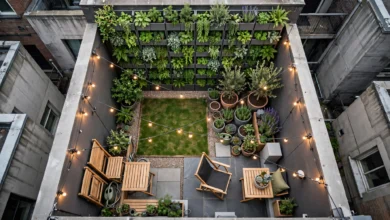
How to Design a Backyard Oasis With a Landscape Designer
How to design a backyard oasis with a landscape designer, covering privacy, water features, lighting, and layout before you start.
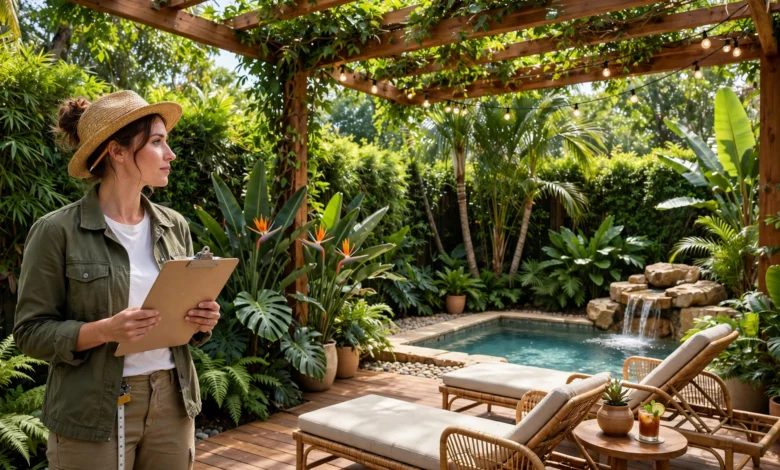
How to Design a Backyard Oasis With a Landscape Designer: 8 Stunning Ideas for Your Dream Retreat
How to design a backyard oasis with a landscape designer is a question that usually comes from the same place: you’re tired of a yard that feels more like an obligation than a retreat, and you want an outdoor space that actually feels like an escape without leaving your property. A backyard oasis isn’t about any single feature. It’s the combination of privacy, sound, layout, planting, and lighting working together to create somewhere you genuinely want to spend time.
This guide breaks down how a landscape designer approaches building this kind of space, from the first conversation about how you want to use the yard to the details that make it feel finished, water features, layered lighting, and planting that creates real privacy rather than just decoration. Whether you’re working with a small urban backyard or a larger suburban lot, the same design principles apply, even if the scale and specific features shift.
By the end of this article, you’ll understand what actually goes into a backyard oasis design, which elements matter most for creating a genuine sense of escape, and what to discuss with a designer before committing to a plan. We’ll also cover budget-friendly phasing options, since a full oasis-style backyard doesn’t have to happen all at once, and common mistakes that leave a space looking more like a construction project than a retreat.
What Makes a Backyard Feel Like an Oasis?
Before diving into specific features, it helps to understand what actually creates that “oasis” feeling, since it’s less about any one element and more about how several work together. A landscape designer typically focuses on:
- Privacy, so the space feels enclosed and personal rather than exposed
- Sound management, using water features or plantings to soften outside noise
- Layered lighting, extending usability into the evening
- A clear sense of purpose for each zone, lounging, dining, soaking, entertaining
- Lush, intentional planting that creates a sense of retreat rather than a sparse yard
Missing even one or two of these elements often leaves a backyard looking nice in photos but not actually functioning as a place people want to relax.
1. Start With Privacy Planning
Privacy is usually the first thing a landscape designer tackles when building an oasis-style backyard, since it’s difficult to feel relaxed in a space that feels exposed to neighbors or the street.
Common privacy solutions include:
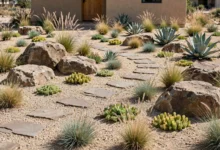
- Layered hedging, using a mix of heights and densities along property lines
- Pergolas with climbing vines, which add overhead privacy as well as shade
- Privacy screens or fencing, often combined with plantings to soften a hard boundary
- Strategic tree placement, chosen specifically to block sightlines from upper-story neighboring windows
A good designer will walk the property at different times of day to identify actual sightlines, from neighboring windows, upper floors, or the street, rather than guessing where privacy is needed.
2. Add a Water Feature for Sound and Focal Interest
Few elements do more for the “oasis” feeling than the sound of moving water. A water feature masks street noise, adds a calming ambient sound, and gives the eye a natural focal point.
Options range widely depending on budget and space:
- Small fountains, a low-cost option that still delivers meaningful ambient sound
- Pondless waterfalls, which provide the visual and audio benefit of a water feature without the maintenance of a full pond
- Koi ponds, a larger investment that adds both visual interest and a genuine focal point
- Pools or spas, for those with the budget and space, integrated into the broader design rather than treated as a separate element
Even a modest water feature can meaningfully change how a backyard feels, since the sound of moving water is one of the fastest ways to mentally separate a space from everyday noise.
3. Layer Your Lighting for Evening Use
A backyard oasis that only works during daylight hours is missing a huge part of its potential. Landscape lighting, done in layers rather than a single floodlight, extends usability well into the evening and adds real atmosphere.
A layered lighting plan typically includes:
- Path lighting for safe, guided movement through the space
- Uplighting on trees or architectural features to create depth and drama after dark
- String lights or overhead lighting over seating and dining areas for ambient glow
- Underwater lighting for any water features or pools
The U.S. Department of Energy’s outdoor lighting guidance is a useful reference if energy efficiency is a priority, since LED fixtures now offer strong performance for landscape lighting without the higher running costs of older systems.
4. Define Distinct Zones for Different Activities
A backyard that tries to do everything in one open space often ends up feeling cluttered rather than relaxing. A well-planned backyard oasis breaks the space into clear zones, each with its own purpose.
Common zoning approaches include:
- A dining zone, typically near the house for easy kitchen access
- A lounging zone, often set slightly apart with comfortable seating and shade
- An entertaining zone, which might include a fire pit or bar area for gatherings
- A quiet retreat zone, tucked further from the house for a more private escape
Transitions between zones, a change in paving material, a low hedge, a change in elevation, help signal the shift from one purpose to another without needing hard walls or fences.
5. Choose Lush, Layered Planting
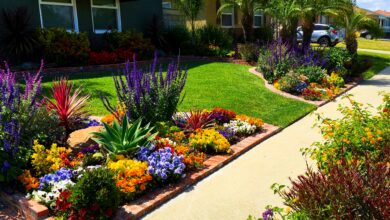
Sparse planting rarely reads as an oasis. The feeling of a genuine retreat usually comes from lush, layered planting that creates depth and a sense of enclosure.
Effective planting strategies include:
- Tall background plants (trees, tall shrubs) to establish enclosure and height
- Mid-height layers for texture and seasonal color
- Groundcover and low plantings to soften hard edges like patios and paths
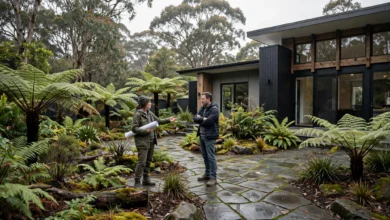
- Tropical or broad-leafed plants where climate allows, since larger leaves tend to read as more lush and relaxing
A designer will typically choose species suited to your specific climate that still achieve this layered, abundant look, since forcing tropical-style planting in an unsuitable climate usually leads to plants that struggle rather than thrive.
6. Incorporate Comfortable, Weather-Resistant Seating
An oasis-style backyard needs somewhere comfortable to actually sit and enjoy it. This sounds obvious, but it’s a step that often gets underprioritized in favor of more visually dramatic features.
Considerations for seating areas include:
- Weather-resistant materials like teak, powder-coated aluminum, or all-weather wicker
- Shade coverage, whether from a pergola, umbrella, or strategically placed tree
- Comfortable proportions, allowing enough space for people to move around furniture without feeling cramped
- Proximity to key features, like positioning lounge seating within view of a water feature or fire pit
Furniture and seating placement is often finalized after the hardscaping and planting plan, since it needs to work with sightlines and shade patterns that develop as the design comes together.
7. Add a Fire Feature for Extended Use
A fire pit or fireplace extends a backyard’s usability into cooler months and evenings, and adds a natural gathering point for entertaining.
Popular fire feature options include:
- Built-in fire pits, often paired with surrounding seating for a defined gathering area
- Portable fire bowls, a lower-cost, flexible option for smaller yards
- Outdoor fireplaces, a larger investment that adds real architectural presence
- Tabletop fire features, useful for dining areas that want ambient warmth without a full fire pit setup
Local regulations around open flames vary by municipality, so it’s worth checking fire pit and fireplace rules with your local building or fire department before finalizing this part of the design, particularly in drought-prone regions.
8. Work With a Landscape Designer to Bring It All Together
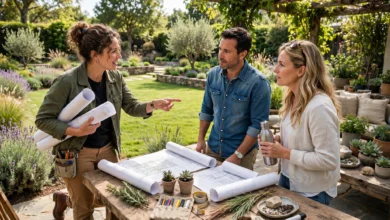
While each of these elements can technically be added individually, a landscape designer brings the experience to make sure they work together as a cohesive space rather than a collection of separate features competing for attention.
A designer typically helps by:
- Creating a phased plan if budget doesn’t allow for everything at once
- Balancing hardscaping, planting, and water features so no single element overwhelms the space
- Ensuring proper drainage and irrigation are planned before any hardscaping goes in
- Advising on materials and plant choices suited specifically to your climate and maintenance preferences
For homeowners planning a larger project, the American Society of Landscape Architects offers a helpful overview of what to expect when working with a design professional on residential outdoor projects, including how design and installation phases typically unfold.
Budgeting and Phasing Your Backyard Oasis
A full backyard oasis doesn’t need to happen in one project. Many homeowners phase the work over a year or two, prioritizing based on both budget and impact.
A common phasing approach:
- Phase one: Core hardscaping, patio, pathways, and any major grading or drainage work
- Phase two: Structural planting, trees, hedges, and foundational shrubs for privacy
- Phase three: Water features, fire features, and lighting
- Phase four: Furniture, accessories, and finishing touches like seasonal planting
This approach spreads out cost while still working toward a cohesive final design, rather than tackling everything piecemeal without an overall plan guiding each phase.
Common Mistakes to Avoid
A few recurring issues show up in backyard oasis projects that don’t quite deliver the intended feeling:
- Skipping privacy planning, leaving the space feeling exposed despite other upgrades
- Underinvesting in lighting, which limits the space to daytime use only
- Overcrowding the yard with features without clear zoning, creating visual clutter
- Choosing plants unsuited to the climate in pursuit of a specific tropical look, leading to ongoing plant health issues
Conclusion
How to design a backyard oasis with a landscape designer comes down to layering several elements thoughtfully rather than chasing one standout feature: privacy, water for sound and focal interest, layered lighting for evening use, clearly defined zones, lush planting, comfortable seating, and often a fire feature to extend the season. A designer’s real value is bringing these pieces together into one cohesive space, phased sensibly if needed, rather than a scattered collection of upgrades. Get these fundamentals right, and a backyard can genuinely become the retreat it’s meant to be, not just another part of the property that needs maintaining.