Interior Designer Tips for Decorating on a Budget
Interior designer tips for decorating on a budget show you where to spend, where to save, and how to style a room without overspending.
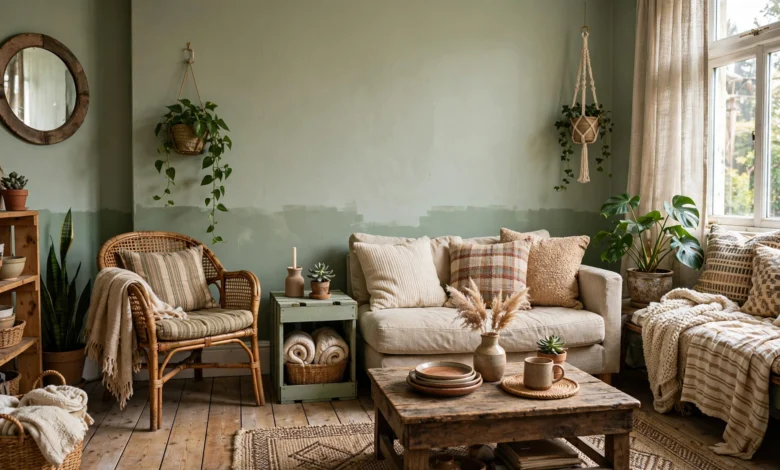
Interior Designer Tips for Decorating on a Budget: 15 Proven Ideas for a Stunning Home
Interior designer tips for decorating on a budget tend to get reduced online to the same tired advice: buy throw pillows, add a plant, light a candle. None of that is wrong exactly, but it’s not what actually changes how a room feels. The rooms that look pulled together on a modest budget usually come down to a handful of decisions made early, not a pile of small purchases made later.
Most people overspend on decorating for the same reason: they buy things one at a time, hoping the room will eventually click. A lamp here, a rug there, a piece of art because it was on sale. Six months later, the room has cost more than expected and still doesn’t feel finished. Professional designers avoid this by working the other way around. They plan the whole room first, decide what deserves real money and what doesn’t, and only then start buying.
This guide pulls together the strategies designers actually use when a client’s budget is tight, not the surface-level hacks that show up in every listicle. You’ll find advice on what’s worth investing in, what to skip, how to shop smarter, and how to make a room look considered rather than thrown together. Whether you’re furnishing a first apartment or refreshing a family home, these budget decorating tips are built to work in the real world, not just in a mood board.
1. Plan the Whole Room Before You Buy Anything
The single biggest mistake in budget decorating isn’t spending too much on individual items, it’s buying without a plan. Designers always start with a full room layout before purchasing a single piece.
- Measure the space first, including doorways, windows, and any architectural features you’ll need to work around
- Decide on a focal point, whether that’s a sofa, a bed, or a fireplace, and build the rest of the room around it
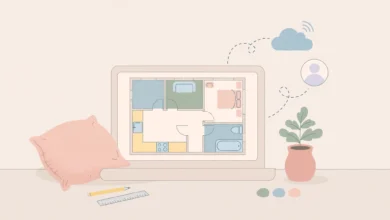
- Create a simple floor plan, even a rough sketch, so you know exactly what sizes will actually fit
This step alone prevents one of the most expensive budget-decorating errors: buying a piece that looks great in a shop but is the wrong scale for your room. Planning mistakes like incorrect scale and mismatched colors are responsible for a significant share of wasted home decor budgets, which makes this step worth the extra hour it takes.
2. Use the Invest, Save, DIY Framework
Professional designers rarely treat every item in a room the same way. Instead, they sort purchases into three categories, which keeps the budget under control without making the room feel cheap.
Invest In
- Seating you’ll use daily, such as a sofa or dining chairs, since low-quality options wear out fast and end up costing more long term
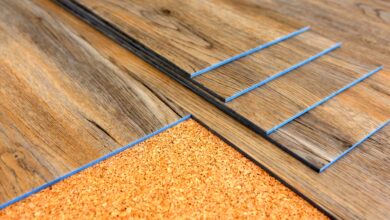
- Durable flooring in high-traffic areas
- Good lighting, which affects how every other piece in the room reads
Save On
- Side tables and accent furniture, where shape and scale matter more than brand or material
- Decorative objects like vases, trays, and books
- Trend-driven pieces you might want to swap out in a year or two
DIY
- Cosmetic upgrades like painting furniture, changing hardware, or refinishing a thrifted piece
- Simple styling tasks, such as rearranging existing decor into new groupings
This framework matters because it stops you from either overspending everywhere or underspending on the pieces that actually need to last.
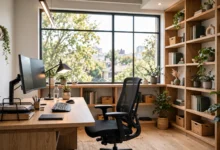
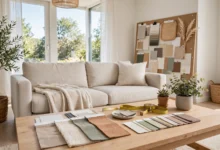
3. Declutter Before You Decorate
It sounds counterintuitive, but one of the most effective interior designer tips for decorating on a budget costs nothing at all: get rid of what you don’t need first. A cluttered room looks unfinished no matter how much you spend filling it with new items.
- Start with one drawer or shelf, not the whole room, so the task doesn’t feel overwhelming
- Sort items into keep, donate, and discard piles
- Reassess what’s left before buying anything new, since you may already own more useful pieces than you realize
Once a space is decluttered, it’s often easier to see what’s genuinely missing, which prevents impulse purchases that don’t actually solve a real problem in the room.
4. Shop Your Own House First
Before buying anything new, walk through your entire home and pull pieces that could work in the room you’re decorating. A lamp from the guest room, a mirror from storage, or artwork from another wall can often solve a styling problem for free.
This approach, sometimes called “shopping your house,” is one of the most consistently recommended budget decorating tips among professional designers, largely because it costs nothing and often produces a more personal, layered look than buying everything new from the same store.
5. Paint Is Still the Highest Return-on-Investment Update
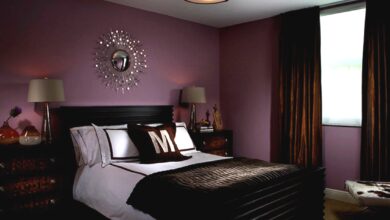
Repainting remains one of the most affordable ways to transform a room, and it’s usually the first move designers recommend for a tight budget. A single wall in a bold or unexpected color can change the entire feel of a space without the cost of new furniture.
- Choose a neutral or soft palette for spaces you plan to keep long term
- Use bolder colors on a single accent wall if you want more personality without repainting the whole room
- Always test paint samples on the actual wall, since lighting changes how a color reads throughout the day
6. Make Curtains and Window Treatments Work Harder
Window treatments are frequently underestimated in budget decorating, but they have an outsized effect on how finished a room feels.
- Hang curtains from ceiling to floor rather than just above the window frame, which makes ceilings look taller and rooms feel larger
- Avoid short curtains, which tend to look inexpensive regardless of the fabric quality
- Choose sheer fabrics for rooms that need natural light, or heavier fabric for a more dramatic, formal look
This is a low-cost swap that consistently gets flagged by designers as one of the easiest ways to make a budget room look more expensive than it was.
7. Style Surfaces Like a Professional
How you arrange objects on a shelf, console, or coffee table matters as much as what you buy. Designers use a few consistent styling rules that cost nothing to apply.
- Group items in odd numbers, which reads as more natural and intentional than pairs
- Vary heights, combining a tall piece, a medium piece, and a low piece to create visual rhythm
- Leave negative space, since overcrowded surfaces make a room feel cluttered even when the individual pieces are nice
Removing half the items from a console table and rearranging what’s left is one of the simplest free updates available, and it often makes the remaining pieces look more considered.
8. Use Mirrors to Add Light and Scale for Less
Mirrors are one of the most cost-effective tools in budget decorating. A well-placed mirror bounces natural light around a room and can make a small space feel noticeably larger.
- Group mirrors of varying shapes and sizes for an artistic wall composition instead of buying one large statement piece
- Position mirrors opposite windows to maximize natural light
- Choose a minimalist frame if you want the mirror to feel modern rather than ornate
9. Bring in Greenery and Natural Textures
Plants and natural materials add warmth and life to a room at a relatively low cost compared to furniture or art. Even a few well-placed plants can make a budget-decorated room feel considered rather than sparse.
- Mix plant sizes and leaf shapes for visual variety
- Choose low-maintenance varieties if you’re not confident about plant care
- Pair greenery with natural materials like woven baskets, jute rugs, or linen textiles to reinforce the same warm, textural feel throughout the room
10. Find Furniture Dupes and Secondhand Pieces
You don’t need designer-brand furniture to get a designer look. Several resale platforms and marketplaces now specialize in finding lower-cost alternatives to high-end pieces, and secondhand shopping remains one of the most effective budget decorating tips for anyone furnishing a full room.
- Check local marketplace listings and estate sales for solid-wood furniture, which often outlasts inexpensive new pieces
- Look for furniture “dupes” that replicate the silhouette of higher-end designs at a fraction of the price
- Refinish or reupholster secondhand pieces instead of buying new, especially for statement chairs or coffee tables
11. Use Virtual Tools Before You Spend
Planning mistakes are one of the biggest sources of wasted decorating budgets, and modern visualization tools make it far easier to catch problems before money is spent. Using an AI or virtual room design tool to test layouts, colors, and furniture placement acts as a genuine financial safeguard, since it’s far cheaper to undo a mistake on screen than to return furniture that doesn’t fit.
This step pairs naturally with the room-planning advice earlier in this guide. The more you can visualize before buying, the less likely you are to end up with mismatched pieces that don’t work together.
12. Know When to Call in a Professional
Budget decorating doesn’t mean doing everything yourself. Sometimes hiring an affordable designer, even for a single consultation, saves money in the long run by preventing costly trial and error.
According to Decorilla’s design team, <cite index=”17-1″>before starting a budget interior design project, it helps to research thoroughly, be honest about your own DIY skillset, and get professional help where needed, since sometimes hiring an affordable professional saves money in the long run</cite>. A short consultation is often enough to get a floor plan, color direction, and shopping list you can then execute yourself.
For additional design inspiration and current styling trends, resources like <a href=”https://www.dezeen.com/interiors/”>Dezeen’s interior design coverage</a> and <a href=”https://www.elledecor.com/design-decorate/”>Elle Decor’s design and decorate section</a> are useful for seeing how professional designers apply these same principles at a higher budget level, which can help you adapt the ideas at a smaller scale.
13. Prioritize Function Before Decoration
It’s tempting to buy decorative pieces first because they’re more exciting, but designers consistently recommend furnishing the functional backbone of a room before adding decor.
- Furnish essential pieces first: seating, storage, and lighting
- Add supporting furniture next: side tables, rugs, and window treatments
- Layer in decorative items last: art, accessories, and styling objects
This order prevents the common budget mistake of spending on decor early and running out of money for furniture the room actually needs.
14. Layer Textures Instead of Buying More Items
Texture does a lot of the visual work that people mistakenly try to solve with more furniture or decor. Mixing materials like linen, wool, wood, and ceramic across a smaller number of pieces creates a layered, high-end look without adding clutter or cost.
- Pair a smooth surface, like a glass or lacquered table, with something textured nearby, like a woven basket or nubby throw
- Use a rug to add texture underfoot without needing to change the furniture
- Choose one or two statement textures per room rather than trying to include every material at once
15. Give the Room Time to Come Together
Budget decorating rarely happens all at once, and that’s actually an advantage. Spacing purchases out over a few months allows you to shop sales, find secondhand pieces, and avoid impulse buying that doesn’t fit the overall plan.
Style is a gradual process rather than a single shopping trip, and homes that evolve slowly, adding pieces that feel meaningful rather than filling space quickly, tend to look more intentional than rooms furnished all at once from a single store.
Conclusion
Interior designer tips for decorating on a budget come down to a few consistent principles rather than an endless list of small hacks: plan the room before you buy, decide where to invest and where to save, declutter before adding anything new, and use free tools like your own belongings, paint, mirrors, and thoughtful styling to do more of the visual work. Secondhand furniture, virtual planning tools, and a short consultation with a professional designer can all stretch a modest budget further without sacrificing the finished look. The rooms that feel the most pulled together aren’t necessarily the most expensive ones, they’re the ones where every decision, big or small, was made with intention rather than convenience.
Keywords