Living Room Ideas for Coastal Homes in Florida
: Living room ideas for coastal homes in Florida that handle humidity, sun, and salt air while still looking beach-ready.
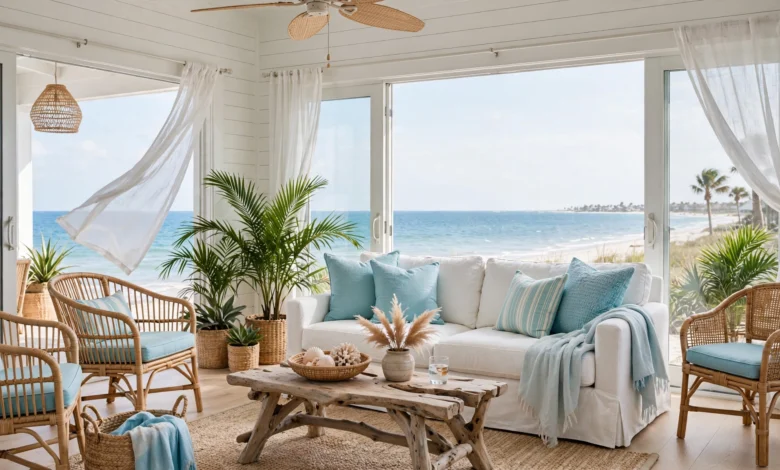
Living room ideas for coastal homes in Florida need to solve two problems at once: they have to look like they belong near the water, and they have to survive actually living near the water. Salt air, year-round humidity, intense sun, and the occasional hurricane season aren’t small details, they’re the reason a gorgeous linen sofa that looks perfect in a magazine can develop mildew within a year if it’s the wrong fabric. Florida living rooms have to be practical first and pretty second, even if the end result looks completely effortless.
That’s really what separates a good coastal living room in Florida from one that just uses beach-themed throw pillows and calls it done. The right materials, ventilation, and layout decisions matter as much as the color palette. A room built around soft neutrals, natural textures, and durable fabrics doesn’t just look the part, it holds up to the climate that makes Florida living what it is.
This guide covers 15 living room ideas for coastal homes in Florida, from color and material choices to layout and lighting decisions specific to the state’s heat, humidity, and storm exposure. Whether you’re decorating a beachfront condo in Naples, a canal-front home in Fort Lauderdale, or an inland house that just wants that Florida coastal feel, these ideas are built to actually last in this climate, not just photograph well for a season.
1. Build the Palette Around Soft, Water-Inspired Neutrals
The classic coastal color palette leans on tone-on-tone whites, sandy neutrals, and soft blues that mirror Florida’s beaches and skies. This isn’t just an aesthetic choice, lighter colors also reflect heat better and keep a sun-drenched room feeling cooler.
- Use warm whites and creams as the base for walls and large furniture
- Layer in muted blues and seafoam greens through pillows, art, and accessories
- Add sandy or driftwood-toned wood tones to ground the cooler colors
2. Choose Performance Fabrics Over Standard Upholstery
Florida’s humidity is hard on regular fabric. Standard upholstery can fade fast under intense sun or develop mildew from constant moisture in the air, especially in homes without central air running around the clock. Performance fabrics, engineered to resist stains, moisture, and fading, are worth the upgrade for any coastal living room near the water.
- Look for solution-dyed acrylic or polyester blends rated for indoor-outdoor use
- Prioritize fabrics with UV resistance if the room gets strong afternoon sun
- Avoid natural fibers like raw linen for main seating pieces in high-humidity rooms
3. Bring In Rattan and Wicker for Texture
Rattan and wicker furniture are staples of Florida coastal design because they’re lightweight, breathable, and visually in line with the relaxed, tropical feel the state is known for. A rattan armchair or wicker accent piece adds texture without weighing the room down the way heavier upholstered furniture can.
Choosing Quality Rattan for Humid Climates
Cheaper rattan pieces can unravel or weaken faster in high humidity, so it’s worth investing in tightly woven, well-finished pieces rather than the lowest-cost option. Pairing rattan with linen or performance-fabric cushions balances the natural texture with practicality.


4. Maximize Natural Light With Large Windows or Sliding Doors
Florida coastal homes are built around natural light, and large sliding glass doors or expansive windows create the indoor-outdoor feel that defines the style. Opening up a wall of glass can genuinely make a living room feel twice its size, especially when it leads directly to a patio, lanai, or ocean view.
Hurricane-Rated Glass for Storm Zones
In storm-prone regions, standard glass isn’t enough. Hurricane-rated, impact-resistant glass is essential for homes near the coast, both for storm protection and often for local building code compliance. The Federal Emergency Management Agency provides detailed guidance on wind-resistant construction standards for coastal properties, which is worth reviewing before any major window or door renovation in a hurricane-exposed area.
5. Install Ceiling Fans as Both Function and Style
A ceiling fan in a Florida living room isn’t optional, it’s one of the most practical additions you can make. Beyond keeping the room comfortable and cutting down on air conditioning costs, fans with woven palm blades or a natural wood finish double as a subtle nod to coastal style rather than a purely utilitarian fixture.
- Choose a fan sized appropriately for the room’s square footage for effective air circulation
- Look for wet-rated or damp-rated fans if the living room connects to an open-air lanai
- Pair a stylish fan with dimmable overhead lighting for flexibility after dark
6. Use Sheer Curtains to Keep the Breeze and the View
Heavy drapes block both light and airflow, which works against the open, breezy feel most Florida coastal homes are going for. Sheer curtains let natural light and any available cross-breeze move through the room while still offering a layer of privacy and softness at the windows.
7. Add Natural Fiber Rugs for Grounding Texture
Jute and sisal rugs are common in coastal interiors because they add warmth and texture without feeling heavy or overly formal. They also tend to handle Florida’s humidity better than plush wool rugs, which can hold moisture and take longer to dry out in a damp climate.
- Choose a rug large enough to anchor the seating area, not just float in the center
- Look for flatweave natural fiber rugs for easier cleaning in high-traffic rooms
- Layer a smaller patterned rug on top for color without sacrificing the natural base
8. Bring the Outdoors In With Tropical Greenery
A potted palm or other tropical plant instantly reinforces the coastal feel of a Florida living room while also improving air quality. According to the University of Florida IFAS Extension, several palm varieties are well suited to growing indoors in Florida’s climate, making them a reliable choice for adding greenery that actually thrives rather than struggling indoors.
9. Keep Furniture Layouts Open and Airy
Dense, heavy furniture arrangements work against the relaxed feel that defines coastal living room design. Leaving breathing room between pieces, choosing furniture with visible legs instead of solid bases, and avoiding oversized statement pieces in smaller rooms all help maintain that open, beach-house atmosphere.
- Float seating away from walls to create a more open, conversational layout
- Choose furniture with slimmer profiles in smaller coastal condos or bungalows
- Leave clear sightlines toward windows or water views wherever possible
10. Layer in Nautical and Coastal Accents Without Overdoing It
Modern coastal style has moved well past anchors and seashells scattered everywhere. A few well-chosen accents, driftwood accessories, glass or ceramic decor in ocean tones, subtle sailboat or botanical artwork, communicate the theme without tipping into a theme park look.
11. Choose Durable Flooring for Sand, Moisture, and Foot Traffic
Florida living rooms deal with a lot of foot traffic in and out from the beach, pool, or patio, plus the general moisture that comes with the climate. Tile, luxury vinyl plank, and sealed hardwood all hold up better than carpet, which tends to trap moisture and show wear faster in humid coastal homes.
12. Add Vertical Storage to Keep Small Coastal Spaces Functional
Many Florida coastal homes, particularly condos and beach cottages, work with a smaller footprint than inland houses. Vertical storage, tall bookshelves, wall-mounted cabinets, and built-ins that use height rather than floor space, keeps the room functional without crowding the open, airy feel that coastal design depends on.
13. Choose Window Treatments That Handle Intense Sun
Beyond sheer curtains for airflow, many Florida living rooms benefit from a secondary layer, like bamboo blinds or light-filtering shades, to manage the intensity of direct sun during peak hours. This protects furniture and fabric from fading while still allowing the room to feel bright and open most of the day.
14. Use Layered Lighting for Evening Ambience
Florida’s natural light is strong during the day, but a coastal living room still needs a solid lighting plan for evenings. Combining a statement fixture, like a woven pendant or a driftwood-inspired chandelier, with table and floor lamps gives the room warmth after sunset without relying on one harsh overhead source.
15. Prioritize Indoor-Outdoor Flow
The best Florida coastal living rooms don’t feel fully separate from the outdoors. Coordinating the living room’s color palette and materials with an adjacent lanai, patio, or pool area creates a seamless transition, and it makes both spaces feel larger and more connected, which is often the whole point of coastal living in the first place.
Frequently Asked Questions
What fabric works best for Florida coastal furniture? Performance fabrics designed to resist moisture, staining, and UV fading hold up significantly better than standard upholstery in Florida’s humid, sun-heavy climate.
Do I need hurricane-rated windows for a coastal living room? If the home is in a storm-prone or coastal wind zone, impact-resistant glass is often required by local building codes and is strongly recommended regardless of code minimums.
What colors work best for a Florida coastal living room? Soft neutrals, sandy tones, and muted blues remain the most popular choices, since they reflect heat well and echo the colors of Florida’s beaches and water.
Conclusion
Living room ideas for coastal homes in Florida work best when style and durability are treated as equally important, not as a trade-off. Soft, water-inspired colors, performance fabrics, natural textures like rattan and jute, and practical additions like ceiling fans and hurricane-rated glass all combine to create a room that looks like it belongs on the coast and can actually handle living there. Start with the materials and layout decisions that address Florida’s climate directly, then layer in the coastal details, and the result will be a living room that stays beautiful well beyond its first season.