Living Room Decorating Tips for Homes in London
Living Room Decorating Tips for Homes in London: 11 essential ideas to work with period features, low light, and smaller room sizes.
Living Room Decorating Tips for Homes in London: 11 Essential Ideas for a Beautiful Space
Living room decorating tips for homes in London need to account for a set of challenges that simply don’t apply everywhere else. London’s housing stock is dominated by Victorian and Georgian terraces, converted flats, and period conversions, many of which come with narrow proportions, tall but heavily framed sash windows, and rooms that were never designed with modern furniture or open-plan living in mind. Add in the city’s famously grey, low-light winters and its unpredictable damp weather, and it’s clear why a decorating approach that works in a new-build suburban home somewhere else doesn’t always translate to a London terrace or a converted mansion block flat.
That doesn’t mean London living rooms can’t be warm, stylish, and functional. In fact, some of the best interior design work happens specifically because of these constraints, not despite them. Working with a room’s original cornicing, choosing furniture scaled to a smaller floor plan, and managing light carefully can turn a compact or oddly shaped living room into one of the most inviting spaces in the home. In this guide, we’ll go through eleven practical, London-specific living room decorating tips, covering everything from period features and light management to furniture scale and color choices that actually suit the city’s architecture and climate. Whether you’re in a converted Victorian terrace in Clapham or a modern flat near Canary Wharf, these ideas are built around how London homes are actually laid out.
Why London Homes Call for a Different Decorating Approach
London’s housing stock is older and more varied than in many other major cities. A large share of homes were built well before central heating, open-plan layouts, or double-glazed windows were standard, which means many living rooms today still carry the bones of a very different way of living. Original features like picture rails, ceiling roses, and fireplaces are common, even in homes that have been extensively renovated, and preserving or working around these details is often part of a property’s character and value. According to Historic England, maintaining original architectural features in period homes not only protects a property’s historic value but also tends to support long-term resale appeal.
At the same time, London’s climate, with long overcast stretches and limited direct sunlight for much of the year, means lighting and color choices matter more here than in sunnier climates. A London living room needs to work hard to feel bright and comfortable, especially in a city where many homes have smaller windows or rooms that don’t face direct south light.
11 Living Room Decorating Tips for Homes in London
Here are eleven decorating strategies built specifically around London’s housing stock, light conditions, and room proportions.
1. Work With Period Features Instead of Removing Them
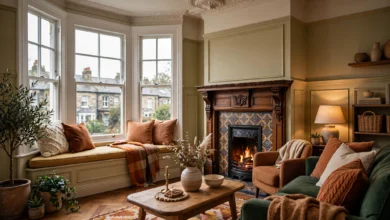
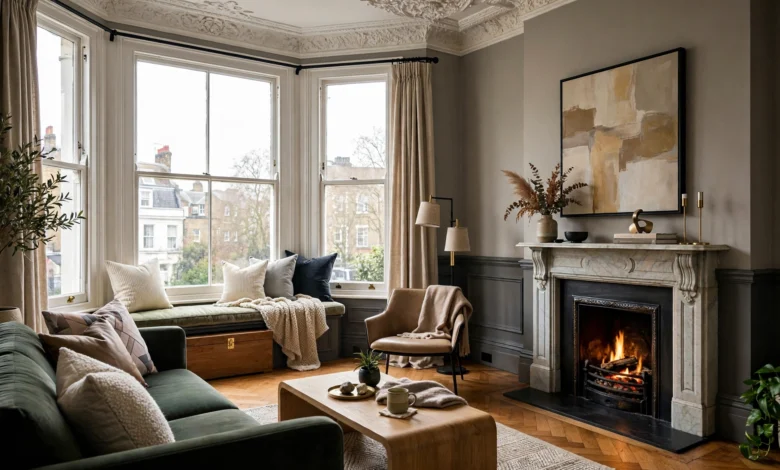
If your living room has original cornicing, a picture rail, or a fireplace surround, resist the urge to strip it all out for a blank, modern look. These details add character and are often expensive to replicate if removed. Instead, paint cornicing and ceiling roses a shade or two lighter than the walls to let them stand out subtly, and consider restoring an original fireplace surround as a focal point rather than covering it over.
2. Choose Paint Colors That Work With Low Light
London’s grey skies mean many living rooms don’t get strong, direct sunlight for much of the year. Very pale, cool-toned whites can end up looking flat or slightly grey in these conditions rather than bright and airy. Warmer neutrals, soft greens, and deep, rich tones like bottle green or terracotta tend to work better in London’s light, since they hold their character regardless of how much natural light comes through the window. Darker, saturated colors can also make a small room feel intentional and cozy rather than cramped.
3. Maximize Light From Sash Windows
Many London terraces have tall sash windows that let in more light than their size suggests, provided the space around them isn’t blocked. Avoid placing bulky furniture directly in front of windows, and choose curtains that can be pulled fully clear of the glass during the day. Sheer curtains layered under heavier drapes let you maximize daylight while still having the option to block cold air and street noise in the evening.
4. Scale Furniture to Fit Narrow Room Proportions
Victorian and Georgian terraces are known for their long, narrow reception rooms, often no more than 3.5 to 4 meters wide. Oversized sofas and large sectional pieces can overwhelm this shape. Instead, look for:
- Slim-profile sofas with narrower arms
- Two smaller armchairs instead of one bulky piece
- Console or drop-leaf tables that don’t eat into walking space
- Low-profile coffee tables that keep sightlines open across the room
Furniture scaled to the room’s actual proportions will make a narrow living room feel considerably more open.
5. Use Mirrors to Bounce Light Around the Room
Mirrors are one of the most effective and affordable tools for brightening a London living room. Positioning a large mirror opposite or adjacent to a window reflects available daylight deeper into the room, which matters significantly during London’s shorter winter days. A well-placed mirror above a fireplace also draws the eye upward, making rooms with high Victorian ceilings feel even more generous.
6. Layer Lighting for Grey Days and Dark Evenings
Because natural light is limited for much of the year, layered artificial lighting matters more in London living rooms than in many other places. Combine:
- Overhead or pendant lighting for general illumination
- Floor and table lamps for softer, adjustable light
- Picture lights to highlight artwork or architectural features
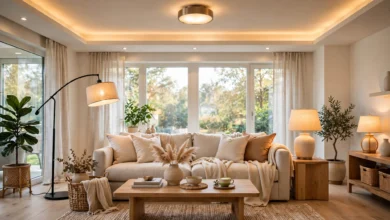
Warm white bulbs, rather than cool daylight tones, tend to suit London’s grey-sky aesthetic far better and make evenings feel cozier rather than clinical.
7. Restore or Highlight the Fireplace
Even where fireplaces are no longer functional, they remain a defining feature in many London living rooms and are worth treating as a focal point rather than an afterthought. A restored surround, a decorative fire screen, or even candles arranged in the hearth can keep this feature relevant in the room’s overall design, especially in period properties where the fireplace was originally the room’s central gathering point.
8. Choose a Rug That Suits the Room’s Proportions
In narrow London reception rooms, a rug that’s too small will exaggerate the room’s shape rather than balancing it. Choose a rug large enough for the front legs of your main seating to rest on, and consider a runner-style rug in particularly long, narrow rooms to soften the proportions rather than fighting them.
9. Add Warmth With Textiles to Offset Older Windows and Doors
Many period London homes, even after renovation, still have some drafts around original doors and windows. Heavier curtains, wool throws, and textured cushions don’t just add warmth stylistically, they also genuinely help retain heat in rooms that weren’t built with modern insulation standards in mind. The Royal Institute of British Architects, or RIBA, has noted that improving insulation and draft-proofing in older homes is one of the most effective ways to boost comfort without compromising a property’s original character.
10. Zone Open-Plan Extensions Carefully
Many London terraces have been extended into the kitchen or side return, creating open-plan living and dining spaces. In these layouts, it helps to visually separate the living room zone using a rug, a change in wall color, or a low bookshelf as a soft divider, rather than letting the furniture blend into one undefined space. This keeps the original living room feeling like a distinct, cozy zone even within a larger open layout.
11. Bring in Greenery to Soften Hard Architectural Lines
Period London living rooms often feature strong architectural lines from cornicing, panelling, or fireplace surrounds. A few well-placed plants soften these lines and add life to a room that can otherwise feel formal or heavy, especially during the darker months when everything outside the window is grey. Low-light tolerant plants like ferns, pothos, and peace lilies do particularly well in rooms that don’t get strong direct sun.
Decorating Around Common London Room Shapes
Not every London living room follows the same layout, and matching your decorating approach to your specific room shape makes a real difference.
- Narrow Victorian terrace rooms: Favor slim furniture, runner rugs, and light-colored walls near the far end of the room to visually extend the space.
- Georgian townhouse reception rooms: Lean into higher ceilings with tall bookcases, statement lighting, and bolder wall colors that suit the room’s proportions.
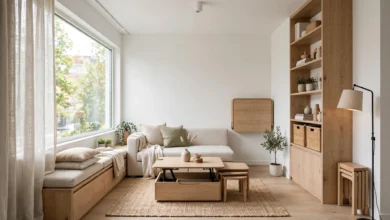
- Converted flats and mansion blocks: Focus on multi-functional furniture and clear zoning, since these rooms often double as dining or work spaces.
- New-build apartments: Use warmer tones and layered lighting to counter the sometimes stark, minimal feel of newer developments.
Common Mistakes to Avoid in London Living Rooms
Even well-intentioned decorating efforts can fall flat in London’s older housing stock. Watch out for:
- Stripping out original features that add character and value
- Choosing overly cool, stark white paint that looks flat under grey skies
- Blocking sash windows with oversized furniture
- Ignoring drafts around older doors and windows
- Using furniture scaled for larger, newer homes in a narrow period room
Avoiding these missteps will get you much further than chasing the latest décor trend that wasn’t designed with London’s housing in mind.
Quick Checklist for London Living Room Decorating
Before finalizing your living room, run through this quick checklist:
- Are original features preserved or highlighted rather than hidden?
- Does the paint color hold up under grey, overcast light?
- Is furniture scaled appropriately for the room’s actual proportions?
- Is lighting layered to handle both daytime and darker evenings?
- Are drafts around windows and doors addressed with textiles or draft-proofing?
If you can check off each of these, your living room is well suited to London’s particular mix of architecture and climate.
Conclusion
Decorating a living room in London comes with a specific set of considerations that don’t always apply elsewhere, from working around original period features to managing limited natural light and narrower room proportions. By choosing the right paint tones, scaling furniture to fit older room shapes, layering lighting for grey days, and preserving architectural details rather than removing them, these eleven living room decorating tips for homes in London offer a practical, city-specific approach to creating a warm and well-designed space. Whether your home is a Victorian terrace, a Georgian townhouse, or a modern flat, working with the property’s character rather than against it will always deliver the best results.