Living Room Design Trends Taking Over Homes in Queensland
Living room design trends shaping Queensland homes, from indoor-outdoor flow to natural materials suited to the subtropical climate.
9 Standout Living Room Design Trends Taking Over Homes in Queensland
Living room design trends in Queensland have always been shaped by something most other states don’t have to plan around quite as closely: the climate. A design that photographs beautifully in a Melbourne terrace or a Sydney apartment doesn’t always hold up once it’s tested against Brisbane humidity, Gold Coast sun, or a Far North Queensland wet season. What’s actually taking hold across the state right now reflects that reality, favouring rooms that breathe, stay cool without relying entirely on air conditioning, and open up to the outdoors rather than closing it off.
This isn’t a new instinct for Queensland. The classic Queenslander, raised on stumps with wraparound verandahs and high ceilings, was solving exactly this problem more than a century ago, using elevation and airflow rather than mechanical cooling. A lot of what’s trending in living rooms across the state today is really a modern update on those same principles, applied to renovated Queenslanders, new-build homes, and everything in between.
At the same time, the usual national and global influences are showing up too: warmer, more layered palettes replacing stark all-white schemes, natural materials taking priority over synthetic finishes, and furniture chosen for how adaptable it is rather than how it looks in a single styled photo.
This guide walks through nine living room design trends currently shaping homes across Queensland, from Brisbane’s inner suburbs to the Sunshine and Gold Coasts, and explains what’s driving each one.
1. Seamless Indoor-Outdoor Living Rooms
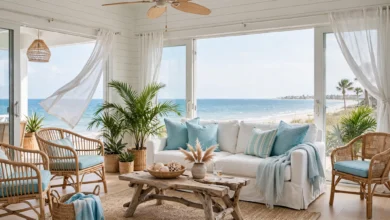
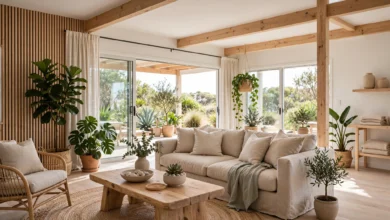
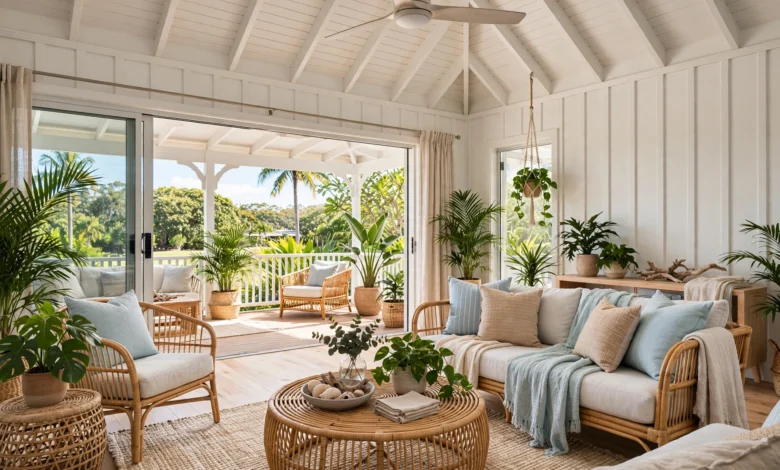
The single most consistent trend across Queensland home design right now is the disappearing boundary between the living room and the outdoors. Large sliding or bifold doors, covered outdoor living areas, and living rooms oriented directly toward an alfresco space are showing up in new builds and renovations alike.
A few ways this trend plays out in practice:
- Full-width sliding or stacking doors that open the living room directly onto a deck or patio, effectively doubling the usable space during warmer months
- Matching or complementary flooring run from the living room straight through to the outdoor area, which visually removes the sense of a hard stop between inside and out
- Outdoor-rated furniture chosen to coordinate with indoor pieces, so the transition feels like one continuous room rather than two separate spaces
Industry coverage of recent Australian Interior Design Awards shortlisted Queensland projects points to this same pattern, noting a shift toward light-filled homes with seamless indoor-outdoor flow and a strong sensitivity to the surrounding climate rather than design driven purely by aesthetics.
2. Warmer, Layered Colour Palettes Replacing Stark White
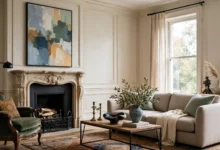
For years, an all-white living room was the default safe choice, particularly for homes being styled for sale. That’s shifting. Queensland’s living room design trends now lean toward warmer, more layered palettes that feel inviting rather than clinical, without giving up the light, airy feel the climate calls for.
Popular directions include:
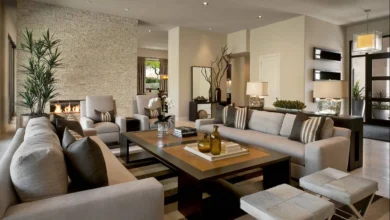
- Warm neutrals like soft terracotta, warm greige, and sandy tones, which suit Queensland’s natural light better than cool, stark white
- Earthy accent colours, including deep greens and rust tones, used on a single wall or through soft furnishings rather than across the whole room
- Layered neutrals in different textures, avoiding a flat, single-tone look while still keeping the palette calm and cohesive
This shift is backed by recent market observations from Brisbane-based stylists, who note that buyers are moving away from stark, all-white interiors toward warmer, more welcoming spaces that photograph well and feel genuinely lived-in during inspections.
3. Elevated, Open-Plan Layouts Inspired by the Queenslander
Even in brand-new builds with no historical connection to the traditional Queenslander, open-plan living room layouts inspired by that original style are everywhere. The logic is the same as it was a century ago: fewer internal walls means better airflow and more natural light reaching deeper into the home.
Key features of this layout trend:
- Open sightlines between the living room, kitchen, and dining area, avoiding the boxed-in feel of fully separated rooms
- High ceilings, either retained from an original Queenslander or replicated in new builds, which help hot air rise away from living spaces
- Strategic window and door placement designed around prevailing breezes, a passive cooling principle borrowed directly from the original Queenslander design
According to G.J. Gardner Homes’ overview of Queensland home design, open floor plans have become a defining feature of modern Queensland homes specifically because they blend living areas for natural light and connection while supporting the state’s outdoor-focused lifestyle.
4. Natural, Climate-Appropriate Materials
Synthetic, low-maintenance materials still have their place, but there’s a clear shift toward natural materials in Queensland living rooms, chosen both for aesthetics and for how well they perform in a hot, humid climate.
Materials showing up most often include:
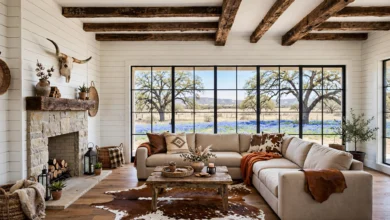
- Timber flooring and feature walls, prized for their natural grain and warmth, and increasingly used to reference the timber construction of classic Queenslanders
- Rattan and woven furniture, which suits a subtropical climate visually and tends to handle humidity better than some upholstered alternatives
- Stone and natural fibre textiles, including linen upholstery and jute rugs, chosen for breathability over heavier, synthetic fabrics
This isn’t purely aesthetic. Natural materials generally perform better under Queensland’s combination of UV exposure, humidity, and temperature swings than many synthetic alternatives, which is part of why the trend has staying power rather than being a passing style choice.
5. Passive Cooling Built Into the Living Room
As energy costs and sustainability awareness both rise, more Queensland homeowners are designing living rooms around passive cooling principles rather than relying entirely on air conditioning to manage the heat.
Common approaches include:
- Ceiling fans as a design feature, not just a functional afterthought, often paired with a statement light fixture rather than replacing it
- Cross-ventilation planning, positioning windows and doors on opposite walls to encourage airflow through the living room
- External shading, such as deep eaves, louvres, or planted screening, which keeps direct sun off large glass doors without sacrificing the indoor-outdoor connection
Recent analysis of Australian residential architecture trends notes that passive solar orientation delivers strong returns because it costs nothing extra at the design stage while meaningfully reducing heating and cooling costs, a principle that applies directly to how Queensland living rooms are being planned today.
6. Multi-Functional Living Spaces
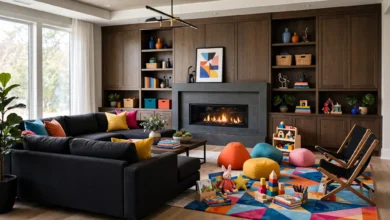
As home offices and flexible living have become permanent fixtures rather than temporary adjustments, Queensland living rooms are increasingly designed to handle more than one function without feeling cluttered or improvised.
A few ways this shows up:
- Furniture that can be reconfigured, like modular sofas that adapt from movie-night layouts to open floor space for entertaining
- Built-in joinery that conceals a home office setup or extra storage within the living room itself, keeping the space visually calm when it’s not in use
- Zoned lighting, allowing one part of the room to function as a reading or work nook while the rest stays set up for relaxing or hosting
This trend reflects a broader shift in how homes are being used day to day, with the living room increasingly expected to flex between multiple roles rather than serve a single fixed purpose.
7. Statement Lighting With a Coastal or Natural Influence
Lighting has become one of the more visible ways Queensland homeowners are personalising their living rooms, particularly through fixtures that echo the state’s coastal and subtropical surroundings.
Popular choices include:
- Woven or rattan pendant lights, which pair naturally with the timber and natural fibre materials trending elsewhere in the room
- Sculptural floor lamps used as a design feature in their own right, rather than purely functional lighting tucked into a corner
- Layered lighting schemes, combining a statement overhead fixture with floor and table lamps to keep the room adaptable from bright daytime use to a softer evening feel
This mirrors a broader move away from purely functional lighting toward fixtures treated as intentional design elements, a pattern showing up consistently across Australian interior styling more generally, not just in Queensland specifically.
8. Sustainable and Low-Maintenance Furnishings
Sustainability has moved from a niche preference to a mainstream factor in how Queensland homeowners furnish their living rooms, driven both by environmental awareness and by the practical demands of the local climate.
What this looks like in practice:
- Durable, UV-resistant fabrics for upholstery near large windows or doors, where Queensland’s strong sunlight can fade weaker materials quickly
- Ethically sourced and locally made furniture, increasingly preferred over imported, mass-produced pieces
- Low-VOC paints and finishes, chosen for indoor air quality in a climate where windows and doors are open for large parts of the year
Recent coverage of Australian home decor trends notes that eco-conscious consumers are increasingly seeking products that are durable and kind to the environment, a shift that lines up closely with what’s practical for Queensland’s climate in the first place, making sustainability and durability a natural pairing rather than a trade-off.
9. Personal, Collected Interiors Over Uniform Styling
The last of these living room design trends is more about approach than a specific product or material: a move away from uniform, single-style rooms toward spaces that feel personally curated over time. This mirrors a broader national shift away from matching furniture sets toward rooms built piece by piece.
A few ways this trend shows up:
- Mixing inherited or vintage furniture with newer pieces, rather than furnishing a room entirely from one collection
- Choosing artwork and accessories that reflect personal history or local connection, rather than purely decorative pieces
- Allowing a living room to evolve gradually, adding pieces over time rather than completing the space in one purchase
This approach tends to produce rooms that feel warmer and more distinctive than a fully coordinated, single-trip furniture purchase, and it fits naturally with the broader move toward warmth and personality already showing up across Queensland’s other living room trends.
Frequently Asked Questions
What makes Queensland living room design different from other Australian states? The subtropical climate is the main driver, pushing design toward passive cooling, natural ventilation, and strong indoor-outdoor connection in ways that matter less in cooler southern states.
Is the Queenslander style still relevant in new home builds? Yes. Many new Queensland homes borrow directly from Queenslander principles, including elevated design, high ceilings, and airflow-focused layouts, even without the traditional weatherboard construction.
Do Queensland living room trends prioritise style or function? Both, generally at the same time. Climate performance and everyday usability tend to shape material and layout choices as much as pure aesthetics, which is part of what distinguishes Queensland’s design trends from purely trend-driven styling elsewhere.
Which Queensland living room trends are worth prioritising on a tighter budget? Colour palette and lighting changes tend to offer the most noticeable impact for the lowest cost, since repainting to a warmer neutral or swapping harsh overhead lighting for a layered scheme doesn’t require any structural work. Passive cooling upgrades like ceiling fans and external shading are the next step up, offering both comfort and long-term energy savings without the cost of a full renovation. Material changes, such as swapping synthetic upholstery for natural fibres or adding timber accents, can be introduced gradually through individual furniture pieces rather than an entire room refresh at once.
Conclusion
Living room design trends in Queensland are shaped as much by climate as by aesthetics, from seamless indoor-outdoor layouts and passive cooling strategies to natural, climate-appropriate materials that hold up under strong sun and humidity. Warmer colour palettes, multi-functional layouts, and personally curated interiors are replacing the stark, uniform styling that dominated for years, while open-plan layouts inspired by the traditional Queenslander continue to influence brand-new builds across the state. Whether you’re renovating an original Queenslander or starting from scratch, the throughline across all nine trends is the same: living rooms designed to work with Queensland’s climate and lifestyle tend to outlast whatever’s simply on-trend at the moment.
Keywords: