10 Raised Garden Bed Ideas for Small Yards
: Practical raised garden bed ideas for small yards, covering layouts, materials, sizing and space-saving designs that work.
10 Raised Garden Bed Ideas for Small Yards You’ll Genuinely Love
Introduction
Raised garden bed ideas for small yards are worth exploring if you’ve ever looked at your compact backyard and assumed a proper vegetable garden simply wasn’t possible. The truth is that raised beds are often the best solution for small spaces, not a compromise. They let you control soil quality directly, define clear boundaries in a tight layout, and make the most of every square foot without the sprawl a traditional in-ground garden usually needs.
Small yards come with real constraints: limited sunlight in some corners, poor native soil, awkward shapes, and not much room to spare. But raised beds solve most of these problems at once. You choose the soil that goes in, you control the exact footprint, and you can position beds to chase the sun rather than working around a whole yard’s worth of shade.
This guide walks through ten practical raised bed ideas suited specifically to small yards, from vertical designs and corner beds to modular layouts and material choices that hold up over time. We’ll also cover sizing, placement, and a few common mistakes that trip up first-time raised bed gardeners. Whether you’ve got a narrow side yard, a small suburban block, or just a patch of lawn you’d rather turn into something productive, there’s a layout here that will fit.
Why Raised Garden Beds Work Well in Small Yards
Before jumping into specific ideas, it helps to understand why raised beds tend to outperform traditional in-ground gardens in tight spaces.
Better Control Over Soil Quality
Small yards, especially in newer housing developments, often have poor or compacted soil left over from construction. Raised beds let you fill the space with a proper soil mix from the start, skipping years of amending native ground that might never fully recover.
Defined Boundaries Make Planning Easier
A raised bed has a fixed footprint, which makes planning a small yard’s layout far more predictable than trying to carve out in-ground rows. You know exactly how much growing space you have, which makes crop rotation and companion planting easier to manage.
Improved Drainage and Warmer Soil
Raised beds drain better than compacted ground, reducing root rot risk, and the soil warms up faster in spring since it sits above ground level. This means an earlier planting window, which matters in a small yard where every growing week counts.


1. Narrow Beds Along Fences and Walls
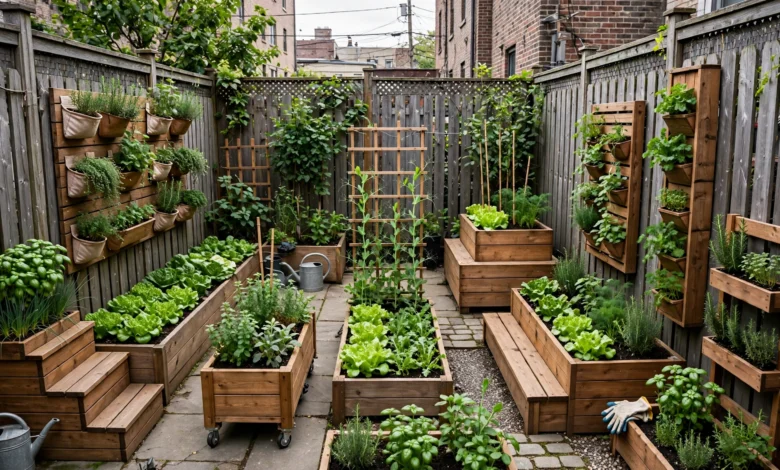
One of the simplest raised garden bed ideas for small yards is running a narrow bed along a fence line or side wall. A bed just 18–24 inches wide makes efficient use of unused perimeter space without eating into the yard’s usable center.
- Ideal for climbing plants like beans, cucumbers, or peas trained up the fence
- Keeps the main lawn or patio area open for other use
- Works well in narrow side yards that are otherwise wasted space
2. Corner Beds to Use Awkward Angles
Corners are often the most underused part of a small yard. An L-shaped or triangular raised bed tucked into a corner turns dead space into productive growing area.
- Great for herbs or smaller vegetables that don’t need much depth
- Reduces the awkward, hard-to-mow angles that corners often create
- Pairs well with a small trellis for vertical interest
3. Modular Stackable Beds
Modular raised bed kits, often made from interlocking timber or composite panels, let you build a layout piece by piece and adjust it later as your needs change.
- Easy to reconfigure without starting from scratch
- Useful if you’re renting and may need to relocate the beds later
- Available in a range of sizes to fit almost any leftover space
4. Vertical Raised Beds for Very Tight Spaces
When floor space is genuinely limited, going vertical is one of the most effective solutions. Tiered or vertical raised bed structures stack growing space upward instead of outward.
- Well suited to balconies, courtyards, and very narrow yards
- Tiered designs also make watering and harvesting easier on the back, since you’re not bending as far
- Works particularly well for herbs, strawberries, and leafy greens
5. Keyhole Garden Beds
A keyhole bed is a circular raised bed with a notch cut into one side, allowing access to a central composting basket. It’s a compact, self-sustaining design that’s popular in small-space permaculture gardening.
- Combines composting and growing space in a single structure
- The central compost feeds nutrients directly to surrounding soil
- Efficient use of space since the whole circle is plantable except the access path
6. Raised Beds With Built-In Seating
For small yards that double as entertaining space, a raised bed with a wide timber cap doubles as both a garden and a bench.
- Adds functional seating without taking up additional yard space
- Works well framing a patio or deck area
- A practical option for yards that need to serve more than one purpose
7. U-Shaped or Horseshoe Beds
A U-shaped raised bed layout creates a small enclosed growing area with a walkway down the middle, which is particularly efficient for a compact vegetable patch.
- Maximizes growing area relative to footprint
- Easy access to all plants from the central path without stepping into beds
- Well suited to a small dedicated vegetable garden zone
8. Elevated Beds for Accessibility and Small Patios
Elevated raised beds, built on legs at waist height, are useful for small yards where ground-level space is at a premium, such as concrete patios or decks.
- No digging or ground preparation required
- Easier on the back and knees, useful for gardeners with mobility considerations
- Can be placed directly on hard surfaces like patios or driveways
9. Mixed-Height Beds for Visual Interest
Combining beds of different heights in a small yard adds visual depth and can help with sun access, since taller beds won’t shade shorter ones if positioned correctly.
- Creates a layered look rather than a flat, uniform garden
- Allows taller crops in elevated beds and low-growing herbs in ground-level beds
- Helps a small space feel more intentional rather than cramped
10. Compact Square Foot Gardening Beds
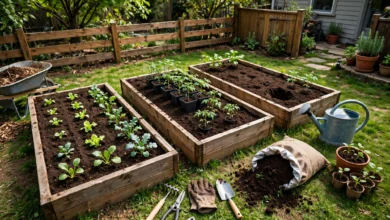
The square foot gardening method divides a small raised bed, often just 4×4 feet, into a grid of one-foot sections, each planted with a different crop.
- Extremely space-efficient, ideal for very small yards
- Simplifies planning since each square has a clear purpose
- A well-documented method with reliable yield expectations, detailed further by Cornell University’s Cooperative Extension gardening resources
Choosing the Right Materials for Small-Yard Raised Beds
Material choice affects both the lifespan of your beds and how they fit visually into a small yard.
Timber
Untreated cedar or redwood resists rot naturally and blends well into most garden styles, though it’s a higher upfront cost than treated pine.
Composite and Recycled Plastic
Composite panels last significantly longer than timber and don’t require repainting or sealing, making them a lower-maintenance option over time.
Metal (Corrugated Steel)
Metal beds have become popular for their clean, modern look and long lifespan, though they can heat up more than timber in direct summer sun, which is worth considering in hotter climates.
Concrete Blocks or Bricks
A budget-friendly, highly durable option, particularly suited to permanent bed placements where flexibility isn’t a priority.
Sizing Raised Beds for Small Yards
Getting the dimensions right matters more in a small yard, where every inch counts.
- Keep bed width to around 3–4 feet so you can reach the center from either side without stepping into the soil
- Depth of at least 12 inches works for most vegetables, though root crops like carrots benefit from closer to 18 inches
- Leave at least 18–24 inches between beds for comfortable walking paths, or wider if you plan to use a wheelbarrow
Sun Placement and Layout Tips
Even the best raised bed idea won’t perform well without adequate sunlight, so placement deserves real attention in a small yard.
- Most vegetables need at least six hours of direct sun daily
- Track sunlight across your yard for a full day before finalizing bed placement
- Position taller beds or trellised crops on the north side (in the northern hemisphere) so they don’t shade shorter plants
Soil Mix for Raised Beds
Since you’re filling the bed yourself, getting the soil mix right from the start pays off for years.
A commonly recommended mix combines:
- Roughly 40% high-quality topsoil
- Roughly 30% compost for nutrients and organic matter
- Roughly 30% aeration material such as perlite, coarse sand, or aged bark fines
This blend drains well while still retaining enough moisture and nutrients to support healthy plant growth throughout the season. The University of Maryland Extension provides additional detail on soil mix ratios and raised bed setup through their raised bed gardening guide, which is a useful reference if you want to fine-tune your mix further.
Common Mistakes to Avoid in Small-Yard Raised Beds
A few recurring mistakes show up often among first-time raised bed gardeners:
- Making beds too wide, which makes the center impossible to reach without stepping into the soil
- Skipping proper soil mix and simply filling beds with garden soil, which compacts and drains poorly
- Overcrowding plants, especially tempting in a small space where every inch feels precious
- Ignoring sun patterns before placing beds, leading to underperforming crops in shaded corners
Avoiding these missteps early saves a full season of frustration and wasted seedlings.
Conclusion
Raised garden bed ideas for small yards prove that limited space doesn’t have to mean a limited garden. From narrow fence-line beds and corner designs to vertical structures, keyhole gardens, and compact square foot layouts, there’s a practical approach suited to almost any small yard shape or sun pattern. Pair the right layout with a solid soil mix, sensible sizing, and good sun placement, and a small yard can produce a genuinely productive garden without ever feeling cramped. Start with one or two beds, see what works for your specific space, and expand from there as your confidence and growing space allow.