Living Room Ideas for Homes in Georgia
Living room ideas for Georgia homes, covering craftsman bungalows, porch-facing layouts, and materials built for southern humidity.
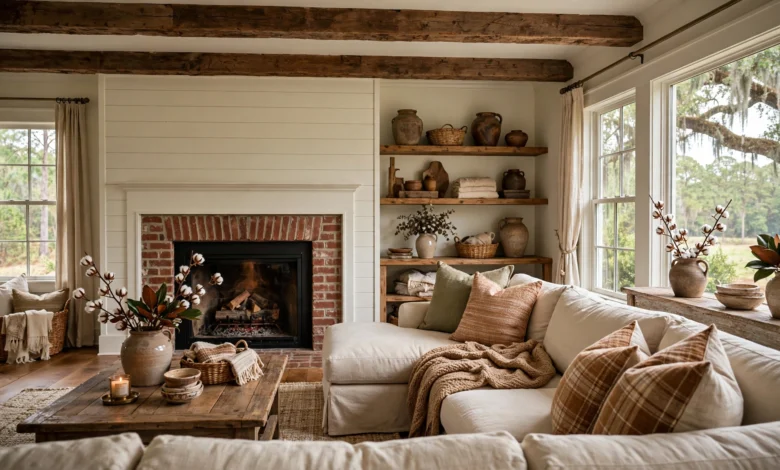
9 Charming Living Room Ideas for Homes in Georgia
Living room ideas for homes in Georgia need to account for something a lot of generic design advice skips over entirely: the state’s housing stock and its climate are deeply tied together. From craftsman bungalows in Atlanta’s older neighborhoods to modern farmhouses in growing suburbs and traditional brick homes across the state, Georgia’s most popular architectural styles were all shaped, at least in part, by hot, humid summers and a strong culture of porch-centered, indoor-outdoor living.
That history still shapes what works well today. A living room designed without any thought to humidity, direct southern sun, or the porch-to-parlor flow so common in Georgia homes tends to feel like it was dropped in from somewhere else, even if the furniture itself is beautiful. The homes that get it right lean into what the state’s architecture already does well: deep porches, generous natural light, and materials that were built to hold up in a humid subtropical climate long before air conditioning made that less of a daily concern.
Whether you’re working with a century-old craftsman bungalow in Grant Park, a colonial-style home in the suburbs, or a newer build in North Georgia’s hill country, the same underlying principles tend to apply. This guide covers nine practical living room ideas for Georgia homes, from layout and materials to color and furniture choices, all built around what actually performs well in this part of the country rather than a generic national trend list.
1. Let the Front Porch Set the Tone for Your Living Room
Georgia’s front porch tradition isn’t just curb appeal, it’s a genuine extension of the home’s living space, and the best living rooms in the state tend to carry that same relaxed, welcoming feel indoors rather than treating the porch as a separate, disconnected area.
A few ways to create that continuity:
- Repeat a material or color from the porch, like a painted ceiling color or a wood tone, somewhere inside the living room to visually connect the two spaces
- Position seating to face the front windows or door, especially in craftsman and traditional homes where the porch view is part of the room’s character
- Choose durable, porch-adjacent fabrics for any seating near the entry, since Georgia’s humidity and pollen season put more wear on fabrics near open doors than in a fully sealed interior room
According to The House Plan Company’s overview of Georgia home design, front porches that connect directly to interior living spaces remain one of the defining features of Craftsman-style homes across the state, reflecting a broader appreciation for outdoor living that shapes how these living rooms are typically laid out.
2. Choose Fabrics and Materials Built for Humidity
Georgia’s humid subtropical climate is one of the biggest practical factors in furnishing a living room well, and it’s often overlooked by design advice written for drier climates. Materials that look identical in a showroom can perform very differently once they’re living through a Georgia summer.
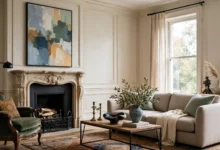
Materials worth prioritizing:
- Performance fabrics for sofas and upholstered chairs, which resist moisture and hold up better to humidity than delicate natural fibers alone
- Top-grain leather or leather-blend seating, increasingly popular across the state for its durability in humid, active households
- Sealed or engineered wood furniture, which resists warping and swelling better than unsealed solid wood in fluctuating humidity levels
Local furniture retailers across North Georgia have noted a clear shift toward performance fabric sofas and top-grain leather sectionals specifically because they stand up better to the region’s humidity and active outdoor lifestyle than more delicate alternatives.
3. Embrace Craftsman Character Where It Exists
If your home is one of Georgia’s many craftsman bungalows, particularly common across Atlanta’s older neighborhoods like Grant Park, Kirkwood, and Candler Park, working with the home’s original character tends to produce a far more convincing living room than trying to erase it.
Key craftsman details worth highlighting:
- Exposed woodwork and built-ins, common in original craftsman homes, which can be refinished rather than removed to preserve the room’s architectural interest
- Wide window and door trim, often original to the home, which pairs well with simpler, less ornate furniture so the millwork remains the visual focus
- Natural material palettes, echoing the craftsman movement’s emphasis on handcrafted, natural finishes over synthetic materials
Even in newer builds without original craftsman detailing, adding simplified versions of these features, like painted built-in shelving flanking a fireplace, is a common way Georgia homeowners bring that same warmth into a living room without an older home’s maintenance demands.
4. Use Open-Plan Layouts to Maximize Natural Light
Many newer Georgia homes, especially modern farmhouse and craftsman-inspired new builds, favor open floor plans that let the living room flow directly into the kitchen and dining space. This layout does double duty: it improves natural light throughout the main living area and suits Georgia’s strong culture of casual, everyday entertaining.
A few ways to make an open-plan living room work well:
- Use a rug to anchor the seating area, giving the living room a defined footprint even without walls separating it from adjoining spaces
- Keep sightlines clear between the kitchen and living room, avoiding tall furniture that blocks the open, connected feel the layout is meant to provide
- Match flooring throughout the open space, which reinforces the sense of one continuous living area rather than several disconnected rooms
Georgia homebuyers consistently favor modern farmhouse, traditional, and craftsman styles that combine open living areas with classic Southern character, which is part of why this layout has held up as a long-term preference rather than a passing trend.
5. Choose Earthy, Southern-Inspired Color Palettes
Color palettes across Georgia living rooms have shifted noticeably away from stark, all-white schemes toward warmer, earthier tones that suit both the region’s natural light and its more relaxed design sensibility.
Popular color directions include:
- Deep forest greens and clay terracottas, which echo Georgia’s natural landscape and create a seamless transition from porch to living room
- Warm neutrals, including soft cream and warm gray, which reflect natural light well without feeling cold or clinical
- Stone grays as a grounding neutral, often paired with warmer accent colors rather than used as the room’s dominant tone
This shift toward earthy tones is showing up consistently across North Georgia and Atlanta furniture retailers, who point to deep greens, terracottas, and stone grays as the colors currently dominating regional living room palettes.
6. Balance Formal Traditional Rooms With Everyday Comfort
Georgia has a strong Southern Traditional design lineage, particularly in established neighborhoods with colonial and brick homes, where formal living rooms with crown molding, wainscoting, and built-ins remain common. The challenge in these living rooms is keeping that formality from feeling stiff or unused day to day.
A few ways to balance the two:
- Pair traditional architectural details, like crown molding or wainscoting, with more relaxed, comfortable furniture rather than doubling down on formal upholstery throughout
- Add soft, textured throws and cushions to formal seating, which keeps the room feeling inviting rather than purely decorative
- Reserve one or two truly formal pieces, like an antique cabinet or a statement mirror, and keep everything else more casual so the room doesn’t feel overly precious
Interior designers working across Atlanta’s historic homes often describe this same approach: enhancing original architectural features with neutral palettes and comfortable furnishings, rather than filling a formal room with equally formal furniture throughout.
7. Bring the Outdoors In With Natural Textures
Georgia’s landscape, from the North Georgia mountains to the coastal Lowcountry influence in the south, shows up frequently in how homeowners furnish their living rooms, particularly through natural textures that reference the state’s outdoor character.
A few natural textures worth incorporating:
- Solid wood coffee tables and media consoles, often featuring live edges or visible natural grain, which are increasingly popular across the state’s more craft-focused furniture makers
- Jute or wool rugs, adding organic texture underfoot without the maintenance concerns of more delicate natural fiber options
- Woven baskets and natural fiber storage, which add texture while doubling as practical storage for blankets, magazines, or toys
This preference for organic textures over synthetic, mass-produced pieces reflects a broader regional appreciation for craftsmanship, something that shows up as much in newly built Georgia homes as it does in restored historic ones.
8. Plan for Deep Roof Overhangs and Filtered Light
Many Georgia home designs include deep roof overhangs specifically to shade windows and reduce direct sun exposure, a practical feature that also shapes how living rooms are lit and furnished throughout the day.
A few considerations that follow from this:
- Sheer or light-filtering curtains work well in rooms already benefiting from overhang shading, since they soften light further without blocking it entirely
- Fade-resistant fabrics are still worth prioritizing for any furniture near south-facing windows, even with overhang shading in place
- Layered lighting helps compensate for rooms that stay naturally shaded for much of the day, especially in homes with deep porches or heavy tree cover
According to The House Designers’ guide to Georgia house plans, deep roof overhangs that shade windows are a common Southern architectural feature specifically because they help keep interiors cooler and reduce strain on air conditioning systems, a passive design principle that also directly shapes how comfortable and naturally lit a living room feels day to day.
9. Extend the Living Room Onto Patios and Decks
As outdoor living continues to grow in popularity across Georgia, more homeowners are treating patios and decks as genuine extensions of the living room rather than separate, secondary spaces.
A few ways this trend shows up:
- Matching or coordinating furniture styles between the indoor living room and an adjoining patio or deck, so the transition feels intentional rather than like two unrelated rooms
- Sliding or French doors connecting the living room directly to outdoor seating, echoing the same connected feel the front porch tradition already established
- Weather-appropriate materials on any furniture that lives near the transition point, since Georgia’s humidity and seasonal storms put real wear on materials close to an open door
This shift reflects a broader pattern across Atlanta and the wider state, where patios and decks are increasingly designed and furnished as direct extensions of the living room rather than an afterthought tacked on separately.
Frequently Asked Questions
What’s the most common living room style in Georgia homes? Craftsman, modern farmhouse, and Southern Traditional are the most consistently popular styles across the state, though the right choice depends heavily on the home’s age and original architecture.
Do Georgia living rooms need special furniture for humidity? Yes, generally. Performance fabrics, sealed wood, and leather or leather-blend upholstery tend to hold up better than delicate natural fibers or unsealed wood in Georgia’s humid subtropical climate.
Should older Georgia homes update their original living room features? Not necessarily. Original craftsman or traditional details like millwork, built-ins, and wide trim are often worth preserving and can be paired with simpler, more contemporary furniture rather than replaced.
Conclusion
Living room ideas for homes in Georgia work best when they’re built around the state’s actual housing stock and climate rather than a generic national trend list, whether that means echoing the front porch’s character indoors, choosing materials that hold up to humidity, or preserving a craftsman bungalow’s original woodwork instead of covering it over. Earthy color palettes, open layouts that maximize natural light, and furniture chosen for durability as much as style all show up consistently across the state’s most well-designed living rooms. Start with whichever idea fits your home’s existing architecture most naturally, whether that’s connecting the living room visually to a front porch or finally swapping delicate upholstery for something built for Georgia’s humidity, and the rest of the room tends to come together around it.
Keywords: