Living Room Design Tips for Homes in Melbourne
Living room design tips built around Melbourne's climate, homes, and light, from period terraces to new-build apartments.
Living Room Design Tips: 15 Proven Ideas for Homes in Melbourne
Living room design tips that work in Sydney or Brisbane don’t always translate well to Melbourne. This city has its own set of quirks: four seasons in one day, a huge stock of Victorian and Edwardian terraces with narrow floor plans, weatherboard cottages in the inner suburbs, and a growing number of apartments and townhouses where every square metre counts. A living room here needs to handle a cold, grey July and a 35-degree February without looking like two different rooms trying to compromise.
That’s the gap this guide is trying to fill. Rather than generic advice about throw pillows and paint swatches, this article focuses on what actually matters for Melbourne living rooms: working with period features instead of fighting them, choosing materials and layouts suited to our changeable weather, and making the most of natural light in homes that were often built before big windows were the norm. Whether you’re in a Fitzroy terrace with high ceilings and ornate cornices, a Brighton weatherboard, or a new apartment in Southbank, the same underlying principles apply, just applied differently depending on your home’s age, orientation, and layout.
Below are 15 practical, Melbourne-specific tips covering layout, color, materials, lighting, and the small details that separate a room that just exists from one that actually gets used every day.
1. Work With Your Home’s Orientation, Not Against It
Melbourne’s block layouts mean plenty of living rooms face south or east, which limits direct sun for much of the day. Before you plan furniture or color, figure out how light moves through the room across the seasons.
- South-facing rooms benefit from lighter wall colors and reflective surfaces to bounce around what light is available
- North-facing rooms can handle deeper, richer tones since they get more warm afternoon light
- Track the light for a day or two before committing to paint or curtain choices
2. Respect Period Features in Older Homes
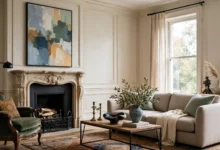
A huge share of Melbourne’s housing stock, particularly in suburbs like Carlton, Fitzroy, and Albert Park, includes Victorian and Edwardian details: ornate ceiling roses, picture rails, and timber fireplaces. Good living room design in these homes works with those features rather than covering them up or ripping them out.
Restoring Versus Replacing
If a ceiling rose or cornice is damaged, restoration is often more affordable than people expect, and it preserves character that’s hard to replicate. For structural changes or anything affecting a heritage overlay, it’s worth checking requirements through the Victorian Building Authority before starting work, since permit rules vary by council and property classification.
3. Choose Furniture That Suits Narrow Terrace Layouts
Many inner-Melbourne terraces have long, narrow living areas, sometimes combined with a hallway that runs straight through the middle of the home. Bulky, deep sofas can choke these spaces fast.
- Opt for slim-arm sofas and chairs that don’t eat into walking paths
- Use a rectangular rug to visually define the seating zone within a long room
- Consider a loveseat and armchair combination instead of one oversized sectional
4. Layer Lighting for Melbourne’s Grey Days
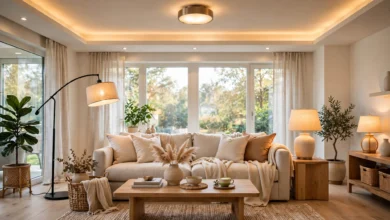
Overcast skies are common for a good chunk of the year, so relying on a single overhead light leaves a room feeling flat when the sun isn’t cooperating. Layered lighting design, a mix of ceiling, floor, and table lamps, keeps the room usable and warm regardless of what’s happening outside.
- Use warm-toned bulbs (around 2700K) to counter grey daylight
- Add a floor lamp near the reading chair or sofa corner
- Install a dimmer so the room can shift from bright and functional to relaxed in the evening
5. Pick Materials That Handle Temperature Swings
A room that needs to feel good in both a cold Melbourne winter and a hot, dry summer benefits from materials that don’t feel extreme in either direction. Wool blend rugs, linen upholstery, and timber furniture tend to perform better across seasons than materials like leather or metal, which can feel cold in winter and hot to the touch in summer.
6. Maximise Natural Light With Smart Window Treatments
Many older Melbourne homes have smaller windows than modern builds, so getting the most out of existing natural light matters. Sheer curtains paired with heavier block-out drapes give flexibility, light and privacy during the day, warmth retention at night. According to Sustainability Victoria, well-chosen window coverings can also meaningfully reduce heating and cooling costs, which is a real consideration in a city with Melbourne’s temperature range.
7. Define Zones in Open-Plan Living Spaces
Newer builds and renovated homes across Melbourne increasingly favour open-plan layouts that combine kitchen, dining, and living areas. Without some definition, the living room section can lose its identity and start to feel like an extension of the kitchen.
- Use a large rug to mark the boundary of the living zone
- Angle a sofa or bookshelf to create a soft visual divider
- Keep a consistent color palette across zones so the space still feels connected
8. Bring In Local and Natural Materials
Melbourne has a strong scene of local furniture makers and boutique studios, and using locally sourced timber, ceramics, and textiles gives a room a sense of place rather than looking like it was pulled from a generic catalog. This also tends to pair well with the earthy tones, terracotta, sage, warm beige, that have been popular across Melbourne interiors recently.
9. Add a Fireplace or Heating Feature as a Focal Point
Given the cooler months, a working fireplace or a well-designed heating feature often becomes the natural centre of a Melbourne living room. If you have an original fireplace, restoring it as a feature, even if it’s decommissioned and paired with a freestanding heater, keeps the room’s focal point intact.
Alternatives for Homes Without a Fireplace
A slimline electric fireplace or a well-styled console with a heater tucked underneath can achieve a similar anchoring effect without any structural work.
10. Choose a Color Palette That Reads Well in Changeable Light
Because Melbourne light shifts so much through the day and across seasons, colors that look great at 2pm in summer can look completely different on a grey winter morning. Testing paint swatches at multiple times of day, and in both natural and artificial light, avoids an expensive repainting mistake.
- Sample paint on the actual wall, not just a card, since reflected light from floors and furniture changes the tone
- Neutral bases with one confident accent color tend to hold up best across seasons
- Warmer neutrals (like greige or warm white) generally read better in south-facing rooms than cool-toned whites
11. Make Small Living Rooms Work Harder
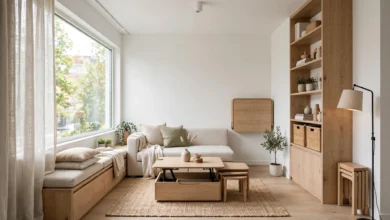
Apartment living has grown significantly across inner Melbourne, and many living rooms in these buildings are compact. Getting the most from a small footprint comes down to a few consistent techniques.
- Choose furniture with visible legs to keep sightlines open
- Use a mirror opposite the main window to double the sense of light and space
- Pick multi-purpose furniture, like a storage ottoman or a console that doubles as a media unit
12. Balance Comfort With Entertaining Needs
Melbourne’s culture of hosting, whether it’s a casual catch-up or a footy final on the couch, means living rooms often need to flex between quiet family time and larger gatherings. Modular sofas that can be reconfigured, plus enough occasional seating like poufs or stackable stools, let a room adapt without needing a full second lounge suite.
13. Use Rugs to Anchor Timber and Polished Concrete Floors
Timber floors are common across Melbourne’s period homes, and polished concrete has become popular in newer builds. Both look great but can feel cold and echo-prone without a rug to soften the space. A rug that’s large enough to sit under the front legs of your sofa and chairs, rather than a small rug floating in the middle of the room, makes the whole area feel more grounded and intentional.
14. Add Greenery Suited to Indoor Melbourne Conditions
Not every indoor plant thrives in Melbourne’s lower-light winters. Species like the zz plant, snake plant, and devil’s ivy tolerate the reduced light of a south-facing room far better than finicky tropical varieties, making them a more reliable choice for adding life to a living space year-round.
15. Plan for Multi-Functional Use
With more people working from home at least part of the week, Melbourne living rooms increasingly need to double as a quiet workspace. A console table that folds out, a bookshelf with a hidden desk nook, or simply a comfortable chair near good light can absorb this function without turning the whole room into an office.
Frequently Asked Questions
What’s the biggest mistake people make with living room design in Melbourne homes? Choosing colors and materials without accounting for how differently a room looks in Melbourne’s shifting light and seasons is one of the most common and costly mistakes.
Do I need council approval to update a living room in a heritage-listed Melbourne home? It depends on the scope of work and whether the property falls under a heritage overlay. Structural changes usually require checking with your local council or the Victorian Building Authority before starting.
What colors work best in a south-facing Melbourne living room? Warmer neutrals and lighter tones tend to work better in south-facing rooms, since they help compensate for the reduced direct sunlight compared to north-facing spaces.
Conclusion
Good living room design in Melbourne comes down to working with the city’s light, climate, and housing stock rather than applying a one-size-fits-all approach borrowed from somewhere else. From respecting period features in a Fitzroy terrace to layering lighting for grey winter days and choosing materials that hold up across four seasons, these 15 tips give you a practical framework for a living room that actually suits how you live here. Start with the one or two changes that address your biggest daily frustration, whether that’s poor light, an awkward layout, or a room that never quite feels warm, and build outward from there.