Bathroom Ideas for a Modern Coastal Home in Queensland
Bathroom ideas for a modern coastal home in Queensland, covering warm neutral palettes, humidity-smart materials, and layouts suited to the climate.
Bathroom Ideas for a Modern Coastal Home in Queensland
Bathroom ideas for a coastal home often start in the wrong place, with a mood board full of navy stripes and starfish decor that looks more like a beach shop than an actual bathroom. Real coastal design, especially in Queensland, has moved well past that. The homes doing it well right now lean into warm, sandy neutrals, natural texture, and materials chosen specifically because they can handle a genuinely humid, sun-heavy climate, not just because they photograph nicely.
Queensland presents a particular set of challenges that a Sydney or Melbourne bathroom simply doesn’t have to think about. Humidity sits higher for more of the year, UV exposure fades certain finishes faster, and solid timber, as much as people love the look of it, tends to warp or swell if it’s not chosen and sealed carefully. Good bathroom design in this climate has to solve for those realities first, then layer the coastal aesthetic on top, rather than the other way around.
This guide walks through practical, climate-aware bathroom ideas for a modern coastal home in Queensland, from palette and materials to layout, lighting, and ventilation. We’ll cover what actually works long-term in a subtropical climate, what tends to fail within a couple of years, and how to get that relaxed, sun-washed look without sacrificing durability. Whether you’re planning a full renovation on the Sunshine Coast or refreshing a bathroom further inland, these ideas are built around what genuinely performs well in Queensland conditions.
Why Queensland’s Climate Should Shape Your Bathroom Ideas
Before picking tiles or tapware, it helps to understand why coastal bathroom design in Queensland needs a slightly different approach than the same style further south. Humidity, salt air, and intense UV exposure all affect how materials age, and a bathroom that ignores this will look tired within a few years no matter how good it looks on install day.
Humidity and Moisture Management
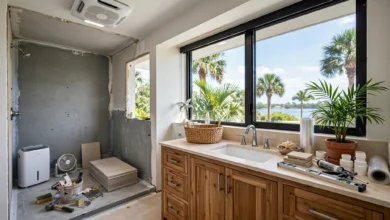
Queensland’s subtropical climate means bathrooms deal with more sustained moisture than in cooler states, and that has a direct effect on material choice. Solid timber vanities and shelving, while beautiful, are prone to swelling and warping in humid conditions unless they’re extremely well sealed and maintained. Engineered timber or high-quality timber-look porcelain gives the same warm visual effect without the ongoing maintenance risk.
Good extraction is non-negotiable in this climate. A bathroom without a properly sized exhaust fan, or reliable cross-ventilation from an openable window, will develop mould in grout lines far faster in Queensland than in a drier climate.
Salt Air and Coastal Corrosion
Homes closer to the coast also need to think about corrosion. Standard chrome fittings can pit and dull faster in salt-heavy air, so many Queensland bathroom designers now specify 304-grade stainless steel or marine-grade finishes for towel rails, hooks, and mirror frames, since these hold up significantly better over time near the water.
Choosing the Right Colour Palette for a Coastal Bathroom
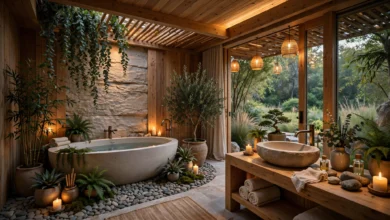
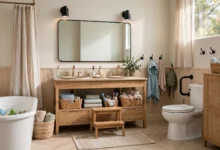
One of the biggest misconceptions about coastal bathroom ideas is that the palette has to be blue and white. The most convincing modern coastal bathrooms in Queensland actually lean toward warm neutrals, sand, driftwood, warm greige, and soft stone tones, rather than literal ocean colours.
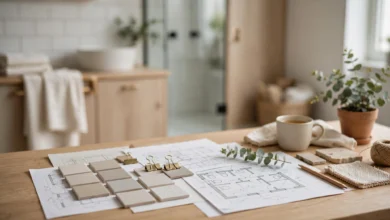
Warm Neutrals Over Ocean Blues
A layered palette of warm off-whites, soft taupe, and sandy beige reads as far more sophisticated and timeless than a literal blue-and-white theme, and it ages better as trends shift. If you want a genuine sense of the ocean in the room, natural light does more of that work than paint colour ever will. Positioning a window or skylight to bring in northern or eastern light gives the room a soft, sea-mist quality without needing a single blue tile.
Where to Add Colour or Contrast
- Matte black or brushed brass tapware against a warm neutral palette adds contrast without breaking the coastal feel.
- A single textured accent, like a fluted vanity front or a ribbed glass shower screen, gives the room depth without overwhelming it.
- Soft, muted greens or dusty blues can work as a subtle accent, in a towel or a single feature tile, without dominating the space the way a full blue scheme would.
Materials That Work in a Subtropical Bathroom
Material choice matters more in Queensland bathroom design than almost anywhere else in Australia, purely because of how much humidity and UV exposure the room deals with over a typical year.
Tiles and Flooring
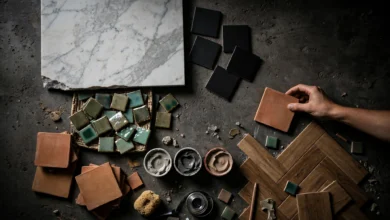
Large-format tiles, generally 600mm by 600mm or larger, are the backbone of a modern coastal floor. They reduce the number of grout lines, which cuts down on mould risk, and they make a small bathroom feel noticeably bigger. Travertine-look and limestone-look porcelain tiles give that warm, organic coastal texture without the maintenance issues that come with genuine natural stone in a wet, humid room.
Timber and Timber-Look Alternatives
Solid timber doesn’t hold up well long-term in Queensland’s humidity, which is why most designers now recommend engineered timber veneer or timber-look porcelain for vanities and shelving. It gives the same warm, driftwood character that defines coastal style without the risk of swelling, cracking, or cupping a few years down the line.
Fixtures and Fittings
- Wall-hung timber-look vanities with stone-look benchtops keep the floor visually open and suit the relaxed coastal aesthetic.
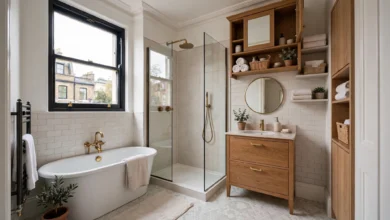
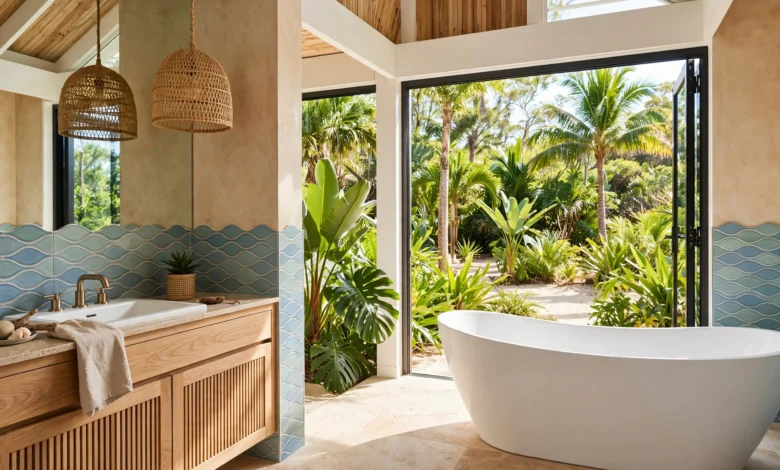
- Freestanding oval baths, ideally positioned under a window, work as a genuine centrepiece in larger bathrooms.
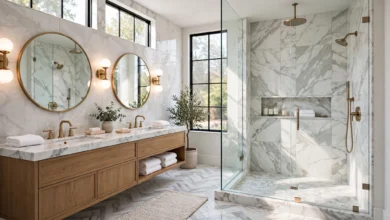
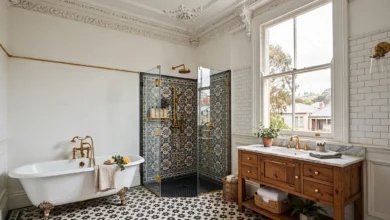
- Arched mirrors with thin brass or timber frames soften the straight lines that dominate a lot of modern bathroom design.
- Rainfall shower heads paired with a matching handheld unit balance the spa-like coastal feel with everyday practicality.
Layout Ideas for Modern Coastal Bathrooms
Layout affects how well a coastal bathroom actually performs day to day, not just how it looks in photos.
Maximising Natural Light
Queensland’s abundant natural light is one of the biggest assets a coastal bathroom has, and good bathroom design should take full advantage of it. Positioning the vanity or bath near a window, using frosted or fluted glass for privacy where needed, and avoiding heavy window treatments all help the room feel brighter and more open.
Open, Uncluttered Floor Plans
Coastal design thrives on simplicity, so keeping the floor plan open matters as much as the finishes themselves. A few practical layout choices that support this:
- Wall-hung toilets and vanities to keep visible floor space open and make cleaning easier.
- A single textured feature, rather than multiple competing patterns, keeps the room feeling calm rather than busy.
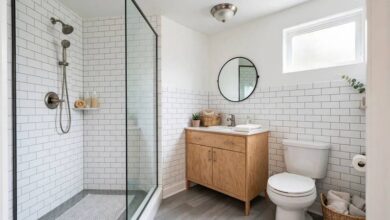
- Recessed shower niches instead of freestanding shelving units, which reduces visual clutter.
- Frameless or slim-frame shower screens to avoid breaking up sightlines across the room.
Lighting for a Warm, Coastal Feel
Lighting has a bigger effect on the coastal mood of a bathroom than most homeowners expect. Cool white LED downlights, the kind commonly used in commercial spaces, tend to give a bathroom a flat, clinical look that works against the warm coastal palette.
Warm-Temperature LED Lighting
Choosing LED downlights in the 2700K to 3000K range, rather than a cooler 4000K white, keeps the lighting warm and flattering, which suits the sandy, driftwood tones that define modern coastal bathroom ideas. Layering this with a mirror light or vertical sconces around the vanity gives more even, usable light for everyday tasks.
Working With Natural Light Through the Day
In a genuinely well-designed coastal bathroom, artificial lighting supports natural light rather than replacing it. Skylights or well-placed windows let the room shift naturally through the day, bright and airy in the morning, softer and warmer in the evening, which is part of what gives coastal bathrooms their relaxed, retreat-like feel.
Electrical and Safety Considerations in Wet Areas
Any electrical work in a Queensland bathroom, including LED mirrors, heated towel rails, or underfloor heating, needs to meet strict wet-area safety standards. All wiring in these zones must be installed by a licensed electrician with proper RCD protection, in line with the requirements set out under AS/NZS 3000, Australia’s wiring rules for electrical installations. It’s also worth confirming that any tradesperson working on your renovation is properly licensed through the Queensland Building and Construction Commission, since unlicensed electrical or plumbing work in a wet area can create serious safety issues and complicate insurance or resale down the track.
Bringing It All Together
The strongest bathroom ideas for a modern coastal home in Queensland share a few common threads: a warm, sand-and-driftwood palette rather than a literal ocean theme, materials chosen specifically to handle humidity and UV exposure, an open and uncluttered layout, and lighting that supports rather than fights the natural light coming through the window. None of these choices sacrifice style for practicality. If anything, the most convincing coastal bathrooms prove that the two go hand in hand, since a room built to genuinely handle Queensland’s climate ends up looking more effortless, not less.
Budgeting for a Coastal Bathroom Renovation
Cost is always part of the conversation once bathroom ideas start turning into an actual renovation plan, and coastal-style finishes tend to sit in the mid-to-upper range compared to a purely budget fit-out. A few things worth knowing before setting a budget:
- Large-format stone-look porcelain costs more per square metre than standard ceramic tile, but the reduced grout lines and lower long-term maintenance often make it worthwhile in a humid climate.
- Engineered timber vanities typically cost slightly more upfront than laminate alternatives but avoid the repair and replacement costs that come with solid timber warping over time.
- 304-grade stainless steel fittings cost more than standard chrome but resist coastal corrosion far better, which matters more the closer you are to the water.
- Skylights and additional windows add cost to a renovation but reduce long-term reliance on artificial lighting and mechanical ventilation.
As a general guide, a well-finished mid-range coastal bathroom renovation in Queensland typically sits somewhat above a standard budget fit-out, mainly due to material choice rather than labour. Spending a bit more on tiling, ventilation, and corrosion-resistant fittings upfront tends to save money on maintenance and repairs over the life of the bathroom, particularly for homes closer to the coastline.
Common Mistakes to Avoid With Coastal Bathroom Ideas
A few recurring mistakes show up again and again in coastal bathroom renovations, and they’re worth knowing before finalising a design.
- Treating coastal as a literal blue-and-white theme. The most convincing modern coastal bathrooms lean on warm neutrals and texture, not an obvious beach motif.
- Choosing solid timber without accounting for humidity. It looks stunning on day one and often needs repair or replacement within a few years in a genuinely humid bathroom.
- Skipping proper ventilation. No amount of styling compensates for a bathroom that stays damp after every shower.
- Overloading the room with texture. One standout textured element, a fluted vanity, a ribbed screen, a feature niche, reads as intentional. Several competing textures tend to look cluttered instead.
- Using standard chrome fittings in a coastal-exposed home. They dull and pit faster near salt air, and the cost difference to a corrosion-resistant finish is usually modest compared to the eventual replacement cost.
Frequently Asked Questions
Do coastal bathrooms in Queensland need to use blue and white? No. While it’s a common assumption, most modern coastal bathrooms in Queensland lean on warm, sandy neutrals rather than literal ocean colours, letting natural light do the work of evoking the coast.
Is solid timber ever a good choice for a Queensland bathroom? It can work in very well-ventilated spaces with careful sealing and maintenance, but engineered timber or timber-look porcelain is generally the safer long-term choice given the region’s humidity levels.
How important is ventilation in a coastal bathroom design? Extremely. Queensland’s humidity means a bathroom without adequate extraction or cross-ventilation will develop mould in grout lines and around fittings far faster than in drier climates, regardless of how well the room is finished.
Conclusion
Getting bathroom ideas right for a modern coastal home in Queensland comes down to designing for the climate first and the aesthetic second, choosing warm neutral palettes over literal ocean colours, engineered timber and large-format stone-look tiles over materials that struggle with humidity, and layouts that maximise the region’s abundant natural light. With the right materials, warm-temperature lighting, and a licensed tradesperson handling any electrical work in wet areas, it’s entirely possible to create a bathroom that feels like a genuine coastal retreat while holding up beautifully to Queensland’s subtropical conditions for years to come.