Bathroom Design Trends Popular Across Australia This Year
Bathroom design trends popular across Australia this year, from warm earthy palettes to large-format tiles and wellness-led layouts.
Bathroom Design Trends Popular Across Australia This Year
Bathroom design trends in Australia have moved decisively away from the stark, all-white bathrooms that dominated the last decade. Walk through any renovation showroom or scroll a design account right now and the shift is obvious: warmer palettes, more texture, softer shapes, and a general sense that bathrooms should feel considered rather than clinical. It’s not a single dramatic style change so much as a collection of smaller, more thoughtful decisions, and together they’re reshaping what a genuinely modern Australian bathroom looks like.
This shift isn’t purely aesthetic either. A lot of what’s driving current bathroom design trends comes from how people actually want to use the room, as a place to slow down, not just get ready in a hurry. That’s part of why wellness-focused features like heated towel rails, underfloor heating, and better task lighting keep showing up alongside the visual changes. Homeowners aren’t just choosing prettier finishes, they’re choosing ones that make the daily routine feel a bit more like a pause than a chore.
This article breaks down the bathroom design trends genuinely shaping renovations across Australia this year, from the colour palettes replacing crisp white through to the materials, layouts, and compliance details that matter more than most people realise. Whether you’re planning a full renovation or just want to understand where the market is heading before you start collecting quotes, these are the trends worth knowing about.
Why Bathroom Design Trends Are Moving Away from All-White
For years, the safe default for an Australian bathroom was crisp white tile, white walls, and chrome fixtures. It photographed well and rarely offended anyone, but it also tended to feel a little cold and interchangeable from one home to the next. The biggest shift in current bathroom design trends is a move toward warmth, texture, and a sense of personality that a purely white palette never really delivered.
Part of this is practical. Warm neutrals hide water spots and everyday wear noticeably better than stark white surfaces, which matters in a room that gets used multiple times a day by every member of the household. The rest is simply taste catching up with how people actually want their homes to feel, less like a display and more like a place to genuinely unwind.
Warm, Earthy Colour Palettes
Colour is where this year’s bathroom design trends are most visible. The classic all-white bathroom is giving way to warmer, earthier tones that feel calmer and more grounded.
Terracotta, Olive, and Warm Neutrals
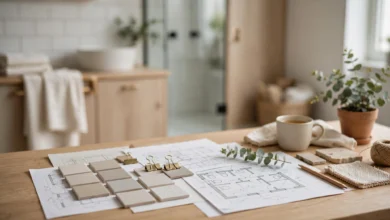
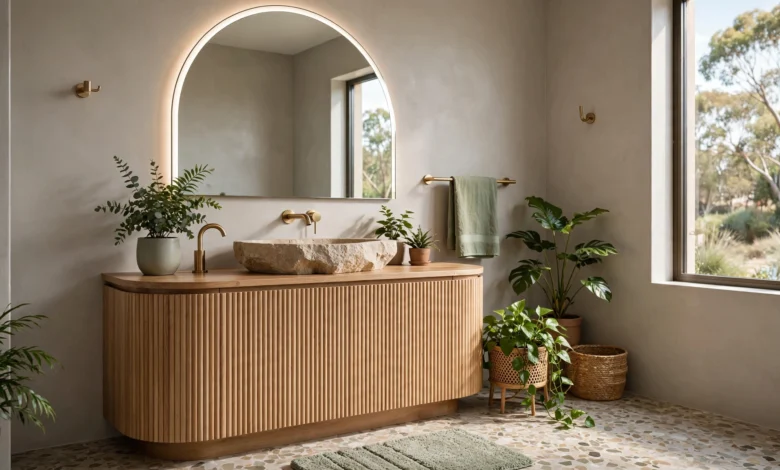
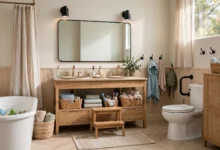
Terracotta and clay tones, olive and deep green, and warm bronze or champagne neutrals are showing up across renovation projects nationwide. These colours pair naturally with natural stone and timber finishes, and they tend to feel more timeless than the trend-driven colours that cycle in and out every few years.
Greige, Putty, and Mushroom Tones
Beyond the bolder earthy shades, a quieter shift is happening in the neutral space itself. Tones like putty, mushroom, greige, and warm taupe are steadily replacing the crisp whites that dominated the past decade. This shift is as practical as it is aesthetic, since these warmer neutrals hide water spots and general wear far better than a stark white surface, while still pairing beautifully with natural stone, timber, and brass fixtures.
Texture-Rich Materials Take Centre Stage
If colour is the biggest visible shift, texture is the quieter one running underneath nearly every current bathroom design trend. Flat, glossy white surfaces are giving way to finishes with genuine depth and tactility.
- Fluted glass on shower screens and cabinetry adds subtle texture without overwhelming the room.
- Matte tiles replace high-gloss finishes for a softer, more contemporary look that also hides fingerprints and water spots better.
- Brushed metal fixtures, in tones like brushed brass, bronze, or nickel, bring warmth that polished chrome never quite achieved.
- Handcrafted and artisanal tiles, including vintage-inspired hand-painted styles, are returning after years of dominance from bold, graphic tile patterns.
A useful designer tip gaining traction this year is colour drenching, using one earthy tone consistently across a vanity or feature wall to anchor the space, while keeping the rest of the room light and airy so it doesn’t feel heavy or overdone.
Large-Format Tiles and Minimal Grout Lines
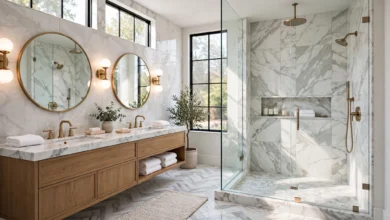
Large-format tiles remain one of the most consistently popular bathroom design trends across Australia, and for good reason. Bigger tiles, both on floors and walls, reduce the number of visible grout lines, which creates a cleaner, more upscale look and cuts down on maintenance over time.
This trend works particularly well paired with the earthier colour palettes gaining ground this year. A large-format, stone-look porcelain tile in a warm neutral tone gives a bathroom a seamless, elevated feel without the cost or maintenance demands of genuine natural stone.
Freestanding Baths With Softer, Smaller Silhouettes
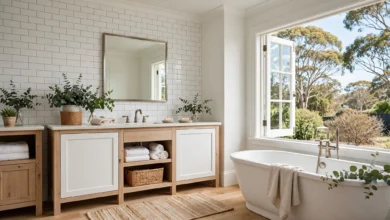
Freestanding baths remain a strong feature in current bathroom design trends, but the shape has evolved noticeably from the oversized statement tubs that were popular a few years ago. This year’s freestanding baths lean toward:
- Softer, oval silhouettes rather than sharp geometric shapes.
- Shallower ends and smaller overall footprints, making them more realistic for compact Australian bathrooms and apartment renovations.
- Understated finishes, favouring matte or stone-effect exteriors over the glossy, high-shine tubs of previous years.
This shift makes the freestanding bath trend far more accessible for smaller homes and renovations, without losing the statement appeal that made the style popular in the first place.
Timber Accents and Natural Materials
Timber has become one of the defining elements of current bathroom design trends, used to soften the hard, cold materials that dominate most bathrooms by necessity. Warm timber vanities, timber-look floor tiles, and timber-framed mirrors are showing up across renovation projects nationwide, adding warmth that makes a bathroom feel like a genuine part of the home rather than a purely utilitarian space.
In humid climates like Queensland and parts of northern New South Wales, timber-look porcelain tiles and properly sealed engineered timber vanities have become the practical choice over solid timber, which is more prone to warping, swelling, and staining over time in sustained humidity.
Wellness-Led Design and Practical Luxury
A genuinely significant shift in this year’s bathroom design trends is the move toward wellness-focused features that make the daily routine feel less like a chore and more like a small reset. Designers increasingly describe this as practical indulgence rather than pure luxury.
Common features driving this trend include:
- Heated towel rails, standard in most mid-range and upscale renovations now, rather than a rare upgrade.
- Underfloor heating, which improves comfort and helps floors dry faster, reducing mould risk in grout lines.
- Rain showers and steam shower features, bringing a spa-like quality to everyday routines.
- Improved task lighting, layered around the vanity rather than relying on a single central fixture.
- Concealed storage and thoughtfully placed wall hooks, reducing visual clutter without sacrificing function.
Smart and Sustainable Bathroom Features
Sustainability and craftsmanship are increasingly shaping bathroom design trends across Australia, with homeowners showing a clear preference for locally made, bespoke products over mass-produced alternatives. This shift reflects a broader move toward materials and fittings that feel personal and are genuinely built to last, rather than simply following whatever finish is trending at a given moment.
On the technology side, smart features are becoming more discreet rather than more prominent. Digital shower controls, demister mirrors with integrated lighting, and water-efficient fixtures are increasingly built into the design rather than presented as standalone gadgets, which suits the calmer, more considered aesthetic driving most of this year’s trends. For guidance on water efficiency ratings when comparing fixtures, the Water Efficiency Labelling and Standards (WELS) scheme provides a useful national reference point for Australian homeowners.
Waterproofing and Compliance Trends Homeowners Shouldn’t Skip
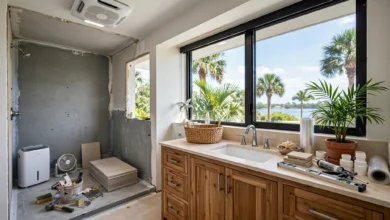
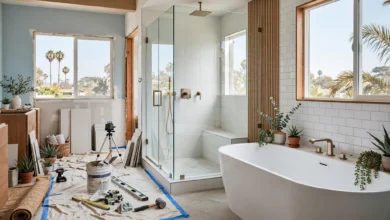
It’s easy to focus entirely on colour and material trends and overlook the compliance side of a renovation, but this matters just as much as anything visible in the finished room. Every bathroom renovation in Australia needs a waterproofing membrane that meets Australian Standard AS 3740, which sets out the requirements for waterproofing wet areas in residential buildings. Skipping or cutting corners on this step is one of the most expensive mistakes a homeowner can make, since water damage behind tile is often invisible until it’s already caused significant structural issues.
Working with a licensed waterproofer and confirming this step explicitly with your contractor is one of the simplest ways to protect the investment behind any of the aesthetic bathroom design trends covered in this article.
How to Bring These Trends Into Your Own Bathroom
Not every trend needs to be adopted wholesale to feel current. A few practical ways to incorporate this year’s direction without a full renovation:
- Swap chrome fixtures for brushed brass or bronze to shift the whole room toward a warmer feel without touching tile or plumbing.
- Add a textured element, like a fluted glass shower screen or a single feature wall in matte tile, rather than overhauling every surface.
- Introduce timber through a vanity or mirror frame if a full retile isn’t in the budget this year.
- Upgrade lighting around the vanity to shift the room’s overall mood without any structural work at all.
How These Trends Vary Across Australia’s States
While the broad direction of this year’s bathroom design trends is consistent nationwide, the way homeowners apply them shifts noticeably depending on climate and local housing stock.
Queensland and Northern New South Wales
In warmer, more humid regions, the shift toward timber accents leans heavily on engineered timber and timber-look porcelain rather than solid timber, which struggles with sustained humidity. Coastal-adjacent renovations also lean toward corrosion-resistant fixtures, since salt air affects standard chrome and lower-grade metals faster than it does in drier inland areas.
Victoria and Southern States
Cooler climates have embraced the earthy, moody palette trend particularly strongly, with deeper olive and charcoal tones showing up more often than in northern states. Underfloor heating has also become close to standard in Melbourne renovations, given the colder mornings for much of the year, whereas it remains more of an optional luxury upgrade in warmer states.
Apartment Renovations in Major Cities
In Sydney, Melbourne, and Brisbane apartments, the freestanding bath trend has adapted specifically to smaller footprints, favouring the softer, shallower silhouettes mentioned earlier rather than the oversized statement tubs that suit larger family homes. Large-format tiles are especially popular in apartment renovations too, since they make compact bathrooms feel noticeably more spacious without any structural changes.
Frequently Asked Questions
Are all-white bathrooms completely out of style now? Not entirely, but they’re no longer the default. Many current renovations use white as a supporting tone, paired with a warm neutral, timber accent, or textured feature, rather than as the entire palette on its own.
Do these bathroom design trends work in a small bathroom? Yes, and in many cases they work particularly well. Large-format tiles, warm neutral palettes, and softer freestanding bath silhouettes are all specifically suited to making compact bathrooms feel more spacious and considered.
Is it worth chasing every trend in one renovation? Generally not. The most successful renovations pick two or three trends that genuinely suit the household’s needs and climate, rather than combining every current direction into a single project, which can end up feeling busy rather than intentional.
How long do current bathroom design trends typically last? Colour-driven trends tend to shift over three to five years, while material and layout choices, like large-format tiles or timber accents, tend to have much longer staying power since they’re rooted in practicality as much as style.
Conclusion
Bathroom design trends across Australia this year point clearly toward warmth, texture, and a more considered approach to how bathrooms actually get used, replacing the stark, all-white default with earthy palettes, large-format tiles, softer freestanding baths, and timber accents that make the room feel like a genuine part of the home. Wellness-focused features like heated towel rails and underfloor heating, paired with a growing preference for locally made, sustainable materials, show that this shift is about more than just visual style. Whatever combination of these trends you bring into your own renovation, getting the fundamentals right, proper waterproofing, sound ventilation, and durable materials suited to your climate, will always matter more than chasing every trend at once.