How to Choose the Right Countertop for Your Kitchen Remodel
How to choose the right countertop for your kitchen remodel, comparing durability, cost, and style across quartz, granite, and more.
How to Choose the Right Countertop for Your Kitchen Remodel: 7 Smart Steps for a Stunning Result
How to choose the right countertop for your kitchen remodel is one of the biggest decisions you’ll make in the entire project, and it’s also one of the easiest to get wrong if you rush it. Your countertop isn’t just a surface, it’s the thing you’ll touch, clean, chop on, and set hot pans down on every single day for years to come. It’s also one of the first things people notice when they walk into your kitchen. With so many materials on the market, quartz, granite, marble, butcher block, laminate, and more, it’s no wonder choosing a countertop material feels like one of the most daunting parts of a remodel.
This guide breaks down how to choose the right countertop for your kitchen remodel step by step, covering the practical questions you need to answer before you fall in love with a slab, the pros and cons of the most common materials, and the budgeting and maintenance realities that don’t always make it into a showroom pitch. Whether you’re renovating a busy family kitchen, a rental property, or your forever home, you’ll walk away with a clear framework for narrowing down your options instead of getting overwhelmed by them. We’ll also cover mistakes to avoid, since picking a countertop based on looks alone is one of the most common and most expensive regrets homeowners run into after a remodel is finished.
Why Your Countertop Choice Matters So Much
Your kitchen countertop plays a genuinely demanding role. As the site of nearly all food preparation, it’s expected to be durable, resistant to stains, scratches, and heat, while also looking beautiful and ideally staying within budget. That’s a lot to ask of one material, which is exactly why how to choose the right countertop for your kitchen remodel isn’t a decision to make on style alone.
Many homeowners make the mistake of choosing a countertop material based purely on price, without considering how well it handles daily wear. A delicate or overly porous surface installed in a high-traffic family kitchen can end up with permanent stains from red wine, lemon juice, or hot coffee within the first year, undermining the whole look of an otherwise beautiful remodel. Getting the choice right up front saves you from an expensive redo down the line.
1. Start With How You Actually Use Your Kitchen
Before you look at a single slab, think honestly about your household’s habits. Your lifestyle should heavily influence your countertop choice.
Questions Worth Asking Yourself
- Do you cook often, or is your kitchen more of a gathering space? Frequent cooks need surfaces that handle heat, knife nicks, and spills without babying.
- Are you worried about stains, scratches, or heat damage specifically? Different materials excel in different categories, and almost none excel at all three equally.
- Do you have young kids or multiple cooks in the kitchen at once? More activity means more wear, which usually points toward a low-maintenance, durable material.
- How much upkeep are you genuinely willing to do? Some beautiful natural materials require regular sealing and careful cleaning; others need almost none.
For busy families, low-maintenance, non-porous materials tend to be the practical choice, while dedicated home cooks might prioritize heat resistance and easy cleanup over anything else.
2. Understand the Main Countertop Materials
Once you know your priorities, it’s much easier to narrow down how to choose the right countertop for your kitchen remodel among the materials actually available to you.

Quartz
Engineered quartz has become one of the most popular countertop choices for good reason. It’s non-porous, which means it resists stains without ever needing to be sealed, and it holds up extremely well to daily wear. If you want near-complete control over the exact look, colour, and pattern of your countertop, quartz is usually the answer, since it’s manufactured rather than mined and offers far more design consistency than natural stone.
- Pros: Highly durable, low maintenance, consistent patterning, wide colour range.
- Cons: Less heat-resistant than granite in some formulations, can be pricier than laminate.
Granite
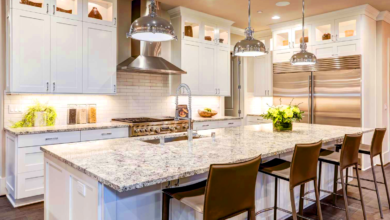
Granite countertops remain a popular choice thanks to their natural beauty and durability. They resist heat, scratches, and stains, making them a genuinely practical option for active kitchens, not just a good-looking one. Because granite is a natural stone, every slab is one of a kind, offering a unique pattern you simply can’t get from an engineered material. If you like warm, lived-in, slightly imperfect looks, granite tends to suit both classic, traditional kitchens and increasingly popular earthy, organic design schemes.
- Pros: Extremely durable, heat-resistant, unique natural patterning, adds resale value.
- Cons: Needs periodic sealing, can be more expensive depending on the stone’s rarity.
Marble
Marble is prized for its timeless, high-end look, especially in white and grey-veined varieties. It’s a favourite for baking-focused kitchens because it stays naturally cool, which is ideal for rolling out pastry. That said, it’s more porous and softer than granite or quartz, meaning it’s more prone to staining and scratching without diligent care and regular sealing.
- Pros: Elegant, classic appearance, naturally cool surface.
- Cons: Porous, requires more maintenance, more prone to etching from acidic foods.
Butcher Block
A butcher block countertop brings warmth and texture into a kitchen that might otherwise lean heavily on stone and steel. It’s forgiving to work on directly, comfortable underfoot in terms of feel, and relatively affordable compared to natural stone. It does require regular oiling to prevent drying and cracking, and it’s not the best choice near a sink unless it’s well sealed.
- Pros: Warm aesthetic, budget-friendly, easy to repair with sanding.
- Cons: Needs regular maintenance, vulnerable to water damage if not sealed properly.
Laminate
Laminate remains one of the most affordable countertop options on the market, and modern versions have come a long way in mimicking the look of stone or wood. It’s a reasonable choice for rental properties, budget renovations, or kitchens that will likely be updated again within a decade or so.
- Pros: Most affordable option, huge range of colours and patterns, easy installation.
- Cons: Less durable, can chip or scratch, not heat-resistant.
Recycled and Eco-Friendly Options
Recycled countertops made from a mix of post-consumer materials like glass, porcelain, and mirror chips embedded in a resin base are a genuinely eco-friendly alternative. They’re durable, easy to maintain, and available in a wide variety of colours and textures, making them a solid choice for homeowners who want sustainability without sacrificing style.
3. Factor In Your Budget Realistically
Cost is often the deciding factor in how to choose the right countertop for your kitchen remodel, and it’s worth planning for more than just the material itself.
A useful budgeting guideline is to spend roughly 15% to 30% of your total kitchen renovation budget on countertops specifically. Spending less than that risks a quality mismatch with the rest of your kitchen’s finishes, while spending significantly more can throw off your overall renovation balance.
Remember that the material price is only part of the total cost. You’ll also need to budget for:
- Removal of old countertops, if applicable.
- Professional installation, which varies significantly by material and complexity.
- Edge profiles and finishing details, like a waterfall edge, which add both cost and visual impact.
- Sealing and ongoing maintenance products, particularly for natural stone.
Partnering with a professional installation crew removes a lot of the physical guesswork from your renovation timeline and helps ensure your new countertop stays level and properly supported for years to come.
4. Think About Durability Before Aesthetics
It’s tempting to choose a countertop purely because it photographs beautifully, but durability should carry real weight in your decision. To make the best choice, evaluate how different materials handle daily moisture and heat exposure in your specific kitchen, not just in a showroom setting.
Key Durability Factors to Weigh
- Heat resistance: Can you set a hot pan directly on it without a trivet, or is that a habit you’ll need to break?
- Scratch resistance: Will everyday knife slips or dragging pots leave visible marks?
- Stain resistance: How does the material react to red wine, coffee, oil, or acidic foods like lemon juice?
- Porosity: Porous materials require sealing and are more vulnerable to bacteria and staining if neglected.
Higher-than-normal sun exposure can also fade some engineered products over time, so if your kitchen gets a lot of direct light, that’s worth factoring into your material choice as well.
5. Consider Design Cohesion With the Rest of Your Kitchen
Your countertop doesn’t exist in isolation, it needs to work visually with your cabinetry, backsplash, and flooring.
You Don’t Need One Material Everywhere
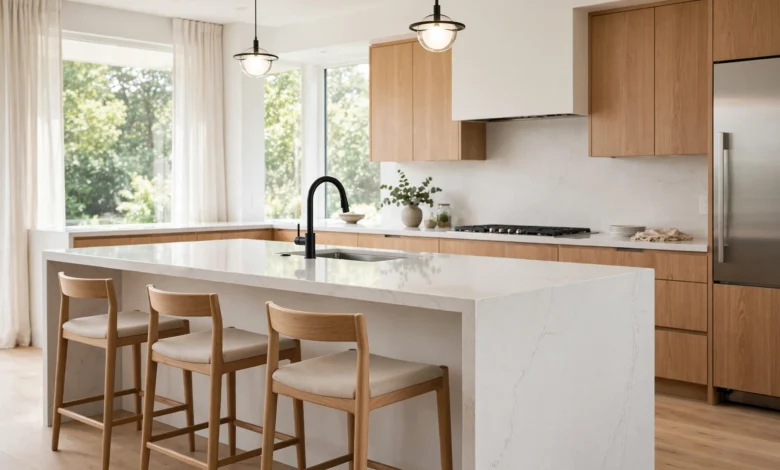
Design cohesion doesn’t require using the exact same countertop material throughout your entire kitchen. In fact, using two different countertop materials, say, stone on the perimeter and butcher block on an island, can add visual interest while also serving your renovation budget better than an all-stone kitchen would. Those who do choose a single material throughout often add interest instead through details like a waterfall edge or a contrasting cabinetry colour.
Matching Undertones
Whatever material you choose, pay attention to undertones. A cool, blue-grey quartz next to warm oak cabinetry can feel disjointed unless something else in the room, like hardware finish or wall colour, bridges the two. Bringing home physical samples and viewing them in your kitchen’s actual lighting, not just under showroom lights, will save you from a mismatch you can’t easily undo.
6. Don’t Skip the Showroom Visit
Photos genuinely don’t do justice to the texture, colour, and feel of most countertop materials, especially natural stone, where every slab is unique. Before finalizing anything, visit a showroom in person and, if possible, view the exact slab that will be cut for your kitchen rather than just a small sample chip. According to <cite index=”55-1″>Remodelista’s guide to kitchen countertops, natural stone options like marble, granite, limestone, and soapstone each carry distinct durability and maintenance profiles worth understanding before committing</cite>, which is exactly the kind of detail a showroom visit and a knowledgeable consultant can help clarify.
7. Plan for the Long Term, Not Just the Current Trend
Trends in countertop colours and finishes come and go, but a well-chosen, classic material will keep your kitchen looking fresh for far longer than something chosen purely because it’s popular this year. Materials like granite and quartz also tend to be more appealing to future buyers, which matters if resale value is any part of your long-term plan, even if selling isn’t imminent.
A few final questions worth asking before you sign off on a material:
- Will this material still look good in ten years, or is it tied to a very current trend?
- Does it suit how this specific kitchen will be used, not just how the display kitchen was used?
- Have I budgeted realistically for installation and long-term maintenance, not just the material cost?
- Have I seen this material in person, in my own kitchen’s lighting?
For additional guidance on comparing specific material performance and cost ranges, The Spruce’s countertop material guide offers a useful side-by-side comparison worth reviewing before your final decision.
Conclusion
Working out how to choose the right countertop for your kitchen remodel comes down to balancing four things: how you actually use your kitchen day to day, the durability and maintenance demands of each material, your realistic budget including installation, and how well the material fits the overall design of your space. Quartz offers durability and consistency with almost no maintenance, granite brings natural beauty and heat resistance, marble delivers timeless elegance at the cost of extra care, and butcher block or laminate can suit a warmer look or a tighter budget. There’s no single right answer for every kitchen, only the right answer for yours, so take the time to test samples in your own lighting, get a realistic quote that includes installation, and choose a material built to handle your kitchen’s daily life, not just its first photograph.
Keywords: