Landscape Designer Advice for Homes in Texas
Landscape designer advice for homes in Texas: practical guidance on heat-tolerant plants, water use, soil, and local rules.
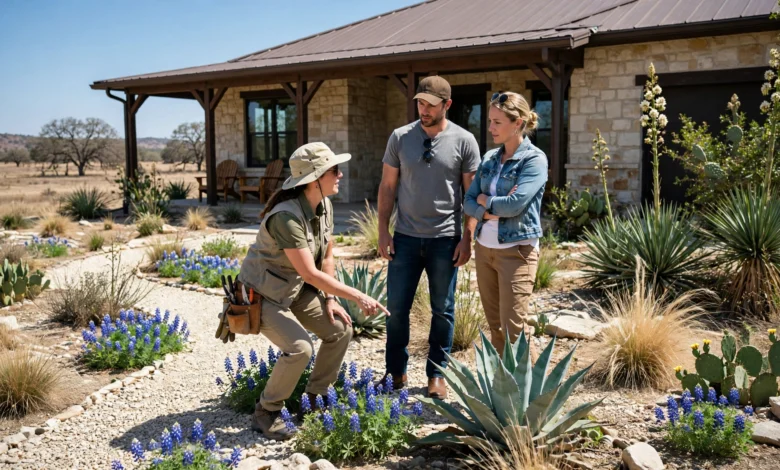
Landscape Designer Advice for Homes in Texas: 7 Powerful Tips for a Thriving Yard
Introduction
Landscape designer advice for homes in Texas looks a lot different from advice you’d get in a cooler, wetter climate, and for good reason. Texas is a massive state with wildly different conditions from one region to the next. A yard in humid Houston has almost nothing in common with one in arid El Paso, and a garden in the Hill Country’s rocky limestone soil faces completely different challenges than one sitting on the heavy clay common around Dallas-Fort Worth. Add in long stretches of extreme summer heat, unpredictable drought years, and increasingly strict water-use rules in many cities, and it’s clear why a generic, one-size-fits-all approach to landscaping falls apart fast here.
A landscape designer who actually understands Texas conditions plans around these realities from day one, rather than treating them as obstacles to work through later. That means choosing plants that can handle 100-degree summers without constant watering, building irrigation systems that comply with local restrictions, and selecting materials that won’t crack or fade under intense UV exposure.
This guide covers the practical advice worth knowing before starting a landscaping project on a Texas property, whether you’re working with a designer or tackling parts of the project yourself. It covers plant selection, water management, soil considerations, hardscaping, and the local rules that often surprise homeowners partway through a project.
1. Understand Your Region’s Climate Zone
Texas spans several USDA hardiness zones, generally from about 6b in the Panhandle up north to 9b or even 10a down near the Rio Grande Valley and Gulf Coast. This range matters enormously when choosing what will actually survive and thrive on your property.
Why Regional Differences Matter
- North Texas: Hot summers, occasional hard freezes, and heavy clay soil that drains poorly
- Central Texas / Hill Country: Thin, rocky, alkaline soil over limestone, with frequent drought stress
- East Texas: More rainfall and humidity, sandier and more acidic soil in places
- Gulf Coast: High humidity, sandy or clay soil depending on location, and hurricane exposure
- West Texas: Arid conditions, sandy soil, and extreme temperature swings between day and night
A landscape designer for Texas homes should be able to speak specifically to your region rather than offering generic advice that ignores these differences.
Checking Your Exact Zone
The USDA Plant Hardiness Zone Map lets you enter a ZIP code to confirm your exact zone, which is a useful starting point before selecting any plants for a new landscape design.
2. Choose Heat-Tolerant and Drought-Resistant Plants
Texas summers are long and brutal in most parts of the state, so plant selection has to prioritize heat and drought tolerance over anything else, particularly for plants that will sit in full sun.
Reliable Plant Choices Across Texas
- Texas sage (Leucophyllum frutescens): extremely drought-tolerant and blooms after rain
- Black-eyed Susan and Mexican feathergrass: low-water perennials and ornamental grasses that handle heat well
- Yaupon holly: a native evergreen shrub that tolerates both drought and periodic flooding
- Crape myrtle: a Texas landscaping staple that thrives in heat and provides long summer bloom
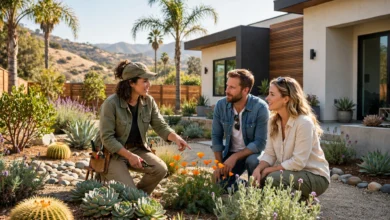
- Agave and yucca: strong choices for xeriscape-style designs in the hottest, driest regions
The Case for Native Plants
Native Texas plants have adapted over generations to the state’s heat, drought cycles, and soil conditions, which means they generally need less water, less fertilizer, and less ongoing maintenance than non-native alternatives. The Lady Bird Johnson Wildflower Center maintains a searchable native plant database that’s a genuinely useful resource when planning a Texas-appropriate garden.
Avoiding Common Plant Mistakes
- Planting moisture-loving species without a dedicated irrigation plan
- Choosing plants rated for zones that don’t match your actual local conditions
- Ignoring mature size, which leads to overcrowding once plants establish in Texas’s fast growing season
3. Plan for Water Efficiency From the Start
Water restrictions are a fact of life in much of Texas, especially during drought years when municipalities implement mandatory watering schedules. A landscape design that assumes unlimited water access is setting itself up to fail.
Water-Saving Strategies
- Xeriscaping: designing with drought-tolerant plants and reduced turf area to minimize water needs
- Drip irrigation: delivers water directly to plant roots, reducing evaporation loss compared to sprinklers
- Rainwater harvesting: collecting runoff from roofs in barrels or cisterns for use during dry periods
- Mulching: a layer of mulch retains soil moisture and reduces watering frequency significantly
Understanding Local Watering Restrictions
Many Texas cities enforce watering schedules based on address or day of the week, particularly during summer months or declared drought conditions. The EPA WaterSense program offers guidance on water-efficient landscaping and irrigation practices that align well with the restrictions common across Texas municipalities. Checking with your local water utility before finalizing an irrigation plan can save a lot of frustration later.
4. Work With Your Soil, Not Against It
Soil conditions vary enormously across Texas, and getting this wrong is one of the most common reasons new landscaping struggles in its first year.
Common Texas Soil Challenges
- Heavy clay (common in North and Central Texas): drains slowly and can crack deeply during dry spells
- Alkaline, rocky soil (Hill Country): limits which plants can access nutrients effectively
- Sandy soil (parts of East Texas and the coast): drains quickly and often needs more frequent watering and fertilizing
Improving Difficult Soil
- Get a soil test done before making major amendments, since guessing often wastes money
- Add organic compost to improve structure in both heavy clay and overly sandy soil
- Consider raised beds in areas where soil amendment isn’t practical or cost-effective
- Select plants naturally suited to your soil type rather than fighting the existing conditions
Texas A&M AgriLife Extension offers soil testing services in many counties, which is a practical first step before any major planting decisions.
5. Choose Hardscaping Materials Built for Texas Heat
Hardscaping choices matter just as much as planting decisions in Texas, since materials face intense UV exposure, heat, and in some regions, humidity or freeze-thaw cycles.
Materials Worth Considering
- Natural stone (limestone, flagstone): widely available in Central Texas and holds up well to heat, though it can get very hot underfoot in direct sun
- Concrete pavers: durable and available in lighter colors that reflect heat rather than absorbing it
- Composite decking: resists warping and fading better than untreated wood in high-UV conditions
- Permeable paving: helps manage the heavy rainfall that can follow drought periods, reducing runoff and flooding risk
Shade Structures Are Worth the Investment
Given how much of the year is spent avoiding direct sun in most of Texas, pergolas, shade sails, and covered patios aren’t just aesthetic choices, they’re functional necessities that make outdoor space usable for more of the year.
6. Account for Local Rules and HOA Restrictions
Many Texas neighborhoods, particularly newer suburban developments, have homeowners association rules that directly affect landscaping choices.
Common HOA Restrictions to Check
- Approved plant lists or restrictions on certain types of xeriscaping
- Rules around fence heights, materials, and colors
- Requirements for a minimum percentage of lawn versus other ground cover
- Restrictions on vegetable gardens or certain hardscape features visible from the street
Municipal Rules Worth Confirming
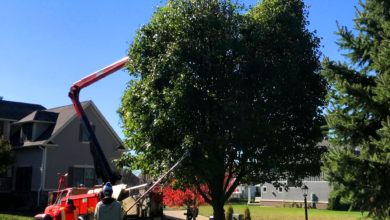
- Tree removal permits, which many Texas cities require for larger or protected tree species
- Drainage requirements, particularly in flood-prone areas near bayous or floodplains
- Setback requirements for fences, sheds, or larger hardscape structures
A landscape designer familiar with your specific city or HOA will already know these rules and can save significant time compared to discovering restrictions mid-project.
7. Plan for Long-Term Maintenance
A Texas landscape that looks great on installation day but requires constant intervention to survive isn’t a well-designed landscape. Long-term maintenance planning should be part of the design conversation from the beginning.
Maintenance Considerations
- Seasonal pruning schedules suited to fast-growing Texas natives and ornamentals
- Irrigation system checks before and after the hottest months, since Texas heat is hard on equipment
- Mulch replenishment at least once or twice a year to maintain moisture retention
- Pest and disease monitoring, since Texas’s warm climate supports pests active for more of the year than in cooler regions
Questions to Ask a Designer About Maintenance
- What’s the expected maintenance schedule for this design over its first two years?
- Which elements of this design are lower-maintenance, and which will need more ongoing attention?
- How will the irrigation system be adjusted seasonally as watering restrictions change?
Common Mistakes Texas Homeowners Make
- Choosing plants based on appearance alone without checking heat and drought tolerance
- Installing irrigation systems without confirming local watering restrictions first
- Ignoring soil testing and amending blindly, which often wastes time and money
- Underestimating the value of shade structures for making outdoor space usable in summer
- Overlooking HOA or municipal rules until partway through installation
Conclusion
Good landscape designer advice for homes in Texas always starts with an honest look at regional climate, soil conditions, and water availability, since these factors shape almost every decision that follows. From choosing heat-tolerant native plants and building water-efficient irrigation systems to selecting hardscaping materials that hold up under intense sun, Texas landscaping rewards planning that works with the state’s conditions rather than against them. Add in careful attention to local HOA rules and municipal requirements, along with a realistic maintenance plan, and a Texas yard can stay genuinely thriving through the state’s toughest summers rather than struggling to survive them.