How to Maintain a Swimming Pool Without the Hassle
Pool maintenance doesn't have to eat your weekends. Here's a realistic, no-nonsense routine that keeps your pool clean and swim-ready.
Pool Maintenance Made Easy: 9 Proven Steps to a Hassle-Free Swimming Pool
Pool maintenance is one of those chores that sounds a lot scarier than it actually is. Most new pool owners picture a second job: testing water every day, hauling chemicals around, and calling a technician every time something looks slightly off. The truth is a lot simpler. Once you understand the handful of things a pool actually needs, pool maintenance turns into a short, predictable routine you can knock out in 20 minutes a few times a week.
This guide walks through what really matters, in an order that makes sense, so you’re not guessing or overdoing it. You’ll learn how water circulation, cleaning, and chemistry work together, what to check weekly versus daily, and which small habits prevent the expensive problems (green water, corroded equipment, algae blooms) before they start. We’ll also cover seasonal tasks like opening and closing your pool, along with a few shortcuts that cut down on manual labor without cutting corners on safety.
Whether you’ve got an inground pool with all the bells and whistles or a simple above-ground setup for the kids, the principles are the same. Get the basics right, stay consistent, and your pool stays clear, safe, and ready to jump into on a moment’s notice. No guesswork, no wasted chemicals, and no more staring at cloudy water wondering what went wrong.
Why Pool Maintenance Matters More Than You Think
Skipping pool maintenance for even a week or two doesn’t just make the water look bad. Neglected water chemistry corrodes metal fittings, stains plaster and vinyl liners, and creates the perfect environment for algae and bacteria. Once algae takes hold, it’s far more work (and far more expensive) to fix than it would have been to prevent. On the health side, poorly maintained water can carry recreational water illnesses that cause skin, ear, and stomach infections, which is why the CDC’s guidance on pool chemical safety exists in the first place.
The good news: a pool that’s kept up consistently practically maintains itself. Most serious pool problems come from inconsistency, not difficulty. A pool checked twice a week rarely surprises you. A pool checked “whenever I remember” almost always does.
The Three C’s of Pool Maintenance
Nearly every pool professional breaks swimming pool maintenance down into three categories: circulation, cleaning, and chemistry. If you remember nothing else from this article, remember these three, because everything below fits into one of them.
1. Circulation
Your pool’s pump and filter are what keep water moving and impurities being pulled out around the clock. Water that sits still gets cloudy fast, no matter how many chemicals you throw at it.


- Run your pump 8 to 12 hours a day during swimming season. In hot climates, lean toward the higher end.
- Check the skimmer basket and pump basket weekly and empty them of leaves, bugs, and debris.
- Keep the water level halfway up the skimmer opening so it can pull surface water in properly.
- Consider a variable-speed pump if you’re replacing an old one. It costs more upfront but uses far less electricity over a season.
2. Cleaning
Even with great circulation, dirt and debris that sink to the bottom or cling to the walls need physical removal.
- Skim daily (or every time you use the pool) with a net to grab leaves and debris before they sink.
- Brush the walls and floor weekly to loosen algae spores and buildup before they take hold, paying extra attention to corners, steps, and ladders where circulation is weakest.
- Vacuum weekly to pull up dirt that’s settled on the bottom. A manual vacuum works fine for most backyard pools, though a robotic cleaner saves time if your budget allows it.
- Clean the filter (cartridge, sand, or DE) according to the manufacturer’s schedule, since a clogged filter can’t do its job no matter how often you run the pump.
3. Chemistry
This is the part that intimidates people most, but it comes down to testing regularly and making small adjustments rather than big, reactive ones.
- Test your water 2 to 3 times a week using test strips or a liquid test kit.
- Keep free chlorine between 1 and 3 ppm and pH between 7.2 and 7.8. These ranges keep the water sanitized without irritating skin and eyes.
- Check total alkalinity (80–120 ppm) periodically, since it acts as a buffer that keeps your pH from swinging wildly.
- Shock your pool weekly or after heavy use, a rainstorm, or a pool party, to burn off contaminants that regular chlorine levels can’t handle alone.
- Store chemicals separately, in a cool, dry space, and never mix them directly. The site Swim University’s pool maintenance guide has good detail on safe storage and dosing if you want to go deeper.
Building a Simple Pool Maintenance Schedule
A schedule takes the guesswork out of pool care and stops small issues from turning into big ones. Here’s a routine that works for most residential pools.
Daily Tasks
- Skim the surface for leaves and debris.
- Check the water level and top it off with a hose if it’s dropped below the skimmer.
- Glance at the pump and filter pressure gauge to make sure nothing looks unusual.
Weekly Tasks
- Brush the walls, floor, and any tile lines.
- Vacuum the pool.
- Test and balance the water chemistry.
- Shock the pool if it’s seen heavy use.
- Empty skimmer and pump baskets.
Monthly Tasks
- Check and clean (or backwash) the filter thoroughly.
- Inspect the pool cover, ladders, and safety equipment for wear.
- Test for calcium hardness and cyanuric acid levels, which drift more slowly than chlorine and pH.
Seasonal Tasks
- Opening the pool: Remove the cover, inspect equipment for winter damage, adjust the water level, clean the filter, test and balance the water, shock it, then run the pump overnight before swimming.
- Closing the pool: Balance the chemistry one last time, lower the water level if required in your climate, add a winterizing chemical kit, disconnect and drain equipment that could freeze, and cover the pool securely.
Common Pool Maintenance Mistakes to Avoid
Even careful pool owners fall into a few predictable traps. Watching for these will save you time and money.
- Overreacting to one bad test result. Water chemistry naturally fluctuates with weather, bather load, and sunlight. Adjust gradually rather than dumping in large amounts of chemicals at once.
- Ignoring the filter. A dirty filter is the number one reason pumps work overtime and water still looks murky. Clean or backwash it on schedule, not just when problems appear.
- Letting the water level drop too low. If it falls below the skimmer, your pump can run dry and burn out, which is a far more expensive fix than a garden hose top-off.
- Skipping shock treatments. Regular chlorine keeps up with day-to-day sanitizing, but it can’t handle a sudden spike in bacteria or organic waste after a storm or a crowded pool day.
- Mixing chemicals incorrectly. Always add chemicals to water, never water to chemicals, and never combine different chemicals directly. Mishandling pool chemicals is a leading cause of preventable injuries, which is why official guidance like the CDC’s recommendations exists for both home and public pools.
Tools That Make Pool Maintenance Easier
You don’t need a garage full of equipment, but a few basics make the routine faster and more accurate.
- A reliable test kit or test strips for chlorine, pH, and alkalinity.
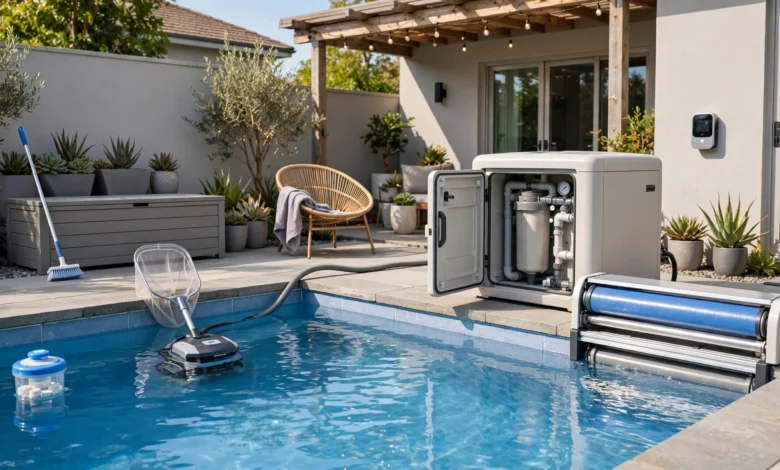
- A telescopic pole with interchangeable skimmer net, brush, and vacuum head attachments.
- A pool cover to cut down on debris, evaporation, and chemical loss between uses.
- A robotic pool cleaner, if your budget allows, to automate the vacuuming step entirely.
- A timer for your pump so it runs consistent hours without you having to remember to switch it on and off.
When to Call a Professional
Most swimming pool maintenance is well within reach for a homeowner willing to spend a little time each week. That said, certain jobs are worth handing off:
- Diagnosing a persistent leak in the plumbing or liner.
- Replacing or repairing pump motors, heaters, or automated chlorinators.
- Resurfacing plaster, tile, or replacing a vinyl liner.
- Opening or closing a pool for the first time, if you want a professional walkthrough before doing it solo in future years.
A seasonal inspection, even for owners who handle everything else themselves, is a reasonable way to catch small mechanical issues before they turn into a drained pool and a big repair bill.
Conclusion
Pool maintenance isn’t complicated once you break it into its core parts: keeping water circulating, physically cleaning the pool, and testing and balancing the chemistry on a consistent schedule. A few minutes of skimming and a couple of short chemistry checks each week prevent nearly every major issue pool owners run into, from cloudy water to algae blooms to equipment damage. Build a simple routine, stick to it, and your pool will stay clean, safe, and ready for swimming with far less effort than most people expect.