Swimming Pool Ideas for Homes in Texas
Swimming pool ideas for Texas homes, from heat-beating designs to low-maintenance finishes built for the state's long, hot summers.
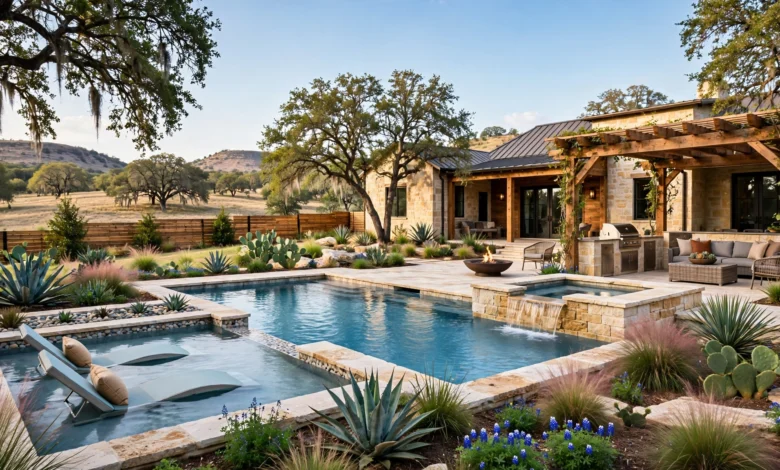
Swimming Pool Ideas for Texas Homes: 12 Stunning Designs to Beat the Heat
Swimming pool ideas look a little different once you factor in Texas weather. Summers here stretch on for months, the sun is relentless, and water restrictions and drought conditions pop up more often than homeowners in cooler states have to think about. That means the best backyard pool design isn’t just about looks. It has to hold up to heat, work with the local landscape, and keep your water bill from becoming a second mortgage payment.
The good news is Texas backyards are some of the most flexible in the country. Whether you’re working with a sprawling ranch-style lot outside Austin, a compact side yard in a Houston suburb, or a hill-country property with a view worth showing off, there’s a pool style built for it. From zero-entry beach pools that feel like a resort to sleek geometric designs that match a modern build, this guide breaks down the swimming pool ideas that actually make sense for Texas homes, along with the practical details, like heating, shading, and materials, that keep a pool enjoyable and affordable to run all year.
We looked at what’s actually working in backyards across Texas right now, from Houston to the Rio Grande Valley to the Hill Country, and pulled together the designs, features, and materials homeowners keep coming back to. Here’s where to start.
Why Texas Backyards Need a Different Approach to Pool Design
Before getting into specific swimming pool ideas, it helps to understand what makes Texas different. The state’s climate swings between scorching summers and occasional winter freezes, so a pool needs to perform in both extremes. Add in periodic drought restrictions in cities like Austin and San Antonio, and water efficiency becomes as important as aesthetics.
A few climate-driven priorities show up again and again in well-designed Texas pools:
- Heat management, through shade structures, water features, and materials that don’t scorch bare feet.
- Water conservation, using covers and efficient equipment to reduce evaporation.
- Freeze protection for equipment during the occasional cold snap.
- Durable, low-maintenance finishes that hold up to sun exposure without fading or cracking.
Keeping these in mind while you plan makes any of the following pool styles far more livable long term.
1. Geometric Pools for a Modern Look
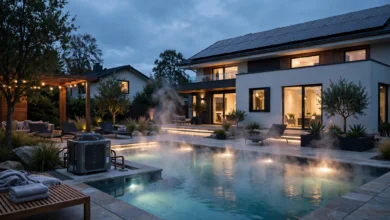
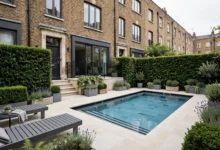
Clean lines and sharp angles give geometric pools a contemporary feel that pairs naturally with the modern farmhouse and minimalist builds common across new Texas construction. Rectangles, L-shapes, and squared-off designs are easy to pair with a matching spa and tend to make the most efficient use of a smaller yard, since every foot of water is usable swimming space rather than curved edges that eat into the layout.
Why It Works in Texas
Geometric shapes are simple to shade with a pergola or covered patio along one edge, which matters when you’re trying to keep a pool usable during the hottest part of the afternoon.
2. Zero-Entry and Beach-Entry Pools
A zero-entry pool, sometimes called a beach-entry pool, replaces steps with a gradual slope that mimics walking into the ocean. It’s one of the most popular swimming pool ideas for families with young kids or older relatives, since there’s no ladder or step to navigate.
- Provides a shallow play area for toddlers without a separate kiddie pool.
- Doubles as a lounging spot, since you can set a chair right in the shallow water.
- Adds a resort feel that’s hard to get with a traditional rectangular design.
3. Tanning Ledges and Baja Shelves
A tanning ledge, also called a Baja shelf, is a shallow shelf built into the pool, typically 6 to 18 inches deep, designed for lounge chairs to sit partially submerged. It’s become close to standard in newer Texas pool builds because it gives adults a place to cool off without needing to swim, which matters a lot when outdoor temperatures hit triple digits for weeks at a time.
4. Splash Pads for Family Backyards
For households with kids, a splash pad built alongside the main pool adds a dedicated play zone with sprayers, small fountains, or a dumping bucket feature. It keeps younger children entertained in shallow, supervised water while older kids or adults use the deeper end. This is one of the more practical swimming pool ideas for multi-generational households, since it reduces the need for constant supervision in the deep end.
5. Freeform and Natural-Style Pools
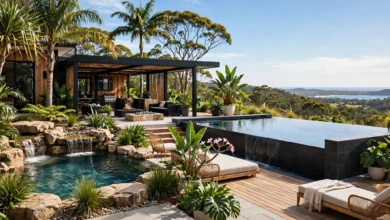
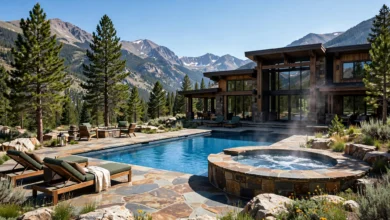
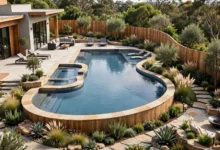
Freeform pools skip the straight lines entirely in favor of curved, irregular shapes that mimic a natural pond or lagoon. Paired with boulders, flagstone decking, and a waterfall feature, this style fits Hill Country properties and larger lots where the goal is a resort or lagoon feel rather than a formal, architectural look.
Natural Swimming Pools
A step further is the natural swimming pool, which uses biological filtration and aquatic plants instead of chlorine to keep water clean. These are less common but growing in popularity among homeowners looking for a lower-chemical option, and they tend to blend especially well into a naturalistic landscape design.
6. Plunge Pools for Smaller Lots
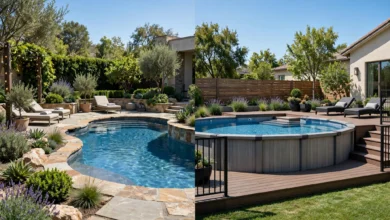
Not every Texas backyard has room for a full-size pool. A plunge pool is a compact, often deep pool designed for cooling off and lounging rather than swimming laps. Many are outfitted with strong jets, functioning as an oversized spa. For narrow side yards or smaller urban lots, this is one of the more space-efficient swimming pool ideas available, and it’s typically less expensive to install and heat than a full-size pool.
7. Multi-Level Pools for Larger Properties
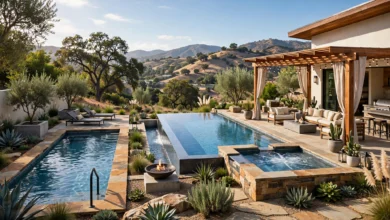
On bigger lots, multi-level pools use elevation changes, often connected by waterfalls or steps, to create distinct zones for swimming, lounging, and entertaining. A swim-up bar, sunken seating area, or even a submerged dining table can be worked into the design. This style suits homeowners who entertain frequently and want the pool to double as an outdoor living and dining space rather than just a place to swim.
8. Fire and Water Features
Combining fire and water elements adds ambiance and stretches the usable season into cooler Texas evenings. Popular options include:
- Fire bowls or fire pits positioned along the pool’s edge.
- Tiki torches for softer, ambient lighting around the deck.
- Fire and water bowls built directly into raised walls or spillover spas, where flame and cascading water sit side by side.
These features work especially well with geometric or multi-level designs, where a raised wall or ledge gives a natural spot to install them.
9. Energy-Efficient and Sustainable Pool Systems
Given the length of the Texas swimming season, energy costs add up fast if a pool isn’t built with efficiency in mind. A few upgrades pay for themselves over time:
- Solar pool heaters, which take advantage of Texas’s abundant sunshine to extend the swimming season without running up gas or electric bills.
- Variable-speed pumps, which use significantly less energy than older single-speed models and can be run longer at lower speeds for better filtration.
- LED pool lighting, which uses a fraction of the electricity of older incandescent fixtures while offering color-changing effects for evening use.
- Pool covers, which cut down on evaporation, reduce chemical loss, and help retain heat overnight.
10. Outdoor Living Spaces Built Around the Pool
A pool rarely stands alone in a well-planned Texas backyard. Pairing it with a functional outdoor living area gets far more use out of the space:
- A covered patio or pergola for shade during peak sun hours.
- An outdoor kitchen or grill station positioned near the pool deck for easy entertaining.
- Sectional seating or a fire feature to extend use into the evening.
- Windbreaks, like hedges or decorative fencing, to soften strong Texas winds without blocking the view.
11. Smart Technology and Automation
Modern pool systems increasingly come with app-based controls, letting homeowners manage temperature, lighting, and cleaning remotely. Common features include:
- Automated temperature controls for the pool and any attached spa.
- Remote-controlled LED lighting and water features.
- Robotic pool cleaners that reduce manual vacuuming and brushing.
This kind of automation is particularly useful in Texas, where you might want to pre-cool or heat a pool before guests arrive rather than adjusting it manually poolside.
12. Safety Features Every Texas Pool Should Have
Whatever style you land on, safety details shouldn’t be an afterthought, especially with children or elderly family members using the pool regularly.
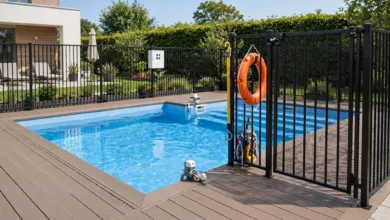
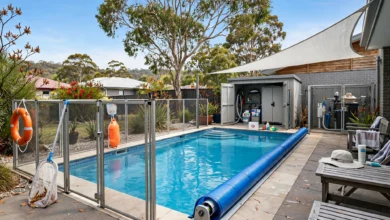
- Four-sided fencing with self-closing, self-latching gates, separating the pool from the house.
- Clear depth markings so swimmers know where shallow water ends and deep water begins.
- Pool alarms on doors and windows that lead directly to the pool area.
- A first aid kit and CPR guide kept poolside for emergencies. The American Red Cross water safety guidelines are a solid reference when setting up a home pool safety plan.
Choosing the Right Materials for Texas Heat
Material choice affects comfort as much as looks. Dark decking and certain stone finishes can get uncomfortably hot underfoot during peak summer. Popular choices that hold up well in Texas conditions include:
- Travertine and light-colored flagstone, which stay cooler to the touch than darker pavers.
- Pebble or quartz interior finishes, which resist staining and hold color better than plain plaster under constant sun exposure.
- Saltwater chlorination systems, which many Texas homeowners prefer for softer water and lower long-term chemical costs, though they still require the same water balancing outlined by the CDC’s pool chemical safety recommendations.
Working with a Local Pool Builder
Because soil conditions, water restrictions, and permitting requirements vary significantly across Texas, from the clay-heavy soil around Dallas to the limestone bedrock of the Hill Country, working with a builder experienced in your specific region matters more than it might in a more uniform climate. A local builder will already know:
- Which pool shells and materials perform best against regional soil movement.
- Local permitting and setback requirements.
- Realistic timelines around Texas’s busy spring and summer construction season.
Conclusion
Texas backyards give homeowners plenty of room to get creative, but the best swimming pool ideas for the state balance style with practicality. Zero-entry designs, tanning ledges, and splash pads make sense for families, while geometric and multi-level pools suit homeowners after a more architectural or resort-style look. Layer in energy-efficient equipment, heat-conscious materials, and solid safety features, and you end up with a pool that looks great and actually holds up to a Texas summer, season after season, without draining your budget to run.