10 Bathroom Storage Ideas That Actually Work
Bathroom storage ideas that actually work, covering vertical space, hidden storage, and small-footprint solutions for every bathroom size.
10 Bathroom Storage Ideas That Actually Work
Bathroom storage ideas are everywhere online, but most of them fall apart the moment you try to use them in a real bathroom with real plumbing, a narrow footprint, and a household that isn’t going to fold towels into perfect thirds every morning. The gap between a Pinterest photo and a bathroom that actually stays organized usually comes down to one thing: the storage solution has to fit how the room is actually used, not just how it looks in a single staged photo.
This article covers ten bathroom storage solutions that hold up under daily use, whether you’re working with a tiny powder room, a shared family bathroom, or a primary ensuite that’s somehow still never got enough space for everything. Each idea below is chosen because it solves a specific, common problem: wasted vertical space, a cluttered counter, awkward gaps around the toilet or sink, or a cabinet that’s technically there but never actually functions well. None of these require a full renovation. Most can be added to an existing bathroom in an afternoon, using space that’s already there but currently going unused.
If you’ve tried bathroom organization before and had it fall apart within a few weeks, the issue usually isn’t discipline, it’s that the system didn’t match how the space gets used day to day. The ideas here are built around that reality, focusing on storage that’s easy to maintain rather than storage that only works when everything’s freshly organized.
Why Most Bathroom Storage Advice Falls Short
Before getting into what works, it’s worth understanding why so much generic storage advice doesn’t hold up in practice. A few common issues:
- It assumes more space than most bathrooms actually have, particularly powder rooms and older ensuites with minimal built-in storage.
- It ignores daily-use items, treating the bathroom like a display space rather than a room used multiple times a day by an entire household.
- It requires constant upkeep, meaning the system only looks good for the first week before it collapses back into clutter.
Good bathroom storage solves for the room you actually have, not an idealized version of it, and it holds up even on the mornings when nobody has time to put things back perfectly.
1. Use Vertical Space Above the Toilet
The wall space above the toilet is one of the most consistently wasted areas in a bathroom, and it’s also one of the easiest to fix.
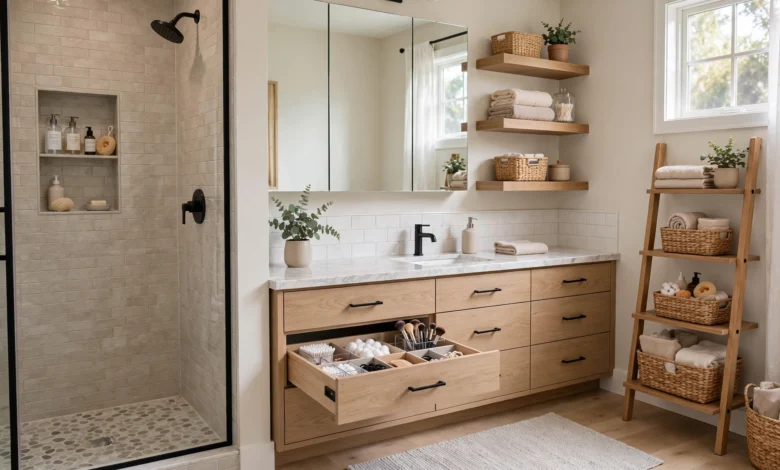
- A slim, wall-mounted shelving unit or ladder-style shelf fits neatly above the tank without extending far into the room.
- Open shelving here works well for rolled towels, spare toilet paper, and decorative baskets that hold smaller items.
- If floor space allows, a narrow storage tower that straddles the toilet adds enclosed storage without taking up any additional footprint elsewhere in the room.
This is often the single highest-impact change in a small bathroom, since it adds meaningful storage without touching the floor plan at all.

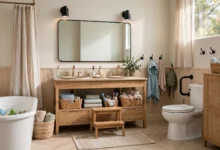
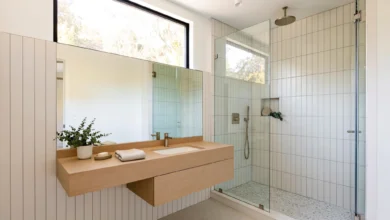
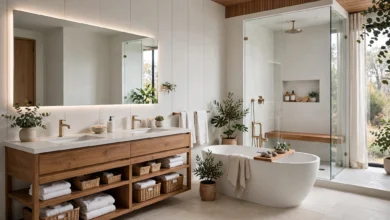
2. Choose a Vanity With Built-In Storage
Not all vanities are created equal, and the difference between a vanity that just holds a sink and one that actually functions as storage comes down to design.
- Drawer-based vanities tend to outperform cabinet-door vanities for daily use, since drawers make it easy to see and reach everything without digging.
- Vanities with built-in dividers or pull-out trays keep hair tools, skincare products, and toiletries separated instead of piled together.
- A vanity with a slightly deeper footprint but genuinely usable internal storage is almost always a better long-term choice than a shallow one that photographs well but holds very little.
If you’re not ready to replace the vanity itself, adding stackable shelves or drawer organizers inside an existing cabinet can meaningfully improve how much it actually holds.
3. Mount a Medicine Cabinet Instead of an Open Mirror
A plain mirror above the sink is wasted wall space compared to a mirrored medicine cabinet, which provides the same reflective function while adding enclosed storage at eye level.
- Medicine cabinets keep frequently used items like medication, toothbrushes, and skincare products close at hand but out of sight.
- The inside of the cabinet door is often overlooked, but adding a small magnetic strip or shallow tray there can hold tweezers, nail clippers, and other small items that otherwise get lost in a drawer.
- Recessed medicine cabinets, built into the wall rather than mounted on top of it, add storage without taking up any additional floor or counter space.
4. Use Over-the-Door Storage
For bathrooms with a door that swings into the room, the back of that door is almost always unused space.
- Over-the-door organizers designed specifically for bathrooms, with pockets sized for haircare products and styling tools, take up zero floor or counter space.
- Even a simple over-the-door hook set can hold towels, robes, or a hanging shower caddy of extra supplies.
- This is one of the few storage upgrades that requires no drilling or permanent installation, making it a strong option for renters.
5. Add Corner Shelving in the Shower
Shower storage is one of the most common pain points in daily bathroom use, and freestanding shower caddies rarely hold up long term.
- Built-in or adhesive corner shelves use space that would otherwise go entirely unused, without intruding into the usable shower area.
- A shelf that hangs from the showerhead avoids the suction-cup failures that plague many standing caddies, particularly in humid environments.
- For a full renovation, a recessed shower niche built directly into the wall during construction is the most permanent and reliable solution, keeping bottles fully out of the way of the water stream and each other.
6. Repurpose Bar Carts and Rolling Storage
A small rolling cart, the kind typically used in a kitchen or as a bar cart, works surprisingly well as flexible bathroom storage, particularly in a small or oddly shaped bathroom.
- A narrow rolling cart can be tucked beside the vanity or toilet and moved wherever it’s needed, whether that’s next to the mirror for a hair routine or near the tub for bath time.
- Multiple tiers allow for a mix of open storage (towels, baskets) and smaller bins for loose items.
- Because it’s mobile, this option works well in bathrooms where fixed storage isn’t possible, such as rentals or bathrooms with limited wall space.
7. Use Under-Sink Space More Efficiently
The area under a sink, particularly a pedestal or wall-mounted sink, is often either wasted entirely or turned into a jumble of loose bottles.
- Stackable shelves create vertical divisions in cabinets that would otherwise waste the space above shorter items.
- Lazy Susans make it easier to access items at the back of a deep cabinet without unpacking everything in front of them.
- Tiered risers let you see and reach items stored at different heights without digging through a single flat layer.
- Vertical dividers keep spray bottles and cleaning supplies upright and separated, rather than tipping over into a pile.
Even in a bathroom without a full vanity cabinet, a slim shelving unit designed to work around exposed plumbing can reclaim usable space that would otherwise sit empty.
8. Add Baskets and Trays to Corral Loose Items
Open storage, whether that’s a shelf, the back of the toilet, or a windowsill, only stays organized if loose items are contained rather than scattered.
- A tray on the counter or toilet tank groups small items together, making the surface look intentional rather than cluttered.
- Woven or fabric baskets on open shelving keep smaller products out of sight while still being easy to grab.
- Hanging baskets mounted on the wall are a strong option for bathrooms without much floor or counter space, and they double as a decorative element when styled well.
This is one of the simplest and cheapest upgrades on this list, and it makes almost every other storage idea here work better by giving loose items an actual home.
9. Make Vertical Use of Tall, Narrow Spaces
Awkward gaps, like the space between a toilet and a wall, or a narrow strip beside a vanity, are easy to overlook but genuinely useful once filled correctly.
- A slim, tall storage tower with adjustable shelves fits into narrow gaps that standard furniture can’t use.
- Running shelving or cabinetry all the way to the ceiling, rather than stopping at a standard height, adds meaningful storage capacity without expanding the room’s footprint.
- In truly tight bathrooms, even a narrow rack designed to hold rolled towels or toilet paper can turn a previously unused gap into functional storage.
10. Move Rarely Used Items Out of the Bathroom Entirely
Not every bathroom item needs to live in the bathroom. One of the most effective bathroom storage solutions isn’t adding more storage to the room, it’s removing what doesn’t need to be there in the first place.
- Extra towels, backup toiletries, and bulk supplies can be stored in a nearby linen closet or bedroom storage instead of competing for space in an already tight bathroom.
- Keeping only what’s used daily within the bathroom itself frees up meaningful space for the items that genuinely need to be close at hand.
- This approach also makes the other storage upgrades on this list more effective, since they’re no longer trying to hold everything the household owns, just what’s actually needed day to day.
For further reference on organizing small or awkward spaces, The Spruce’s guide to small bathroom storage and Apartment Therapy’s bathroom organization roundup both offer additional visual examples worth reviewing alongside the ideas above.
How to Choose the Right Combination for Your Bathroom
Not every idea on this list will suit every bathroom, and trying to apply all ten at once often creates more clutter than it solves. A more effective approach:
- Identify your biggest pain point first. Is it counter clutter, shower storage, or a lack of anywhere to put extra towels?
- Start with one or two changes, rather than overhauling the entire room at once.
- Prioritize solutions that require no maintenance to work, like fixed shelving or drawer organizers, over ones that rely on remembering to put things back a specific way.
- Reassess after a few weeks. The best test of any storage system is whether it’s still working once the novelty has worn off.
Conclusion
The most effective bathroom storage ideas aren’t the most elaborate ones, they’re the ones that match how a bathroom is actually used every day. Making use of vertical space above the toilet, choosing a vanity with genuinely functional storage, adding a recessed medicine cabinet, and containing loose items in trays and baskets all make a meaningful difference without requiring a full renovation. The real key is choosing a small combination of these ideas that fit your specific bathroom and household, rather than trying to apply every trick at once, since a storage system that’s simple enough to maintain will always outperform one that only looks good for the first week.