How to Choose the Right Tile for Your Bathroom Renovation
How to choose the right bathroom tile by comparing porcelain, ceramic, and stone for slip resistance, moisture, cost, and long-term upkeep.
How to Choose the Right Tile for Your Bathroom Renovation
How to choose the right tile is one of the first questions that comes up in any bathroom renovation, and it’s also one of the easiest to get wrong. Tile choice feels like a style decision, and it is one, but it’s just as much a performance decision. A bathroom floor deals with constant moisture, soap residue, bare feet, and daily foot traffic, and a shower floor handles all of that at an even higher intensity. Choosing a tile purely because it looked good in a showroom, without considering how it performs in a genuinely wet environment, is one of the most common and expensive mistakes homeowners make during a renovation.
This guide walks through how to choose bathroom tile by comparing the main materials available, porcelain, ceramic, and natural stone, across the factors that actually matter: water resistance, slip resistance, cleaning effort, durability, and cost. It also covers how tile size and layout affect a room’s visual proportions, where to use different materials within a single bathroom, and the maintenance commitments each option carries once the renovation is finished.
Rather than treating this as a single decision, this article breaks it down the way an experienced designer would: by zone, since your shower floor, shower walls, and main bathroom floor each face different demands, and by what you’re realistically willing to maintain over the years ahead. By the end, you should have a clear framework for narrowing down options rather than being overwhelmed by the sheer range of tile available.
Why Tile Choice Matters More in a Bathroom Than Almost Any Other Room
Before comparing specific materials, it helps to understand why bathroom tile decisions carry more weight than the same choice in, say, a living room or hallway.
- Constant moisture exposure. Bathroom floors and shower surfaces deal with water daily, which affects which materials are appropriate and how they need to be sealed or maintained.
- Slip risk. Wet tile is inherently more dangerous underfoot, making surface texture and slip rating a genuine safety consideration, not just an aesthetic one.
- Cleaning frequency. Soap scum, hard water marks, and mildew build up faster in a bathroom than almost anywhere else in the home, so how easily a tile cleans matters for daily life, not just appearances.
- Cost of getting it wrong. Tile is expensive and disruptive to replace once installed, so a poor choice here is costlier to fix than in most other rooms.
With that context, the material comparison below focuses on performance first and looks second, since a beautiful tile that fails in daily use isn’t actually the right choice.
1. Understand Your Main Material Options
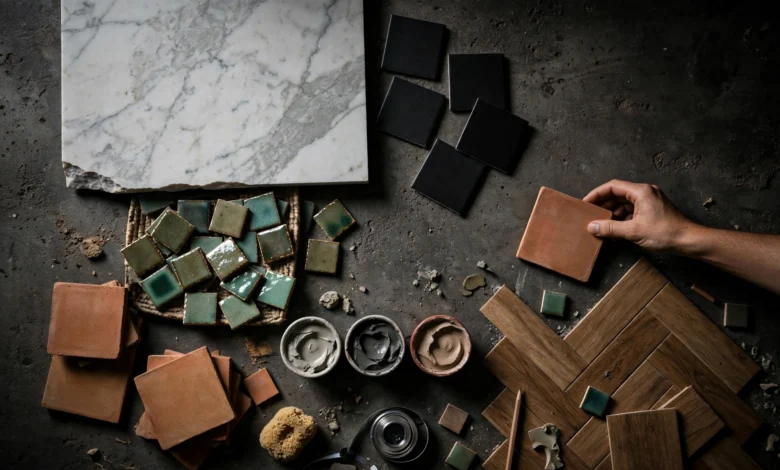
There are three primary tile categories used in most bathroom renovations, and each comes with a distinct set of trade-offs.
Porcelain Tile
Porcelain tile is a dense, fired ceramic material made from refined clay and minerals, giving it very low water absorption and strong resistance to staining and chipping.


- Highly water-resistant, making it well suited to both bathroom floors and shower areas.
- Available in a huge range of finishes, including realistic replications of natural stone, wood, and concrete.
- Large-format porcelain slabs are increasingly popular for minimising grout lines and creating a sleek, continuous look.
- Generally more expensive than ceramic but more durable and lower maintenance than natural stone.
Ceramic Tile
Ceramic tile is also made from fired clay, but it’s typically softer and slightly more porous than porcelain, which affects both cost and performance.
- More affordable to buy and install than porcelain or natural stone, making it a popular choice for budget-conscious renovations.
- Available in a wide range of colours, sizes, and patterns.
- Softer than porcelain, which makes it easier to cut but also more prone to chipping over time.
- Best suited to walls and lower-traffic areas, though many glazed ceramic options are suitable for bathroom floors as well.
Natural Stone Tile
Natural stone tile, including marble, travertine, limestone, granite, and slate, is quarried directly from the earth rather than manufactured.
- Offers a look and depth of character that manufactured tile can imitate closely but not fully replicate.
- Naturally porous, meaning it requires sealing at installation and periodic resealing over time to resist staining and water damage.
- Some stones, particularly marble, are sensitive to acidic cleaning products, which limits the cleaning products safe to use.
- Generally the most expensive option, and the one requiring the most ongoing maintenance.
2. Match Tile Material to Each Zone of the Bathroom
Not every surface in a bathroom faces the same demands, and choosing tile zone by zone often produces a better result than picking one material for the entire room.
Shower Floor
The shower floor faces constant water, shampoo residue, and bare feet, making slip resistance and water resistance the top priorities.
- Porcelain with a textured, slip-rated finish is a strong, low-maintenance choice.
- Smaller mosaic tiles, with their higher proportion of grout lines, provide more traction underfoot than large-format tile, which is part of why many installers favour them specifically for shower floors.
Shower Walls
Shower walls see less direct foot traffic but still deal with consistent moisture and soap exposure.
- Porcelain that replicates natural stone or marble offers the visual appeal of stone with considerably less maintenance.
- Combining materials, porcelain on the lower walls paired with a strip of natural stone or glass at eye level, is a popular way to add texture without fully committing to a higher-maintenance material throughout.
Main Bathroom Floor
The main floor experiences moderate moisture and heavy daily foot traffic.
- Porcelain or well-rated ceramic both perform well here, with the choice often coming down to budget and desired finish.
- Natural stone, if chosen for the main floor, needs a slip-resistant finish and a firm commitment to regular sealing.
3. Weigh Cost Against Long-Term Maintenance
Upfront price is only part of the cost equation. The ongoing maintenance a tile requires affects the real cost of ownership over the years you’ll live with it.
- Ceramic tends to be the most affordable at installation but may need more frequent repairs if chipped.
- Porcelain costs more upfront than ceramic but requires very little ongoing maintenance, no sealing, straightforward cleaning.
- Natural stone carries the highest upfront and long-term cost, since sealing needs to be repeated periodically and specific, non-acidic cleaning products are often required.
If a lower-maintenance option matters to you as much as the upfront price, porcelain frequently offers the best overall value, combining reasonable cost with minimal ongoing care.
4. Prioritise Slip Resistance, Especially on Floors
Slip resistance deserves separate, deliberate attention beyond simply choosing a material, since two tiles made from the same substance can perform very differently underfoot depending on their surface finish.
- Matte and textured finishes generally offer better grip than high-gloss, polished surfaces.
- Smaller tiles with more grout lines provide additional traction, which is one reason mosaic tile remains popular for shower floors specifically.
- Always check the tile’s specific slip rating for its intended use rather than assuming a material category is automatically safe. This matters most in showers and for households with young children or older adults.
5. Choose Tile Size and Orientation With the Room’s Proportions in Mind
Beyond material, the size and orientation of your tile has a significant effect on how the finished bathroom looks and feels.
- Large-format tile reduces the number of grout lines, creating a calmer, more expansive appearance, particularly effective in smaller bathrooms.
- Vertical orientation on walls draws the eye upward, which can help a room with a lower ceiling feel taller.
- Horizontal orientation on floors and walls can make a narrow bathroom feel wider.
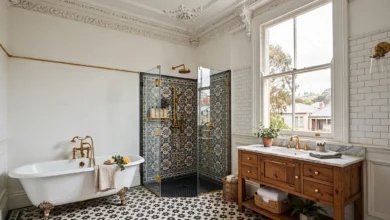
- Mosaic and smaller-format tile work well for accent areas, such as a shower niche or feature wall, where a bold, detailed pattern can be introduced without covering the entire room.
6. Use Tile to Add Character Without Overcommitting
Not every surface needs to carry the same material or pattern. A few strategic choices can add personality to a bathroom without the cost or risk of a fully bold material choice throughout.
- A mosaic feature panel inside a shower niche adds visual interest in a contained, low-risk area.
- Tiling a border around a mirror or along a wainscot line introduces detail without covering an entire wall.
- A patterned floor tile, paired with simpler, solid-colour walls, keeps a bold choice from overwhelming the whole room.
These smaller design moments let you introduce a more expensive or striking tile in a limited quantity, which is often more visually effective, and more affordable, than committing to it throughout the entire space.
7. Consider How Tile Choice Affects Installation Complexity
Some tile choices are meaningfully more complex to install correctly than others, which affects both cost and the pool of contractors qualified to do the work well.
- Large-format porcelain slabs require a flat, well-prepared substrate and specific adhesives, and are best installed by someone experienced specifically with large-format work.
- Natural stone often requires more careful cutting and handling due to its weight and tendency to chip along edges.
- Mosaic tile takes longer to install due to the sheer number of individual pieces and grout lines involved, which affects labour cost.
Discussing your tile choice with your installer before finalising the selection can help avoid surprises in either the final cost or the installation timeline.
8. Don’t Overlook Grout and Sealant Decisions
Tile selection often gets the most attention, but grout and sealant choices affect the finished look and long-term performance just as much.
- Epoxy grout resists staining and moisture better than standard cement-based grout, making it a strong choice for wet areas despite a higher upfront cost.
- Grout colour significantly affects how a tile pattern reads. A contrasting grout emphasizes each individual tile, while a matching grout creates a more seamless, unified surface.
- Sealant reapplication schedules vary by material. Natural stone typically needs resealing every one to two years, while porcelain generally needs none at all.
For further guidance on comparing tile materials and their specific performance characteristics, The Tile Shop’s bathroom flooring guide and Bedrosians’ comparison of porcelain, ceramic, and stone both offer detailed material breakdowns worth reviewing alongside your own project’s specific needs.
Common Tile Mistakes to Avoid
- Choosing a beautiful but overly porous natural stone for a shower floor without accounting for the sealing commitment it requires.
- Selecting high-gloss tile for a shower floor, prioritising shine over the slip resistance that actually matters underfoot.
- Mixing too many bold tile choices in one room, resulting in a space that feels busy rather than intentional.
- Ignoring grout colour and type, which can undercut an otherwise well-chosen tile if it stains quickly or clashes visually.
- Skipping a slip rating check, assuming a material category is automatically safe without confirming the specific product’s rating.
Conclusion
Learning how to choose the right tile for a bathroom renovation comes down to balancing appearance with genuine daily performance: water resistance, slip safety, cleaning effort, and the maintenance commitment you’re realistically willing to keep up with over the years ahead. Porcelain offers the strongest overall balance of durability, water resistance, and low upkeep for most areas, ceramic remains a solid, budget-friendly option for walls and moderate-traffic zones, and natural stone delivers unmatched character for homeowners willing to invest in its ongoing care. Choosing tile zone by zone, matching size and orientation to your room’s proportions, and paying as much attention to grout and installation as to the tile itself will help ensure the finished bathroom performs as well as it looks, long after the renovation is done.
Keywords: