How to Create a Cozy Outdoor Living Room
Learn how to create a cozy outdoor living room with practical tips on furniture, shade, lighting, textiles, and layout that hold up outside.
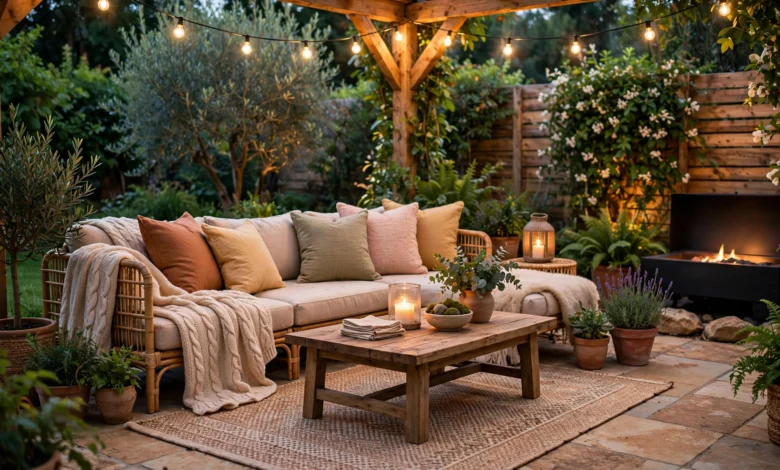
How to Create a Cozy Outdoor Living Room: 9 Easy Ideas That Actually Work
Introduction
How to create a cozy outdoor living room is a question that usually comes up after someone realizes their patio furniture has been sitting there for two summers and still doesn’t feel like anywhere they actually want to spend time. Buying a couch and a coffee table for the backyard doesn’t automatically produce a space people gravitate toward. Coziness outdoors comes from a handful of deliberate choices working together: layout, texture, shade, lighting, and a bit of restraint on how much you try to cram into the space.
This guide walks through the practical side of building an outdoor living room that actually gets used, not just admired from the kitchen window. We’ll cover how to define the space without walls, which furniture and fabric choices survive weather without looking worn out after one season, how to layer lighting so the space works after dark, and small details like rugs, cushions, and plants that make the difference between a patio and an actual room.
None of this requires a massive budget or a full landscaping overhaul. Most of what makes an outdoor living room feel cozy is about thoughtful arrangement and material choice rather than spending a lot of money. By the end of this article, you’ll have a clear, practical plan for turning an unused patio or deck into a space you’ll actually want to sit in.
1. Define the Space Before You Buy Anything
Before picking furniture or colors, figure out the physical boundaries of your outdoor living room. Indoor rooms have walls that do this automatically. Outdoors, you have to create that sense of enclosure yourself, or the space ends up feeling like an afterthought rather than a cozy outdoor living room.
A few ways to establish boundaries:
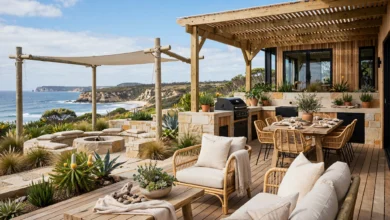
- Use a pergola, umbrella, or shade sail to define a “ceiling,” which does a lot of the work in making a space feel like a room.
- Anchor the layout with a rug, even an outdoor-rated one, to mark the floor area the way it would indoors.
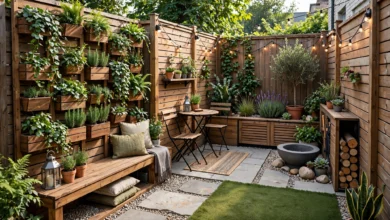
- Add planters, low hedges, or a privacy screen along one or two sides to create a sense of enclosure without fully closing the space off.
- Keep the layout close enough to the house, or to a natural focal point like a fire pit, that it reads as a destination rather than just leftover yard space.
Once the boundaries are clear, everything else, furniture, lighting, textiles, becomes much easier to plan because you’re working within a defined footprint instead of an open, undefined area.
2. Choose Furniture Built for the Outdoors, Not Just Placed There
Furniture is where a lot of outdoor living rooms go wrong. Bringing indoor pieces outside, or buying furniture that looks comfortable in a showroom but wasn’t built for sun and rain, leads to fading, mildew, and rust within a season or two.
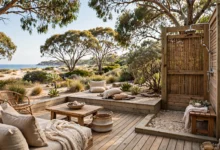

Materials That Hold Up
- Teak and other weather-resistant hardwoods age gracefully outdoors and develop a silvery patina over time rather than rotting or warping.
- Powder-coated aluminum is lightweight, resists rust, and works well for chairs and tables that need to be moved around.
- Resin wicker mimics the look of natural wicker but tolerates rain and sun far better than the real thing.
- Sunbrella and other solution-dyed acrylic fabrics resist fading and mildew, which matters far more than most people expect once cushions have a full summer of direct sun behind them. The Sunbrella fabric guide is a useful reference on caring for outdoor textiles so they last.
Layout for Comfort
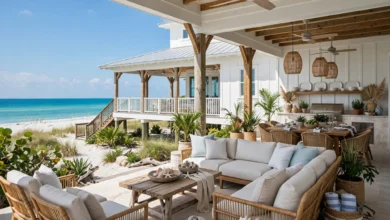
Arrange seating the way you would indoors: facing inward toward a coffee table or fire feature rather than lined up against a wall. A sectional or a pair of facing sofas with a low table in between encourages conversation, which is a big part of what makes a space feel like an actual living room instead of a row of patio chairs.
3. Layer Soft Textiles to Add Warmth
Hard surfaces, wood, stone, concrete, dominate most outdoor spaces by default, and that’s part of why they can feel cold or uninviting even in warm weather. Layering in soft textures is one of the fastest ways to make an outdoor living room feel cozy.
Practical additions that make a real difference:
- Outdoor rugs made from polypropylene or similar synthetic fibers, which handle moisture without staining or rotting.
- Weather-resistant cushions and throw pillows in varied textures, not just matching sets, which reads as more considered and less like a furniture showroom display.
- Outdoor-rated throws or blankets stored in a weatherproof bin nearby, ready for cooler evenings.
- Curtains or fabric panels along a pergola or patio edge, which soften hard architectural lines and add a sense of privacy.
The goal isn’t to recreate an indoor living room exactly, since some texture and material differences are unavoidable outside, but to bring enough softness into the space that it doesn’t feel purely functional.
4. Get the Lighting Right
An outdoor living room that looks great at 2pm and disappears at 8pm isn’t finished. Lighting is what extends usable hours into the evening, and layering different types of light tends to work better than relying on one bright overhead fixture.
Ambient Lighting
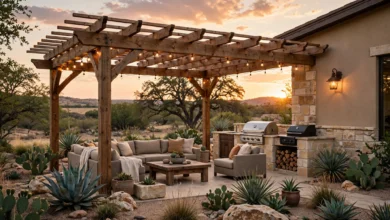
String lights remain a reliable option for overall ambient light, strung across a pergola or along a fence line. They’re inexpensive, easy to install, and immediately make a space feel more finished and intentional.
Task Lighting
Anywhere people will read, cook, or work needs brighter, more directed light. Table lamps rated for outdoor use, or a floor lamp near a reading chair, cover this without requiring a full electrical rewiring project.
Accent Lighting
Small details go a long way here:
- Lanterns or candles on a coffee table for a warm, low glow in the evening.
- Uplighting on a tree or architectural feature to add depth after dark.
- Solar path lights leading into the space, which double as a safety feature.
Dimmable or warm-toned bulbs (look for a color temperature around 2700K) create a noticeably cozier atmosphere than the cooler, bluer light that some outdoor fixtures default to.
5. Add a Heat Source for Year-Round Use
A cozy outdoor living room that only works for three months of the year isn’t making the most of the investment. Adding a heat source extends the season significantly, sometimes to nearly year-round use depending on climate.
Common options include:
- Fire pits, which double as both heat and a natural gathering point, whether wood-burning or gas.
- Patio heaters, either freestanding propane units or mounted electric heaters, which work well for smaller spaces or apartment balconies.
- Outdoor fireplaces, a bigger investment but a strong focal point if you’re doing a more permanent renovation.
Whichever option you choose, check local regulations first. Many municipalities have rules around open flames, gas connections, or clearance distances from structures, and it’s worth confirming before installation rather than after.
6. Bring in Plants for Softness and Privacy
Plants do double duty in an outdoor living room: they soften hard surfaces visually, and they can provide privacy or shade depending on placement. The American Society of Landscape Architects has useful guidance on selecting plants suited to different outdoor living needs through its residential landscape architecture resources, which is worth a look if you’re planning a more substantial planting scheme.
A few practical approaches:
- Use tall potted plants or small trees to create a sense of privacy without a permanent structure.
- Add hanging plants or a vertical garden if floor space is limited, particularly useful for balconies and smaller patios.
- Choose low-maintenance, climate-appropriate species so the greenery doesn’t become another chore added to your week.
- Group pots of varying heights together rather than lining them up evenly, which tends to look more natural and considered.
7. Keep a Consistent Color Palette
Outdoor living rooms that feel the most put-together usually stick to a limited, intentional color palette rather than mixing whatever cushions and decor happened to be on sale. Two or three main colors, plus a neutral base like tan, gray, or off-white, tend to work well and make it easier to add or swap pieces later without clashing.
Natural, earthy tones (terracotta, sage green, warm wood tones) tend to read as cozier than very bright or cool colors, though this comes down to personal preference and how the space connects to the rest of your home’s exterior.
8. Add Personal Touches and Functional Details
A space starts to feel like a genuine living room rather than a showroom display once it includes a few personal or functional touches:
- A side table within reach of every seat, so no one has to balance a drink on the arm of a chair.
- A small side table with book or magazine storage.
- Outdoor speakers for background music, wired or portable.
- A weatherproof storage bench or box for cushions, blankets, and games.
- Artwork or mirrors rated for outdoor use, which add visual interest the way they would indoors.
These small details are often what separates a space that looks nice from one that people actually choose to spend time in.
9. Maintain the Space So It Stays Cozy
Even the best-designed outdoor living room needs some upkeep to stay inviting. A few habits that keep the space looking good with minimal effort:
- Wipe down furniture and cushions after rain to prevent mildew buildup.
- Store cushions or bring furniture under cover during extended wet weather if possible.
- Sweep or hose down hard flooring and rugs regularly to prevent dirt and algae buildup.
- Rotate seasonal decor, lighter fabrics and brighter colors in summer, warmer tones and heavier textiles in cooler months, to keep the space feeling current and cared for.
A small amount of regular maintenance goes a long way toward keeping an outdoor living room feeling like an intentional, well-loved space rather than something that’s slowly deteriorating in the weather.
Conclusion
Learning how to create a cozy outdoor living room comes down to treating the space with the same intention you’d give an indoor room: clear boundaries, comfortable and weather-appropriate furniture, layered lighting, soft textiles, and a few personal touches that make it feel lived-in rather than staged. Add a heat source and some greenery, keep the color palette consistent, and commit to a bit of regular upkeep, and what started as an unused patio can become one of the most-used spaces in the house.