Outdoor Ideas for Coastal Homes in Florida
Outdoor ideas for coastal homes in Florida, covering hurricane-ready materials, salt-tolerant landscaping, pools, and building codes.
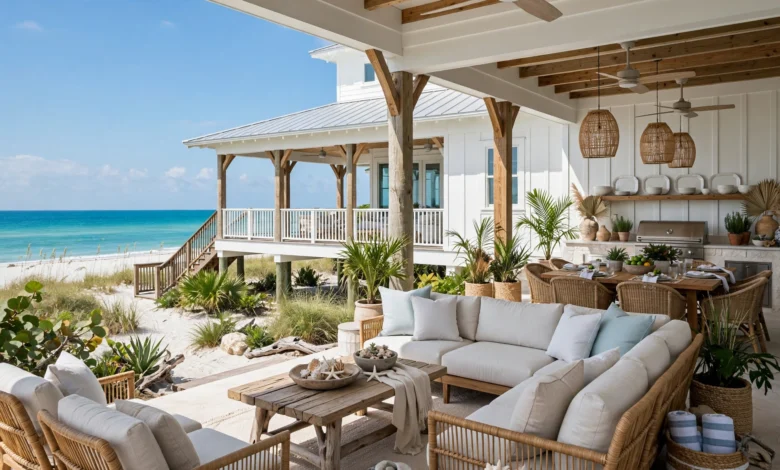
Outdoor Ideas for Coastal Homes in Florida: 9 Proven Ways to Build a Storm-Ready Backyard
Introduction
Outdoor ideas for coastal homes in Florida have to account for conditions that most outdoor design advice never considers: salt air that corrodes metal within a couple of years, hurricane-force winds that can turn an unsecured pergola into a projectile, and humidity levels that make certain materials and plants struggle no matter how well they’re maintained. A backyard that looks great in a home magazine shot from California or the Northeast often isn’t built to survive a single Florida storm season.
This article looks at what genuinely works for coastal Florida properties, from Naples and Sarasota to the Space Coast and the Panhandle. We’ll cover material choices that resist salt corrosion and humidity, landscaping that survives both drought stretches and heavy tropical downpours, pool and outdoor living design suited to near year-round outdoor use, and the building code and flood zone considerations that catch a lot of homeowners off guard partway through a renovation.
Florida’s coastal climate isn’t uniform either. Conditions in the Keys differ from the Panhandle, and hurricane exposure varies significantly by region and elevation. What stays consistent across the state is the need to design with storms, salt, sun, and humidity in mind from the start, rather than treating them as problems to solve after something fails. By the end of this guide, you’ll have a realistic, practical framework for building an outdoor space that holds up to what Florida’s coastal climate actually throws at it, season after season.
1. Choose Materials Built to Resist Salt and Corrosion
Material selection matters more for coastal Florida homes than almost anywhere else in the country, since salt-laden air accelerates corrosion on metal fixtures and can degrade certain finishes within just a season or two if the wrong materials are chosen.
Furniture and Fixtures
- Marine-grade stainless steel (316-grade specifically) resists corrosion far better than standard stainless or mild steel, and it’s worth the extra cost for anything near the water.
- Powder-coated aluminum furniture holds up well against salt air and doesn’t rust the way untreated metal does.
- Teak and other naturally weather-resistant hardwoods tolerate humidity and salt exposure better than softer timbers, developing a silvery patina rather than rotting.
- Avoid untreated mild steel entirely for anything within a mile or two of the coast, including deck screws, brackets, and railing hardware.
Flooring and Hardscaping
- Porcelain pavers resist salt staining and don’t absorb moisture the way natural stone can, making them a strong choice for pool decks and patios.
- Travertine, a popular choice in Florida for its heat-reflective properties, stays cooler underfoot in direct sun, which matters given how intense Florida’s summer heat is.
- Composite decking avoids the swelling and splitting that timber decking is prone to in consistently humid coastal air.
2. Design for Hurricane Resilience
Hurricane season runs roughly from June through November across Florida, and outdoor structures need to be built, or at least planned, with that reality in mind. This is one of the most important outdoor ideas considerations for coastal Florida homes, and it’s not optional the way it might be in other regions.
Structural Considerations
- Engineered pergolas and patio covers rated for local wind load requirements hold up far better than standard off-the-shelf kits, which often aren’t built for Florida’s wind zone requirements.
- Impact-rated screens for lanais and pool enclosures reduce the risk of debris damage during storms.
- Removable or foldable furniture makes it far easier to secure or store items quickly when a storm warning is issued, rather than scrambling to move heavy, fixed pieces.
- Anchored structures, including pergola posts and fence lines, should meet local building code wind ratings rather than relying on standard residential fencing not rated for coastal wind exposure.
Checking Local Requirements
Florida’s building codes are among the strictest in the country specifically because of hurricane risk, and requirements vary by county and wind zone. The National Hurricane Center provides useful general preparedness guidance, and checking with your local building department before installing any permanent outdoor structure is worth the time, since retrofitting a non-compliant structure after the fact is far more expensive than confirming requirements up front.
3. Build a Screened Lanai or Enclosed Patio
The screened lanai is close to a defining feature of Florida outdoor living, and for good reason. It solves several problems at once: mosquitoes, intense direct sun, and light rain, all without fully closing off the connection to the outdoors.
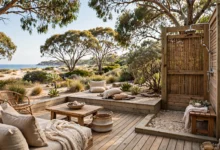
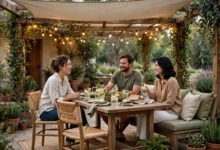
Benefits of a screened lanai include:
- Mosquito and insect protection, a genuine necessity in Florida’s humid climate, particularly during and after the wet season.
- UV reduction, with certain screen materials cutting a meaningful percentage of direct sun exposure while still allowing airflow.
- Extended usable time, since a screened space stays comfortable through light rain and buggy evenings that would otherwise drive people indoors.
- Increased home value, since a well-built lanai is a feature many Florida buyers specifically look for.
Combining a lanai with ceiling fans significantly improves comfort during the hottest months, since moving air makes a real difference in how Florida’s humidity actually feels.
4. Choose Florida-Friendly, Salt-Tolerant Landscaping
Landscaping for coastal Florida properties needs to handle salt spray, sandy or poor-draining soil in some areas, intense sun, and both drought stretches and heavy tropical downpours, sometimes within the same month.
Reliable Plant Choices
- Sea grape and saw palmetto, both naturally salt-tolerant native species that hold up well directly along the coast.
- Bougainvillea, which tolerates heat and salt exposure while adding strong color to garden beds and fences.
- Muhly grass and other native ornamental grasses, low-maintenance options that add movement and texture without heavy watering needs.
- Coontie and other native groundcovers, which handle Florida’s sandy soil and intense sun better than many non-native alternatives.
The University of Florida IFAS Extension’s Florida-Friendly Landscaping program is a strong, region-specific resource for choosing species suited to your particular part of the state, since conditions vary meaningfully between the Panhandle, Central Florida, and the southern coastal regions.
Drainage and Soil Considerations
Florida’s sandy coastal soil drains quickly in some areas but can also be prone to waterlogging during heavy tropical downpours in others. Raised garden beds, proper grading away from the home’s foundation, and mulch to retain moisture during dry stretches all help manage these swings.
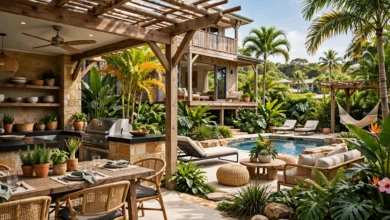
5. Design a Pool Area Built for the Climate
A pool is close to a default feature for coastal Florida properties, given how much of the year is warm enough to use one, sometimes nearly all twelve months in the southern part of the state.
Pool Design Trends
- Saltwater pools have become increasingly popular, offering a gentler feel on skin and eyes compared to traditional chlorine systems.
- Sun shelves and tanning ledges, shallow areas built into the pool design specifically for lounging in the water rather than sitting poolside.
- Screened pool enclosures, which combine the benefits of a lanai with pool protection from debris and insects.
- Heated pools or solar heating, which extend comfortable swimming into cooler winter months, particularly in northern and central Florida.
Safety and Compliance
Florida law requires pool barriers meeting specific safety standards, and enforcement varies somewhat by county. Checking with your local building department before finalizing a pool design avoids issues with fencing height, gate specifications, and setback distances during final inspection.
6. Add Shade Without Sacrificing Airflow
Florida’s sun is intense for most of the year, and shade is a functional necessity rather than a style preference. At the same time, blocking too much airflow makes outdoor spaces feel far hotter than they need to given the state’s humidity.
- Louvre roof systems offer adjustable shade while allowing airflow when fully or partially open.
- Tall shade trees, such as live oaks, provide natural cooling and have the added benefit of being reasonably wind-resistant compared to more brittle species.
- Outdoor ceiling fans, installed under covered patios or lanais, make a significant difference in comfort during humid months, often more than people expect.
- Retractable awnings, giving flexibility to open the space up on milder days and provide shade during peak sun hours.
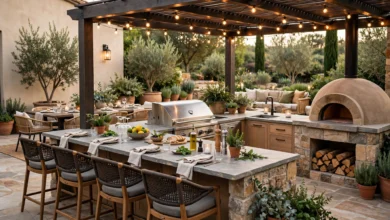
7. Build an Outdoor Kitchen for Year-Round Entertaining
Given how much of the Florida calendar is warm enough for outdoor cooking and dining, outdoor kitchens have become a standard feature in coastal home renovations rather than a rare luxury addition.
Common features include:
- Built-in grills and smokers, often with stone or stucco surrounds matching the home’s exterior.
- Weatherproof cabinetry and countertops, using marine-grade materials suited to humidity and salt air rather than standard indoor-rated finishes.
- Outdoor refrigeration and ice makers, keeping food and drinks accessible without constant trips inside.
- Covered cooking areas, protecting both the equipment and the cook from Florida’s frequent afternoon thunderstorms.
8. Layer Lighting for Extended Evening Use
Florida’s warm evenings mean outdoor spaces get used well after dark for most of the year, making layered lighting a practical investment rather than a purely decorative one.
- Pool and water feature lighting, extending the resort-style feel into the evening hours.
- Warm-toned LED lighting integrated into lanai or pergola structures rather than bolted-on fixtures.
- Motion-sensor security lighting, paired with softer ambient lighting for a balance of safety and atmosphere.
- Corrosion-resistant fixtures rated for coastal or marine environments, since standard outdoor lighting hardware corrodes noticeably faster in salt-heavy air.
9. Understand Flood Zones and Building Restrictions
Many coastal Florida properties sit within designated flood zones, which affects what can be built, how, and sometimes where on the property. This is a step that’s easy to overlook when focused on the design side of a project, but it has real financial and legal consequences if skipped.
- Check your property’s flood zone designation before planning any permanent structure, since requirements differ significantly between zones.
- Elevation requirements may apply to certain outdoor structures depending on your specific flood zone and local ordinances.
- Insurance implications are worth researching early, since some outdoor additions can affect flood insurance premiums or requirements.
- HOA and community restrictions, common in many Florida coastal developments, often add another layer of rules beyond county building codes, covering everything from fence height to approved exterior colors.
Conclusion
Outdoor ideas for coastal homes in Florida need to work harder than outdoor design in most other regions, since they’re solving for salt air, hurricane risk, intense heat, and humidity all at once. That means choosing corrosion-resistant materials, building structures rated for local wind requirements, adding a screened lanai to manage insects and sun, and selecting native, salt-tolerant landscaping suited to sandy soil and heavy seasonal rain. Layer in a well-designed pool area, real shade with proper airflow, an outdoor kitchen built for year-round use, and a clear understanding of flood zone and building code requirements, and a coastal Florida backyard can be both genuinely beautiful and built to actually last through what the climate delivers